
 Submit an article

Search
- Page Path
- HOME > Search
Research Papers
- Illness experience of head and neck cancer patients: an interpretative phenomenological analysis
- Min Ryu, Suhye Kwon
- J Korean Acad Nurs 2026;56(3):408-420. Published online August 18, 2026
- DOI: https://doi.org/10.4040/jkan.26027
-
 Abstract
 PDF
PDF ePub
ePub - Purpose
Head and neck cancer is frequently diagnosed at an advanced stage and is associated with substantial mortality. Patients also experience major physical limitations and psychosocial distress. This study explored the subjective meaning of illness experiences among patients with head and neck cancer using interpretative phenomenological analysis (IPA).
Methods
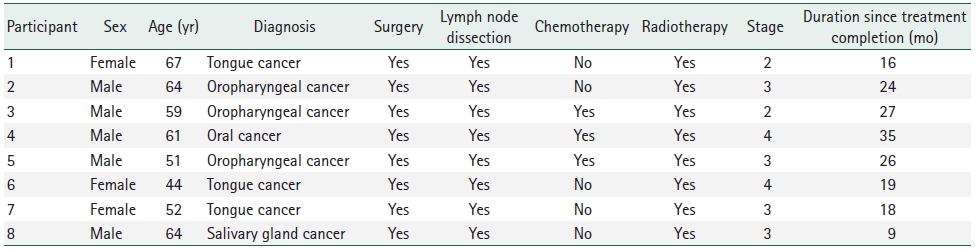
This qualitative study used IPA to examine the experiences of eight adults with stage II–IV head and neck cancer recruited from two university hospitals. All participants had undergone surgery followed by radiotherapy or chemoradiotherapy at least 6 months before data collection. Data were collected through in-depth interviews conducted from February to June 2022 and were analyzed using the cyclical IPA procedure.
Results
Four superordinate themes were identified: (1) being overwhelmed by lamentation and fear when confronting a late-diagnosed illness; (2) confronting human limitations during treatment undertaken for survival; (3) losing daily life and selfhood while living in a body that had not recovered; and (4) reconstructing life beyond the fear of recurrence. Participants experienced diagnosis and treatment as traumatic and described persistent functional impairments and painful sequelae.
Conclusion
These findings provide an in-depth understanding of the illness experiences of patients with head and neck cancer and offer evidence to inform nursing interventions that support adaptation and quality of life.
- 693 View
- 36 Download

- Effect of a continuous glucose monitoring-guided personalized lifestyle coaching intervention on glycemic outcomes and variability in patients with type 2 diabetes mellitus: a randomized controlled trial
- Youngran Yang, Youngmin Park, Heung Yong Jin
- J Korean Acad Nurs 2026;56(3):393-407. Published online August 12, 2026
- DOI: https://doi.org/10.4040/jkan.26036
-
Abstract
PDFePub
- Purpose
This study examined the effects of continuous glucose monitoring (CGM)-guided personalized lifestyle coaching on glycemic outcomes and glycemic variability in patients with type 2 diabetes mellitus (T2DM).
Methods
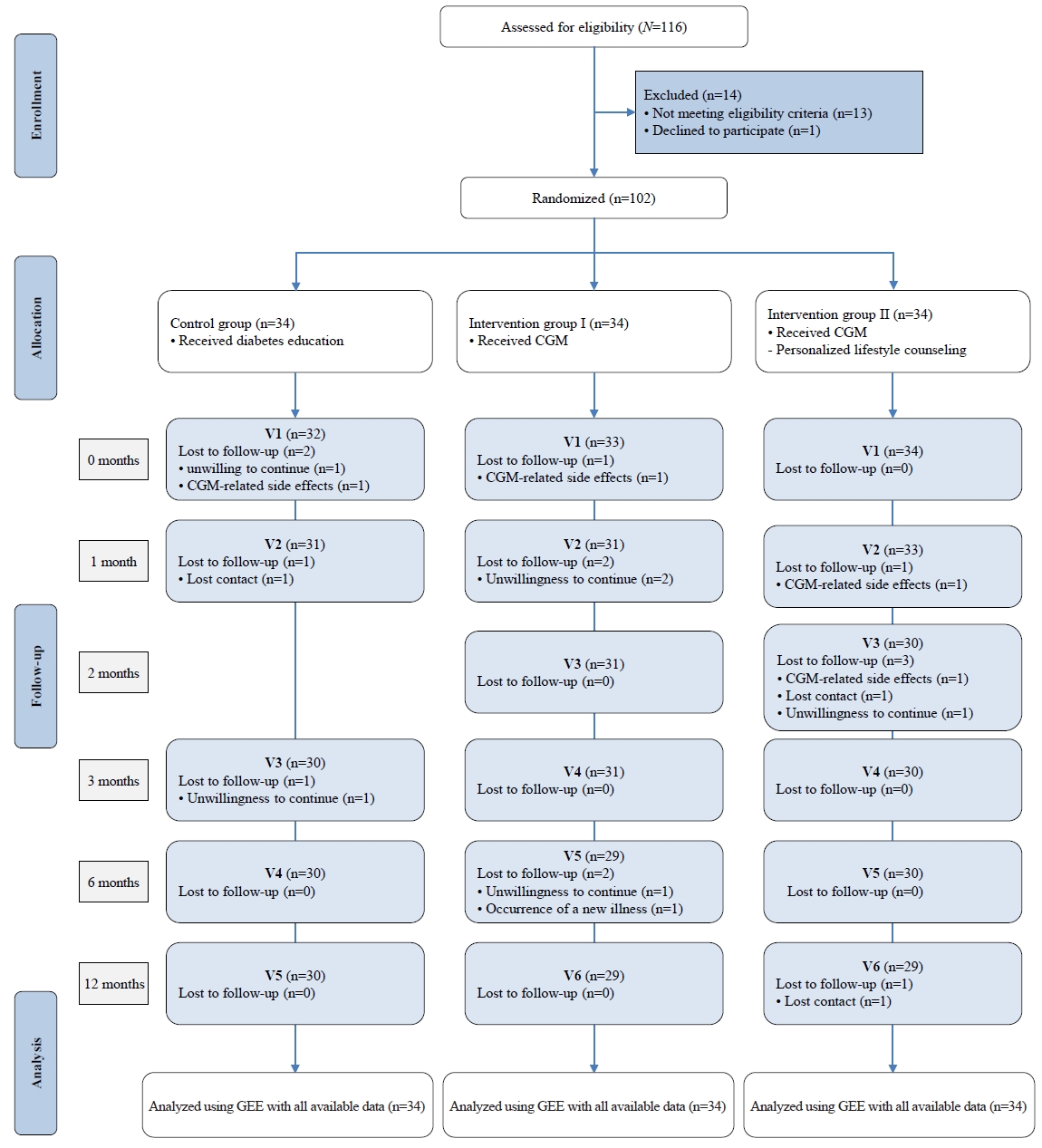
This three-arm randomized controlled trial was conducted in South Korea from June 2023 to November 2024. Participants were assigned to CGM alone (Intervention I, n=34), CGM-guided personalized lifestyle coaching (Intervention II, n=34), or standard diabetes education (control, n=34). The intervention lasted 3 months, with assessments at baseline and at 3, 6, and 12 months. Data were analyzed using generalized estimating equations.
Results
At 3 months, glycated hemoglobin (HbA1c) and fasting plasma glucose (FPG) levels were significantly lower in both intervention groups than in the control group. Compared with the control group, HbA1c was lower by 0.78 percentage points in Intervention I (p=.008) and by 1.12 percentage points in Intervention II (p<.001). At 3 months, FPG was lower than in the control group by 34.05 mg/dL in Intervention I (p=.001) and by 34.77 mg/dL in Intervention II (p<.001). At 6 months, TBR70 (time below range <70 mg/dL) was lower in Intervention I than in Intervention II (adjusted mean difference=–2.18, p=.010), whereas TAR180 (time above range >180 mg/dL) was lower in Intervention II than in the control group and Intervention I by 7.85 and 8.28 percentage points, respectively (both p=.004).
Conclusion
CGM-guided personalized lifestyle coaching improved glycemic control and reduced hyperglycemic exposure in patients with T2DM. Real-time glucose data may support individualized lifestyle counseling and sustained diabetes self-management. This study was retrospectively registered with the Clinical Research Information Service (CRIS) of the Republic of Korea (KCT0008872) on 16 October 2023.
- 1,157 View
- 90 Download
- The actor-partner interdependence mediation model of infertility-related stress and subjective happiness in infertile couples: the mediating role of dyadic coping
- Eun Jin Kim, Ju-Hee Nho
- J Korean Acad Nurs 2026;56(3):421-433. Published online August 11, 2026
- DOI: https://doi.org/10.4040/jkan.26047
-
Abstract
PDFePub
- Purpose
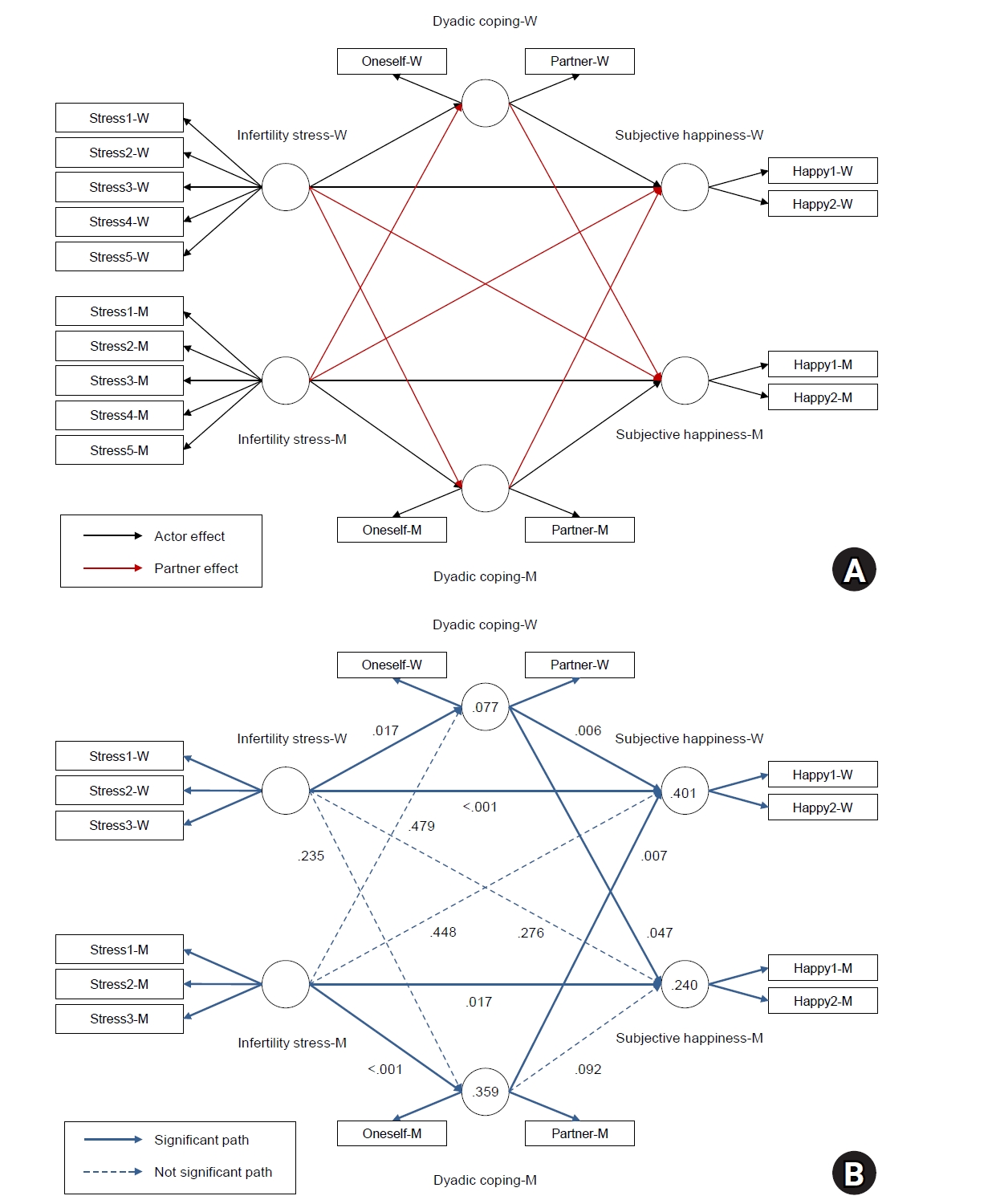
This study aimed to identify the mediating effect of dyadic coping and the actor–partner effects of infertility-related stress, dyadic coping, and subjective happiness among infertile couples by applying the actor–partner interdependence mediation model.
Methods
A total of 115 infertile couples, comprising women diagnosed with primary infertility and their spouses, participated in an online survey. Data were collected between November 17, 2022 and January 9, 2023, and analyzed using IBM SPSS Statistics version 25.0 and SmartPLS version 4.0.9.2 with the path weighting scheme. Bootstrapping with 5,000 resamples was performed to estimate 95% confidence intervals.
Results
Significant correlations were observed between infertile women and their spouses in infertility-related stress, dyadic coping, and subjective happiness, indicating mutual psychological influence within couples. Infertility-related stress in both women and spouses had actor effects on their own dyadic coping and subjective happiness. Women’s dyadic coping had an actor effect on their own subjective happiness, whereas spouses’ dyadic coping had a partner effect on women’s subjective happiness. Among women with infertility, dyadic coping significantly mediated the association between infertility-related stress and subjective happiness. A significant partner-mediated effect was also observed for women’s subjective happiness, whereas no significant mediating effect was found for spouses’ own subjective happiness.
Conclusion
Infertility-related stress was associated with subjective happiness through dyadic coping among women with infertility. In addition, spouses’ infertility-related stress was indirectly associated with women’s subjective happiness through spouses’ dyadic coping. These findings suggest that interventions designed to strengthen dyadic coping may help reduce infertility-related stress and improve subjective happiness among infertile couples.
- 777 View
- 54 Download
- Psychological reactance to anti-smoking campaigns in designated smoking areas among female smokers in their 20s and 30s: a quasi-experimental study
- Hyeonji Mun, Soontae An, Hyekyeong Kim
- J Korean Acad Nurs 2026;56(3):294-305. Published online August 10, 2026
- DOI: https://doi.org/10.4040/jkan.25177
-
Abstract
PDFePub
- Purpose
This study aimed to determine whether placing anti-smoking campaign messages in designated smoking areas elicits psychological reactance among female smokers and to assess whether message framing (controlling vs. non-controlling) moderates the association between psychological reactance and intention to quit smoking.
Methods
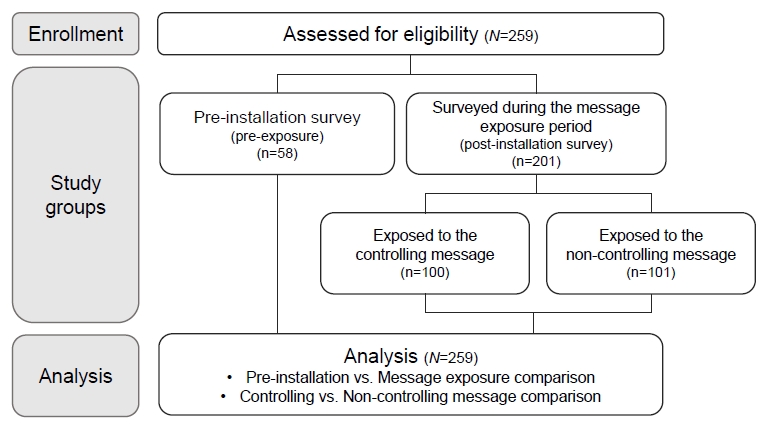
A quasi-experimental survey was conducted with 259 female smokers. Of these, 58 participants completed the survey before exposure to smoking-cessation messages, and 201 completed the survey after exposure. Among the exposed participants, 100 were assigned to the controlling condition and 101 to the non-controlling condition. Measures included psychological reactance, intention to quit smoking, trait reactance, smoking disclosure, and smoking-related covariates. Data were analyzed using analysis of covariance and Hayes’ PROCESS Model 1, with statistical significance set at p<.05.
Results
Smokers exposed to anti-smoking messages within designated smoking areas reported higher psychological reactance (mean±standard deviation: 2.10±0.94) than those not exposed (1.81±0.77), with a significant between-group difference (p=.017). Simple slope analysis revealed that psychological reactance was negatively associated with quit intention under controlling messages (B=–0.20, p=.031), but not under non-controlling messages (B=–0.05, p=.591).
Conclusion
Exposure to anti-smoking messages within designated smoking areas was associated with increased psychological reactance toward smoking cessation. In contrast, autonomy-supportive, non-controlling messages attenuated this effect. These findings suggest that smoking areas may serve as strategic behavioral intervention points when campaigns employ context-sensitive, autonomy-supportive message framing. This study was registered with the Clinical Research Information Service (CRIS) of the Republic of Korea (KCT0012514) on 27 August 2026.
- 1,038 View
- 71 Download
- Regional imbalance in nursing workforce: a system dynamics approach focusing on wages and job attractiveness
- Sohyun Lee, Eun Kyoung Yun
- J Korean Acad Nurs 2026;56(3):344-357. Published online August 7, 2026
- DOI: https://doi.org/10.4040/jkan.26003
-
Abstract
PDFePub
- Purpose
This study used a system dynamics approach to analyze the feedback structure underlying regional imbalance in the nursing workforce in Korea and to evaluate the projected effects of policy interventions through simulation.
Methods
A system dynamics model was developed using literature and public statistics from the Graduate Occupation Mobility Survey and the Korean Statistical Information Service for 2009–2024. Model validity was assessed through sensitivity analysis and comparison with historical data from 2018–2022. Policy simulations covering 2020–2035 were conducted to compare interventions targeting wages and working conditions in Seoul and Jeonnam.
Results
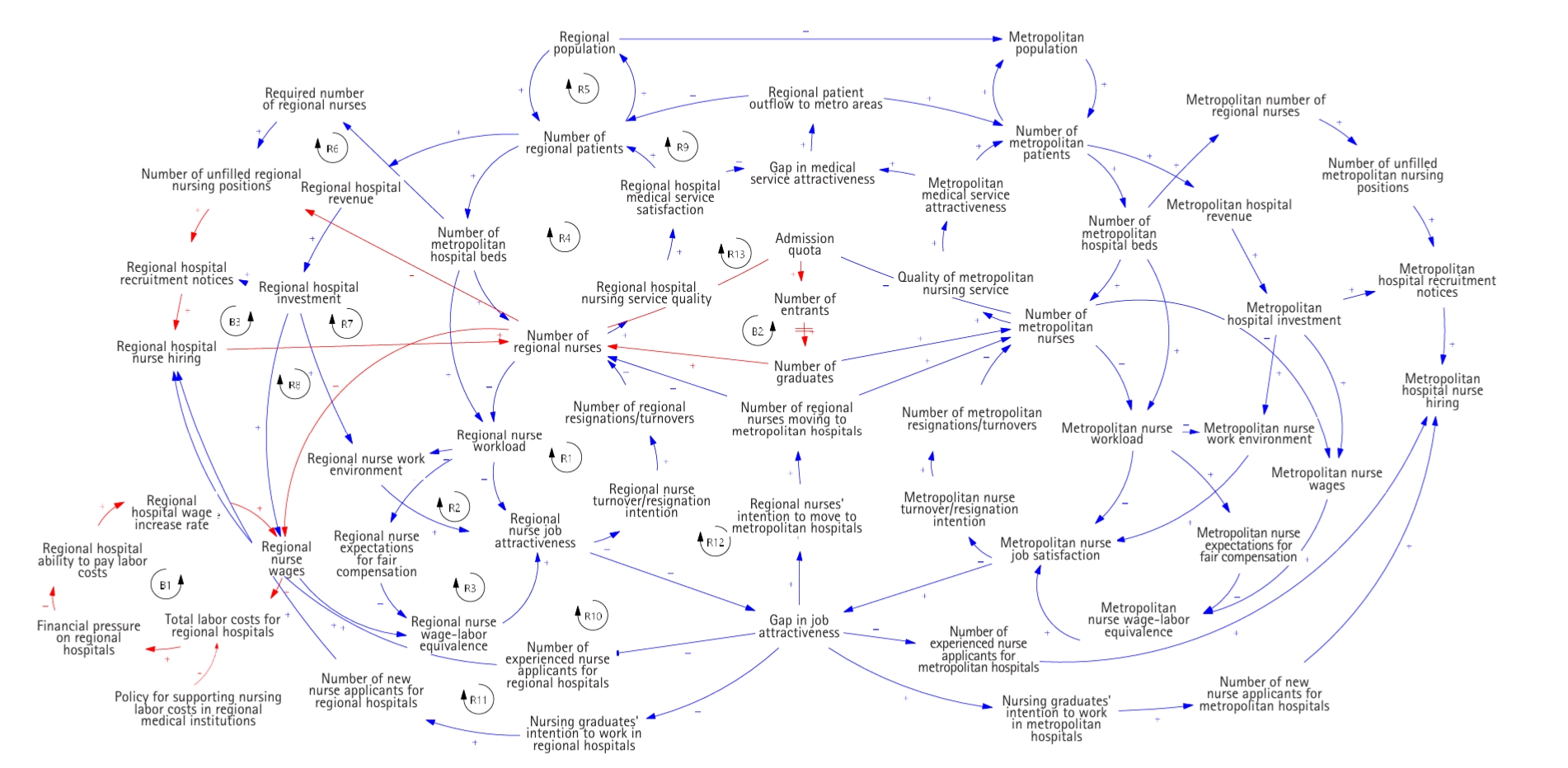
The analysis identified 16 feedback loops, comprising 13 reinforcing loops and three balancing loops, that formed a “success to the successful” structure dominated by a reinforcing cycle of high turnover. In the baseline simulation, the regional gap widened through 2035. Single-factor scenarios involving wage increases or improvements in working conditions had limited effects, whereas high-intensity combined scenarios showed a synergistic effect that could reverse the projected imbalance.
Conclusion
Regional imbalance in the nursing workforce appears to be a structural problem that is unlikely to be resolved through single-factor policies. Sustained, high-intensity strategies that combine wage improvement with nonfinancial improvements in working conditions are likely needed to disrupt the reinforcing cycle and reduce the nursing workforce imbalance.
- 907 View
- 54 Download
- Development of a nurses’ situation awareness scale for clinical deterioration: a methodological study
- Hye Jin Kang, Yi Kyung Ha
- J Korean Acad Nurs 2026;56(3):370-381. Published online August 5, 2026
- DOI: https://doi.org/10.4040/jkan.26039
-
Abstract
PDFePub
- Purpose
This study aimed to develop a scale for assessing nurses’ situation awareness of clinical deterioration and to evaluate its validity and reliability.
Methods
This methodological study followed the scale-development guidelines of DeVellis and Thorpe. Item generation began with 44 items derived from 17 attributes identified through a hybrid-model concept analysis, which included a literature review and focus group interviews with 13 nursing experts. After content validity was evaluated by seven experts, 30 items were retained. A pilot test was then conducted with 20 hospital nurses to assess item comprehensibility. From August 30 to October 6, 2025, a total of 446 hospital nurses participated in the survey, and data from 440 respondents were analyzed. Construct validity was examined using exploratory and confirmatory factor analyses, along with convergent and discriminant validity testing. Internal consistency was evaluated using Cronbach’s α and McDonald’s ω.
Results
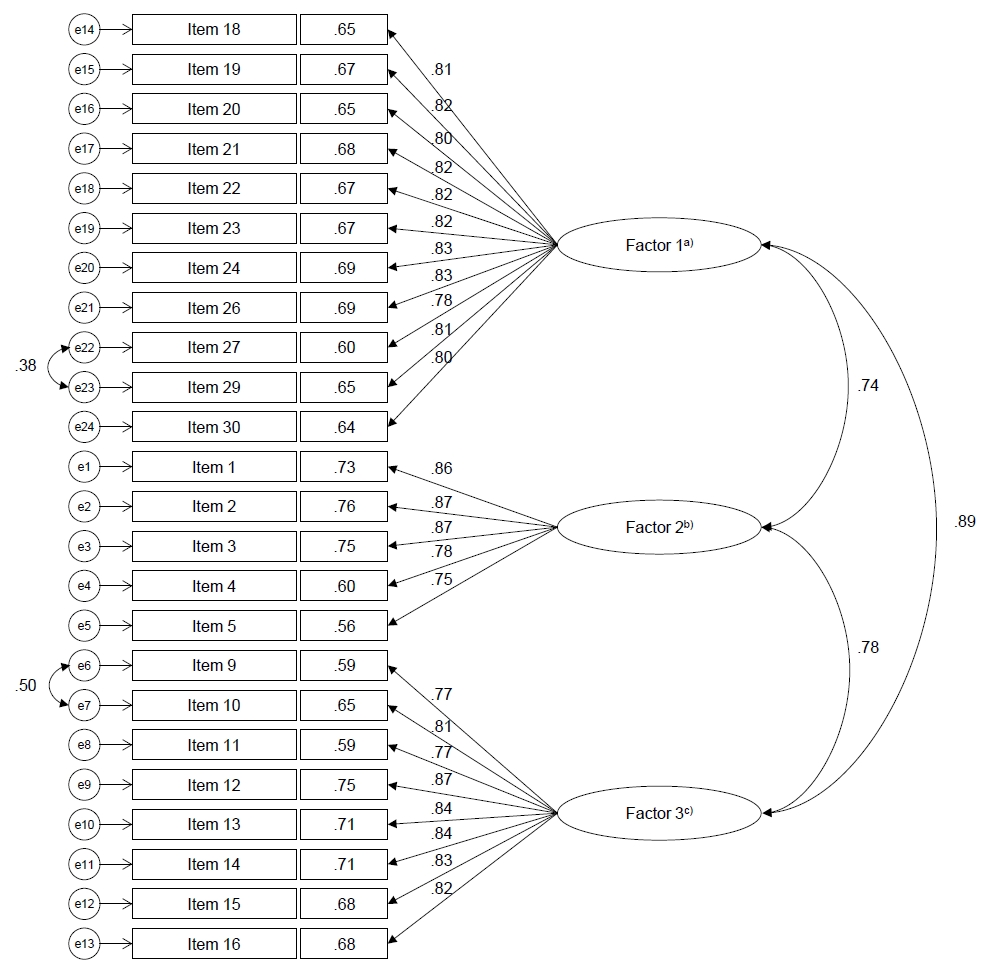
Exploratory factor analysis yielded a three-factor model, which showed acceptable fit in confirmatory factor analysis. The final instrument comprised 24 items across three factors, was scored on a 5-point Likert scale, and was named the Nurses’ Situation Awareness Scale for Clinical Deterioration (NSAS-CD). The scale showed high internal consistency, with Cronbach’s α of .98 and McDonald’s ω of .98.
Conclusion
The NSAS-CD demonstrated acceptable validity and reliability for assessing nurses’ situation awareness of clinical deterioration. Further research is needed to evaluate its generalizability across diverse clinical settings and to establish standardized criteria for clinical deterioration.
- 985 View
- 116 Download
- Job analysis of nurses in acute psychiatric intensive care units using the DACUM method: a cross-sectional study
- Yun Ju Lee, Hee Kyung Kim, Jinhee Yoo, Sukja Kim, Jungeun Shin, Kyoungduck Park, Bunsun Cho
- J Korean Acad Nurs 2026;56(3):382-392. Published online August 3, 2026
- DOI: https://doi.org/10.4040/jkan.26037
-
Abstract
PDFePub
- Purpose
This study systematically analyzed the job duties of nurses in acute psychiatric intensive care units using the Developing A Curriculum (DACUM) technique and identified the core job structure that reflects the characteristics of acute mental health nursing.
Methods
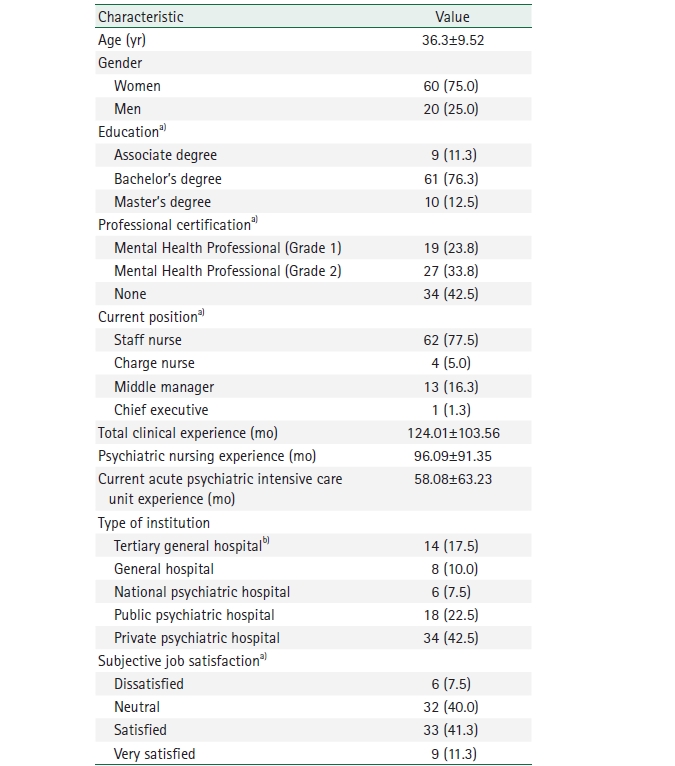
This descriptive cross-sectional study used a DACUM workshop conducted in 2025 to identify job duties. The DACUM committee included one job analysis expert, one coordinator, and eight acute psychiatric nurses. Content validity was verified by eight experts using an item-level content validity index of ≥0.78. A total of 80 nurses assessed task importance, difficulty, and frequency. Data were analyzed using descriptive statistics and the determinant coefficient.
Results
The DACUM analysis identified a structured framework consisting of 10 duties and 39 tasks. “Emergency and crisis management” had the highest determinant coefficient, followed by “therapeutic milieu management,” “psychosocial interventions,” and “education and professional development.” At the task level, crisis intervention and response, physical emergency nursing care, and management of safety incident recurrence were prioritized.
Conclusion
DACUM-based job analysis clarified the structured roles of nurses in acute psychiatric intensive care units and highlighted job characteristics centered on emergency management and safety. These findings provide foundational data for standardizing nursing roles, establishing staffing strategies, and developing specialized clinical education programs for acute psychiatric care.
- 684 View
- 65 Download
- Concept mapping study of positive patient experiences among family members of nursing home residents in South Korea
- Hyoungshim Choi, InJa Choi, Jui Kim
- J Korean Acad Nurs 2026;56(3):318-330. Published online July 29, 2026
- DOI: https://doi.org/10.4040/jkan.26021
-
Abstract
PDFePub
- Purpose
This study focused on identifying key components and dimensions of positive patient experiences perceived by family members of nursing home residents in South Korea, which may inform strength-based quality improvement in nursing home care.
Methods
Data were collected from May 8, 2023, to July 18, 2023, through interviews with 19 family members of nursing home residents aged 65 years or older who had lived in the facility for at least 30 days. Interview data were used to develop empirical statements on the nature of residents’ experiences as perceived by family members. These data were then analyzed using concept mapping to identify components of positive patient experiences from the perspectives of family members of nursing home residents in Korea.
Results
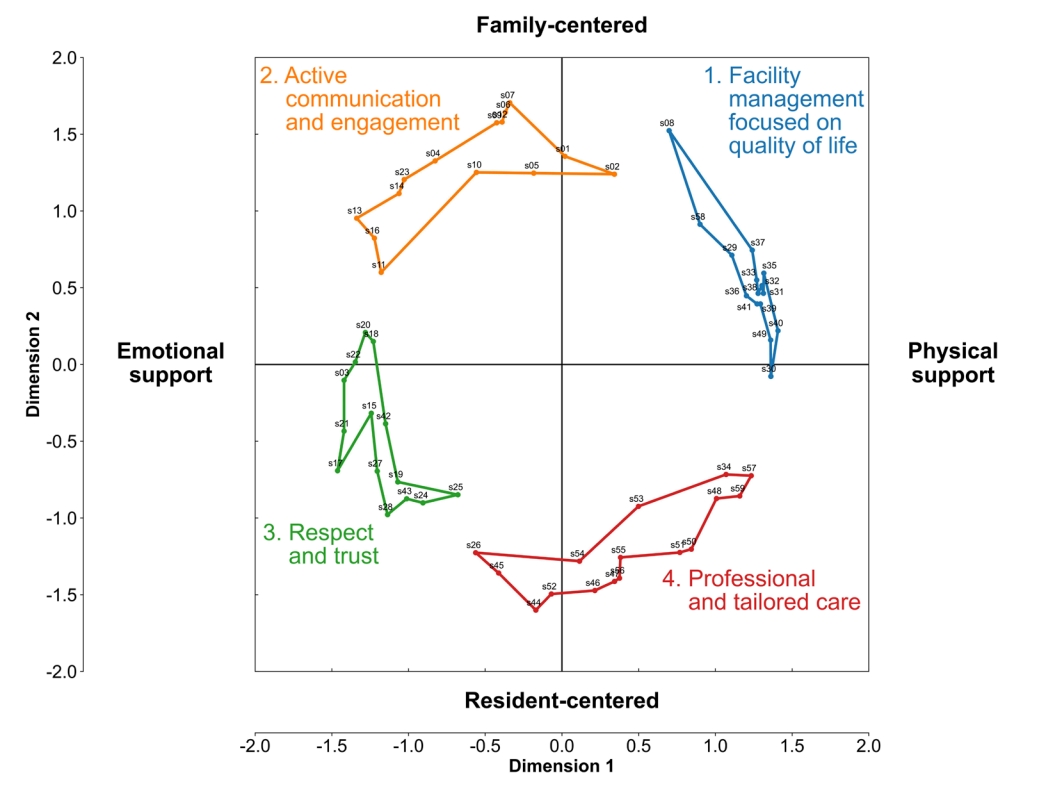
Multidimensional scaling and hierarchical cluster analysis yielded 59 core statements, two dimensions, and four clusters of positive patient experiences. The two dimensions were type of support (physical vs. emotional) and centrality of care (resident-centered vs. family-centered). The four clusters of positive patient experiences were “facility management focused on quality of life,” “active communication and engagement,” “respect and trust,” and “professional and personalized care.”
Conclusion
These findings provide insight into the experiences valued by family members of older adults in nursing homes. The concept map may inform development of a patient experience index tailored to family members of nursing home residents.
- 835 View
- 50 Download
- Effects of a health literacy program on COVID-19 awareness and preventive behaviors among older adults in Bangkok, Thailand: a quasi-experimental study
- Walaya Tupanich, Sasawan Attaworakun, Suteekarn Chaiyalap, Nattanan Wattanawikan
- J Korean Acad Nurs 2026;56(3):306-317. Published online July 28, 2026
- DOI: https://doi.org/10.4040/jkan.25147
-
Abstract
PDFePub
- Purpose
This study examined the effectiveness of a health literacy (HL) enhancement program in improving awareness of and preventive behaviors related to coronavirus disease 2019 (COVID-19) among older adults in an urban community in Bangkok, Thailand.
Methods
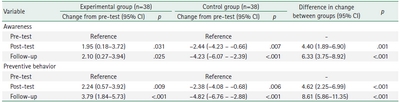
This quasi-experimental study included 76 older adults in Dusit District, Bangkok. Eight participants were lost to follow-up; however, all 76 participants (38 per group) were included in the primary analysis using all available observations. The intervention was based on Pengjuntr’s V-shape HL model, which includes six domains: access, understanding, interactive communication, decision-making, behavior change, and advocacy. The program was delivered through group sessions, LINE-based communication, community activities, and home visits. Data were collected at pre-test (baseline), post-test (4 weeks), and follow-up (12 weeks) using questionnaires. Outcomes were analyzed using linear mixed-effects models. This study was retrospectively registered with the Thai Clinical Trials Registry (TCTR20260502013).
Results
At post-test, the experimental group had significantly higher COVID-19 awareness and preventive behavior scores than the control group (p<.001). Within-group analysis showed significant improvements in both COVID-19 awareness and preventive behavior at post-test and follow-up. Significant between-group differences were also observed at follow-up (p<.001), with higher scores in the experimental group.
Conclusion
The intervention group receiving the HL enhancement program showed significant improvements in both COVID-19 awareness and preventive behaviors, which were sustained through follow-up. These findings support the use of nurse-led, community-based HL interventions with behavioral reinforcement to promote COVID-19 prevention among urban older adults.
- 899 View
- 66 Download
- Effects of a hybrid delirium nursing competency enhancement program using the metaverse and standardized patients for intensive care unit nurses: a quasi-experimental study
- Juwon Yun, Mi Yang Jeon
- J Korean Acad Nurs 2026;56(3):331-343. Published online July 27, 2026
- DOI: https://doi.org/10.4040/jkan.26013
-
Abstract
PDFePub
- Purpose
This study evaluated the effects of a hybrid simulation program using the metaverse and standardized patients to enhance delirium nursing competency among intensive care unit (ICU) nurses. Outcomes included delirium nursing knowledge, attitudes, and performance confidence.
Methods
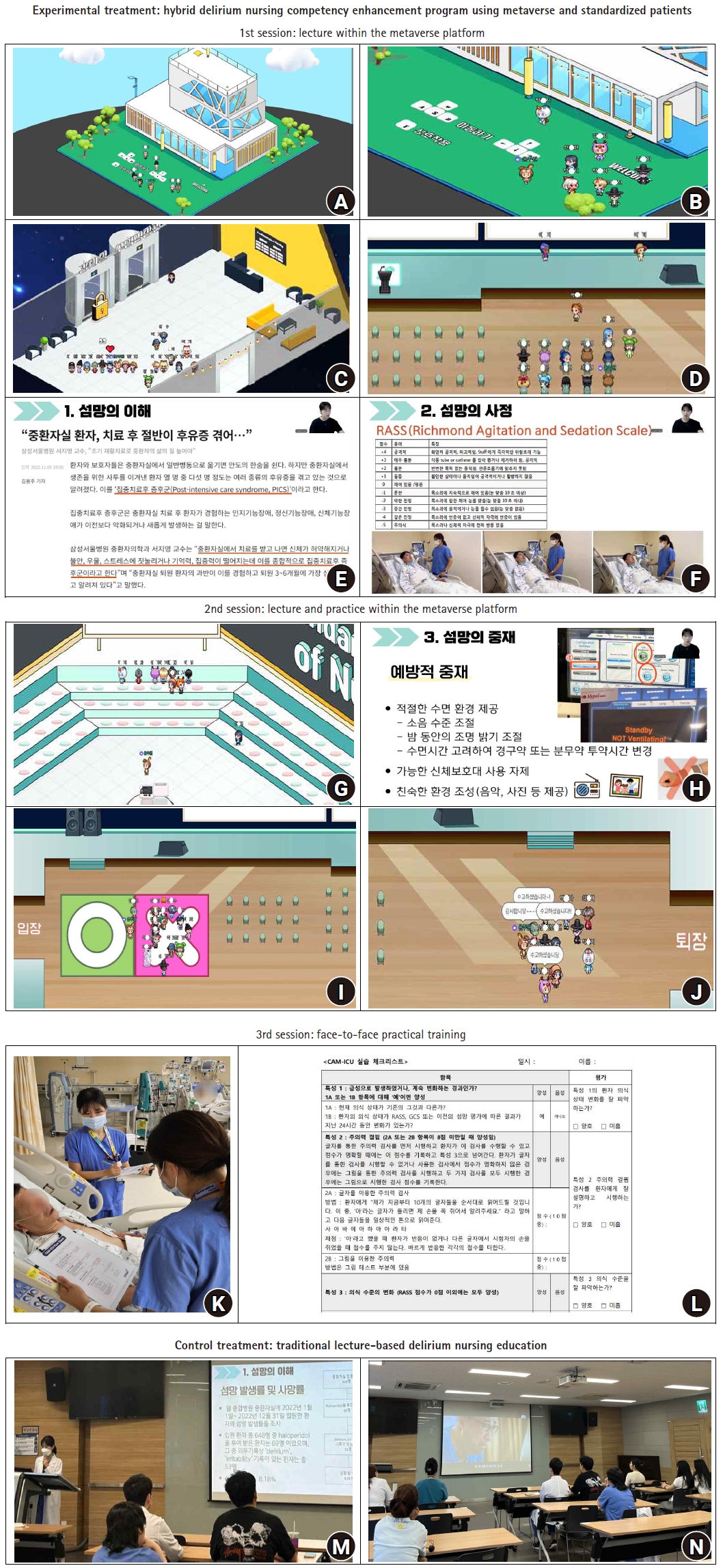
A quasi-experimental study with cluster allocation was conducted among 52 ICU nurses, including 28 in the experimental group and 24 in the control group. Data were collected from July 8 to August 28, 2024. The experimental group participated in a hybrid delirium nursing competency simulation program comprising two metaverse-based sessions (lectures, quizzes, discussions, and practice) followed by a face-to-face standardized patient simulation session. The control group received a conventional face-to-face lecture on delirium nursing. Data were analyzed using the chi-square test, the Fisher exact test, the independent t-test, and the paired t-test with IBM SPSS Statistics ver. 27.0.
Results
After the intervention, the experimental group demonstrated significantly greater improvement in delirium nursing attitude (t=2.05, p=.046) and performance confidence (t=3.35, p=.002) compared with the control group. However, the change in delirium nursing knowledge did not differ significantly between groups (t=0.71, p=.483).
Conclusion
The hybrid delirium nursing competency program using the metaverse and standardized patients was associated with greater positive changes in ICU nurses’ delirium nursing attitudes and performance confidence than conventional lecture-based education. This immersive and interactive hybrid simulation approach may be a sustainable continuing education strategy for strengthening delirium nursing competency among ICU nurses.
- 1,029 View
- 79 Download
- Latent profile analysis of health and fatigue recovery among shift work nurses and differential associations with participation in a shift work improvement pilot project: a descriptive cross-sectional study
- Eunhee Jung, Eunhye Kim, Suryang Seo, Sunyoung Lee, Sora An, Hyejin Kim, Ye Seul Kim, Youjin Kim, Mijeong Park, Hyoun-Joong Kong, Saram Lee, Yeong Joo Hong, Minho Jung
- J Korean Acad Nurs 2026;56(3):358-369. Published online July 23, 2026
- DOI: https://doi.org/10.4040/jkan.26006
-
Abstract
PDFePub
- Purpose
This study aimed to identify latent profiles of shift-work nurses according to perceived health, fatigue, and recovery levels and to examine differences across profiles in work-related outcomes, including sleep quality, work-life balance, job satisfaction, and turnover intention. It also examined whether patterns associated with participation in a shift-work improvement pilot project differed by latent profile.
Methods
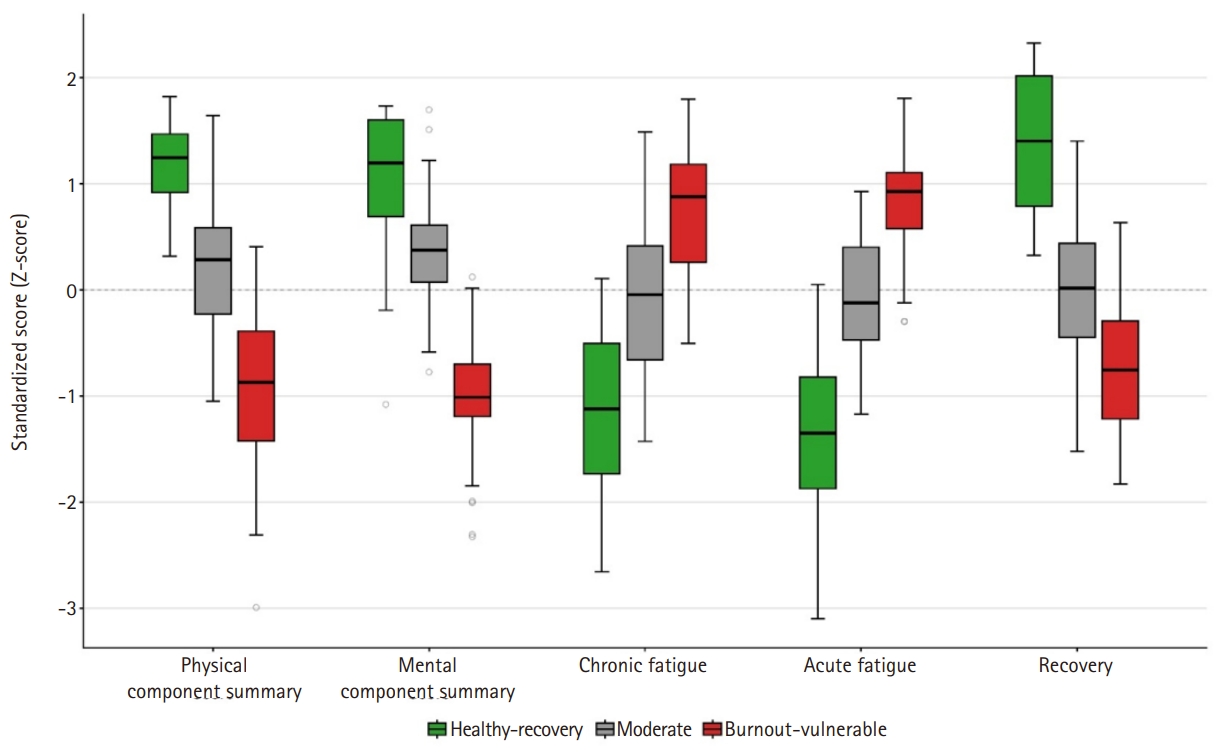
This descriptive cross-sectional study included 120 shift-work nurses working in pediatric wards at a tertiary hospital in South Korea. Data were collected from January 14 to 24, 2025. Latent profile analysis was performed using the 36-Item Short Form Health Survey and the Occupational Fatigue Exhaustion Recovery Scale. Differences in outcomes by latent profile membership and pilot-project participation status at the time of data collection were examined using two-way analysis of covariance, with age included as a covariate.
Results
Three latent profiles were identified: Healthy-Recovery (20.8%), Moderate (41.7%), and Burnout-Vulnerable (37.5%). Significant differences among profiles were observed in sleep quality (F=37.37, p<.001), work-life balance (F=50.86, p<.001), job satisfaction (F=12.29, p<.001), and turnover intention (F=12.11, p<.001). A significant interaction between latent profile membership and pilot-project participation was observed for job satisfaction (F=4.77, p=.010, partial η²=.078). Pilot-project participation was associated with significantly higher job satisfaction only in the Healthy-Recovery profile (p=.005).
Conclusion
Associations between pilot-project participation and work-related outcomes differed according to nurses’ health, fatigue, and recovery profiles. These findings indicate that heterogeneity among shift-work nurses should be considered when interpreting work-related outcomes and designing tailored support strategies.
- 874 View
- 83 Download
- Effects of a practitioner-led empowerment program for low-income social service recipients in South Korea: a quasi-experimental study
- Myung Sun Hyun, Eunyoung Park, Hyuncheol Kang, Mi-hye Kim
- J Korean Acad Nurs 2026;56(2):276-288. Published online May 26, 2026
- DOI: https://doi.org/10.4040/jkan.26015
-
Abstract
PDFePub
- Purpose
This study aimed to evaluate the effects of a practitioner-led empowerment program on self-sufficiency motivation, self-esteem, and self-efficacy among low-income service recipients at self-sufficiency centers.
Methods
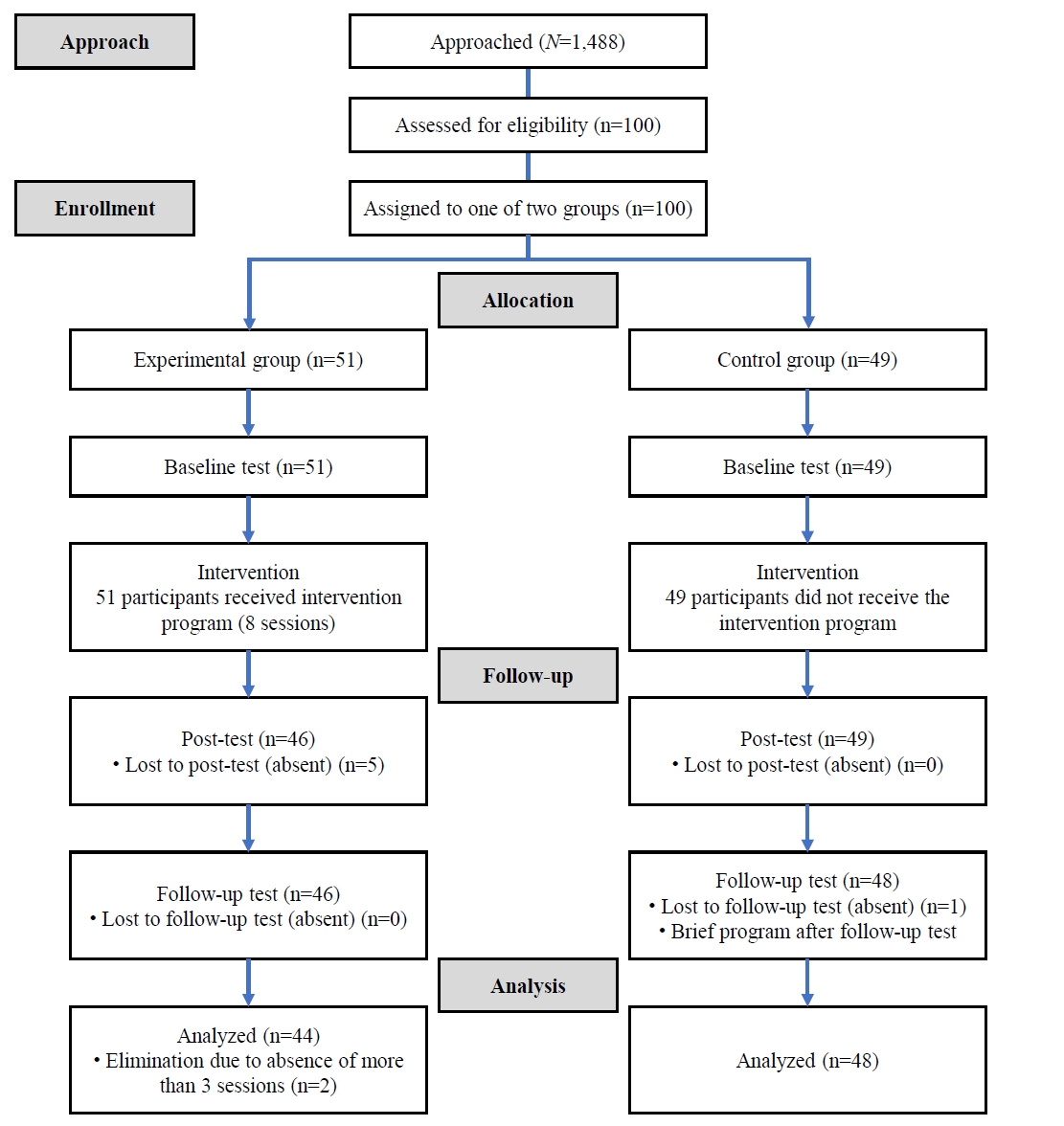
A quasi-experimental repeated-measures design was used. Participants were recipients of social services from 11 local self-sufficiency centers in Gyeonggi-do, South Korea. In total, 100 participants were recruited, with 51 assigned to the experimental group and 49 assigned to the control group. The experimental group received an eight-session program delivered by center practitioners who had been trained by mental health nurses, whereas the control group received usual services. Self-sufficiency motivation, self-esteem, and self-efficacy were assessed at three time points: baseline (pretest: T0), immediately after the intervention (post-test: T1), and 4 weeks after the intervention (follow-up: T2).
Results
Using generalized estimating equations, participants in the experimental group showed significantly greater improvements than those in the control group at both T1 and T2 in self-sufficiency motivation (T1: B=1.61, p=.030; T2: B=2.88, p<.001), self-esteem (T1: B=2.77, p<.001; T2: B=2.78, p<.001), and self-efficacy (T1: B=3.95, p=.004; T2: B=4.19, p<.001).
Conclusion
The practitioner-led program is associated with significant short-term improvements in psychosocial determinants of self-sufficiency among low-income service recipients. These findings may inform the development of community nursing interventions that support the psychosocial foundations of independent living in this population and provide a basis for training programs designed to strengthen the capacity of practitioners at local self-sufficiency centers (Clinical Research Information Service of Korea registration number: KCT0010027; registration date: December 12, 2024).
- 1,253 View
- 146 Download
- Lived experiences of correctional officers in treating drug offenders: a hermeneutic phenomenological approach
- Hyun-Ok Jung
- J Korean Acad Nurs 2026;56(2):233-246. Published online May 26, 2026
- DOI: https://doi.org/10.4040/jkan.25166
-
Abstract
PDFePub
- Purpose
This study explored the lived experiences of correctional officers working with individuals convicted of drug offenses.
Methods
Data were collected through individual in-depth interviews and observations with 10 correctional officers who had experience working with individuals convicted of drug offenses. Data were collected from September 15 to November 2, 2025, and analyzed using van Manen’s hermeneutic phenomenological approach to identify essential themes.
Results
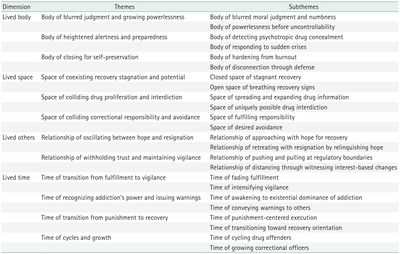
The themes were interpreted within four existential grounds: body, space, other, and time. The lived body was experienced as a body of blurred judgment and growing powerlessness, a body of heightened alertness and preparedness, and a body that closes itself off for self-preservation. The lived space was experienced as a space in which recovery stagnation and potential coexist, a space in which drug proliferation and interdiction collide, and a space in which correctional responsibility and avoidance conflict. The lived other was experienced as a relationship oscillating between hope and resignation and as a relationship characterized by withheld trust and sustained vigilance. The lived time was experienced as a transition from fulfillment to vigilance, a time of recognizing the power of addiction and issuing warnings, a transition from punishment to recovery, and a time of cycles and growth.
Conclusion
This study shows that working with individuals convicted of drug offenses is not merely the execution of regulation and control, but an existential practice of care in which correctional officers continually attune themselves to sensing risk, negotiating relationships, and sustaining the possibility of recovery.
- 1,146 View
- 115 Download
Review Paper
- Effectiveness of mobile health interventions to improve medication adherence for patients with cardiovascular disease: a systematic review and meta-analysis
- Yeoungsuk Song, Seurk Park, Yuyoung Lee, Sohye Lee
- J Korean Acad Nurs 2026;56(2):148-165. Published online May 22, 2026
- DOI: https://doi.org/10.4040/jkan.26016
-
Abstract
PDFePub
- Purpose
This study systematically reviewed and synthesized the evidence on the effectiveness of mobile health (mHealth) interventions in improving medication adherence among patients with cardiovascular disease.
Methods
This systematic review included randomized controlled trials that evaluated the effects of mHealth interventions on medication adherence among patients with cardiovascular disease. PubMed, the Cochrane Library, CINAHL, and Embase were searched for peer-reviewed studies and grey literature published in English between January 1, 2013, and July 31, 2025. The Cochrane Risk of Bias 2 (RoB 2) tool was used to assess the risk of bias in the included studies. R software ver. 4.5.2 was used to perform the meta-analysis.
Results
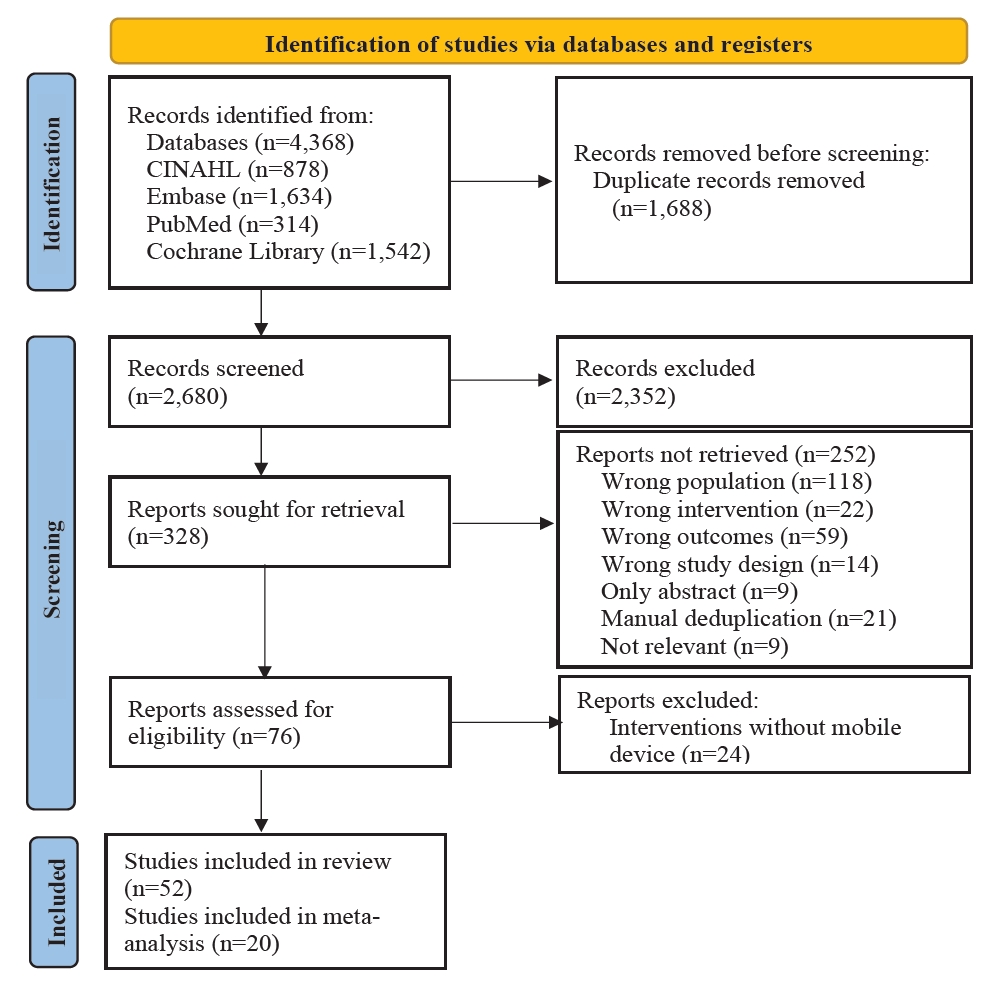
Fifty-two studies were included in the systematic review, of which 20 were included in the meta-analysis. The pooled analysis demonstrated a significant improvement in medication adherence among patients with cardiovascular disease receiving mHealth interventions, with a moderate to large effect size (Hedges’ g=0.72; 95% confidence interval, 0.20–1.25; p<.001), despite substantial heterogeneity (I2=97%). However, a considerable proportion of the included studies were assessed as having a high risk of bias, which may limit the internal validity of the findings. Subgroup analyses indicated that the effects of mHealth interventions on medication adherence did not differ significantly according to intervention type, duration, or outcome measurement tools.
Conclusion
mHealth interventions appear to be effective in improving medication adherence among patients with cardiovascular disease. However, these findings should be interpreted with caution because of the high risk of bias and substantial heterogeneity among the included studies. Future research should explore the use of emerging technologies, such as artificial intelligence and virtual reality, to address medication non-adherence (PROSPERO registration number: CRD42023450502).
- 3,028 View
- 213 Download
Research Papers
- Nursing management competencies among nurses in national specialized hospitals in Korea: a mixed-methods study
- Jiyoung Choi, Jee-In Hwang
- J Korean Acad Nurs 2026;56(2):190-205. Published online May 22, 2026
- DOI: https://doi.org/10.4040/jkan.25175
-
Abstract
PDFePub
- Purpose
This study aimed to examine nursing management competencies among nurses working in national specialized hospitals, to identify competency development needs and influencing factors, and to provide foundational data for the development of educational and competency-enhancement programs.
Methods
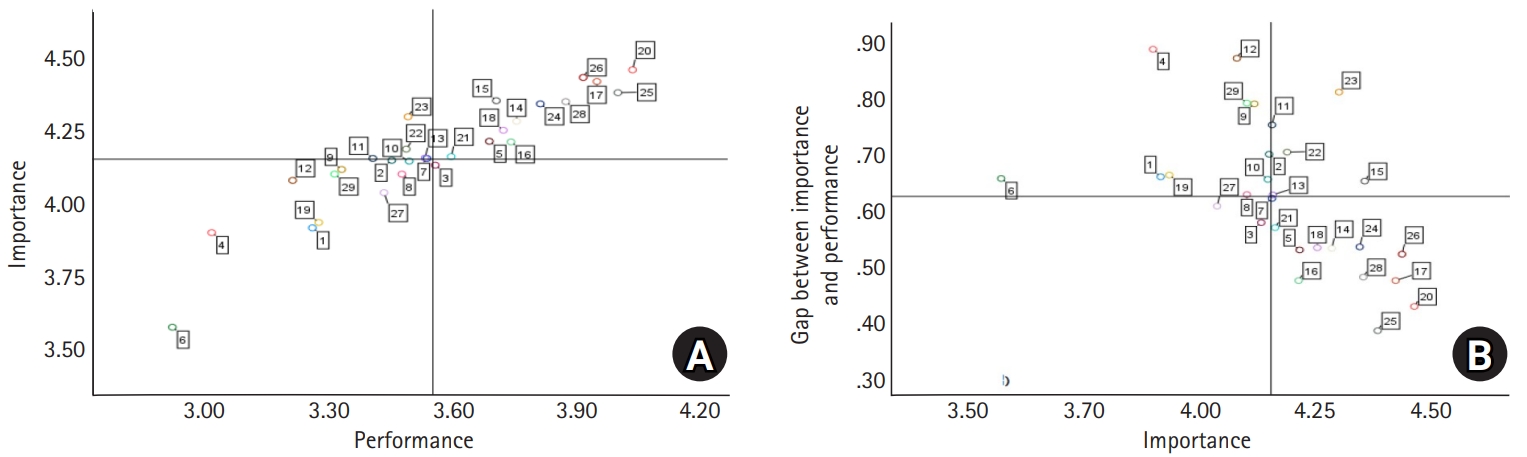
A mixed-methods design was employed. Quantitative data were collected via an online survey of 162 nurses from five national specialized hospitals from January 10 to February 10, 2025, and qualitative data were obtained through in-depth interviews with 20 participants from March 7 to April 16, 2025. Quantitative data were analyzed using descriptive statistics, independent t-tests, analysis of variance, importance–performance analysis, the Borich Needs Assessment, the Locus for Focus model, and multiple regression analysis. Qualitative data were analyzed using content analysis with ATLAS.ti.
Results
The mean performance score for nursing management competencies was 3.56±0.71 on a 5-point scale. Customer orientation received the highest score (4.03±0.78), whereas business and marketing received the lowest score (2.92±1.03). Across needs-assessment models, leadership, nursing ethics and law, quality improvement, and standard development consistently emerged as high-priority areas. In multiple regression analysis, the nursing work environment was the only factor significantly associated with nursing management competency performance (β=.33, p<.001). Qualitative content analysis corroborated these findings and identified three facilitator themes and three barrier themes.
Conclusion
Nursing management competency performance among nurses in national specialized hospitals was associated with the nursing work environment, including organizational conditions. These findings underscore the importance of organizational support and suggest that competency-based education should be redesigned to prioritize high-need competency areas. This study provides a foundation for developing educational interventions and programs to enhance nursing management capacity.
- 1,565 View
- 186 Download
- Development and evaluation of a health education program to enhance middle school students’ climate adaptation competencies: a nonequivalent control group pretest–posttest study in Korea
- Jiyu Hyun, Ju Hee Kim
- J Korean Acad Nurs 2026;56(2):179-189. Published online May 22, 2026
- DOI: https://doi.org/10.4040/jkan.25139
-
Abstract
PDFePub
- Purpose
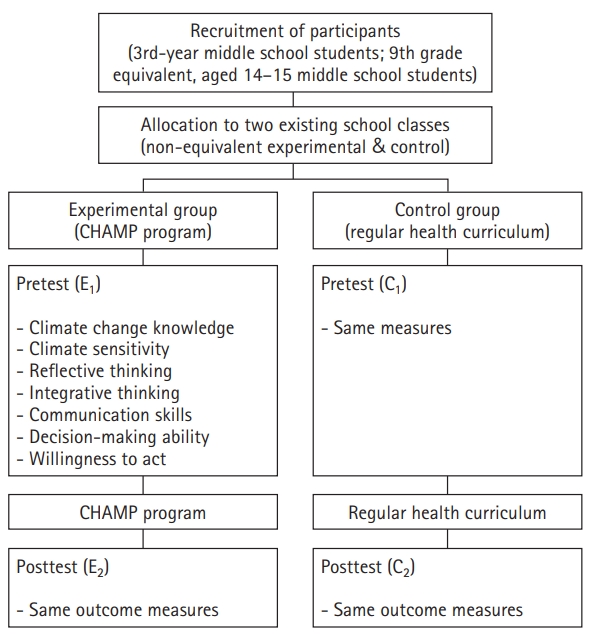
This study aimed to develop and evaluate the Climate and Health Action Mitigation Program (CHAMP), a health education intervention designed to enhance middle school students’ competencies for practicing climate adaptation behaviors in response to the health impacts of climate change.
Methods
A quasi-experimental pretest-posttest nonequivalent control group design was employed. Data were collected from October to December 2024. A total of 3rd-year middle school students; 9th grade equivalent, aged 14-15 students were assigned to either an experimental group that received the CHAMP intervention or a control group that received conventional health education. The CHAMP curriculum comprised six sessions developed using the ADDIE (Analysis, Design, Development, Implementation, and Evaluation) instructional design model and was aligned with the 2022 revised national health curriculum and the instructional hours stipulated in the School Health Act. Climate adaptation competency and its seven subdomains—climate-change knowledge, climate sensitivity, reflective thinking, integrative thinking, communication skills, decision-making ability, and willingness to act—were assessed before and after the intervention.
Results
Compared with the control group, the experimental group demonstrated statistically significant improvements (p<.01) in overall climate adaptation competency as well as in all seven subdomains. The largest improvements were observed in willingness to act, climate sensitivity, and climate-change knowledge. The CHAMP intervention was associated with meaningful improvements in students’ climate adaptation competencies, encompassing cognitive, behavioral, and attitudinal domains.
Conclusion
These findings support the feasibility and educational value of integrating climate–health content into the national curriculum. Future research should examine the scalability of CHAMP and evaluate its long-term sustainability and effects across diverse educational settings.
- 1,523 View
- 199 Download
- A structural equation model of respiratory infection prevention behaviors among elementary school teachers in South Korea: a cross-sectional study
- Yoon-Ji Lee, JONG-EUN LEE
- J Korean Acad Nurs 2026;56(2):262-275. Published online May 21, 2026
- DOI: https://doi.org/10.4040/jkan.26010
-
Abstract
PDFePub
- Purpose
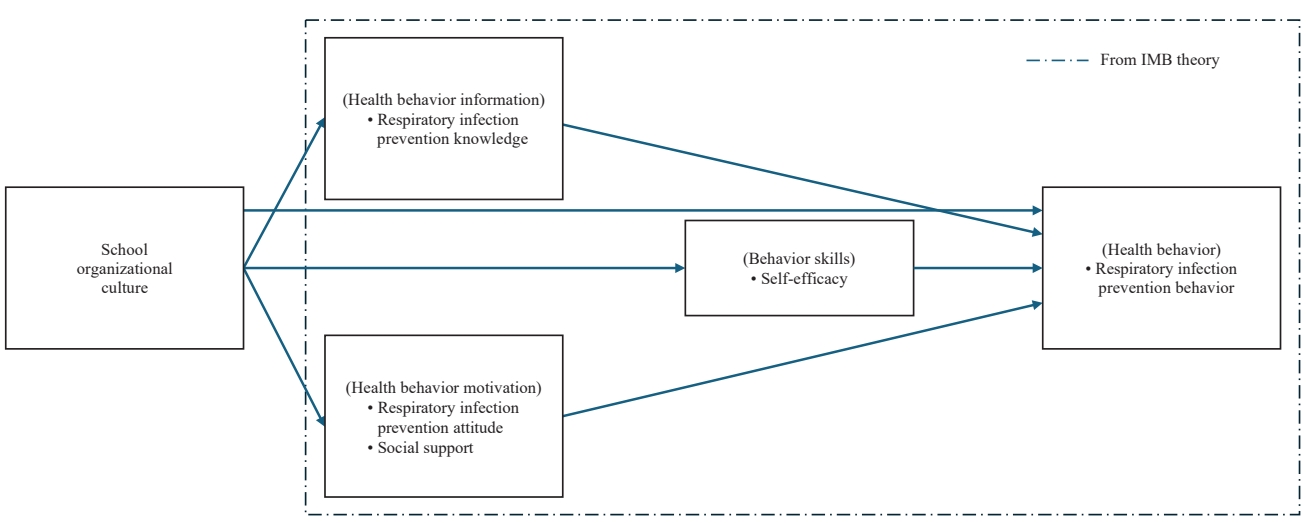
This study aimed to develop and test a structural equation model of respiratory infection prevention behaviors among elementary school teachers based on the Information–Motivation–Behavioral Skills model.
Methods
This study included 250 teachers who were currently working in elementary schools and had experience as homeroom teachers. Data were collected from December 18 to December 31, 2023 using self-reported questionnaires. The proposed model included school organizational culture as the exogenous variable and respiratory infection prevention knowledge, respiratory infection prevention attitude, social support, self-efficacy, and respiratory infection prevention behavior as endogenous variables. Data were analyzed using IBM SPSS for Windows ver. 24.0 and Smart PLS ver. 4.1.
Results
Of the 19 hypothesized paths in the research model, five were statistically significant. School organizational culture had a significant direct effect on respiratory infection prevention knowledge (β=.20, p=.041), social support had a significant direct effect on self-efficacy (β=.33, p=.001), and self-efficacy had a significant direct effect on respiratory infection prevention behaviors (β=.22, p=.021). Respiratory infection prevention attitude (direct: β=.23, p=.029; total: β=.26, p=.008) and school organizational culture (direct: β=.22, p=.017; total: β=.30, p=.002) had significant direct and total effects on respiratory infection prevention behaviors.
Conclusion
To enhance respiratory infection prevention behaviors among elementary school teachers, interventions should focus on strengthening positive attitudes toward infection prevention and improving self-efficacy. Organizational-level strategies, including establishing supportive school organizational cultures, promoting peer support among teachers, and sharing infection prevention practices within schools, are also needed to facilitate and sustain preventive behaviors.
- 1,157 View
- 119 Download
- Development of emergency nursing educational materials in Lao People's Democratic Republic: a methodological study
- Jina Oh, Eunsil Won, Seohyun Won, Sunmi Kim, Seryung Oh, Souksavanh Phanpaseuth, Anousone Sisoulath, Lamngeun Silavong
- J Korean Acad Nurs 2026;56(2):247-261. Published online May 21, 2026
- DOI: https://doi.org/10.4040/jkan.25174
-
Abstract
PDFePub
- Purpose
This study aimed to develop contextualized emergency nursing educational materials tailored to the Lao People’s Democratic Republic (Lao PDR). Emergency nurses in Lao PDR face challenges arising from the lack of standardized, culturally relevant learning resources. Existing materials are often adopted from other countries and do not adequately reflect local needs, contributing to inconsistencies in clinical practice. Developing locally tailored resources, supported by official development assistance, is therefore essential for improving emergency nursing education and practice.
Methods
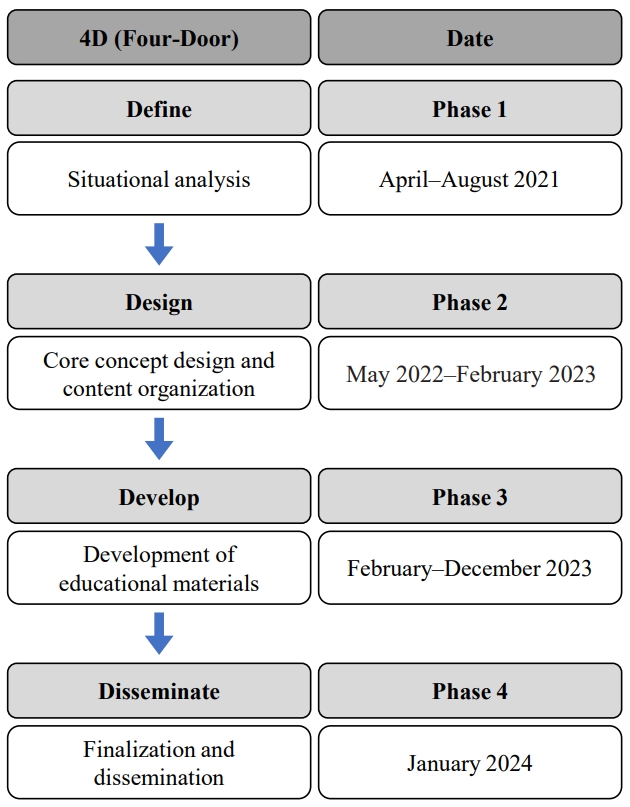
This study used a methodological design based on the Four-Door Model—Define, Design, Develop, and Disseminate—from 2021 to 2024. A situational analysis was conducted using a mixed-methods approach that included a quantitative survey of 70 nursing professionals and qualitative interviews with 52 stakeholders. Content validity and suitability were evaluated by a panel of six local experts using standardized validation forms and the Suitability Assessment of Materials (SAM).
Results
Ten emergency nursing domains were developed to address both universal principles, including triage protocols and life support interventions, and Lao PDR-specific challenges. Validity and suitability were supported by a SAM score of 77.3%, indicating clinical accuracy and cultural appropriateness. The 269-page coursebook was distributed to partner nursing colleges, three central hospitals, and international organizations.
Conclusion
This study developed the first comprehensive emergency nursing educational materials tailored to the Lao PDR context and written in the local language. These materials support continuing professional development and license renewal every 5 years. They also exemplify an international development paradigm that prioritizes recipient-country ownership and sustainable capacity building through collaborative knowledge creation.
- 1,214 View
- 114 Download
Review Paper
- Migrant health research in South Korea, 2010–2021: a scoping review
- Soo Jin Kang, Bok-Nam Seo
- J Korean Acad Nurs 2026;56(2):126-147. Published online May 19, 2026
- DOI: https://doi.org/10.4040/jkan.25152
-
Abstract
PDFePub
- Purpose
This scoping review mapped research trends in migrant health in Korea and evaluated their alignment with global priorities.
Methods
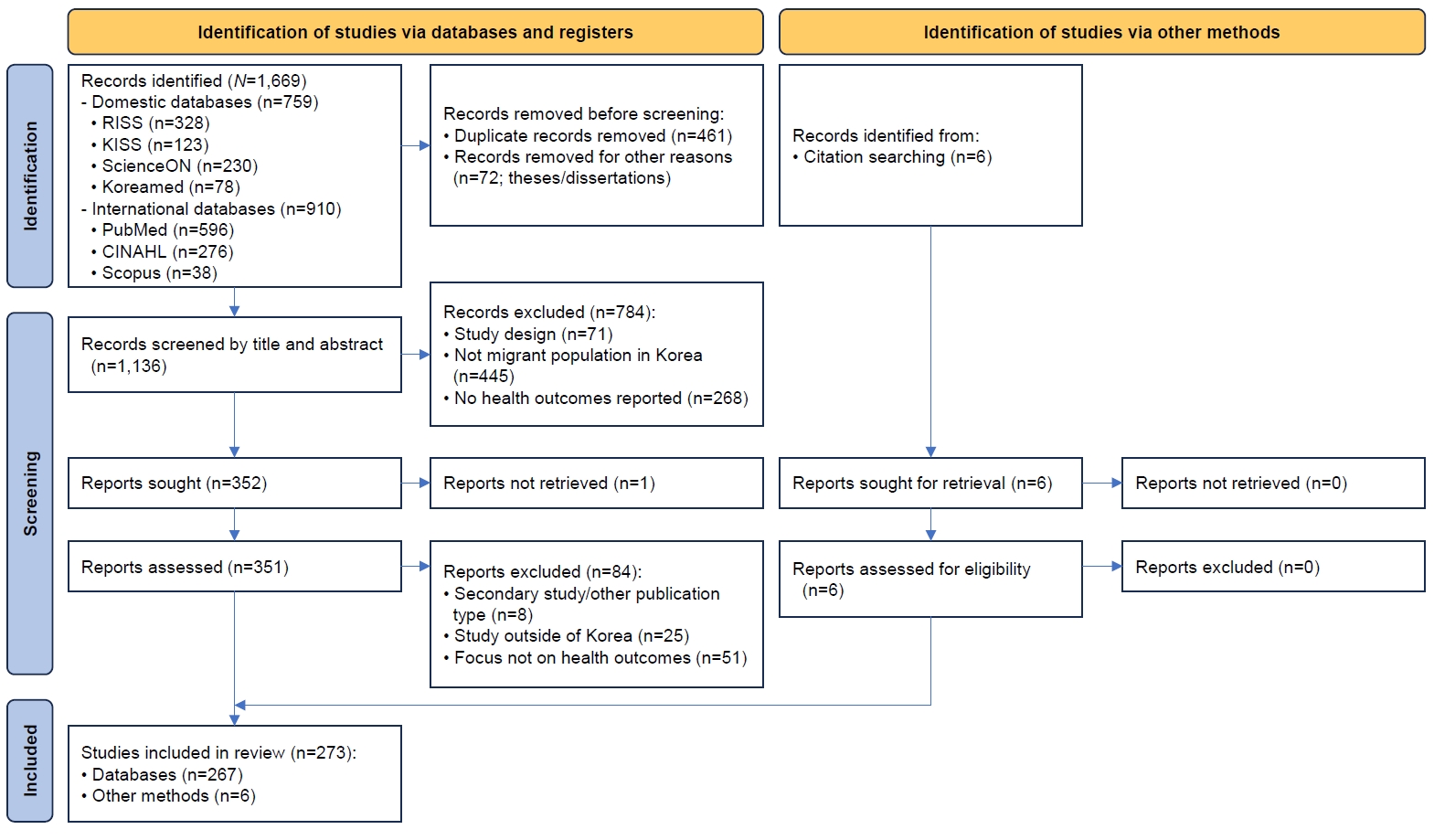
We conducted a scoping review using the Arksey and O’Malley framework. We searched PubMed, CINAHL, Scopus, KoreaMed, ScienceON, RISS, and KISS for articles published between 2010 and 2021, which defined the review period. The inclusion criteria were studies of adult migrants residing in Korea, primary empirical research, and academic journal articles with full text available in Korean or English. Two reviewers performed inductive coding and assigned each study to one primary subject area for frequency counts.
Results
Of 1,669 records, 273 studies met the inclusion criteria. Marriage-migrant women were the most frequently studied group (56.4%), followed by migrant workers (20.5%) and international students (7.0%). Ten subject areas were identified. Mental health (56/273; 20.5%) and health status and quality of life (47/273; 17.2%) were the most common, whereas infection was the least common (6/273; 2.2%). According to World Health Organization priority areas, P4 (tackling the social determinants of health) was the most common (132/273; 48.4%), followed by P1 (promoting health through public health interventions) (73/273; 26.7%). P3 (mainstreaming health policies and fostering partnerships) and P5 (strengthening health monitoring and information systems) were minimally represented (6/273; 2.2% and 11/273; 4.0%, respectively).
Conclusion
Migrant health research in Korea is heavily concentrated on individual-level topics and marriage-migrant populations, with limited evidence on policies, monitoring systems, and underserved groups (e.g., refugees and diverse populations). Future studies should diversify the populations examined, standardize national monitoring and linked data infrastructure, strengthen the P3 and P5 priority areas, and include more longitudinal, interventional, and policy evaluation research.
- 2,442 View
- 234 Download
Research Papers
- Nurse retention discourse in YouTube comments: a structural topic modeling analysis
- Taewha Lee, JooHyun Lee
- J Korean Acad Nurs 2026;56(2):206-219. Published online May 18, 2026
- DOI: https://doi.org/10.4040/jkan.25172
-
Abstract
PDFePub
- Purpose
This study analyzed public discourse on nurse retention through YouTube comments posted between 2018 and 2024 to examine how retention issues are collectively framed in online public spheres, thereby extending individual-level retention research to societal-level discourse analysis.
Methods
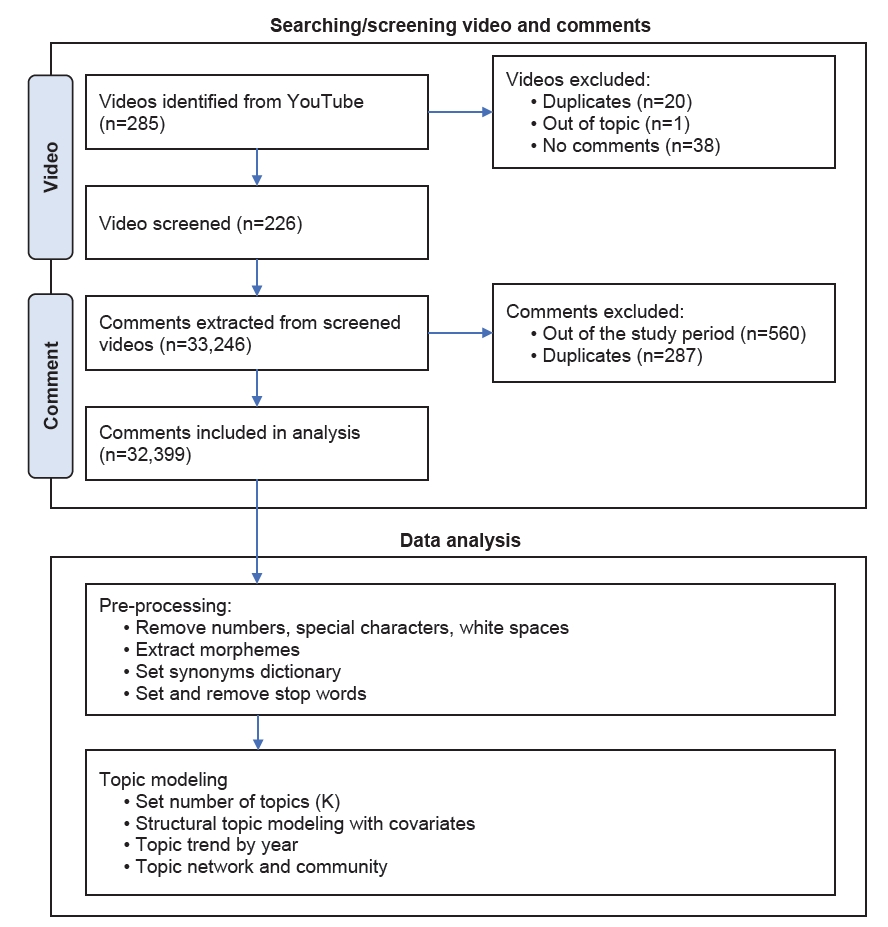
Comments were collected from 226 YouTube videos uploaded between January 2015 and December 2024, identified using search terms that combined “nurse” with retention-related keywords. After duplicates and comments posted outside the study period were removed, 32,399 comments were analyzed using structural topic modeling with year and number of likes as covariates. Topic correlation network analysis with community detection was used to identify discourse coalitions.
Results
Fourteen substantive topics and one noninterpretive topic emerged, spanning individual coping strategies, organizational workplace issues, and systemic policy structures. “International nursing migration and career pathways” (12.8%) and “Disputes regarding the scope of practice among professionals” (11.4%) were the most prevalent topics. Temporal analysis revealed discourse shifts consistent with focusing events theory: COVID-19 (coronavirus disease 2019) activated structural critique frames while suppressing career mobility discourse; the 2022 Nursing Law followed an issue-attention cycle pattern; and the 2024 medical school quota expansion embedded retention discourse within broader healthcare policy debates. Network analysis identified two discourse communities, professional identity and structural exploitation, with international migration serving as a bridging frame across both.
Conclusion
Public discourse framed nurse retention as a systemic and structural issue rather than as an expression of individual professional rejection. These collective framing patterns complement traditional survey-based research and may inform policy design by identifying which frames achieve public resonance and where discourse fragmentation may challenge policy implementation.
- 1,414 View
- 127 Download
- Experiences of nurses working as physician assistants under the expanded scope-of-practice policy following the 2024 resignation of medical residents in South Korea: a phenomenological study
- Tae Yeong Yang, Myung Jin Jang, NaHyun Lee
- J Korean Acad Nurs 2026;56(2):220-232. Published online May 14, 2026
- DOI: https://doi.org/10.4040/jkan.26001
-
Abstract
PDFePub
- Purpose
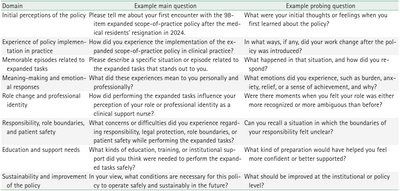
This study aimed to explore the lived experiences of clinical support nurses under the expanded scope-of-practice policy implemented after the mass resignation of medical residents in Korea in 2024. In Korea, these nurses are often referred to as physician assistant (PA) nurses, although they differ from licensed physician assistants or nurse practitioners in the United States. The study sought to understand how the policy was perceived, implemented, and interpreted by nurses who played a key role in maintaining clinical services during a healthcare workforce crisis.
Methods
A qualitative phenomenological design based on Colaizzi’s method was used. Fourteen clinical support nurses from a tertiary hospital in Seoul participated in in-depth, semi-structured interviews conducted between August and December 2025. The interviews were transcribed verbatim and analyzed through iterative reading, extraction of significant statements, formulation of meanings, and thematic integration. Trustworthiness was established using the criteria of credibility, dependability, transferability, and confirmability.
Results
Four essential themes were identified: (1) multifaceted perceptions of the 98-item expanded scope-of-practice policy; (2) gaps in the current education system and demands for structured training; (3) ambivalent experiences during policy implementation; and (4) conditional acceptance of the policy’s sustainability and calls for improvement. Participants reported increased professional recognition and autonomy while also experiencing ambiguity in role boundaries, concerns about legal accountability, and emotional burden related to insufficient preparation and protection.
Conclusion
The expanded scope-of-practice policy both strengthens professional competence and creates role instability among clinical support nurses. Its sustainable implementation requires clear legal protection, standardized education and certification systems, appropriate compensation, and the active involvement of frontline nurses in policy development. -
Citations
Citations to this article as recorded by
- The Tertiary Hospital Restructuring Project in South Korea: A Reflexive Thematic Analysis of Hospital Directors’ Perspectives on Barriers and Policy Recommendations
Hooyeon Lee, Ji Eun Kim, Kyungin Lee, Dong Jun Kim, Kwangmo Yang, Kyounga Lee, Myung-Il Hahm
Healthcare.2026; 14(16): 2469. CrossRef
- The Tertiary Hospital Restructuring Project in South Korea: A Reflexive Thematic Analysis of Hospital Directors’ Perspectives on Barriers and Policy Recommendations
- 1,799 View
- 204 Download
- 1 Web of Science
- 1 Crossref
- The mediating effects of perceived organizational support and coping strategies on the relationship between job stress and professional quality of life among nurse managers in tertiary and general hospitals
- Seo-In Yang, Min-Jung Choi
- J Korean Acad Nurs 2026;56(2):166-178. Published online April 6, 2026
- DOI: https://doi.org/10.4040/jkan.25099
-
Abstract
PDFePub
- Purpose
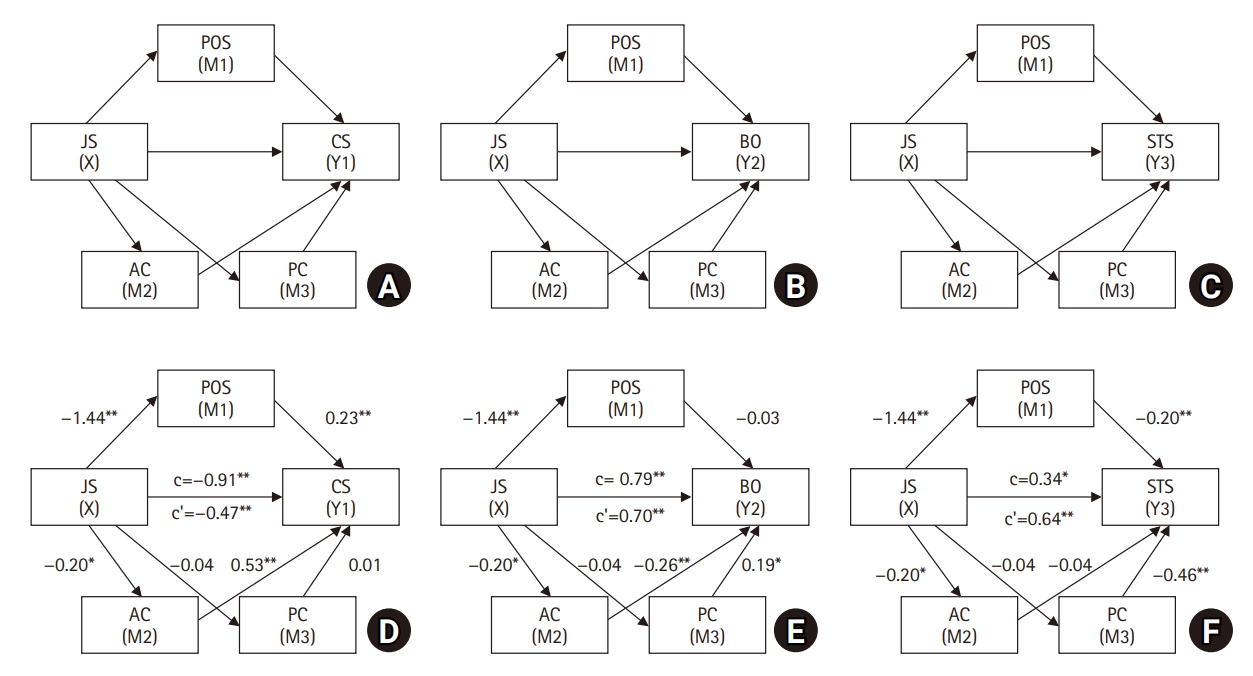
This study aimed to examine the mediating effects of perceived organizational support and coping strategies on the relationship between job stress and professional quality of life among nurse managers working in tertiary and general hospitals.
Methods
The participants were 299 nurse managers employed at tertiary and general hospitals located in Seoul and Gyeonggi Province. Data on job stress, perceived organizational support, coping strategies, and professional quality of life were collected using an online self-report questionnaire between June 28, 2024, and May 31, 2025. The collected data were analyzed using IBM SPSS Statistics ver. 27.0 and the PROCESS Macro ver. 4.0.
Results
Job stress was identified as a significant predictor of professional quality of life among nurse managers. Perceived organizational support and active coping demonstrated significant mediating effects on compassion satisfaction. Active coping showed a significant mediating effect on burnout, whereas perceived organizational support mediated secondary traumatic stress. Passive coping did not demonstrate a significant mediating effect on any of the three subdomains of professional quality of life.
Conclusion
Job stress is closely associated with compassion satisfaction, and this relationship is partially mediated by perceived organizational support and active coping. Accordingly, targeted interventions are required to reduce job stress, strengthen organizational support, and enhance coping competencies among nurse managers. Furthermore, reinforcing institutional- and policy-level support is essential to mitigate secondary traumatic stress and to ensure the sustainability of nurse managers’ professional roles.
- 2,368 View
- 246 Download
Review Paper
- Variables associated with compliance with standard precautions among hospital nurses: a systematic review and meta-analysis
- Song Hee Park, Seok Hee Jeong, Chang Seop Lee, Young Man Kim
- J Korean Acad Nurs 2026;56(1):1-26. Published online February 27, 2026
- DOI: https://doi.org/10.4040/jkan.25114
-
Abstract
PDF
- Purpose
This study aimed to conduct a systematic review and meta-analysis to identify variables associated with standard precautions compliance among hospital nurses and to comprehensively examine their effect sizes.
Methods
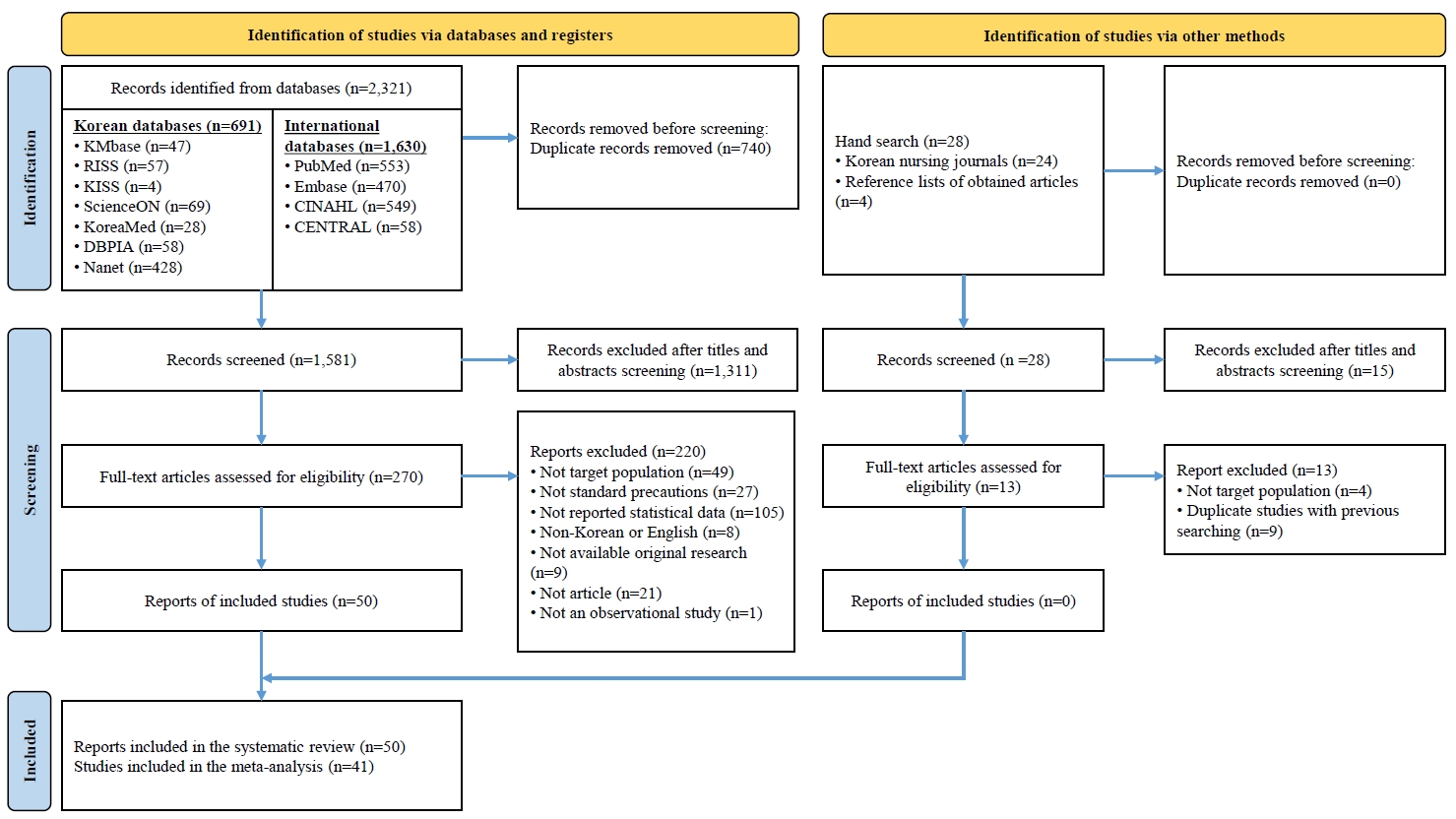
A systematic review and meta-analysis were reported in accordance with the PRISMA and MOOSE guidelines. Studies published in English or Korean were retrieved from KMbase, KoreaMed, KISS, ScienceON, RISS, Nanet, DBpia, PubMed, Embase, CINAHL, and CENTRAL. Data collection was conducted from July 6 to July 16, 2024. To ensure a comprehensive search, no restrictions were placed on the publication period, and studies published up to June 2024 were included in the literature search. Analyses were performed using R ver. 4.4.1.
Results
Of the 2,321 studies screened, 50 were included in the systematic review and 41 were included in the meta-analysis. Variables were categorized according to the ecological model. Among individual-level factors, variables with medium correlation effect sizes (ESr ≥.30) included self-efficacy (ESr=.41; 95% confidence interval [CI], 0.24 to 0.56), perceived barriers (ESr=−.35; 95% CI, −0.59 to −0.05), cues to action (ESr=.34; 95% CI, 0.07 to 0.57), and perceived benefits (ESr=.30; 95% CI, 0.13 to 0.46). Among organizational factors, organizational culture for infection control (ESr=.47; 95% CI, 0.39 to 0.54) and patient safety culture (ESr=.44; 95% CI, 0.35 to 0.53) demonstrated medium effect sizes. Other statistically significant variables with small effect sizes were also identified. No variables were identified within the interpersonal, community, or public policy domains.
Conclusion
This study identified self-efficacy and organizational culture for infection control as key determinants of compliance with standard precautions. Strengthening these factors may reduce healthcare-associated infections and promote safer nursing care (PROSPERO registration number: CRD42024566518). -
Citations
Citations to this article as recorded by- Factors influencing intensive care unit nurses’ performance of standard precautions in South Korea: a descriptive correlational study
Hana Seo, Nahyun Kim
Journal of Korean Biological Nursing Science.2026; 28(2): 300. CrossRef
- Factors influencing intensive care unit nurses’ performance of standard precautions in South Korea: a descriptive correlational study
- 3,439 View
- 391 Download
- 1 Crossref
Research Papers
- Perspectives of parents, teachers, and community leaders on adolescent sexual behavior across ecological contexts in Cambodia: a qualitative study
- Youngran Yang, Gloria Park
- J Korean Acad Nurs 2026;56(1):108-122. Published online February 25, 2026
- DOI: https://doi.org/10.4040/jkan.25146
-
Abstract
PDFePub
- Purpose
This study investigated the perspectives of parents, teachers, and community leaders regarding adolescents’ sexual behavior in Cambodia.
Methods
Grounded in the ‘ecological framework of adolescent health,’ this study employed a descriptive qualitative approach to explore the perspectives of key stakeholders, including 12 parents, eight teachers, and four community leaders. Drawing on in-depth, semi-structured individual and focus group interviews, the study examined risk and protective factors related to risky sexual behavior across family, school, community, social, cultural, and policy contexts. Data collection was conducted from December 5, 2022 to January 31, 2023.
Results
The integrated thematic analysis revealed six main themes. Parents positioned themselves as anxious protectors but struggled with limited opportunities for open conversation; teachers acted as observe-and-warn mediators, constrained by institutional authority, curricular boundaries, and rapidly shifting youth culture; and community leaders interpreted emerging trends through the lens of social change, eroding traditions, and weakening collective governance. Across groups, participants acknowledged the limitations of unilateral action and advocated for multilevel, collaborative solutions that bridge families, schools, and broader communities.
Conclusion
The study concluded that adolescent sexual behaviors should be understood from diverse perspectives. This finding highlights the need for culturally appropriate and sensitive measures supported by multisectoral systems operating at the family, school, community, civil society (e.g., non-governmental organizations), and national levels.
- 1,587 View
- 115 Download
- Development and evaluation of the Trauma-nursing Education and Skill Support program to enhance trauma nursing competencies: a quasi-experimental study
- Tae Yeong Yang, Myung Jin Jang, Ki Ung Kim, Min So, Mi Na Choi, Eun Jung Lee, Jin Su Jo, Ji Yun Lee, Kwang Kyun Lim, Kyoung Mi Kim, Hae Jun Baek, Sun Ho Wang, Jin Oh Choi
- J Korean Acad Nurs 2026;56(1):67-80. Published online February 24, 2026
- DOI: https://doi.org/10.4040/jkan.25134
-
Abstract
PDFePub
- Purpose
This study aimed to develop and evaluate the effectiveness of the Trauma-nursing Education and Skill Support (TESS) program based on the ADDIE model (Analysis, Design, Development, Implementation, Evaluation model). The program was designed to enhance trauma nurses’ clinical competencies, including trauma-related knowledge, self-efficacy, and problem-solving ability, through the integration of theoretical education and simulation-based practice.
Methods
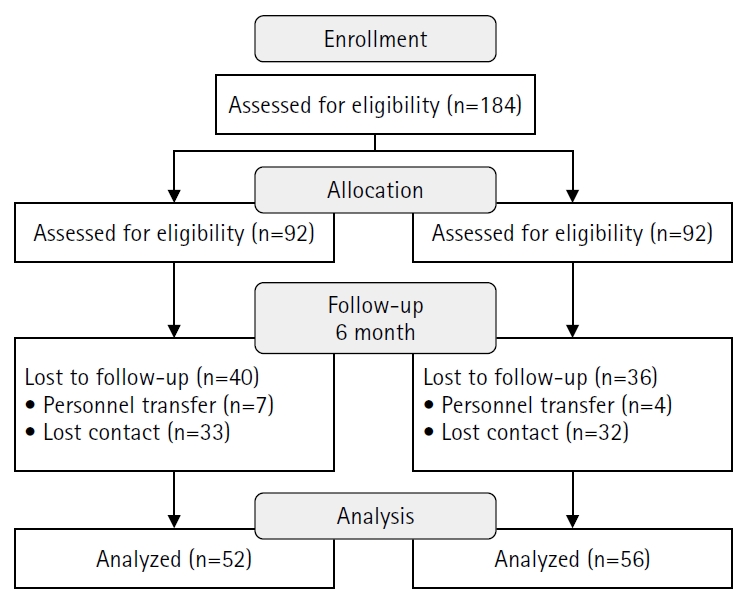
A quasi-experimental study using a non-equivalent control group pretest–posttest design was conducted. Participants included 108 trauma nurses from regional trauma centers, military trauma centers, and emergency care facilities, who were assigned to an experimental group (n=52) or a control group (n=56). The TESS program consisted of a 2-day, 14-hour blended-learning course that included eight lecture sessions and four simulation-based practice stations. Data were collected at baseline, immediately after the intervention, and at 6 months using validated instruments measuring trauma-related knowledge, self-efficacy, and problem-solving ability. Two-way repeated-measures analysis of variance was used for data analysis.
Results
The experimental group demonstrated significant improvements in trauma-related knowledge, self-efficacy, and problem-solving ability compared with baseline (all p<.001). These improvements were sustained at 6 months, although trauma-related knowledge scores showed a slight decline compared with immediate posttest levels. Between-group analyses confirmed significant group-by-time interaction effects for all outcomes: trauma-related knowledge (η2=0.12, p<.001), self-efficacy (η2=0.09, p=.002), and problem-solving ability (η2=0.08, p=.003).
Conclusion
The TESS program effectively enhanced trauma nurses’ trauma-related knowledge, self-efficacy, and problem-solving ability, with effects sustained for up to 6 months. Incorporating blended learning and simulation-based training into standardized trauma nursing education may strengthen clinical competencies and ultimately contribute to improved patient outcomes.
- 3,328 View
- 353 Download
- Experiences of work performance among physician assistant nurses during the period of healthcare disruption in South Korea: a qualitative content analysis
- Juyoung Ha, Minji Kim
- J Korean Acad Nurs 2026;56(1):98-107. Published online February 24, 2026
- DOI: https://doi.org/10.4040/jkan.25133
-
Abstract
PDFePub
- Purpose
This study aimed to explore the work experiences of physician assistant (dedicated nurses in Korea) during the medical service gap caused by physician–government conflicts.
Methods
A qualitative design employing individual in-depth interviews was used. Data were collected from July 18 to August 13, 2025. Fifteen nurses who worked as physician assistant 5 during the healthcare service gap participated in the study. Participants were categorized as follows: (1) nurses in the role before the period of healthcare disruption, (2) those who voluntarily applied after the period of healthcare disruption, and (3) those involuntarily assigned during the period of healthcare disruption. Data were analyzed using conventional content analysis.
Results
Three categories with six subcategories were identified: (1) reconstructing inner experience within an expanded role (unprepared responsibility and burden, inner fulfillment discovered through continuity of care); (2) reconfiguring relationships from a boundary position (feeling distant as “the same yet different” nurses, expansion of mutual understanding in a crisis context); and (3) precarious positioning within an unestablished system (uncertain standing after residents’ return, episodic implementation of non-standardized training).
Conclusion
This study showed that physician assistant who filled residents’ gaps in an incomplete system experienced heavier role burdens, blurred job identity, unequal conditions, and unstable affiliation, while some also found renewed meaning and fulfillment through continuity of care and closer collaboration. With structured education, clearly defined scopes of practice after residents’ return, and stable legal and organizational support, these nurses can function as more than temporary substitutes and help sustain continuity and quality of patient care. -
Citations
Citations to this article as recorded by- The Tertiary Hospital Restructuring Project in South Korea: A Reflexive Thematic Analysis of Hospital Directors’ Perspectives on Barriers and Policy Recommendations
Hooyeon Lee, Ji Eun Kim, Kyungin Lee, Dong Jun Kim, Kwangmo Yang, Kyounga Lee, Myung-Il Hahm
Healthcare.2026; 14(16): 2469. CrossRef
- The Tertiary Hospital Restructuring Project in South Korea: A Reflexive Thematic Analysis of Hospital Directors’ Perspectives on Barriers and Policy Recommendations
- 2,630 View
- 367 Download
- 1 Web of Science
- 1 Crossref
- Development and psychometric testing of the Perceived Postoperative Care Competency Scale for Nursing Students: a methodological study
- Perihan Şimşek, Gül Çakir Özmen, Melek Ertürk Yavuz, Sema Koçan, Dilek Çilingir
- J Korean Acad Nurs 2026;56(1):81-97. Published online February 24, 2026
- DOI: https://doi.org/10.4040/jkan.25123
-
Abstract
PDFePub
- Purpose
To improve the quality of postoperative care and promote recovery after surgery, it is important that nursing education is competency-based and that competency assessment is an integral part of the educational process. The purpose of this study was to develop a tool to evaluate nursing students’ perceived competence in postoperative care.
Methods
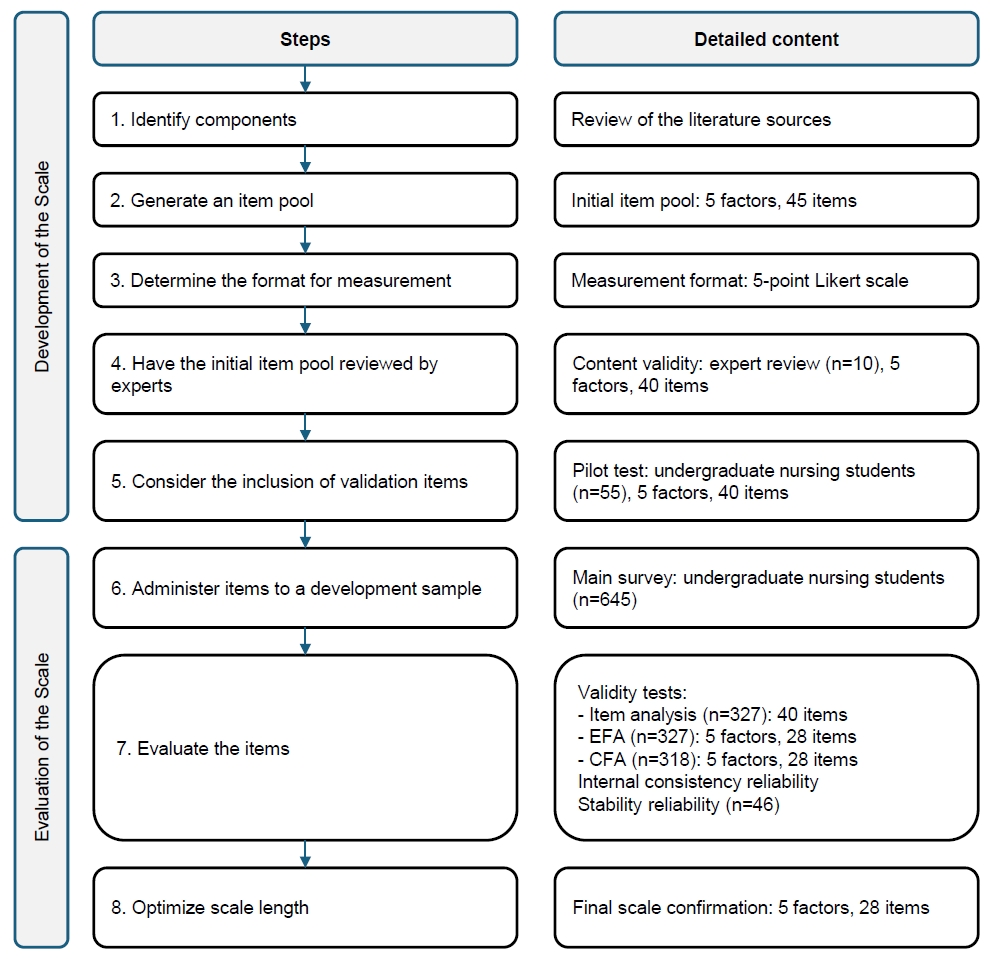
This cross-sectional methodological study followed DeVellis’s scale development steps and was conducted between December 2022 and March 2023. In this study, 892 students were invited and 703 responded. After exclusions, data from 645 students were analyzed to examine the psychometric structure of the scale using exploratory factor analysis (n=327) and confirmatory factor analysis (n=318). Reliability was assessed by calculating Cronbach’s α coefficients and by test–retest measurement (n=46).
Results
The proposed scale was confirmed to consist of five factors and 28 items (χ2/degrees of freedom=2.25, root mean square error of approximation=.06, normed fit index=.90, and goodness-of-fit index=.85). Cronbach’s α was .97 for the total scale. The data demonstrated high test–retest stability (intraclass correlation coefficient=.88). The scale developed and psychometrically tested in this study revealed a five-factor structure: legal responsibilities and ethical principles (seven items), postoperative nursing care (seven items), interpersonal relations and communication (four items), leadership (six items), and education and professional development (four items).
Conclusion
The scale, which demonstrated very good psychometric properties, would be helpful in assessing perceived postoperative nursing competence among nursing students. This may help students graduate with the necessary knowledge and skills required for postoperative care. However, further research involving larger samples and more diverse cultural contexts is needed to enhance the generalizability of the scale.
- 2,798 View
- 191 Download
- Usefulness of Charlson comorbidity index-adjusted mortality prediction tools and factors influencing mortality in intensive care unit patients: a retrospective medical record review–based study
- Jai Jung Lee, Dong Yeon Kim, Min Ji Lee, Ji Young Kim
- J Korean Acad Nurs 2026;56(1):27-38. Published online February 11, 2026
- DOI: https://doi.org/10.4040/jkan.25094
-
Abstract
PDFePub
- Purpose
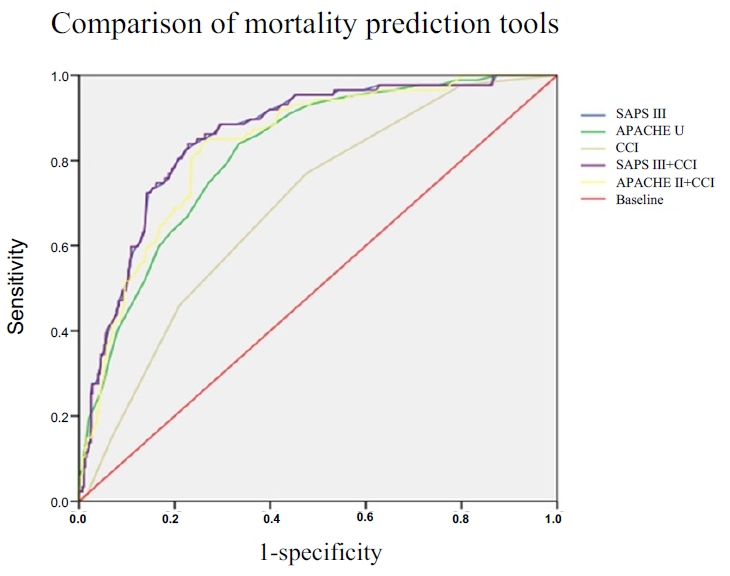
This study aimed to estimate the mortality rate in adult intensive care units (ICUs) using the Charlson comorbidity index (CCI)-adjusted Acute Physiology and Chronic Health Evaluation (APACHE) II and Simplified Acute Physiology Score (SAPS) III models, and to identify factors influencing mortality.
Methods
This retrospective cohort study included adult patients admitted to the ICU at a tertiary hospital between June 1 and August 31, 2022. Among the 1,098 screened patients, those younger than 18 years, those discharged within 48 hours, and those with missing medical records were excluded. In total, 482 patients were analyzed using the chi-square test, independent t-test, and multivariate logistic regression. Model performance was evaluated using the c-statistic and the Hosmer-Lemeshow goodness-of-fit test.
Results
The predictive accuracy of the mortality models was shown by c-statistic values of 0.817 for APACHE II, 0.857 for SAPS III, 0.697 for CCI, and 0.834 for CCI-adjusted APACHE II (0.834). Mechanical ventilation, cardiopulmonary cerebral resuscitation, continuous renal replacement therapy, and the presence of leukemia or lymphoma were significant predictors of mortality in adult ICU patients. Among the evaluated models, SAPS III and CCI-adjusted APACHE II demonstrated the highest predictive power.
Conclusion
The findings indicate that incorporating comorbidity indices such as the CCI with acute physiological parameters improves the accuracy of mortality prediction in ICU patients. Understanding mortality prediction models is essential for nurses to provide individualized, evidence-based, and high-quality care in adult ICUs.
- 3,526 View
- 277 Download
- Psychometric testing of the Korean version of the Undergraduate Nursing Student Academic Satisfaction Scale: a methodological study
- Da-In Park, Joohee Shim
- J Korean Acad Nurs 2026;56(1):51-66. Published online February 9, 2026
- DOI: https://doi.org/10.4040/jkan.25125
- Correction in: J Korean Acad Nurs 2026;56(2):289
-
Abstract
PDFePub
- Purpose
This study aimed to translate, cross-culturally adapt, and evaluate the psychometric properties of the Korean version of the Undergraduate Nursing Student Academic Satisfaction Scale (K-UNSASS).
Methods
The K-UNSASS was developed using Brislin’s team-based translation–back-translation approach, with semantic and conceptual equivalence examined. Face validity was assessed, and a pilot test was conducted in November 2022. Content validity was evaluated by an expert panel. Formal data collection was conducted from December 2022 to January 2023. Structural validity was examined using exploratory and confirmatory factor analyses. Reliability was assessed using Cronbach’s alpha and McDonald’s omega coefficients.
Results
A total of 482 full-time nursing students, most of whom were in the fourth year of their nursing program, were included in the psychometric testing. Construct validity supported a four-factor structure accounting for 65.9% of the total variance. After removal of three items with unsatisfactory factor loadings, a 45-item K-UNSASS was established. Confirmatory factor analysis of the 45-item K-UNSASS demonstrated an acceptable model fit, and both Cronbach’s alpha and McDonald’s omega coefficients were .97.
Conclusion
The K-UNSASS demonstrates acceptable reliability and validity for assessing academic satisfaction among Korean nursing students. As a culturally relevant instrument, it supports educational improvement through targeted strategies and program evaluation. -
Citations
Citations to this article as recorded by- Corrigendum: Psychometric testing of the Korean version of the Undergraduate Nursing Student Academic Satisfaction Scale: a methodological study
Da-In Park, Joohee Shim
Journal of Korean Academy of Nursing.2026; 56(2): 289. CrossRef
- Corrigendum: Psychometric testing of the Korean version of the Undergraduate Nursing Student Academic Satisfaction Scale: a methodological study
- 3,031 View
- 214 Download
- 1 Web of Science
- 1 Crossref
- Transforming nursing education to enhance integrated nursing competency: a Delphi-based methodological study on symptom-based clinical reasoning
- Jeung-Im Kim, Soyoung Yu, Jin-Hee Park, Ju-Eun Song, Eunjung Ryu, JuHee Lee, YeoJin Im
- J Korean Acad Nurs 2026;56(1):39-50. Published online February 5, 2026
- DOI: https://doi.org/10.4040/jkan.25151
-
Abstract
PDFePub
- Purpose
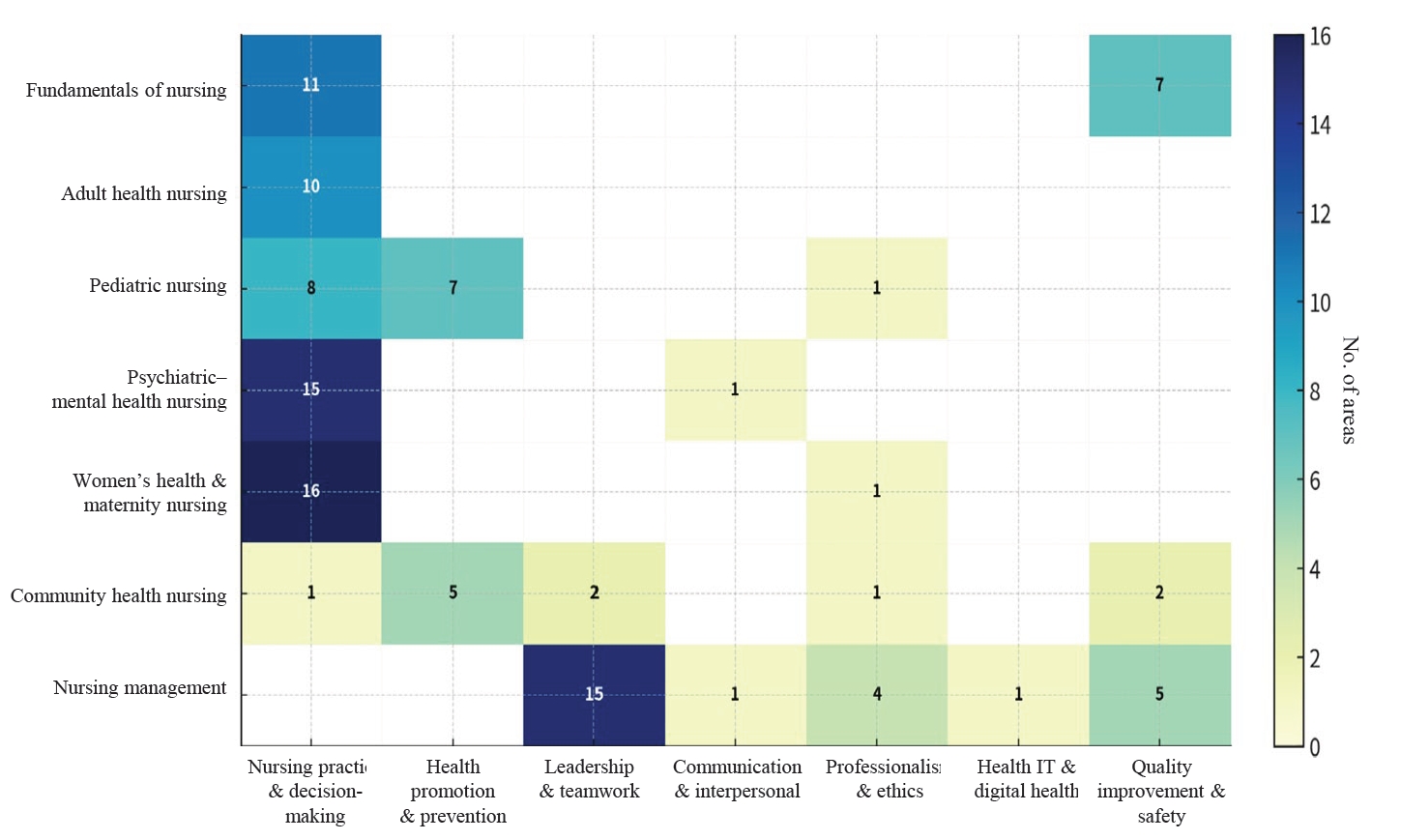
This study aimed to address the shift toward competency-based education and the planned 2028 “Integrated Nursing” National Licensing Examination (NLE), this study aimed to establish structural alignment among NLE domains, the seven integrated nursing competencies (INCs), and curriculum goals, with a particular focus on implementing symptom-based clinical reasoning (SBCR).
Methods
This Delphi-based methodological study included seven content experts for content validity index (CVI) assessment and 24 nursing education experts who participated in a consensus workshop. The item-level CVI and the scale-level CVI/average were calculated to confirm the linkage between INCs and NLE domains. In addition, qualitative analysis of workshop materials and meeting records was conducted to derive 10 integrated learning topics and to develop an SBCR educational model for the key symptom of headache, grounded in Miller’s Clinical Competence Pyramid (levels 2–4).
Results
The analysis confirmed the validity of integrating the INCs within the overall curriculum structure. The resulting framework delineates staged learning objectives and core clinical questions designed to systematically enhance clinical reasoning, promote safe nursing practice, and support professional reflection within a unified curriculum.
Conclusion
This study provides a practical foundation for nursing curriculum redesign by facilitating a transition from fragmented, subject-based instruction to a holistic, patient-centered SBCR model. This approach aligns with the requirements of the integrated NLE and is expected to contribute to meaningful improvements in actual clinical competency.
- 3,217 View
- 320 Download
Invited Paper
- Lessons from the US Advanced Practice Registered Nurse system
- Eun-Ok Im, Dongmi Kim
- J Korean Acad Nurs 2025;55(4):492-505. Published online November 27, 2025
- DOI: https://doi.org/10.4040/jkan.25120
-
Abstract
PDFePub
- Purpose
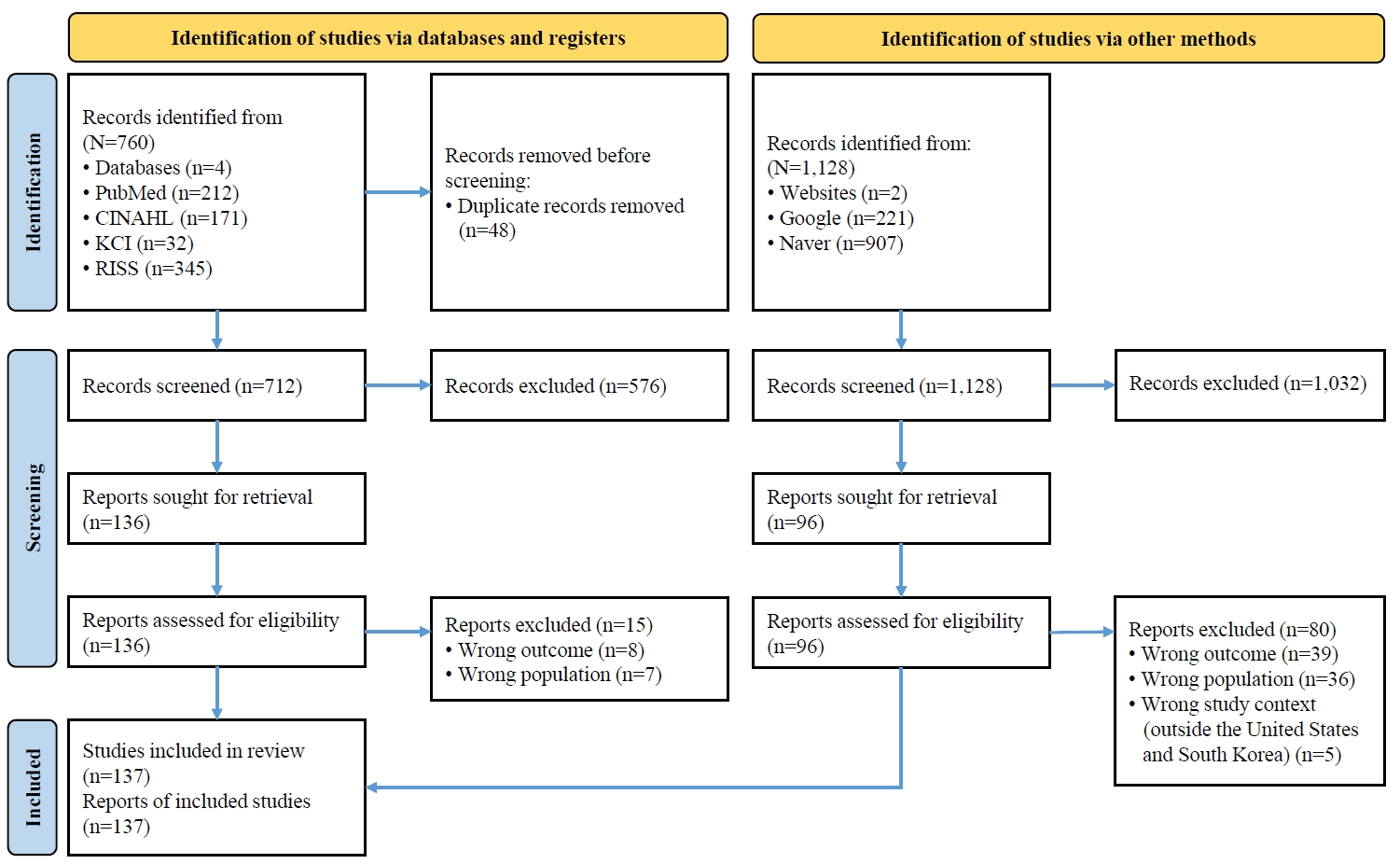
This review compares the development of South Korea’s Advanced Practice Registered Nurse (APRN) system the well-established APRN system in the United States and provides recommendations for future improvements to the APRN system in South Korea.
Methods
To compare the APRN systems between the two countries, an integrative literature review was conducted using multiple databases and professional nursing organization documents and reports from both the United States and South Korea.
Results
Issues were identified in five major domains: (1) research evidence, (2) education and training, (3) the scope of practice, (4) financial mechanisms, and (5) public awareness and acceptance.
Conclusion
Recommendations are made in four areas: (1) building evidence to support APRN programs; (2) strengthening APRN education; (3) establishing legal support and reimbursement mechanisms; and (4) improving public awareness and acceptance of APRNs.
- 2,513 View
- 217 Download
Research Paper
- Development of an end-of-life care competency scale for nurses in long-term care hospitals: a psychometric validation study
- Sookyeon Son, Mi-Kyeong Jeon
- J Korean Acad Nurs 2025;55(4):598-612. Published online November 27, 2025
- DOI: https://doi.org/10.4040/jkan.25113
-
Abstract
PDFePub
- Purpose
This study aimed to develop a scale to measure end-of-life care (EOLC) competency among nurses working in long-term care hospitals and to evaluate its validity and reliability.
Methods
Preliminary items were developed based on attributes and indicators identified through a conceptual analysis of EOLC competency. The initial version of the scale was refined through expert content validity assessment, item revision, and a pilot test. The main survey was conducted among 460 nurses in long-term care hospitals, and 409 valid responses were analyzed after excluding 51 incomplete or invalid cases. Data were analyzed using software-assisted item analysis, exploratory and confirmatory factor analyses, and assessments of convergent, discriminant, and criterion-related validity, as well as reliability testing.
Results
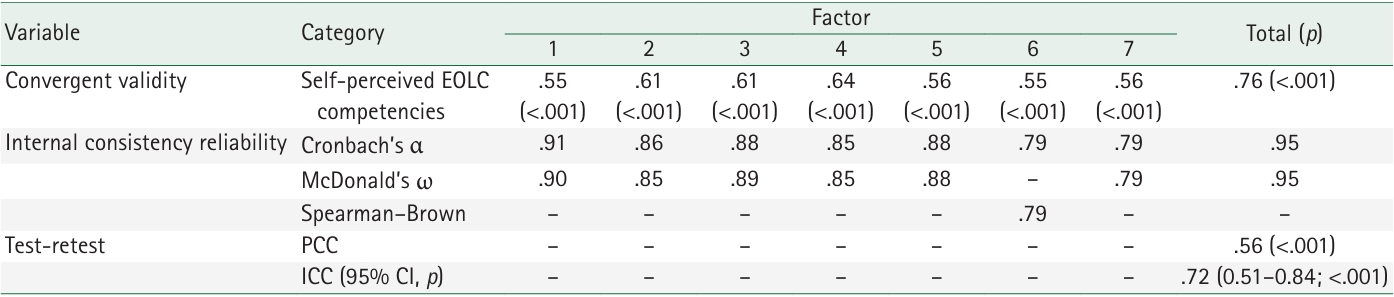
The initial 55 items were reduced to a final set of 30 items across seven dimensions. Model fit indices indicated good construct validity (χ²/degrees of freedom=1.91, standardized root mean square residual=.06, root mean square error of approximation=.07, Tucker-Lewis index=.90, comparative fit index=.91), with a total explained variance of 70.2%. The scale demonstrated strong criterion-related validity (r=.76, p<.001), high internal consistency (Cronbach’s α=.95; McDonald’s ω=.95), acceptable test–retest reliability (r=.56, p<.001), and an intraclass correlation coefficient of .72 (95% confidence interval, .51–.84; p<.001).
Conclusion
The developed scale is a valid and reliable instrument for assessing EOLC competency among nurses in long-term care hospitals. It can be effectively utilized for educational assessment, training evaluation, and the measurement of program effectiveness in end-of-life care.
- 2,978 View
- 233 Download
Review Paper
- Variables influencing digital health literacy in older adults: a systematic review and meta-analysis
- Jin Hwa Park, Eun Ju Mun
- J Korean Acad Nurs 2025;55(4):651-667. Published online November 27, 2025
- DOI: https://doi.org/10.4040/jkan.25112
-
Abstract
PDFePub
- Purpose
This study aimed to synthesize existing evidence on digital health literacy (DHL) among older adults and to estimate the associations between related influencing factors through a systematic literature review and meta-analysis.
Methods
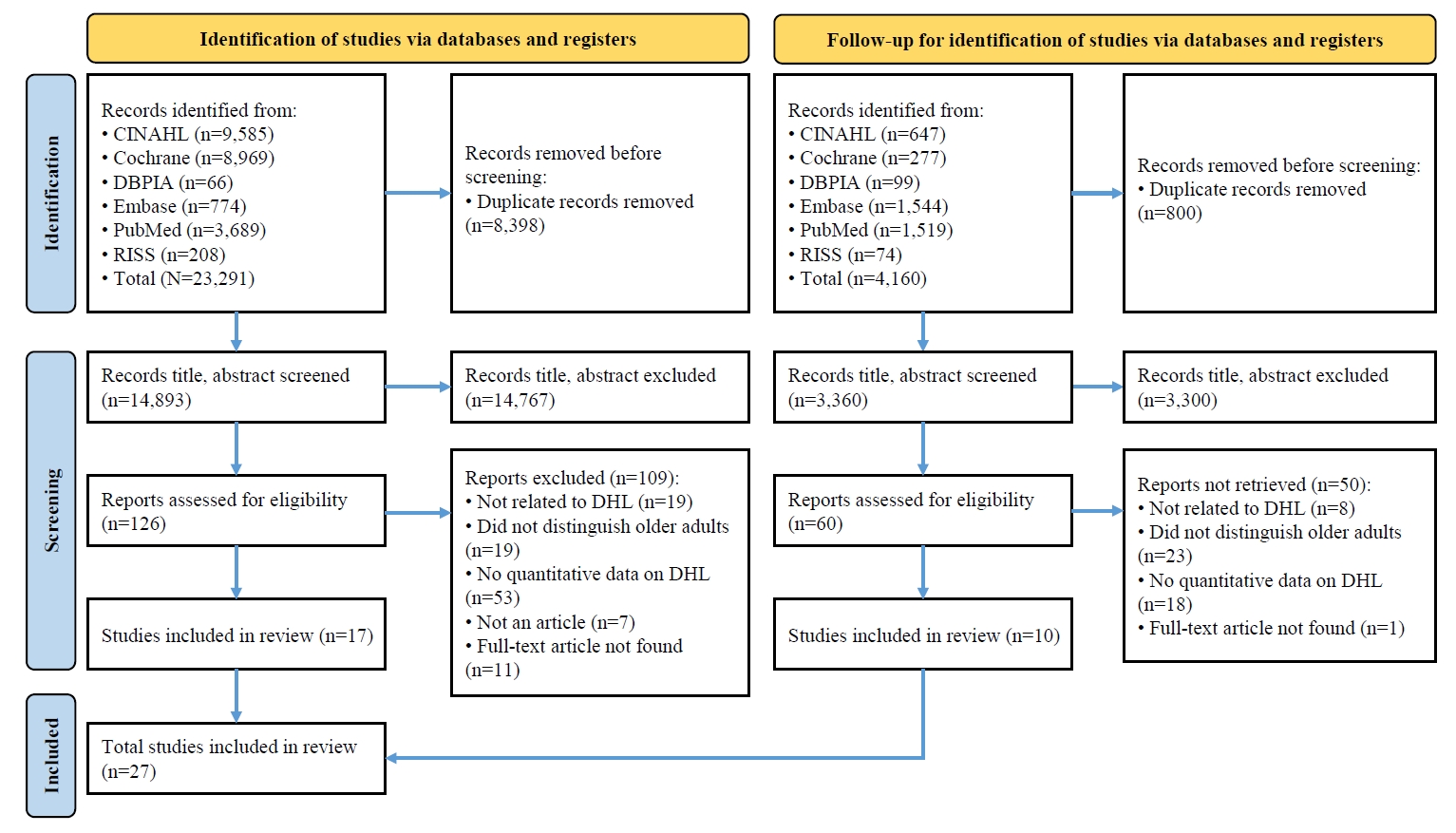
A systematic review and meta-analysis were conducted in accordance with the Preferred Reporting Items for Systematic Reviews and Meta-Analyses (PRISMA) and Meta-Analysis of Observational Studies in Epidemiology (MOOSE) guidelines. Literature searches were performed across PubMed, EMBASE, Cochrane Library, CINAHL, RISS, and DBPIA. The search and screening process was conducted from December 24, 2023, to March 31, 2025. Effect sizes (ESr) using correlation coefficient for each variable were calculated, and meta-analyses were performed using Microsoft Excel and R version 4.3.1.
Results
Forty-seven variables were identified, including two demographic, six physical, six behavioral, 23 psychosocial, and 10 cognitive factors. Meta-analysis results showed that physical, behavioral, psychosocial, and cognitive factors had significant effects on DHL. Among these, digital information level (ESr=.62; 95% confidence interval [CI], 0.55 to 0.69) within the cognitive domain and technophobia (ESr=−.55; 95% CI, −0.47 to −0.40) within the psychosocial domain demonstrated the largest ESr.
Conclusion
Among factors influencing DHL, digital information level and technophobia showed the strongest associations. These findings suggest that improving DHL in older adults requires a dual approach targeting both cognitive and psychosocial dimensions—enhancing digital information skills while reducing technophobia—to effectively support digital engagement and health empowerment in this population (PROSPERO registration number: CRD42023487486). -
Citations
Citations to this article as recorded by- 고령자를 위한 디지털 헬스 리터러시 측정척도의 적합도 검증
소윤 이
The Korean Journal of Physical Education.2026; 65(2): 157. CrossRef
- 고령자를 위한 디지털 헬스 리터러시 측정척도의 적합도 검증
- 4,752 View
- 379 Download
- 1 Crossref
Research Papers
- Validity and reliability of the Security Neglect Subscale of the Child Neglect Scale in vulnerable Chinese children: a methodological study
- Zexi Su
- J Korean Acad Nurs 2025;55(4):613-620. Published online November 27, 2025
- DOI: https://doi.org/10.4040/jkan.25089
-
Abstract
PDFePub
- Purpose
Security neglect is common among vulnerable children. The Child Neglect Scale (CNS) is widely used to screen children for neglect. However, little is known about the accuracy of the Security Neglect Subscale when administered in isolation. This study aimed to examine the reliability and validity of the Security Neglect Subscale of the CNS among vulnerable children in China.
Methods
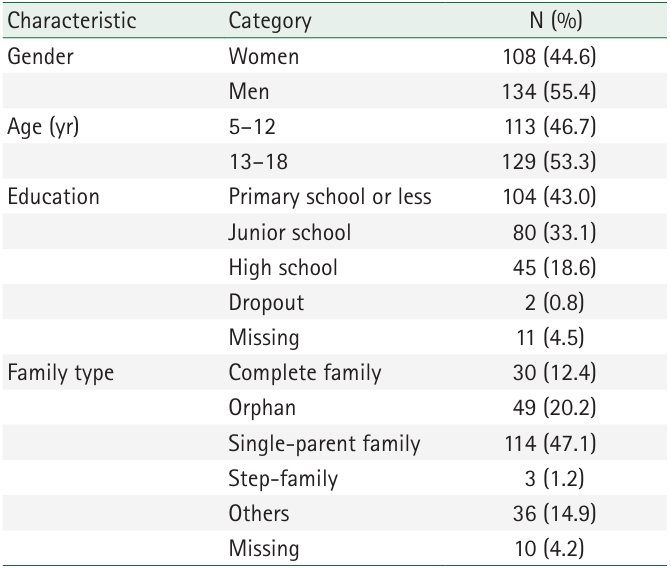
Cluster sampling was used, and 242 vulnerable children participated in the study. Data were analyzed using IBM SPSS ver. 28.0 and Amos ver. 28.0, and the test construct validity of the CNS Security Neglect Subscale was analyzed through confirmatory factor analysis. In addition, convergent and discriminant validity, as well as reliability, were evaluated.
Results
The construct validity of the nine-item CNS Security Neglect Subscale was confirmed by a two-factor structure. The modified model fit the data well, as shown by a normed chi-square of 2.48, a comparative fit index of .97, a Tucker-Lewis index of .96, and a root mean square error of approximation of .08. The model had acceptable convergent and discriminant validity for each structure. The Cronbach’s α coefficient was .87 overall, and values for the two factors ranged from .78 to .93.
Conclusion
The findings of this study support the satisfactory psychometric properties of the CNS Security Neglect Subscale, indicating its utility in evaluating security neglect in vulnerable children in China.
- 1,142 View
- 108 Download
- A qualitative exploration of acute stroke patients’ experiences with aphasia in Korea
- Jiyeon Kang, Hyunyoung Heo
- J Korean Acad Nurs 2025;55(4):621-633. Published online November 25, 2025
- DOI: https://doi.org/10.4040/jkan.25132
-
Abstract
PDFePub
- Purpose
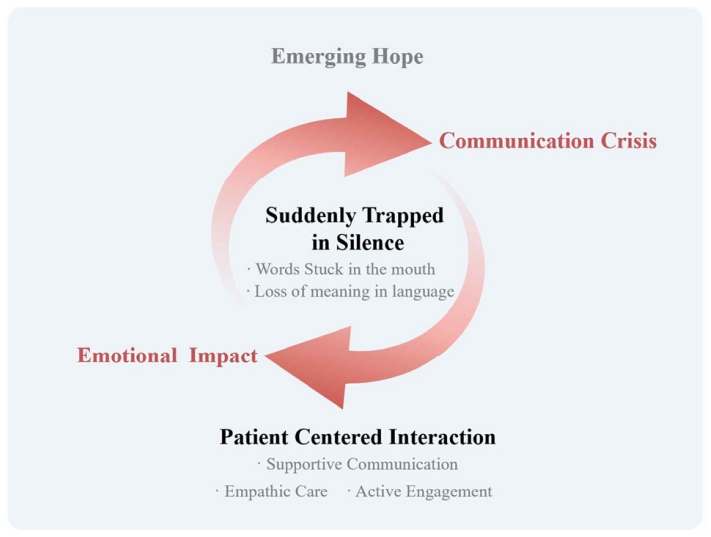
This study aimed to explore the lived experiences of patients with acute stroke-related aphasia within the Korean healthcare context.
Methods
A qualitative research design using inductive content analysis was employed, following the Consolidated Criteria for Reporting Qualitative Research guidelines. Fourteen adults with acute stroke-related aphasia participated in one-on-one, in-depth interviews conducted between January and May 2025. Participants were recruited through purposive sampling until theoretical saturation was reached. Data were analyzed using an inductive qualitative content analysis approach.
Results
Five main categories emerged: “suddenly trapped in silence” described the abrupt loss of language, including the inability to articulate intended words and understand others; “emotional impact” captured psychological shock and feelings of loss; “communication crisis” encompassed expressive difficulties, exclusion from decision-making, and social withdrawal; “patient-centered interaction” highlighted supportive communication, empathic care, and active engagement by others; and “emerging hope” reflected signs of recovery, self-directed efforts, and anticipation of improvement. These categories converged into the overarching theme, “communication beyond language,” illustrating how patients sought meaningful interaction despite linguistic limitations.
Conclusion
Acute aphasia extends beyond a language disorder to encompass profound emotional and social experiences. Although communication barriers exist, meaningful interaction remains possible through empathetic, person-centered approaches. Healthcare professionals should recognize that patients with aphasia retain cognitive competence despite expressive limitations. These findings underscore the need to integrate emotional sensitivity into clinical care and to develop training programs that enhance person-centered communication skills in stroke rehabilitation settings.
- 2,900 View
- 226 Download
- Strategies for expanding the role of advanced practice providers in the Korean nursing workforce: a mixed-methods approach
- Jeong Hye Kim, Mi-Kyeong Jeon, Suyoung Choi, Mimi Lee, Su Jung Choi
- J Korean Acad Nurs 2025;55(4):568-583. Published online November 21, 2025
- DOI: https://doi.org/10.4040/jkan.25106
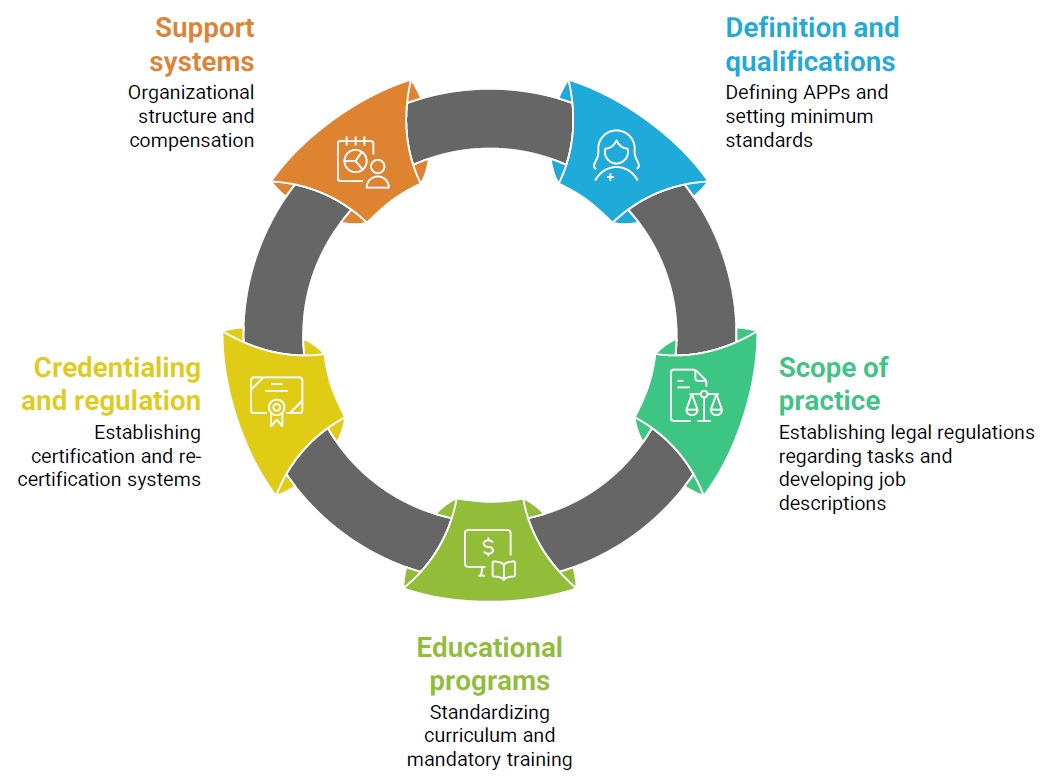
-
Abstract
PDFePub
- Purpose
This study aimed to propose strategies for strengthening the nursing workforce by expanding their roles as advanced practice providers (APPs).
Methods
A mixed-methods approach was employed, consisting of five focus group interviews (FGIs) with 30 healthcare professionals (including 10 physicians) and a two-round Delphi survey with 49 experts. The FGIs explored practical insights from clinical settings, while the Delphi process validated and prioritized strategic recommendations through expert consensus.
Results
Four major themes emerged from the FGI analysis: (1) utilization of diverse APPs to ensure quality care, (2) expanding the scope of practice of APPs, (3) requirements to ensure the quality of APPs, and (4) strategies for sustainable management of the APP workforce. Building on these findings, the Delphi survey identified five strategic domains: “definition and qualifications,” “scope of practice,” “educational programs,” “credentialing and regulation,” and “support systems.” Key areas of consensus included the need for mandatory clinical experience and specialty training, legal clarification of role boundaries, standardized curricula with certification mechanisms, and institution-led support systems such as task-specific job descriptions and recredentialing processes.
Conclusion
To effectively strengthen APP roles, it is essential to build on the existing advanced practice nurse (APN) framework, which already includes structured curricula and national certification. Furthermore, integrative strategies should be developed to incorporate experienced clinical nurses without APN licenses into the APN system.
- 3,968 View
- 332 Download
Review Paper
- Risk factors for the readmission of patients with diabetic ketoacidosis: a systematic review and meta-analysis
- Hyerim Ji, Sun-Kyung Hwang
- J Korean Acad Nurs 2025;55(4):634-650. Published online November 21, 2025
- DOI: https://doi.org/10.4040/jkan.25072
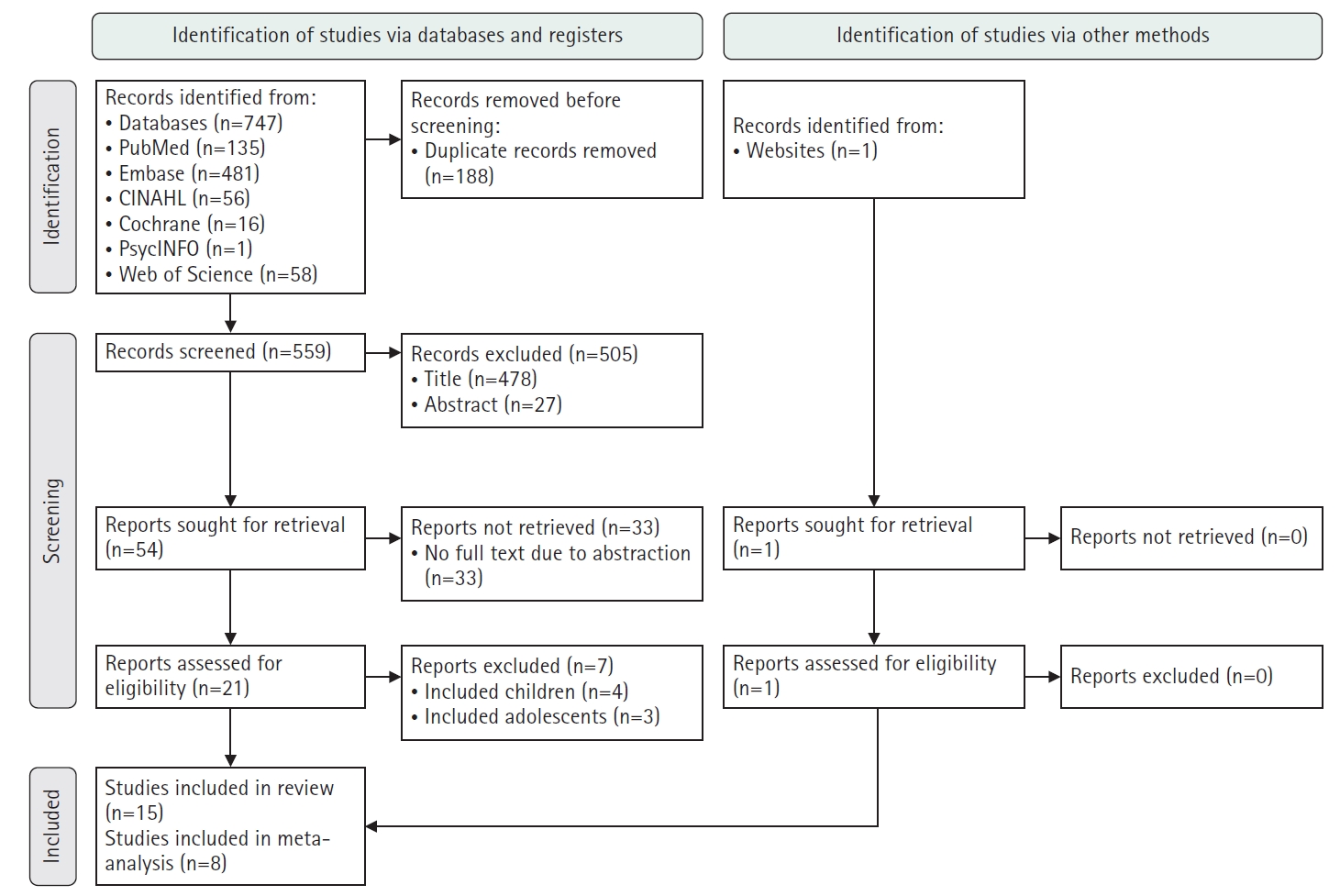
-
Abstract
PDFePub
- Purpose
This study aimed to identify risk factors associated with the readmission of patients with diabetic ketoacidosis (DKA) through a systematic review and meta-analysis.
Methods
A systematic literature review was conducted in accordance with the PRISMA guidelines. Relevant studies were retrieved from international databases (PubMed, EMBASE, Cochrane Library, CINAHL, PsycINFO, and Web of Science) and Korean databases (RISS, KoreaMed, KMbase, KISS, and DBpia). Study quality was evaluated using the Newcastle-Ottawa Scale. Meta-analysis was performed using a random-effects model with the Hartung-Knapp-Sidik-Jonkman adjustment to account for the limited number of studies and heterogeneity.
Results
Fifteen studies were included in the review, and eight were eligible for meta-analysis. From the systematic review, 21 risk factors for DKA readmission were identified and categorized into five domains: demographic, socioeconomic, diabetes-related, comorbidity, and health-behavioral factors. In the meta-analysis, significant risk factors included low income, psychiatric disorders, and discharge against medical advice.
Conclusion
This study demonstrates that DKA readmissions result from the complex interplay of multiple clinical and social factors. By identifying these risk factors and suggesting risk-stratification criteria, the findings may support the development of tailored interventions, such as self-management education, integrated mental health care, structured discharge planning, and coordinated post-discharge follow-up.
- 3,201 View
- 345 Download
Research Papers
- Development of a machine learning-based prediction model for early hospital readmission after kidney transplantation: a retrospective study
- Hye Jin Chong, Ji-hyun Yeom
- J Korean Acad Nurs 2025;55(4):528-542. Published online November 21, 2025
- DOI: https://doi.org/10.4040/jkan.25030
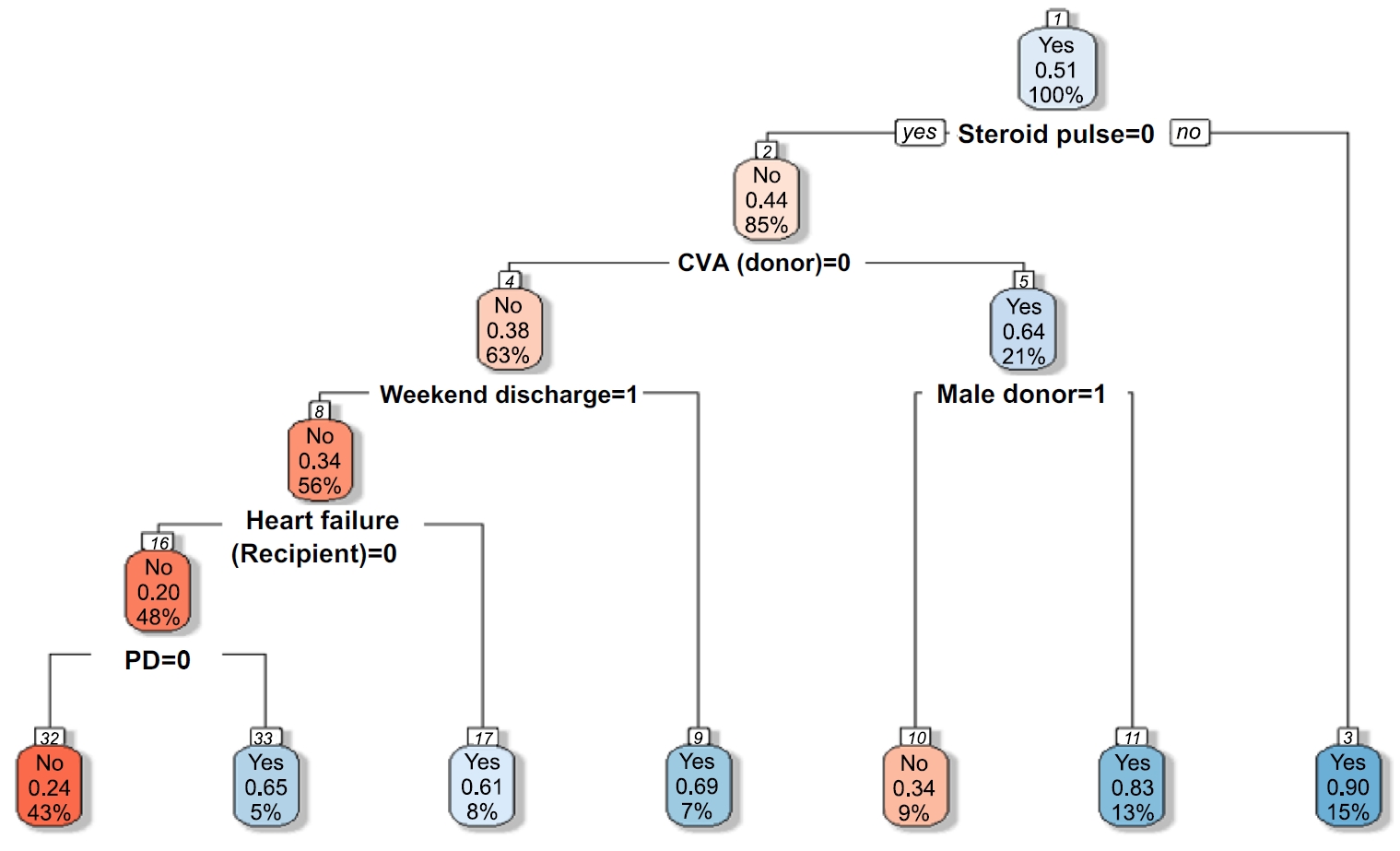
-
Abstract
PDFePub
- Purpose
This study aimed to develop and validate a machine learning-based prediction model for early hospital readmission (EHR) post-kidney transplantation.
Methods
The study was conducted at the organ transplantation center of a university hospital, utilizing data from 470 kidney transplant recipients. We built and trained four machine learning models and tested them to identify the strongest EHR predictors. Predictive performance was evaluated using confusion matrices and the area under the receiver operating characteristic curve (ROC AUC).
Results
Among the 470 kidney transplant recipients with a mean age of 46.1 ± 12.02 years, 322 (68.5%) were males, and 74 (15.7%) were readmitted within 30 days after kidney transplantation. In total, 241 (51.2%) recipients were found to have experienced EHR after applying the random over-sampling examples method. The random forest model achieved the best performance, with an ROC AUC of .87 (validation set) and .82 (test set). The 15 most important features were steroid pulse therapy (recipient), cerebrovascular accident (recipient), heart failure (recipient), male sex (donor), cardiovascular disease (recipient), weekend discharge (recipient), peritoneal dialysis (recipient) cerebrovascular accident as the cause of brain death (donor), current smoker (recipient), cardiac arrest (donor), previous kidney transplantation (recipient), age (donor), hypertension (donor), male sex (recipient), and dialysis duration (recipient).
Conclusion
Our framework demonstrated strong predictive interpretability. It can support appropriate and effective clinical decision-making by assisting transplant professionals in stratifying recipients based on their risk of EHR. prioritizing post-discharge care and follow-up for high-risk individuals, and allocating targeted interventions such as closer monitoring or education.
- 2,504 View
- 227 Download
- Ten-year trends in research designs and keywords: a bibliometric comparison of the Journal of Korean Academy of Nursing and leading international nursing journals
- Jin-Hee Park, Hyun Kyoung Kim, Gaeun Kim, Sun Hyoung Bae
- J Korean Acad Nurs 2025;55(4):557-567. Published online November 19, 2025
- DOI: https://doi.org/10.4040/jkan.25119
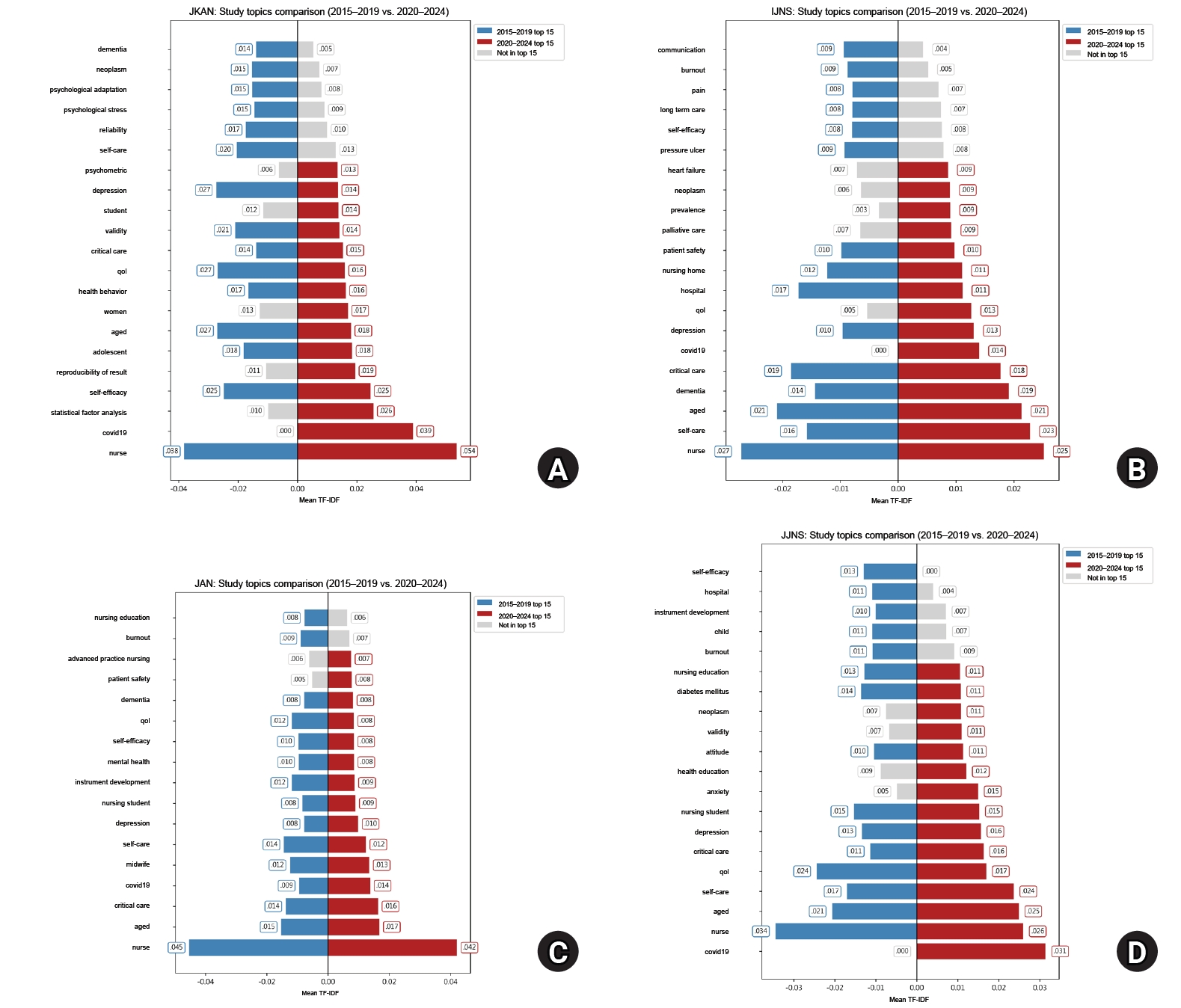
-
Abstract
PDFePub
- Purpose
This study compared trends in research designs and keywords by analyzing the abstracts of four major nursing journals over the past decade, focusing on the Journal of Korean Academy of Nursing (JKAN) in comparison with the International Journal of Nursing Studies (IJNS), Journal of Advanced Nursing (JAN), and Japan Journal of Nursing Science (JJNS).
Methods
A bibliometric analysis was conducted, encompassing 5,522 abstracts published between 2015 and 2024. Research designs were first classified as “quantitative,” “qualitative,” or “other,” and then further sub-classified based on international evidence-based frameworks. Text preprocessing was also conducted, and term frequency–inverse document frequency was applied to evaluate keyword importance. The 2015–2019 and 2020–2024 periods were compared to examine changes in both research designs and keyword importance.
Results
Compared to IJNS, JAN, and JJNS, JKAN published more instrument development and analytic studies but fewer randomized controlled trials and systematic reviews. Over time, the number of instrument development and mixed-methods studies in JKAN increased, while high-evidence designs remained scarce. Keyword analysis showed JKAN’s emphasis on psychosocial themes such as self-efficacy, quality of life, and depression, whereas the other journals more often highlighted policy- and institution-related topics. Across journals, COVID-19 and patient safety emerged as important themes after 2020.
Conclusion
JKAN demonstrates strengths in methodological diversity within quantitative research and in digital health–related analytics. However, high-evidence study designs and policy-oriented keywords are underrepresented in JKAN. Strategic expansion toward randomized controlled trials, systematic review, global and digital health, and policy-relevant research is recommended to strengthen JKAN’s international competitiveness. -
Citations
Citations to this article as recorded by- Methodological and Thematic Trends in the Korean Journal of Adult Nursing (2015–2024)
Eunok Park, Jungsun Lee, Jeong Hee Kim, JinShil Kim, Haeng-Mi Son, Jeonghyun Cho, Bohyun Park
Korean Journal of Adult Nursing.2026; 38(2): 155. CrossRef
- Methodological and Thematic Trends in the Korean Journal of Adult Nursing (2015–2024)
- 2,751 View
- 170 Download
- 1 Crossref
- Multidimensional factors influencing the completion of advance directives among community-dwelling older Koreans
- Hee-Ju Ji, Soong-Nang Jang
- J Korean Acad Nurs 2025;55(4):543-556. Published online November 18, 2025
- DOI: https://doi.org/10.4040/jkan.25098
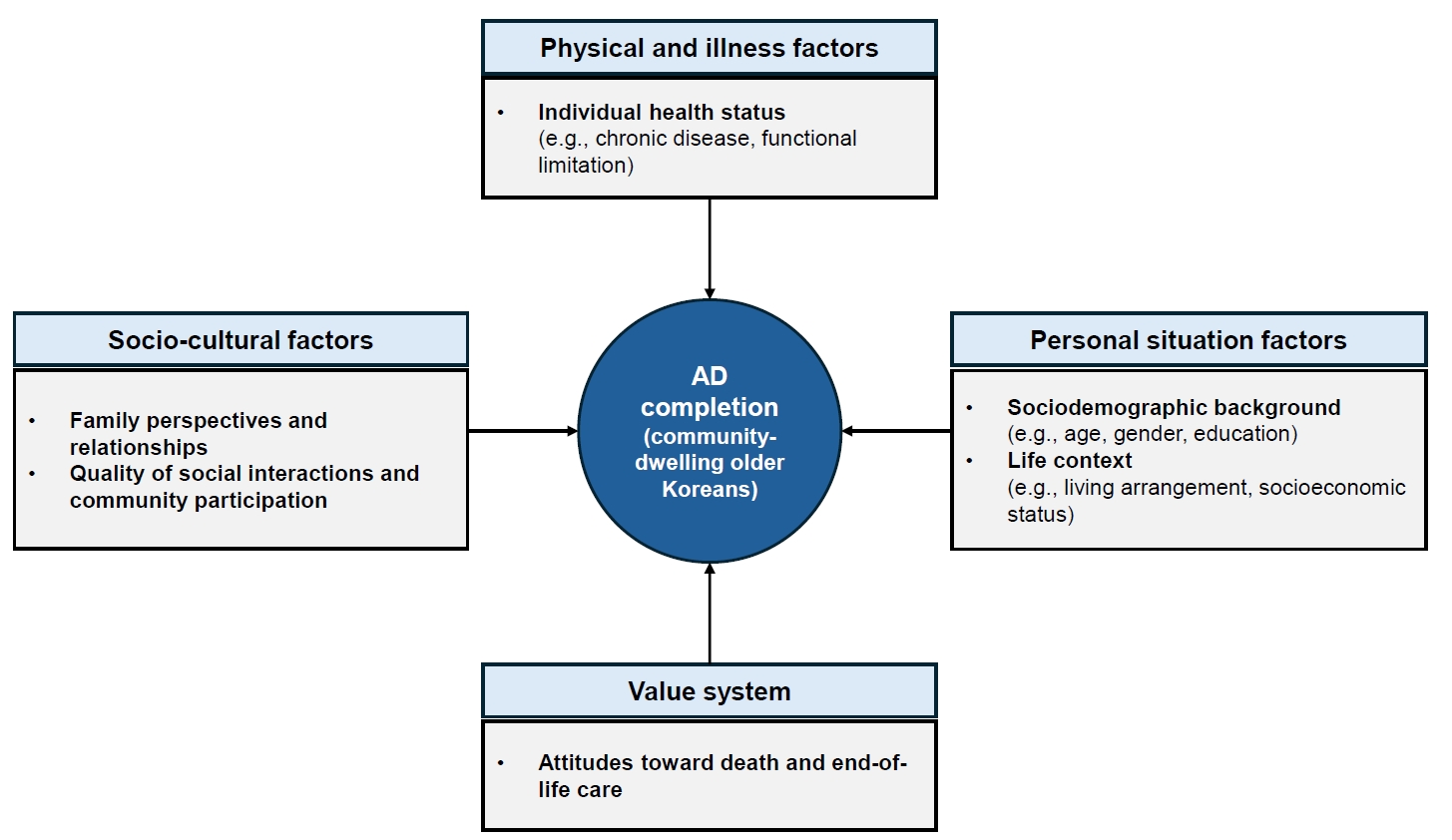
-
Abstract
PDFePub
- Purpose
This study aimed to examine the multidimensional factors associated with the completion of advance directives (ADs) among community-dwelling older Koreans, guided by conceptual frameworks developed in Asian contexts.
Methods
Data from the 2023 National Survey of Older Koreans (sixth wave) were analyzed for 9,951 community-dwelling older Koreans aged 65 years or older. Complex sample cross-tabulation and binary logistic regression analyses were conducted.
Results
In total, 11.1% of community-dwelling older Koreans had completed an AD. Significant factors associated with AD completion were identified across four domains—personal situation: age, educational level, religion, and housing preference in the event of poor health; socio-cultural: presence of children, participation in social activities and satisfaction with social relationships; physical and illness: the number of chronic diseases; and value system: awareness of hospice and palliative services, participation in death preparedness education, and documentation of organ donation.
Conclusion
Among older Koreans, AD completion represents more than a documentation process; it reflects a complex decision-making process shaped by their values and life circumstances, underscoring the need for supportive interventions. As the highest AD completion rates are found among older adults, related policies should be aligned with older adult-centered policy frameworks.
- 2,709 View
- 234 Download
- Effects of presenteeism on turnover intention in clinical nurses through the serial mediating roles of missed nursing care and job satisfaction: a cross-sectional predictive correlational study
- Hyeonseon Cheon, Seok Hee Jeong, Hyun Kyung Kim, Hyoung Eun Chang
- J Korean Acad Nurs 2025;55(4):584-597. Published online November 10, 2025
- DOI: https://doi.org/10.4040/jkan.25015
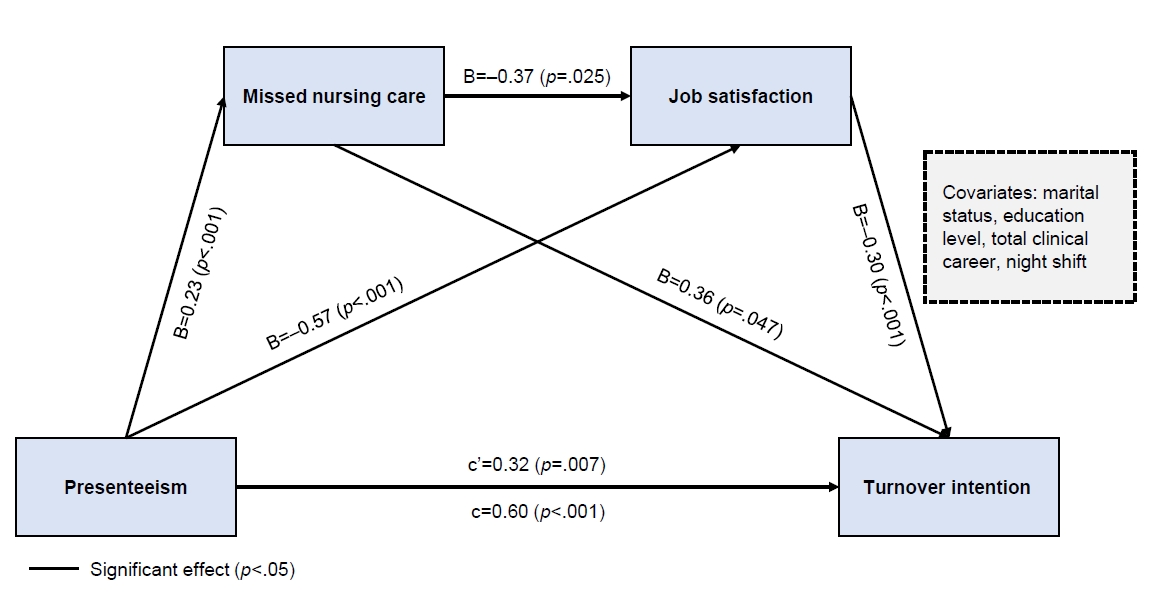
-
Abstract
PDFePub
- Purpose
This study aimed to investigate the two-mediator serial mediation effect of missed nursing care and job satisfaction on the relationship between presenteeism and turnover intention in clinical nurses.
Methods
A cross-sectional predictive correlational study was conducted, and the participants were 208 clinical nurses working in advanced general hospitals in South Korea. Data were collected from October 6 to November 7, 2023 using self-reported questionnaires, including general characteristics, presenteeism, missed nursing care, job satisfaction, and turnover intention. Data were analyzed using IBM SPSS/WIN ver. 29.0 and PROCESS macro ver. 4.2.
Results
Missed nursing care and job satisfaction exhibited a double mediating effect on the relationship between presenteeism and clinical nurses’ turnover intention. In addition, missed nursing care showed a mediating effect on the relationship between presenteeism and clinical nurses’ turnover intention. Job satisfaction had a mediating effect on the relationship between presenteeism and clinical nurses’ turnover intention. Presenteeism had a direct effect on missed nursing care, job satisfaction, and turnover intention. Missed nursing care exerted a direct effect on job satisfaction and turnover intention among clinical nurses. Job satisfaction had a direct effect on turnover intention.
Conclusion
To reduce nurses’ turnover intention, it is essential to develop and implement programs focused on preventing presenteeism. Additionally, organizational initiatives should prioritize active support for nurses’ health management, alleviating the shortage of nursing staff, augmenting job satisfaction, and improving the overall working environment. -
Citations
Citations to this article as recorded by- The Effects of Perceived Time Pressure, Presenteeism, and Patient Safety Culture of General Hospital Nurses on Patient Safety Management Activities
Young Suk Yoo, Ju Young Park
Journal of Korean Public Health Nursing.2026; 40(1): 63. CrossRef - The Effects of Nurses' Job Stress and Presenteeism on Turnover Intention: Moderated Mediating Effect of Nursing Work Environment
Yu Seung Ban, Youngran Yang, Seok Hee Jeong, Hyoung Eun Chang
Journal of Korean Academy of Nursing Administration.2026; 32(3): 187. CrossRef - Post-Traumatic Stress Symptoms, Occupational Stress, Emotional Exhaustion, and Quiet Quitting in Workplace-Violence-Exposed Turkish Prehospital Emergency Workers: A Cross-Sectional Study
Mehmet Tatlı, Ramazan Güven, Habip Balsak, Mehmet Özel, İsmail Altıntop
Healthcare.2026; 14(15): 2244. CrossRef - Portuguese Version of the MISSCARE Survey-Patient: A Cross-Cultural Validation Study
Paulo Cruchinho, Gisela Teixeira, Pedro Lucas, Filomena Gaspar, María Dolores López-Franco
Nursing Reports.2026; 16(9): 312. CrossRef
- The Effects of Perceived Time Pressure, Presenteeism, and Patient Safety Culture of General Hospital Nurses on Patient Safety Management Activities
- 3,677 View
- 436 Download
- 2 Web of Science
- 4 Crossref
- Effects of an integrated healthcare program for postpartum women: a quasi-experimental study
- Eun Suk Hwang, Ju-Hee Nho
- J Korean Acad Nurs 2025;55(4):506-518. Published online November 7, 2025
- DOI: https://doi.org/10.4040/jkan.25076
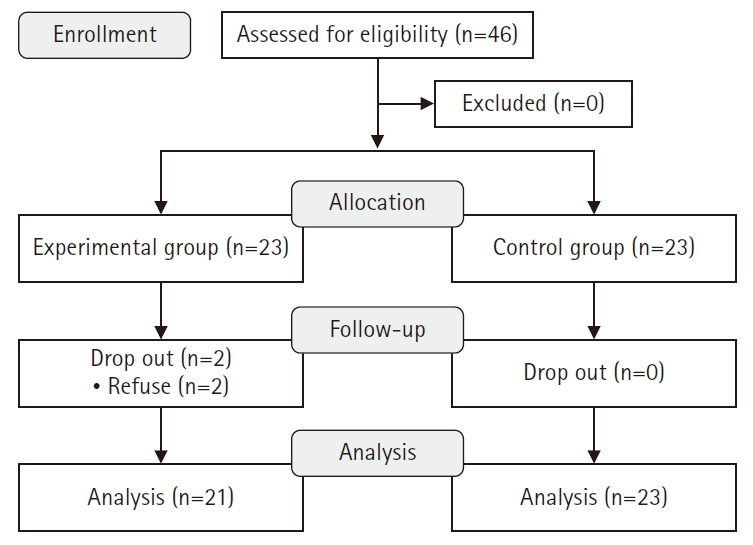
-
Abstract
PDFePub
- Purpose
This study aimed to develop and evaluate an integrated healthcare program for postpartum mothers based on Cox’s interaction model of client health behavior.
Methods
A non-equivalent control group pretest-posttest design was used. The integrated healthcare program was administered 6 times over 2 weeks to postpartum mothers in the experimental group (n=21), while the control group (n=23) received standard care. Data were collected from June 3 to July 15, 2024, through structured questionnaires measuring postpartum fatigue, depression, marital intimacy, and mother-infant attachment. Analyses were conducted using IBM SPSS ver. 23.0.
Results
The experimental group showed significantly lower postpartum fatigue (Z=–2.00, p=.023), a significantly proportion of improvement in postpartum depression (χ2=10.32, p=.012), and a significant increase in mother-infant attachment (t=1.70, p=.048) compared to the control group. However, there was no significant difference in marital intimacy between groups (Z=–0.46, p=.326).
Conclusion
These results suggest that an integrated health management program including physical health, psychological stability, and relational support can be used as an effective nursing intervention to promote health in postpartum mothers. Therefore, additional research is warranted that expands and applies integrated programs for postpartum mothers in various environments in postpartum care centers and communities.
- 4,261 View
- 528 Download
- Development of a predictive model for exclusive breastfeeding at 3 months using machine learning : a secondary analysis of a cross-sectional survey
- Hyun Kyoung Kim
- J Korean Acad Nurs 2025;55(4):519-527. Published online October 28, 2025
- DOI: https://doi.org/10.4040/jkan.25086
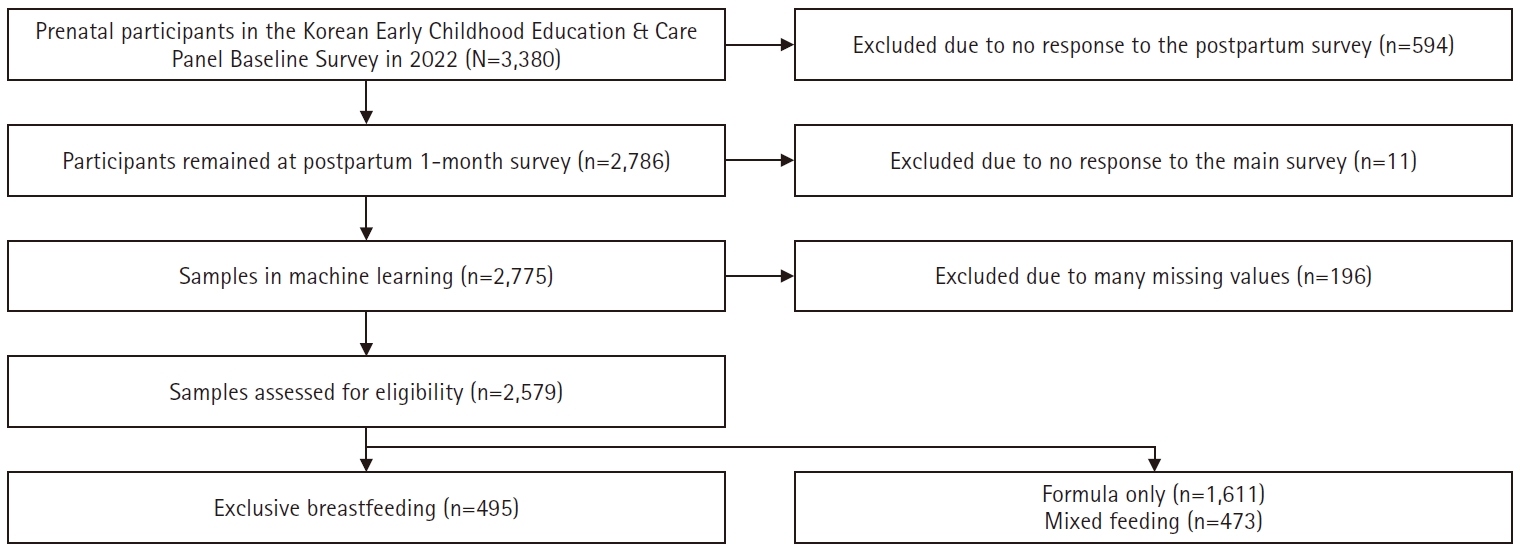
-
Abstract
PDFePub
- Purpose
This study aimed to develop a machine learning model to predict exclusive breastfeeding during the first 3 months after birth and to explore factors affecting breastfeeding outcomes.
Methods
Data from 2,579 participants in the Korean Early Childhood Education & Care Panel between March 1 and June 3, 2025 were analyzed using Python version 3.12.8 and Colab. The dataset was split into training and testing sets at an 80:20 ratio, and five classifiers (random forest, logistic regression, decision tree, AdaBoost, and XGBoost) were trained and evaluated using multiple performance metrics and feature importance analysis.
Results
The confusion matrix of the random forest classifier model demonstrated strong performance, with a precision of 86.6%, accuracy of 84.8%, recall of 96.8%, F1-score of 91.9%, and an area under the curve of 86.0%. Twenty-one features were analyzed, from which feeding plan, breastfeeding at 1 month, marriage period, maternal prenatal weight, self-respect, alcohol consumption, grit, value placed on children, maternal age, and depression emerged as important predictors of exclusive breastfeeding in the first 3 months.
Discussion
A robust model was developed to predict exclusive breastfeeding that identified feeding planning and breastfeeding at 1 month as the most influential predictors. The model could be implemented in clinical and community settings to guide tailored breastfeeding support strategies, coupled with the integration of maternal self-respect, grit, and the value placed on children in counseling programs to promote exclusive breastfeeding. -
Citations
Citations to this article as recorded by- Effects of Digital Health Interventions on Breastfeeding Rates, Self-Efficacy, and Knowledge: Systematic Review and Meta-Analysis
Jiahe Sun, Yu Wang, Shuang Hu, Yajie Ding, Congshan Pu, Danni Song, Jiaai Xia, Chunjian Shan
Journal of Medical Internet Research.2026; 28: e92184. CrossRef
- Effects of Digital Health Interventions on Breastfeeding Rates, Self-Efficacy, and Knowledge: Systematic Review and Meta-Analysis
- 3,301 View
- 232 Download
- 1 Web of Science
- 1 Crossref
- Job stress levels and coping among hospital nurses: a latent profile analysis
- Myungji Kim, Hyunkyung Choi
- J Korean Acad Nurs 2025;55(3):377-387. Published online August 22, 2025
- DOI: https://doi.org/10.4040/jkan.25061
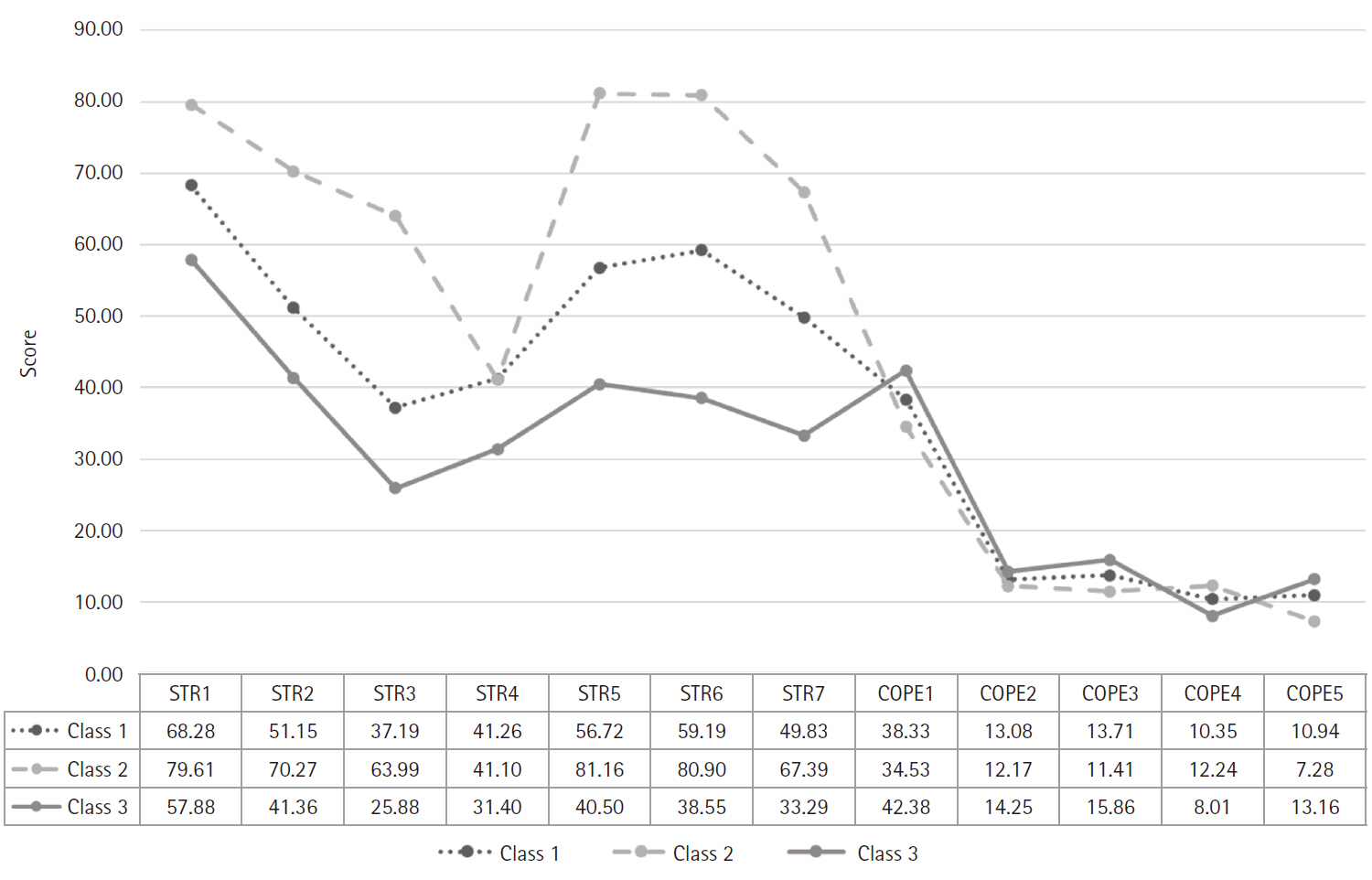
-
Abstract
PDFePub
- Purpose
This study aimed to identify job stress levels and coping profiles among hospital nurses, explore the factors influencing profile classification, and determine whether levels of job embeddedness and happiness varied among the profiles.
Methods
Data were collected through an online survey of 325 hospital nurses, and latent profiles were identified via latent profile analysis. The R3STEP (three-step auxiliary variable approach) method was used to examine the factors influencing the latent profiles, and one-way analysis of variance was conducted to analyze differences in levels of job embeddedness and happiness.
Results
Three job stress and coping profiles were identified: (1) the “moderate stress-balanced coping group”, characterized by moderate levels of job stress and moderate use of all coping strategies; (2) the “high stress-emotional coping group”, with high job stress and primary use of emotional display strategies; and (3) the “low stress-adaptive coping group, with low job stress and the utilization of a variety of coping strategies. Workplace location and monthly income influenced the classification of latent profiles. Nurses working in metropolitan areas and those with lower monthly incomes were more likely to be classified into the high stress-emotional coping group than other groups. The levels of job embeddedness and happiness were highest in the low stress-adaptive coping group and lowest in the high stress-emotional coping group.
Conclusion
The results of this study indicate the need to develop strategies that offer diverse stress-coping programs and support nurses in effectively utilizing coping methods that best suit their individual needs.
- 3,941 View
- 329 Download
- Effects of an agro-healing program on depression, stress, and cognitive function in older adults: a quasi-experimental study
- Gyu Yeon Park, Kwang Ok Lee
- J Korean Acad Nurs 2025;55(3):342-352. Published online August 21, 2025
- DOI: https://doi.org/10.4040/jkan.25058

-
Abstract
PDFePub
- Purpose
This study aimed to evaluate the effects of an agro-healing program on depression, stress, and cognitive function in older adults.
Methods
A quasi-experimental, nonequivalent control group pretest–posttest design was used. The study was conducted from July 16 to September 6, 2024. Sixty-two individuals aged 65 or older residing in Gimcheon, Gyeongsangbuk-do, were recruited according to the selection criteria (31 in the experimental group and 31 in the control group). The final analysis included 30 participants in each group. The program was delivered by one main instructor (a healing farmer) and three assistants. The pretest assessed general characteristics, the Geriatric Depression Scale Short Form-Korean Version, Stress Response Inventory-Modified Form, and Cognitive Impairment Screening Test. The experimental group participated in the agro-healing program once a week for 90 minutes over 8 weeks. The posttest included the same measurements as the pretest. Data were analyzed using IBM SPSS ver. 23.0.
Results
The experimental group, which participated in the healing agriculture program, showed reduced depression (F=7.97, p=.007) and stress (F=282.70, p<.001) and improved cognitive function (F=10.12, p=.002) compared to the control group.
Conclusion
The findings suggest that the agro-healing program is an effective intervention for reducing depression and stress and improving cognitive function in older adults. We propose its use to promote health and prevent dementia in this population. -
Citations
Citations to this article as recorded by- The concept and characteristics of agro-healing foods: results from focus group interviews and a Delphi survey among experts
Dahye Han, Chae-Ryeon Kim, Jaesin Lee, Kyeong-a Jang, Sohyun Park
Journal of Nutrition and Health.2026; 59(3): 303. CrossRef
- The concept and characteristics of agro-healing foods: results from focus group interviews and a Delphi survey among experts
- 4,813 View
- 400 Download
- 1 Crossref
- Comparison of educational needs and priorities for work-related laws between hospital and community-based nurses
- Jeonghyun Kim, Min Kyoung Han, Minjae Lee, Sujin Shin
- J Korean Acad Nurs 2025;55(3):400-412. Published online August 21, 2025
- DOI: https://doi.org/10.4040/jkan.25049
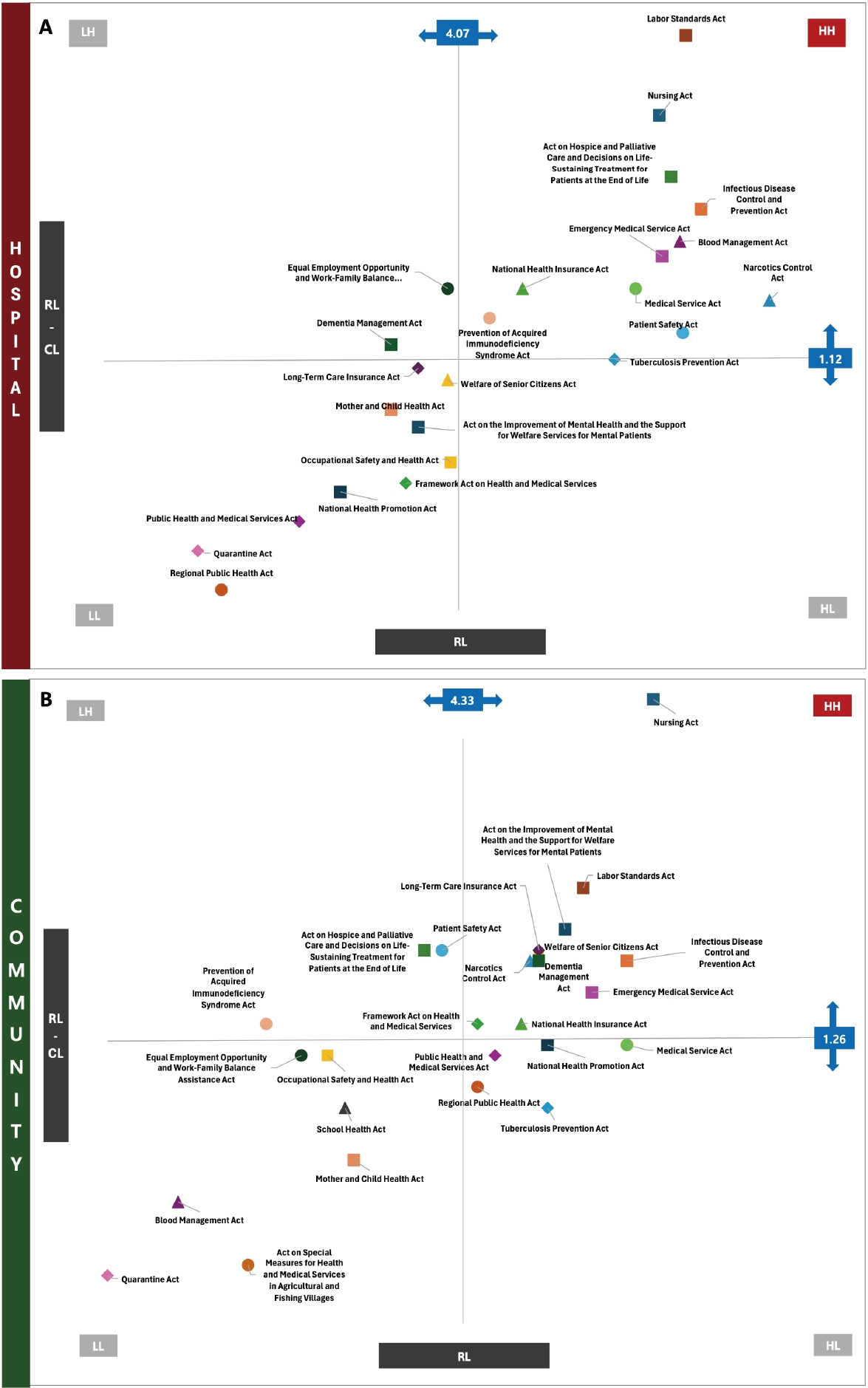
-
Abstract
PDFePub
- Purpose
This study aimed to examine the practical utilization of work-related laws in nursing practice and to prioritize educational needs to provide foundational data for improving nurses’ legal competencies.
Methods
A descriptive survey was employed using an online self-reported questionnaire. Participants included 275 nurses with over 3 years of clinical experience, categorized into hospital and community-based. Convenience sampling was used, and data were collected between January 9 and February 3, 2025. Descriptive statistics and the paired t-test were conducted using IBM SPSS 26.0. Educational needs were analyzed using the Borich Needs Assessment and the Locus for Focus model.
Results
Among participants, 75.6% had received education on work-related laws, and 79.3% of those participants received related education during their undergraduate studies. However, 32.4% of nurses reported experiencing practice related difficulties due to insufficient legal knowledge, particularly related to unclear legal responsibilities and ambiguity in the scope of practice. High educational needs were identified for the Nursing Act and the Labor Standards Act across all workplaces. Hospital nurses emphasized the Hospice and Palliative Care Act and Emergency Medical Services Act, while community-based nurses prioritized the Mental Health Welfare Act, Elderly Welfare Act, and Dementia Management Act.
Conclusion
Nurses’ legal education needs are related to practical applications and their capability to respond appropriately to legal requirements, and these needs vary depending on their work environment and social changes. These findings underscore the necessity of restructuring legal education curricula to improve practical relevance and support nurses’ rights, providing a basis for developing workplace-specific legal education programs. -
Citations
Citations to this article as recorded by- Legal Literacy in Clinical Nursing Practice: A Walker and Avant Concept Analysis
Yufei Xing, Xiaolong Wang, Enming Zhang, Jiajia Yu, Qiong Fang
Nursing Reports.2026; 16(6): 200. CrossRef
- Legal Literacy in Clinical Nursing Practice: A Walker and Avant Concept Analysis
- 3,151 View
- 207 Download
- 1 Web of Science
- 1 Crossref
- Development of a scale to measure fear of falling in older adults: a psychometric validation study
- Dayeon Lee, Sunghee H Tak
- J Korean Acad Nurs 2025;55(3):413-424. Published online August 21, 2025
- DOI: https://doi.org/10.4040/jkan.25036
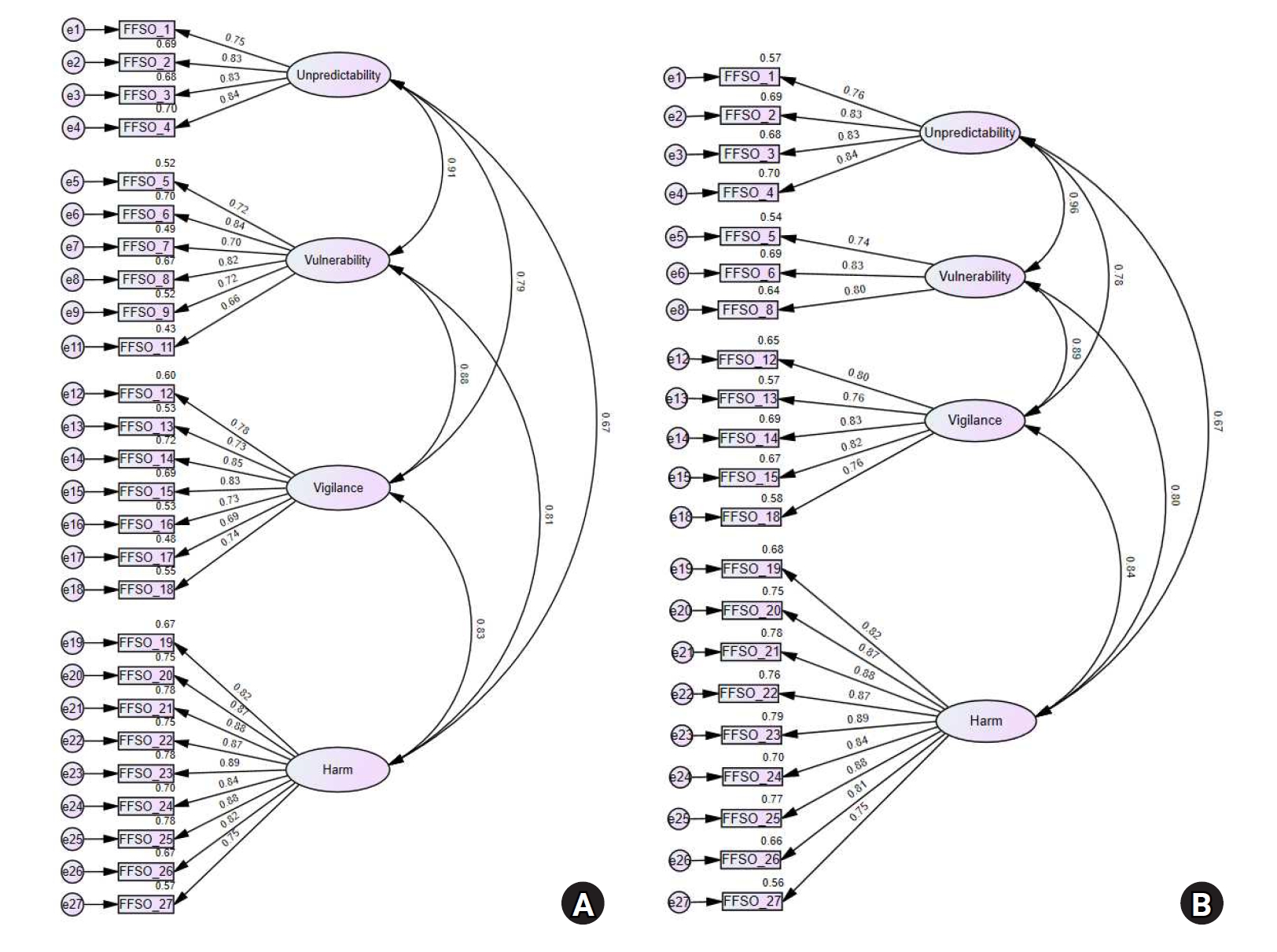
-
Abstract
PDFePub
- Purpose
This study aimed to develop a scale to measure fear of falling in older adults and to validate its reliability and validity.
Methods
In total, 31 initial items were developed by referring to expressions from previous studies and items from existing instruments. After verifying content validity through expert evaluation, the remaining 27 items were used to construct a survey. Data from 252 participants recruited at three senior welfare centers in the metropolitan area were analyzed to examine item analysis, construct validity, convergent validity, discriminant validity, and reliability. Confirmatory factor analysis (CFA) was conducted to test construct validity. The correlation with the Korean version of the Falls Efficacy Scale-International (KFES-I) was used to assess convergent validity. Cronbach’s alpha was calculated to determine reliability.
Results
The final instrument consisted of 21 items. CFA confirmed acceptable model fit. Convergent validity was also acceptable and discriminant validity was partially supported. Correlations with the KFES-I ranged from .54 to .63. The Cronbach’s alpha coefficients for the total score and all factors ranged from .84 to .97.
Conclusion
The Fear of Falling Scale for Older Adults developed in this study is a validated tool capable of measuring various dimensions of fear of falling. It provides a foundation for accurately assessing fear of falling in older adults and addressing its specific aspects.
- 2,445 View
- 233 Download
- Prenatal psychosocial factors and postpartum post-traumatic stress disorder in low-risk postnatal women: a longitudinal study
- Jung Hee Yeo, So Yeon Park
- J Korean Acad Nurs 2025;55(3):353-363. Published online August 21, 2025
- DOI: https://doi.org/10.4040/jkan.25027
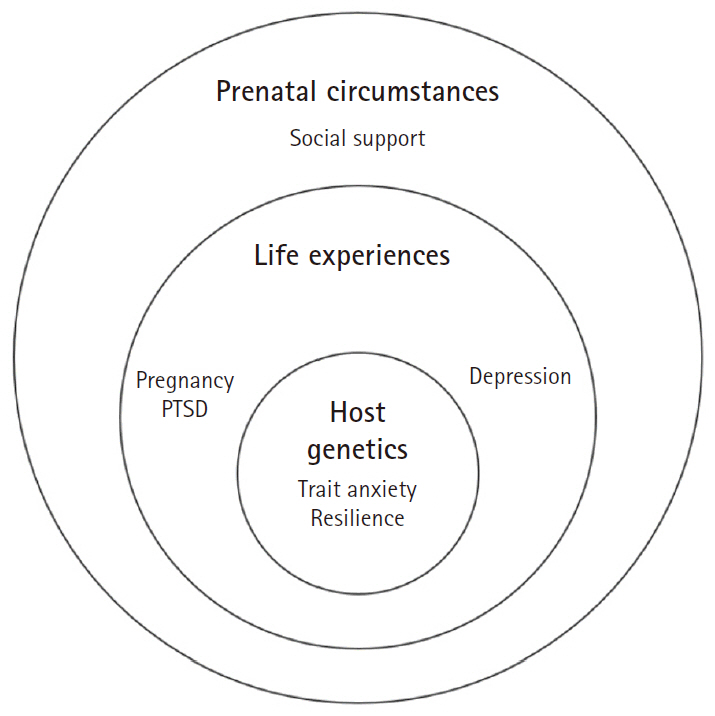
-
Abstract
PDFePub
- Purpose
This study aimed to identify prenatal psychosocial factors influencing the development of postpartum post-traumatic stress disorder (PTSD) in both short-term (4–6 weeks postpartum) and long-term (4–6 and 14–18 weeks postpartum) assessments using the wheel model.
Methods
This study employed a longitudinal design with 359 women in their third trimester who received care at two maternity hospitals in City B. Surveys were used to measure depression, anxiety, resilience, and pregnancy-related PTSD during the third trimester (n=318). Postpartum PTSD was assessed at 4–6 weeks (n=198) and at 14–18 weeks postpartum (n=156). Data were analyzed using the t-test, chi-square test, and logistic regression.
Results
The prevalence of short-term postpartum PTSD was 32.7%, and that of long-term PTSD was 19.9%. The risk of short-term PTSD increased with higher pregnancy-related PTSD symptoms (odds ratio [OR], 1.04; 95% confidence interval [CI], 1.02–1.07), higher prenatal resilience (OR, 1.09; 95% CI, 1.00–1.18), and lower social support (OR, 0.93; 95% CI, 0.87–0.99). Similarly, the risk of long-term PTSD increased with higher pregnancy-related PTSD (OR, 1.09; 95% CI, 1.04–1.13), higher prenatal resilience (OR, 1.19; 95% CI, 1.06–1.34), and low educational attainment (OR, 6.75; 95% CI, 1.03–44.30).
Conclusion
The high prevalence of short- and long-term postpartum PTSD highlights the need for systematic screening and interventions for prenatal factors, including pregnancy-related PTSD, social support, resilience, and education level. Therefore, it is necessary to alleviate pregnancy-related PTSD and strengthen social support during prenatal care to prevent postpartum PTSD. Furthermore, women with high resilience should also be targeted in these interventions, because they can also develop postpartum PTSD.
- 2,588 View
- 208 Download
- 1 Web of Science
- Effects of social support on organizational commitment among experienced nurses experiencing department rotation: the mediating effect of organizational socialization
- Young Jun Jang, Jeong A Jeong, Yu Seung Ban, Seon Hwa Park, Eun Jee Lee
- J Korean Acad Nurs 2025;55(3):364-376. Published online August 18, 2025
- DOI: https://doi.org/10.4040/jkan.25042
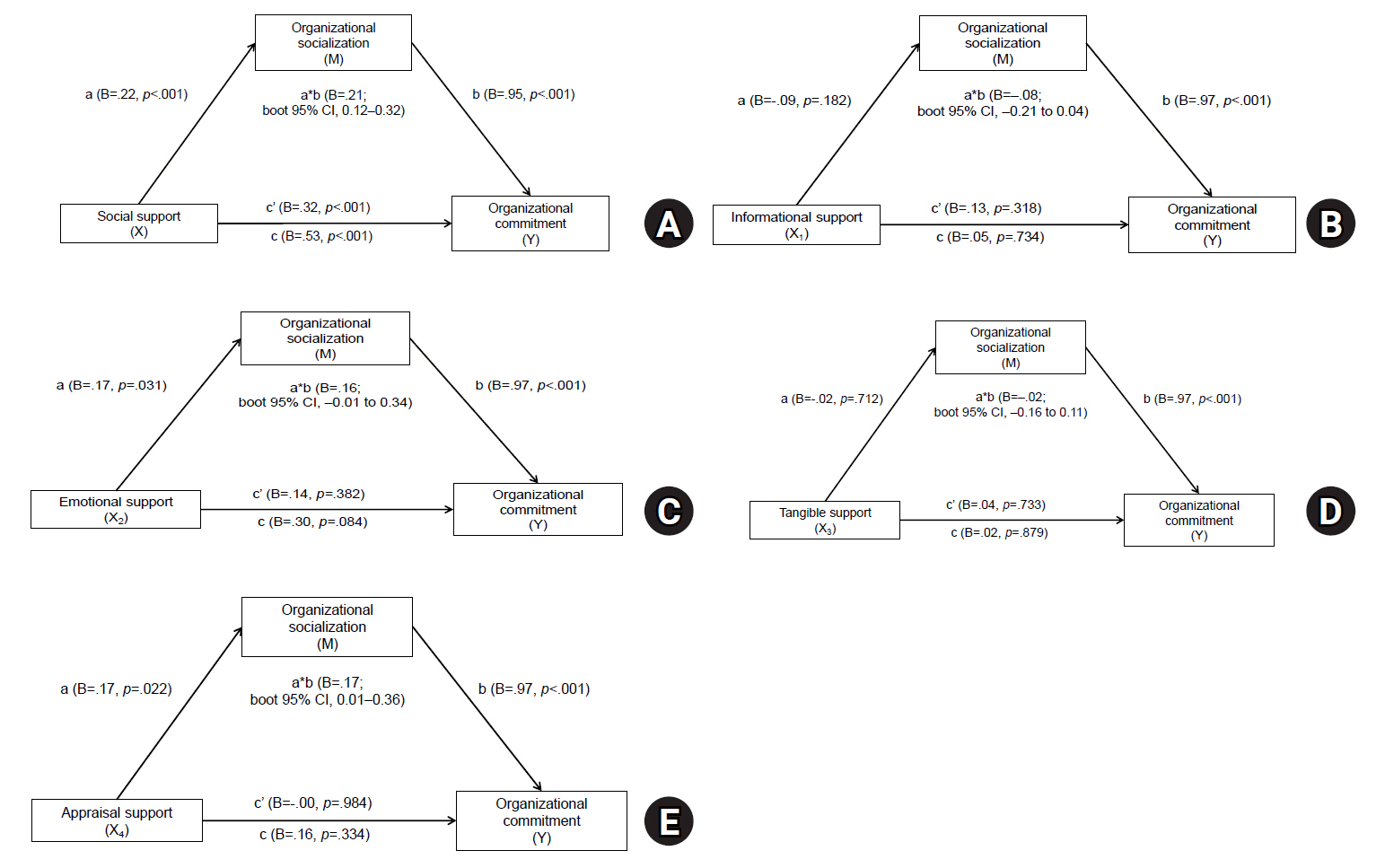
-
Abstract
PDFePub
- Purpose
This study explored the mediating role of organizational socialization in the relationship between social support and organizational commitment among nurses in hospitals who had experienced department rotation.
Methods
A descriptive survey design was used with 202 nurses from a tertiary hospital who had experienced department rotation within the past 12 months. Data were collected via an online questionnaire from August 1 to August 30, 2024. Analyses included frequency analysis, descriptive statistics, Pearson correlation, and multiple regression. The mediating effect was tested using IBM SPSS WIN ver. 23.0 and the PROCESS macro (model 4) with 10,000 bootstrap resamples.
Results
Organizational socialization partially mediated the relationship between social support and organizational commitment (B=.21; bootstrapped 95% confidence interval, 0.12–0.32).
Conclusion
The findings suggest that both social support and organizational socialization play essential roles in improving nurses’ organizational commitment following department rotation. Thus, practical programs, such as mentoring systems, should be implemented that both enhance social support and actively promote organizational socialization. These efforts have the potential to help nurses adjust more effectively to new units and ultimately improve retention and performance within healthcare organizations. -
Citations
Citations to this article as recorded by- Why Self‐Leadership Alone Is Not Enough: How Professional Self‐Concept and Organizational Commitment Shape Male Nurses’ Intention to Stay
Donghyeok Lee, Mihwa Shim, Jungmin Lee, Matthew Vandermeulen
Journal of Nursing Management.2026;[Epub] CrossRef - Job Satisfaction among Transferred Nurses: Associations with Work Environment, Peer Support, and Grit
Ji Wan Choi, Ji Yea Lee
Journal of Korean Academy of Nursing Administration.2026; 32(4): 292. CrossRef - The Effects of Organizational Socialization and Nursing Competence on Organizational Commitment among Clinical Nurses
Sangyun Park, Seunghee Lee
Journal of Korean Academy of Nursing Administration.2026; 32(4): 254. CrossRef - The Effects of Nurses’ Dispatch Work Characteristics on Job Embeddedness, Organizational Commitment, and Turnover Intention
Eejee Jung, Gunjeong Lee
Journal of Korean Academy of Nursing Administration.2025; 31(5): 560. CrossRef - Nurses' Experience Working with Substitute Nurses
Hye Mi Kim, Yeon Hee Kim, Jeong Hye Kim
Journal of Korean Association for Qualitative Research.2025; 10(3): 208. CrossRef
- Why Self‐Leadership Alone Is Not Enough: How Professional Self‐Concept and Organizational Commitment Shape Male Nurses’ Intention to Stay
- 3,621 View
- 388 Download
- 1 Web of Science
- 5 Crossref
- Impact of an integrated disease-specific nursing care model on parental anxiety and depression in severe hypospadias patients in China: a randomized controlled trial
- Ruijuan Wu, Lucai Jia, Biyu Ding, Ying Li, Yaqing Cao, Zhaojun Shi, Yanfang Yang
- J Korean Acad Nurs 2025;55(3):327-341. Published online August 12, 2025
- DOI: https://doi.org/10.4040/jkan.24147
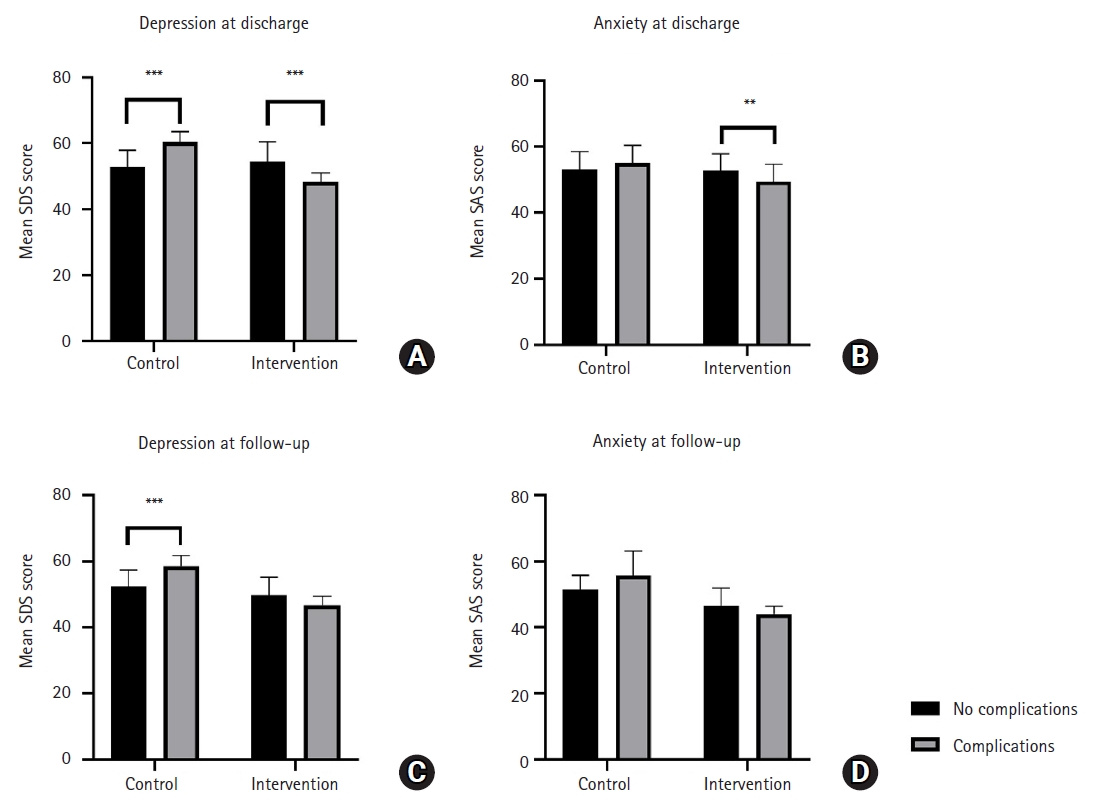
-
Abstract
PDFePub
- Purpose
This study aimed to explore the effects of an integrated disease-specific nursing care model on alleviating perioperative and post-surgical anxiety and depression in parents of children with severe hypospadias.
Methods
Parents of children with severe hypospadias were recruited and randomly allocated into a control group (n=87), which received standard nursing care, and an intervention group (n=93), which was given an integrated disease-specific nursing intervention in addition to standard care. Parental anxiety and depression were measured using the Self-Rating Anxiety Scale (SAS) and Self-Rating Depression Scale (SDS) at admission, discharge, and 6-month follow-up post-surgery.
Results
A linear mixed-effects model showed that SAS and SDS scores in the intervention group decreased to a significantly greater extent over time, from admission to follow-up, compared to the control group. Post-hoc analysis showed a trend for increased parental anxiety and depression among patients with complications at discharge and follow-up for the control group. Meanwhile, the intervention group exhibited a trend for decreased parental anxiety and depression among patients with complications at discharge and follow-up.
Conclusion
The integrated disease-specific nursing model significantly alleviated parental anxiety and depression over time compared to standard care, highlighting its effectiveness in supporting families of children with severe hypospadias. Notably, the intervention appeared to mitigate the negative emotional impact of postoperative and follow-up complications, suggesting its potential as a targeted approach to improve both emotional well-being and overall care outcomes.
- 4,187 View
- 218 Download
 First
First Prev
Prev


