
 Submit an article

Search
- Page Path
- HOME > Search
Research Papers
- Psychological reactance to anti-smoking campaigns in designated smoking areas among female smokers in their 20s and 30s: a quasi-experimental study
- Hyeonji Mun, Soontae An, Hyekyeong Kim
- J Korean Acad Nurs 2026;56(3):294-305. Published online August 10, 2026
- DOI: https://doi.org/10.4040/jkan.25177
-
 Abstract
 PDF
PDF ePub
ePub - Purpose
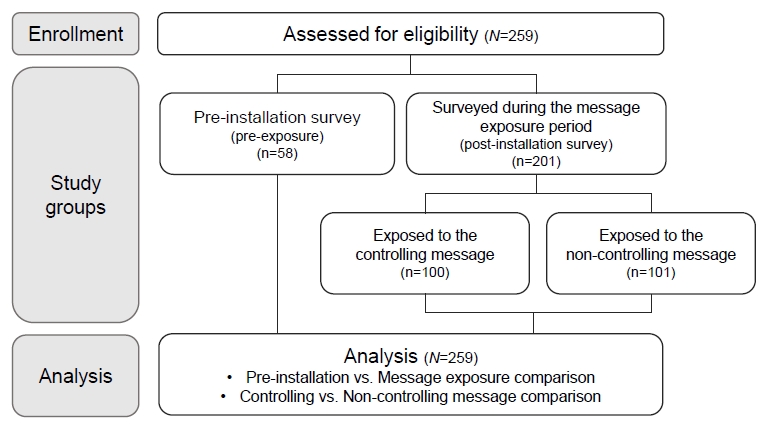
This study aimed to determine whether placing anti-smoking campaign messages in designated smoking areas elicits psychological reactance among female smokers and to assess whether message framing (controlling vs. non-controlling) moderates the association between psychological reactance and intention to quit smoking.
Methods
A quasi-experimental survey was conducted with 259 female smokers. Of these, 58 participants completed the survey before exposure to smoking-cessation messages, and 201 completed the survey after exposure. Among the exposed participants, 100 were assigned to the controlling condition and 101 to the non-controlling condition. Measures included psychological reactance, intention to quit smoking, trait reactance, smoking disclosure, and smoking-related covariates. Data were analyzed using analysis of covariance and Hayes’ PROCESS Model 1, with statistical significance set at p<.05.
Results
Smokers exposed to anti-smoking messages within designated smoking areas reported higher psychological reactance (mean±standard deviation: 2.10±0.94) than those not exposed (1.81±0.77), with a significant between-group difference (p=.017). Simple slope analysis revealed that psychological reactance was negatively associated with quit intention under controlling messages (B=–0.20, p=.031), but not under non-controlling messages (B=–0.05, p=.591).
Conclusion
Exposure to anti-smoking messages within designated smoking areas was associated with increased psychological reactance toward smoking cessation. In contrast, autonomy-supportive, non-controlling messages attenuated this effect. These findings suggest that smoking areas may serve as strategic behavioral intervention points when campaigns employ context-sensitive, autonomy-supportive message framing. This study was registered with the Clinical Research Information Service (CRIS) of the Republic of Korea (KCT0012514) on 27 August 2026.
- 1,055 View
- 74 Download

- Development of a nurses’ situation awareness scale for clinical deterioration: a methodological study
- Hye Jin Kang, Yi Kyung Ha
- J Korean Acad Nurs 2026;56(3):370-381. Published online August 5, 2026
- DOI: https://doi.org/10.4040/jkan.26039
-
Abstract
PDFePub
- Purpose
This study aimed to develop a scale for assessing nurses’ situation awareness of clinical deterioration and to evaluate its validity and reliability.
Methods
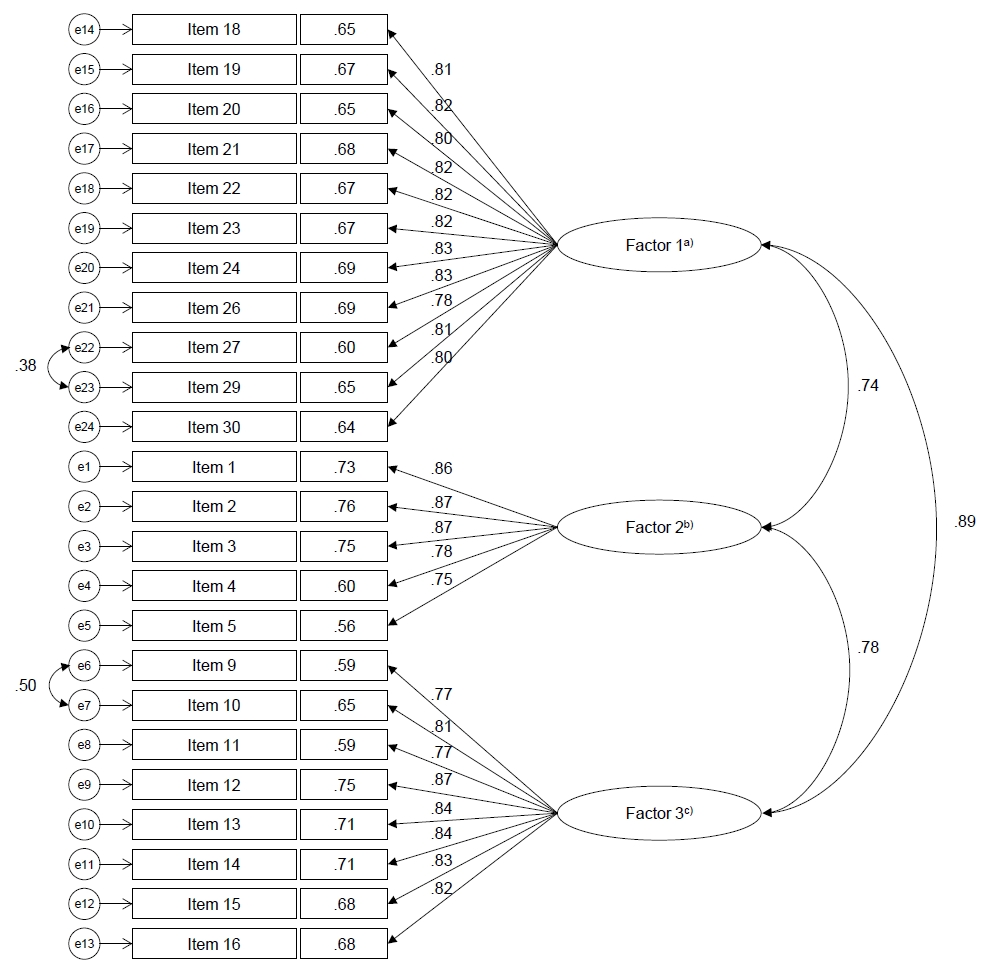
This methodological study followed the scale-development guidelines of DeVellis and Thorpe. Item generation began with 44 items derived from 17 attributes identified through a hybrid-model concept analysis, which included a literature review and focus group interviews with 13 nursing experts. After content validity was evaluated by seven experts, 30 items were retained. A pilot test was then conducted with 20 hospital nurses to assess item comprehensibility. From August 30 to October 6, 2025, a total of 446 hospital nurses participated in the survey, and data from 440 respondents were analyzed. Construct validity was examined using exploratory and confirmatory factor analyses, along with convergent and discriminant validity testing. Internal consistency was evaluated using Cronbach’s α and McDonald’s ω.
Results
Exploratory factor analysis yielded a three-factor model, which showed acceptable fit in confirmatory factor analysis. The final instrument comprised 24 items across three factors, was scored on a 5-point Likert scale, and was named the Nurses’ Situation Awareness Scale for Clinical Deterioration (NSAS-CD). The scale showed high internal consistency, with Cronbach’s α of .98 and McDonald’s ω of .98.
Conclusion
The NSAS-CD demonstrated acceptable validity and reliability for assessing nurses’ situation awareness of clinical deterioration. Further research is needed to evaluate its generalizability across diverse clinical settings and to establish standardized criteria for clinical deterioration.
- 999 View
- 117 Download
- Job analysis of nurses in acute psychiatric intensive care units using the DACUM method: a cross-sectional study
- Yun Ju Lee, Hee Kyung Kim, Jinhee Yoo, Sukja Kim, Jungeun Shin, Kyoungduck Park, Bunsun Cho
- J Korean Acad Nurs 2026;56(3):382-392. Published online August 3, 2026
- DOI: https://doi.org/10.4040/jkan.26037
-
Abstract
PDFePub
- Purpose
This study systematically analyzed the job duties of nurses in acute psychiatric intensive care units using the Developing A Curriculum (DACUM) technique and identified the core job structure that reflects the characteristics of acute mental health nursing.
Methods
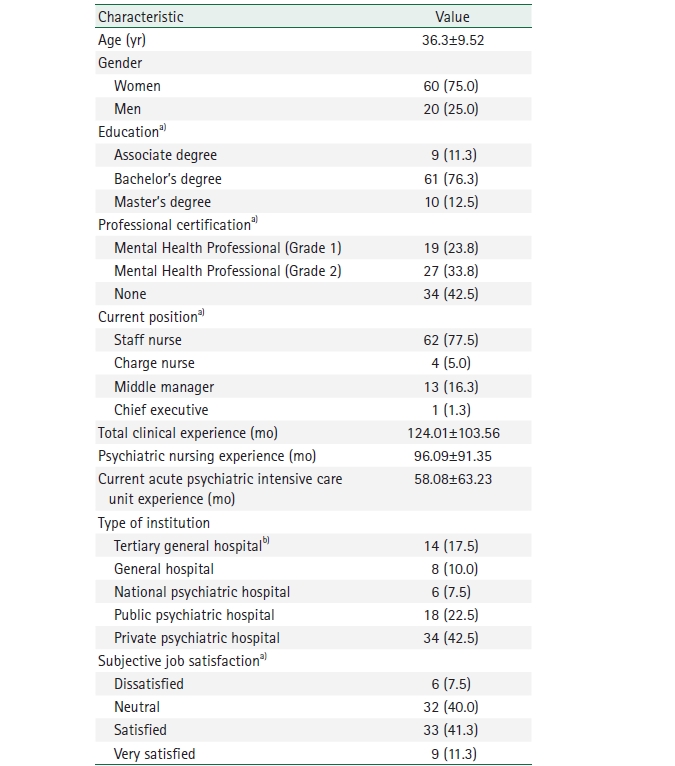
This descriptive cross-sectional study used a DACUM workshop conducted in 2025 to identify job duties. The DACUM committee included one job analysis expert, one coordinator, and eight acute psychiatric nurses. Content validity was verified by eight experts using an item-level content validity index of ≥0.78. A total of 80 nurses assessed task importance, difficulty, and frequency. Data were analyzed using descriptive statistics and the determinant coefficient.
Results
The DACUM analysis identified a structured framework consisting of 10 duties and 39 tasks. “Emergency and crisis management” had the highest determinant coefficient, followed by “therapeutic milieu management,” “psychosocial interventions,” and “education and professional development.” At the task level, crisis intervention and response, physical emergency nursing care, and management of safety incident recurrence were prioritized.
Conclusion
DACUM-based job analysis clarified the structured roles of nurses in acute psychiatric intensive care units and highlighted job characteristics centered on emergency management and safety. These findings provide foundational data for standardizing nursing roles, establishing staffing strategies, and developing specialized clinical education programs for acute psychiatric care.
- 697 View
- 65 Download
- Effects of a practitioner-led empowerment program for low-income social service recipients in South Korea: a quasi-experimental study
- Myung Sun Hyun, Eunyoung Park, Hyuncheol Kang, Mi-hye Kim
- J Korean Acad Nurs 2026;56(2):276-288. Published online May 26, 2026
- DOI: https://doi.org/10.4040/jkan.26015
-
Abstract
PDFePub
- Purpose
This study aimed to evaluate the effects of a practitioner-led empowerment program on self-sufficiency motivation, self-esteem, and self-efficacy among low-income service recipients at self-sufficiency centers.
Methods
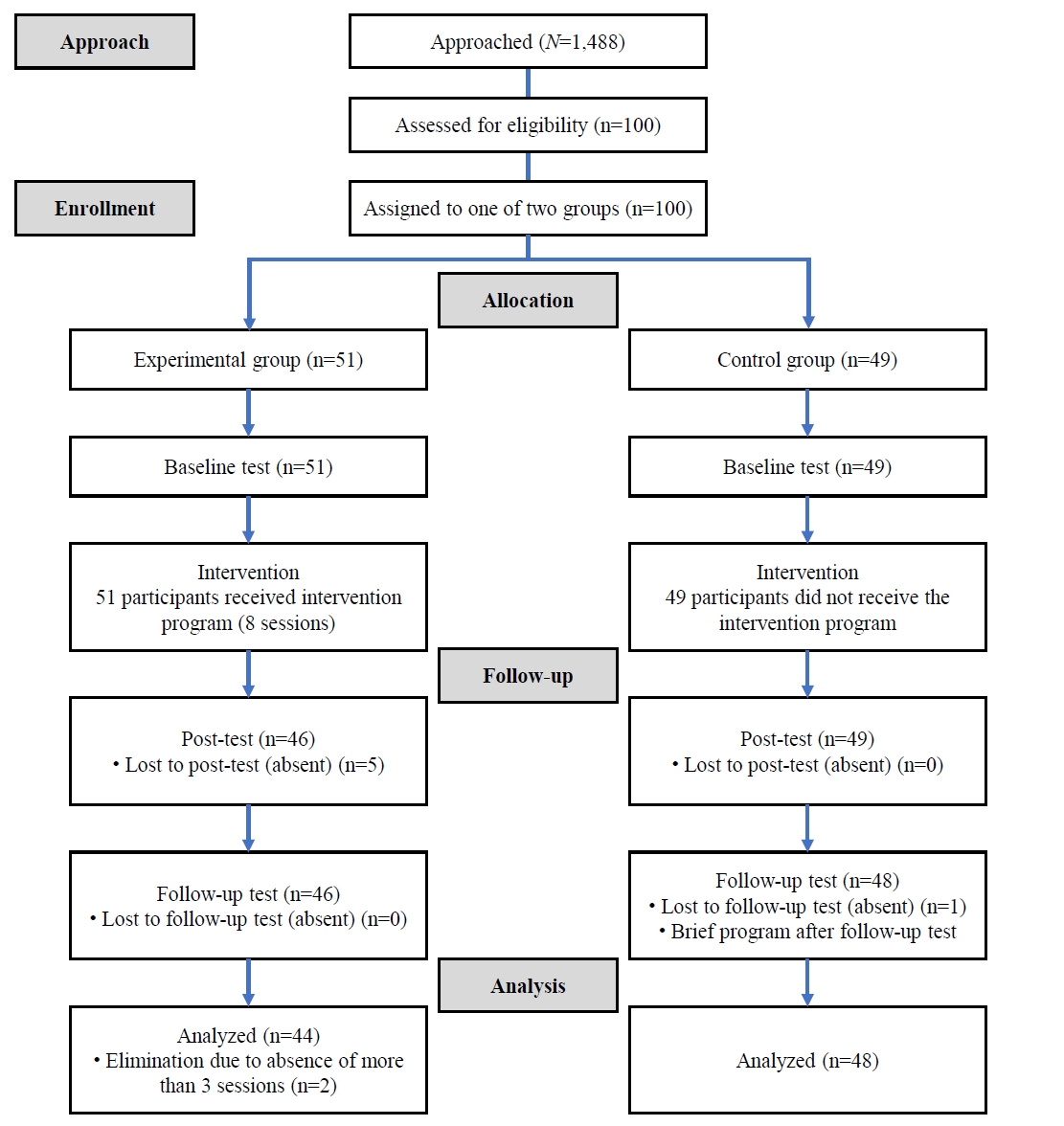
A quasi-experimental repeated-measures design was used. Participants were recipients of social services from 11 local self-sufficiency centers in Gyeonggi-do, South Korea. In total, 100 participants were recruited, with 51 assigned to the experimental group and 49 assigned to the control group. The experimental group received an eight-session program delivered by center practitioners who had been trained by mental health nurses, whereas the control group received usual services. Self-sufficiency motivation, self-esteem, and self-efficacy were assessed at three time points: baseline (pretest: T0), immediately after the intervention (post-test: T1), and 4 weeks after the intervention (follow-up: T2).
Results
Using generalized estimating equations, participants in the experimental group showed significantly greater improvements than those in the control group at both T1 and T2 in self-sufficiency motivation (T1: B=1.61, p=.030; T2: B=2.88, p<.001), self-esteem (T1: B=2.77, p<.001; T2: B=2.78, p<.001), and self-efficacy (T1: B=3.95, p=.004; T2: B=4.19, p<.001).
Conclusion
The practitioner-led program is associated with significant short-term improvements in psychosocial determinants of self-sufficiency among low-income service recipients. These findings may inform the development of community nursing interventions that support the psychosocial foundations of independent living in this population and provide a basis for training programs designed to strengthen the capacity of practitioners at local self-sufficiency centers (Clinical Research Information Service of Korea registration number: KCT0010027; registration date: December 12, 2024).
- 1,262 View
- 147 Download
- Nursing management competencies among nurses in national specialized hospitals in Korea: a mixed-methods study
- Jiyoung Choi, Jee-In Hwang
- J Korean Acad Nurs 2026;56(2):190-205. Published online May 22, 2026
- DOI: https://doi.org/10.4040/jkan.25175
-
Abstract
PDFePub
- Purpose
This study aimed to examine nursing management competencies among nurses working in national specialized hospitals, to identify competency development needs and influencing factors, and to provide foundational data for the development of educational and competency-enhancement programs.
Methods
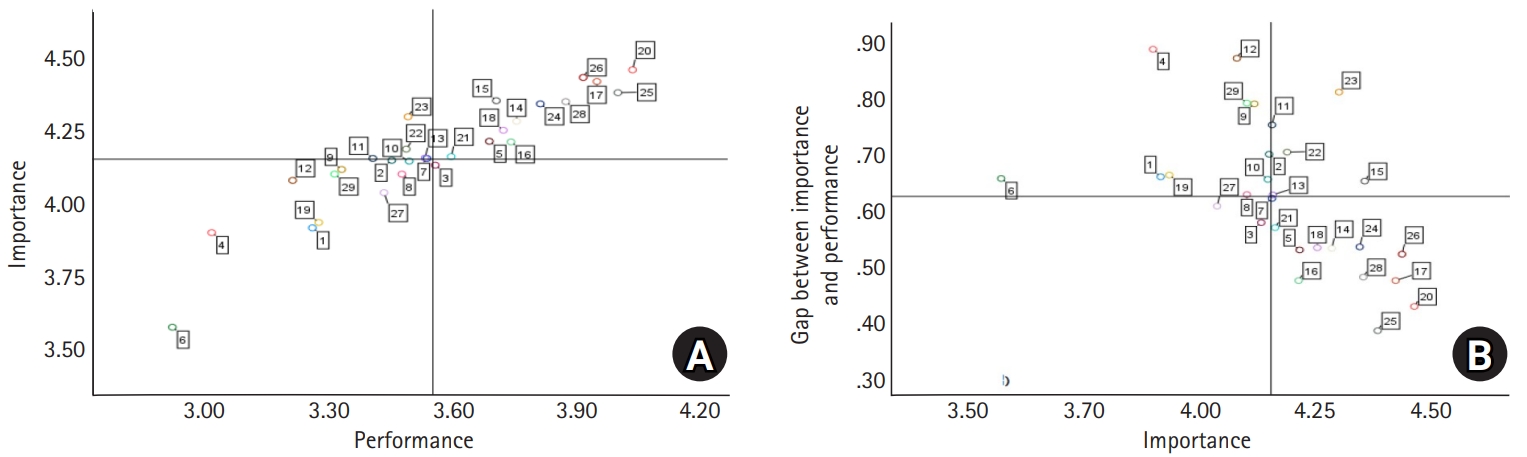
A mixed-methods design was employed. Quantitative data were collected via an online survey of 162 nurses from five national specialized hospitals from January 10 to February 10, 2025, and qualitative data were obtained through in-depth interviews with 20 participants from March 7 to April 16, 2025. Quantitative data were analyzed using descriptive statistics, independent t-tests, analysis of variance, importance–performance analysis, the Borich Needs Assessment, the Locus for Focus model, and multiple regression analysis. Qualitative data were analyzed using content analysis with ATLAS.ti.
Results
The mean performance score for nursing management competencies was 3.56±0.71 on a 5-point scale. Customer orientation received the highest score (4.03±0.78), whereas business and marketing received the lowest score (2.92±1.03). Across needs-assessment models, leadership, nursing ethics and law, quality improvement, and standard development consistently emerged as high-priority areas. In multiple regression analysis, the nursing work environment was the only factor significantly associated with nursing management competency performance (β=.33, p<.001). Qualitative content analysis corroborated these findings and identified three facilitator themes and three barrier themes.
Conclusion
Nursing management competency performance among nurses in national specialized hospitals was associated with the nursing work environment, including organizational conditions. These findings underscore the importance of organizational support and suggest that competency-based education should be redesigned to prioritize high-need competency areas. This study provides a foundation for developing educational interventions and programs to enhance nursing management capacity.
- 1,572 View
- 186 Download
- Psychometric testing of the Korean version of the Undergraduate Nursing Student Academic Satisfaction Scale: a methodological study
- Da-In Park, Joohee Shim
- J Korean Acad Nurs 2026;56(1):51-66. Published online February 9, 2026
- DOI: https://doi.org/10.4040/jkan.25125
- Correction in: J Korean Acad Nurs 2026;56(2):289
-
Abstract
PDFePub
- Purpose
This study aimed to translate, cross-culturally adapt, and evaluate the psychometric properties of the Korean version of the Undergraduate Nursing Student Academic Satisfaction Scale (K-UNSASS).
Methods
The K-UNSASS was developed using Brislin’s team-based translation–back-translation approach, with semantic and conceptual equivalence examined. Face validity was assessed, and a pilot test was conducted in November 2022. Content validity was evaluated by an expert panel. Formal data collection was conducted from December 2022 to January 2023. Structural validity was examined using exploratory and confirmatory factor analyses. Reliability was assessed using Cronbach’s alpha and McDonald’s omega coefficients.
Results
A total of 482 full-time nursing students, most of whom were in the fourth year of their nursing program, were included in the psychometric testing. Construct validity supported a four-factor structure accounting for 65.9% of the total variance. After removal of three items with unsatisfactory factor loadings, a 45-item K-UNSASS was established. Confirmatory factor analysis of the 45-item K-UNSASS demonstrated an acceptable model fit, and both Cronbach’s alpha and McDonald’s omega coefficients were .97.
Conclusion
The K-UNSASS demonstrates acceptable reliability and validity for assessing academic satisfaction among Korean nursing students. As a culturally relevant instrument, it supports educational improvement through targeted strategies and program evaluation. -
Citations
Citations to this article as recorded by
- Corrigendum: Psychometric testing of the Korean version of the Undergraduate Nursing Student Academic Satisfaction Scale: a methodological study
Da-In Park, Joohee Shim
Journal of Korean Academy of Nursing.2026; 56(2): 289. CrossRef
- Corrigendum: Psychometric testing of the Korean version of the Undergraduate Nursing Student Academic Satisfaction Scale: a methodological study
- 3,052 View
- 214 Download
- 1 Web of Science
- 1 Crossref
- Transforming nursing education to enhance integrated nursing competency: a Delphi-based methodological study on symptom-based clinical reasoning
- Jeung-Im Kim, Soyoung Yu, Jin-Hee Park, Ju-Eun Song, Eunjung Ryu, JuHee Lee, YeoJin Im
- J Korean Acad Nurs 2026;56(1):39-50. Published online February 5, 2026
- DOI: https://doi.org/10.4040/jkan.25151
-
Abstract
PDFePub
- Purpose
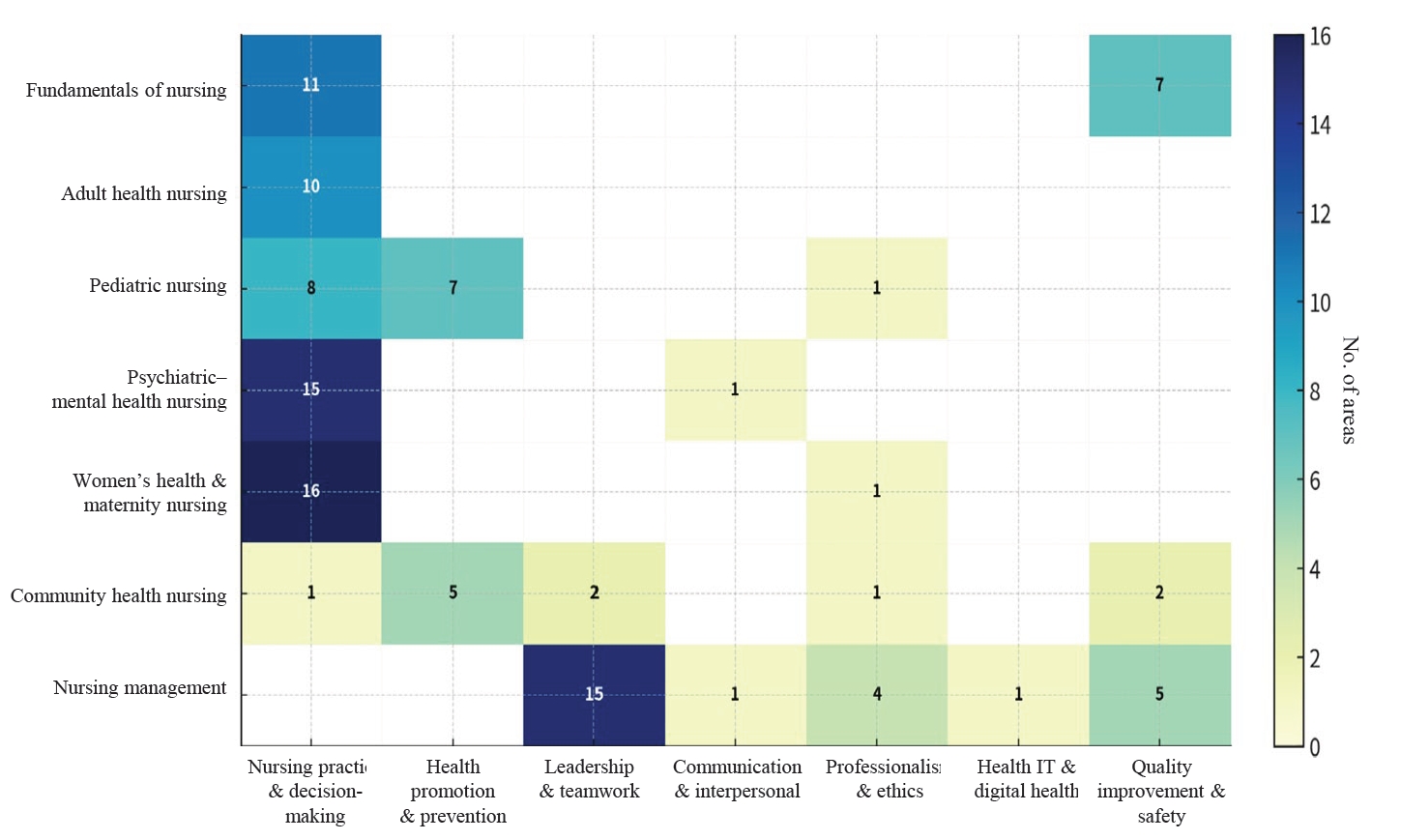
This study aimed to address the shift toward competency-based education and the planned 2028 “Integrated Nursing” National Licensing Examination (NLE), this study aimed to establish structural alignment among NLE domains, the seven integrated nursing competencies (INCs), and curriculum goals, with a particular focus on implementing symptom-based clinical reasoning (SBCR).
Methods
This Delphi-based methodological study included seven content experts for content validity index (CVI) assessment and 24 nursing education experts who participated in a consensus workshop. The item-level CVI and the scale-level CVI/average were calculated to confirm the linkage between INCs and NLE domains. In addition, qualitative analysis of workshop materials and meeting records was conducted to derive 10 integrated learning topics and to develop an SBCR educational model for the key symptom of headache, grounded in Miller’s Clinical Competence Pyramid (levels 2–4).
Results
The analysis confirmed the validity of integrating the INCs within the overall curriculum structure. The resulting framework delineates staged learning objectives and core clinical questions designed to systematically enhance clinical reasoning, promote safe nursing practice, and support professional reflection within a unified curriculum.
Conclusion
This study provides a practical foundation for nursing curriculum redesign by facilitating a transition from fragmented, subject-based instruction to a holistic, patient-centered SBCR model. This approach aligns with the requirements of the integrated NLE and is expected to contribute to meaningful improvements in actual clinical competency.
- 3,225 View
- 321 Download
- Development of a predictive model for exclusive breastfeeding at 3 months using machine learning : a secondary analysis of a cross-sectional survey
- Hyun Kyoung Kim
- J Korean Acad Nurs 2025;55(4):519-527. Published online October 28, 2025
- DOI: https://doi.org/10.4040/jkan.25086
-
Abstract
PDFePub
- Purpose
This study aimed to develop a machine learning model to predict exclusive breastfeeding during the first 3 months after birth and to explore factors affecting breastfeeding outcomes.
Methods
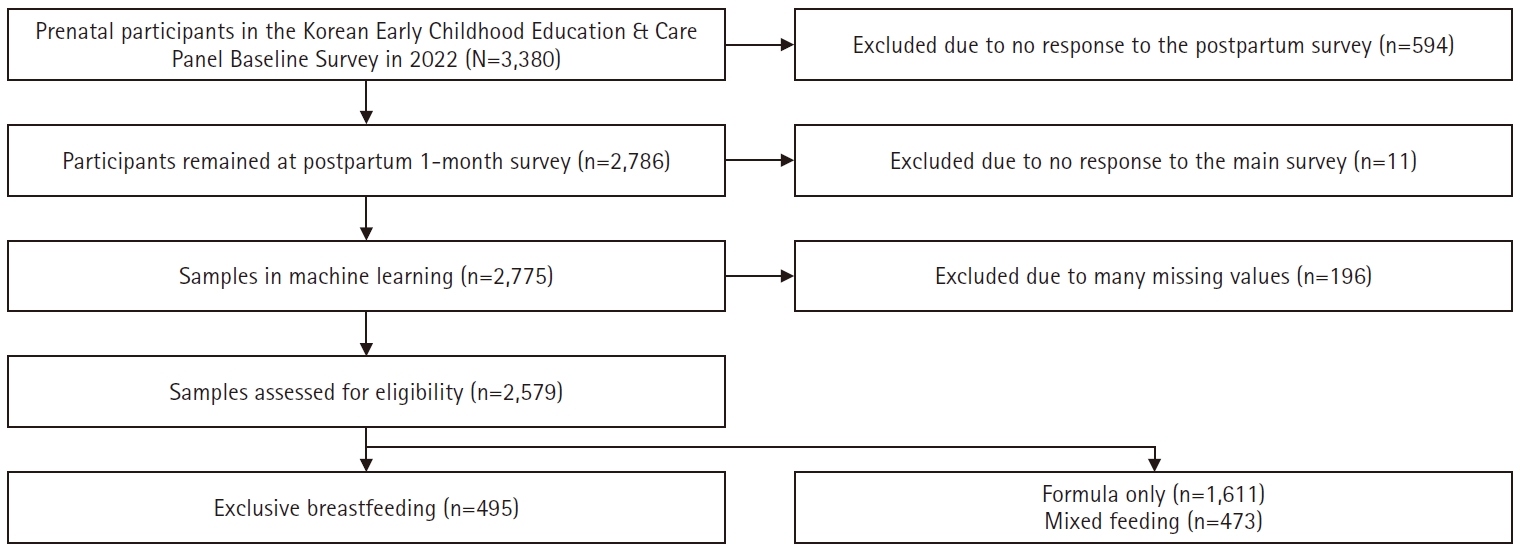
Data from 2,579 participants in the Korean Early Childhood Education & Care Panel between March 1 and June 3, 2025 were analyzed using Python version 3.12.8 and Colab. The dataset was split into training and testing sets at an 80:20 ratio, and five classifiers (random forest, logistic regression, decision tree, AdaBoost, and XGBoost) were trained and evaluated using multiple performance metrics and feature importance analysis.
Results
The confusion matrix of the random forest classifier model demonstrated strong performance, with a precision of 86.6%, accuracy of 84.8%, recall of 96.8%, F1-score of 91.9%, and an area under the curve of 86.0%. Twenty-one features were analyzed, from which feeding plan, breastfeeding at 1 month, marriage period, maternal prenatal weight, self-respect, alcohol consumption, grit, value placed on children, maternal age, and depression emerged as important predictors of exclusive breastfeeding in the first 3 months.
Discussion
A robust model was developed to predict exclusive breastfeeding that identified feeding planning and breastfeeding at 1 month as the most influential predictors. The model could be implemented in clinical and community settings to guide tailored breastfeeding support strategies, coupled with the integration of maternal self-respect, grit, and the value placed on children in counseling programs to promote exclusive breastfeeding. -
Citations
Citations to this article as recorded by- Effects of Digital Health Interventions on Breastfeeding Rates, Self-Efficacy, and Knowledge: Systematic Review and Meta-Analysis
Jiahe Sun, Yu Wang, Shuang Hu, Yajie Ding, Congshan Pu, Danni Song, Jiaai Xia, Chunjian Shan
Journal of Medical Internet Research.2026; 28: e92184. CrossRef
- Effects of Digital Health Interventions on Breastfeeding Rates, Self-Efficacy, and Knowledge: Systematic Review and Meta-Analysis
- 3,310 View
- 232 Download
- 1 Web of Science
- 1 Crossref
- Effects of an agro-healing program on depression, stress, and cognitive function in older adults: a quasi-experimental study
- Gyu Yeon Park, Kwang Ok Lee
- J Korean Acad Nurs 2025;55(3):342-352. Published online August 21, 2025
- DOI: https://doi.org/10.4040/jkan.25058

-
Abstract
PDFePub
- Purpose
This study aimed to evaluate the effects of an agro-healing program on depression, stress, and cognitive function in older adults.
Methods
A quasi-experimental, nonequivalent control group pretest–posttest design was used. The study was conducted from July 16 to September 6, 2024. Sixty-two individuals aged 65 or older residing in Gimcheon, Gyeongsangbuk-do, were recruited according to the selection criteria (31 in the experimental group and 31 in the control group). The final analysis included 30 participants in each group. The program was delivered by one main instructor (a healing farmer) and three assistants. The pretest assessed general characteristics, the Geriatric Depression Scale Short Form-Korean Version, Stress Response Inventory-Modified Form, and Cognitive Impairment Screening Test. The experimental group participated in the agro-healing program once a week for 90 minutes over 8 weeks. The posttest included the same measurements as the pretest. Data were analyzed using IBM SPSS ver. 23.0.
Results
The experimental group, which participated in the healing agriculture program, showed reduced depression (F=7.97, p=.007) and stress (F=282.70, p<.001) and improved cognitive function (F=10.12, p=.002) compared to the control group.
Conclusion
The findings suggest that the agro-healing program is an effective intervention for reducing depression and stress and improving cognitive function in older adults. We propose its use to promote health and prevent dementia in this population. -
Citations
Citations to this article as recorded by- The concept and characteristics of agro-healing foods: results from focus group interviews and a Delphi survey among experts
Dahye Han, Chae-Ryeon Kim, Jaesin Lee, Kyeong-a Jang, Sohyun Park
Journal of Nutrition and Health.2026; 59(3): 303. CrossRef
- The concept and characteristics of agro-healing foods: results from focus group interviews and a Delphi survey among experts
- 4,829 View
- 401 Download
- 1 Crossref
- Comparison of educational needs and priorities for work-related laws between hospital and community-based nurses
- Jeonghyun Kim, Min Kyoung Han, Minjae Lee, Sujin Shin
- J Korean Acad Nurs 2025;55(3):400-412. Published online August 21, 2025
- DOI: https://doi.org/10.4040/jkan.25049
-
Abstract
PDFePub
- Purpose
This study aimed to examine the practical utilization of work-related laws in nursing practice and to prioritize educational needs to provide foundational data for improving nurses’ legal competencies.
Methods
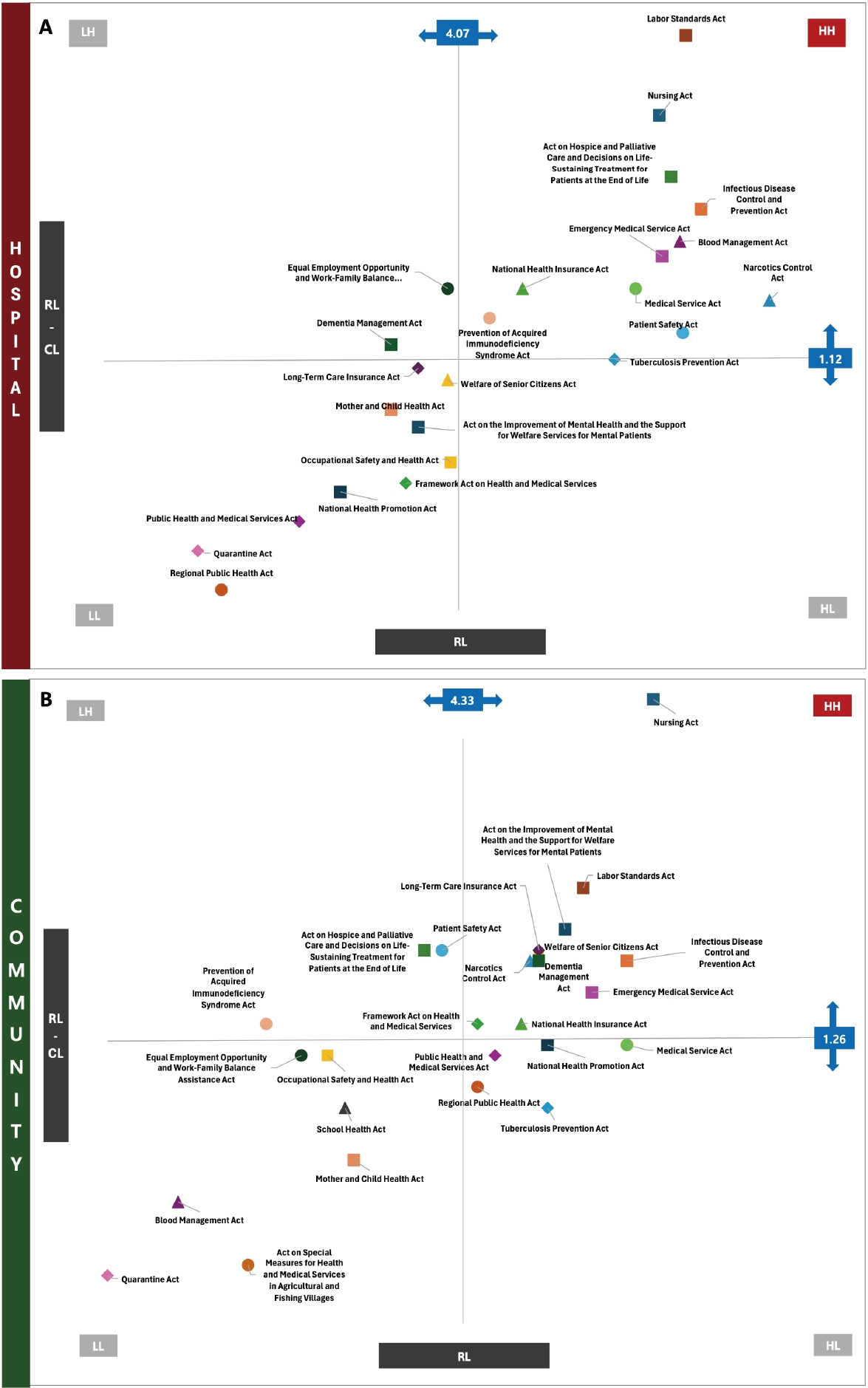
A descriptive survey was employed using an online self-reported questionnaire. Participants included 275 nurses with over 3 years of clinical experience, categorized into hospital and community-based. Convenience sampling was used, and data were collected between January 9 and February 3, 2025. Descriptive statistics and the paired t-test were conducted using IBM SPSS 26.0. Educational needs were analyzed using the Borich Needs Assessment and the Locus for Focus model.
Results
Among participants, 75.6% had received education on work-related laws, and 79.3% of those participants received related education during their undergraduate studies. However, 32.4% of nurses reported experiencing practice related difficulties due to insufficient legal knowledge, particularly related to unclear legal responsibilities and ambiguity in the scope of practice. High educational needs were identified for the Nursing Act and the Labor Standards Act across all workplaces. Hospital nurses emphasized the Hospice and Palliative Care Act and Emergency Medical Services Act, while community-based nurses prioritized the Mental Health Welfare Act, Elderly Welfare Act, and Dementia Management Act.
Conclusion
Nurses’ legal education needs are related to practical applications and their capability to respond appropriately to legal requirements, and these needs vary depending on their work environment and social changes. These findings underscore the necessity of restructuring legal education curricula to improve practical relevance and support nurses’ rights, providing a basis for developing workplace-specific legal education programs. -
Citations
Citations to this article as recorded by- Legal Literacy in Clinical Nursing Practice: A Walker and Avant Concept Analysis
Yufei Xing, Xiaolong Wang, Enming Zhang, Jiajia Yu, Qiong Fang
Nursing Reports.2026; 16(6): 200. CrossRef
- Legal Literacy in Clinical Nursing Practice: A Walker and Avant Concept Analysis
- 3,167 View
- 209 Download
- 1 Web of Science
- 1 Crossref
- Effects of social support on organizational commitment among experienced nurses experiencing department rotation: the mediating effect of organizational socialization
- Young Jun Jang, Jeong A Jeong, Yu Seung Ban, Seon Hwa Park, Eun Jee Lee
- J Korean Acad Nurs 2025;55(3):364-376. Published online August 18, 2025
- DOI: https://doi.org/10.4040/jkan.25042
-
Abstract
PDFePub
- Purpose
This study explored the mediating role of organizational socialization in the relationship between social support and organizational commitment among nurses in hospitals who had experienced department rotation.
Methods
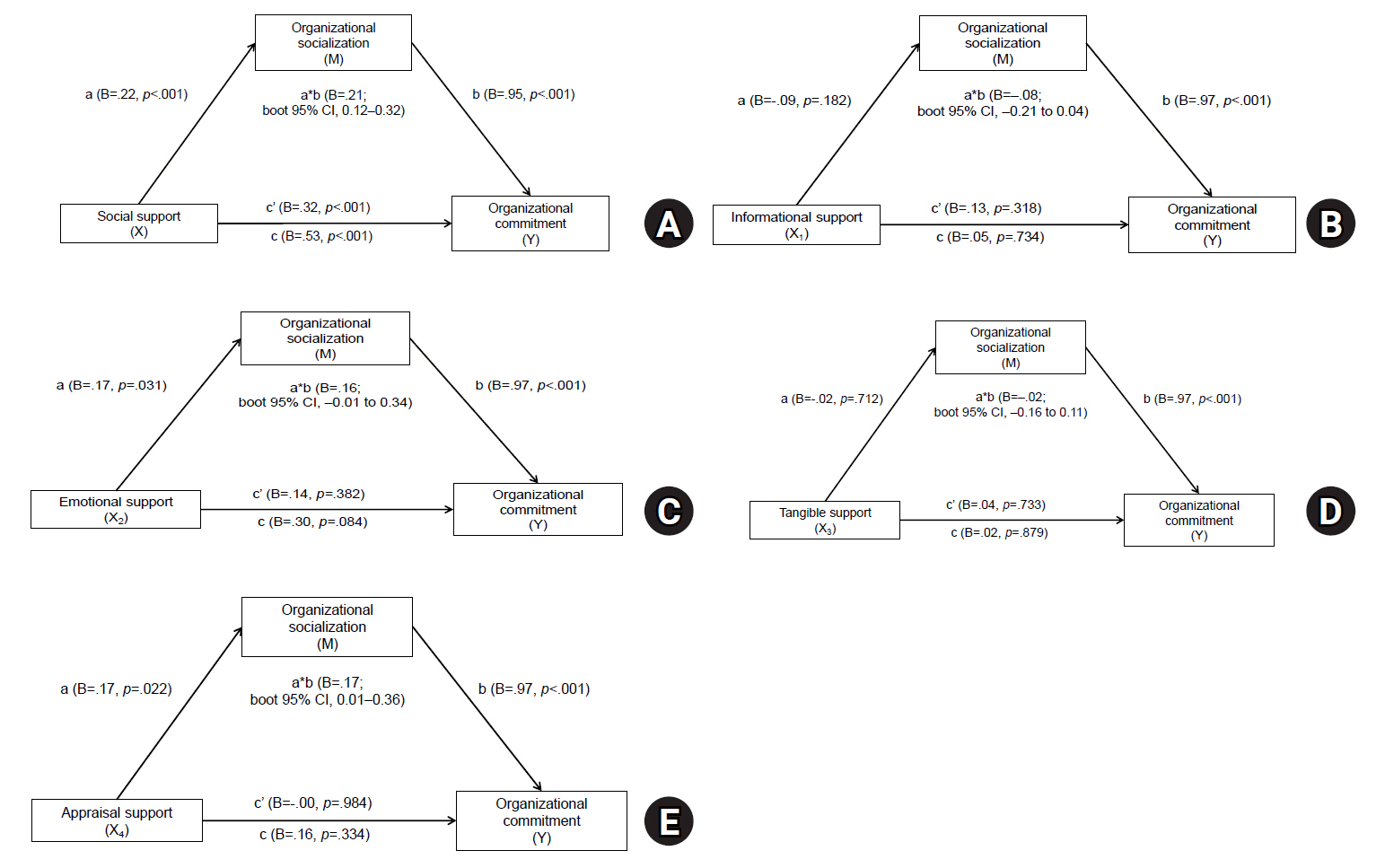
A descriptive survey design was used with 202 nurses from a tertiary hospital who had experienced department rotation within the past 12 months. Data were collected via an online questionnaire from August 1 to August 30, 2024. Analyses included frequency analysis, descriptive statistics, Pearson correlation, and multiple regression. The mediating effect was tested using IBM SPSS WIN ver. 23.0 and the PROCESS macro (model 4) with 10,000 bootstrap resamples.
Results
Organizational socialization partially mediated the relationship between social support and organizational commitment (B=.21; bootstrapped 95% confidence interval, 0.12–0.32).
Conclusion
The findings suggest that both social support and organizational socialization play essential roles in improving nurses’ organizational commitment following department rotation. Thus, practical programs, such as mentoring systems, should be implemented that both enhance social support and actively promote organizational socialization. These efforts have the potential to help nurses adjust more effectively to new units and ultimately improve retention and performance within healthcare organizations. -
Citations
Citations to this article as recorded by- Why Self‐Leadership Alone Is Not Enough: How Professional Self‐Concept and Organizational Commitment Shape Male Nurses’ Intention to Stay
Donghyeok Lee, Mihwa Shim, Jungmin Lee, Matthew Vandermeulen
Journal of Nursing Management.2026;[Epub] CrossRef - Job Satisfaction among Transferred Nurses: Associations with Work Environment, Peer Support, and Grit
Ji Wan Choi, Ji Yea Lee
Journal of Korean Academy of Nursing Administration.2026; 32(4): 292. CrossRef - The Effects of Organizational Socialization and Nursing Competence on Organizational Commitment among Clinical Nurses
Sangyun Park, Seunghee Lee
Journal of Korean Academy of Nursing Administration.2026; 32(4): 254. CrossRef - The Effects of Nurses’ Dispatch Work Characteristics on Job Embeddedness, Organizational Commitment, and Turnover Intention
Eejee Jung, Gunjeong Lee
Journal of Korean Academy of Nursing Administration.2025; 31(5): 560. CrossRef - Nurses' Experience Working with Substitute Nurses
Hye Mi Kim, Yeon Hee Kim, Jeong Hye Kim
Journal of Korean Association for Qualitative Research.2025; 10(3): 208. CrossRef
- Why Self‐Leadership Alone Is Not Enough: How Professional Self‐Concept and Organizational Commitment Shape Male Nurses’ Intention to Stay
- 3,636 View
- 388 Download
- 1 Web of Science
- 5 Crossref
- The experiences of infertile women discontinuing in vitro fertilization treatment: a grounded theory approach
- Eunmi Park, Yeoungsuk Song
- J Korean Acad Nurs 2025;55(3):440-453. Published online August 11, 2025
- DOI: https://doi.org/10.4040/jkan.25048
-
Abstract
PDFePub
- Purpose
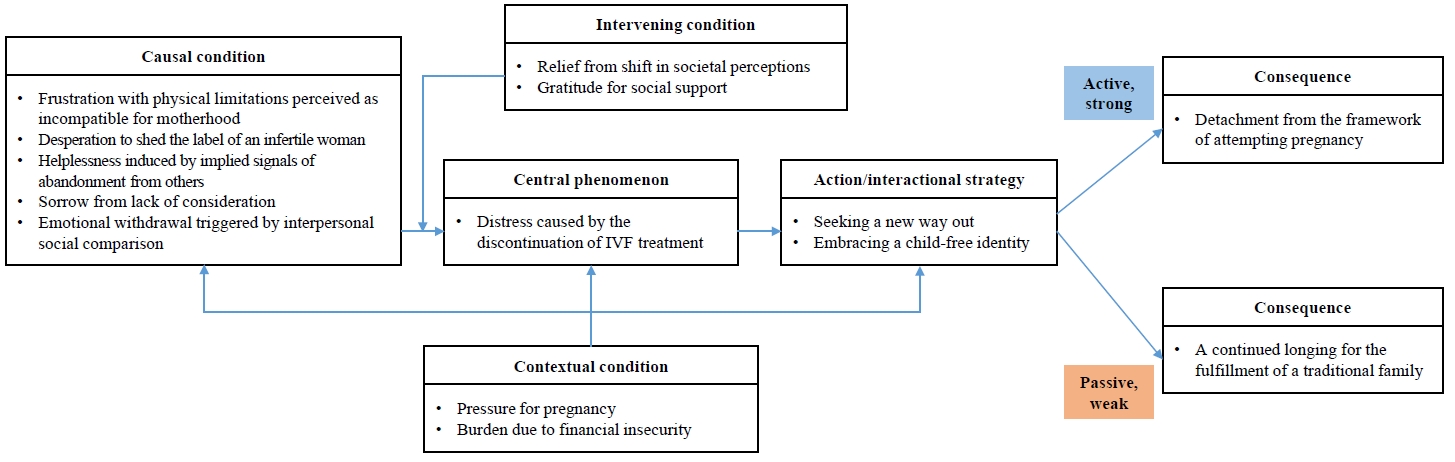
This study aimed to develop a situation-specific theory by gaining an in-depth understanding of the deterrent processes experienced by infertile women who have discontinued in vitro fertilization (IVF) procedures, within the socio-cultural context of South Korea.
Methods
The participants were 16 infertile women who discontinued IVF procedures. Data were collected through individual in-depth interviews from February to December 2023. Theoretical sampling was conducted, and the transcribed interview contents were analyzed using Strauss and Corbin’s grounded theory method.
Results
In total, 37 concepts and 14 categories were extracted through the open coding process. The central phenomenon in axial coding was “Distress caused by the discontinuation of IVF treatment.” The core category was “A journey to break free from the identity of infertility toward self-determined womanhood.” The results were categorized into two types: “Detachment from the framework of attempting pregnancy” and “A continued longing for the fulfillment of a traditional family.” The situation-specific theory was the “Theory of reconstructing subjective identity through the acceptance of childfree life,” which illustrates how infertile women actively redefine their life trajectories after discontinuing IVF treatment.
Conclusion
This study highlights the importance of public perceptions about infertile women who discontinue IVF procedures, which are seen as the last resort of assisted reproductive technology, because positive perceptions assists women in living a self-governing life. It may be necessary to develop educational and promotional programs to change negative social perceptions and to establish a psycho-social support system for infertile women who have been deterred from IVF procedures.
- 2,954 View
- 230 Download
- Work system analysis of health management for individuals with disabilities in supportive housing: a focus group study using the SEIPS framework
- Haesun Lee, Hye Jin Nam, Bohye Kim, Ju Young Yoon
- J Korean Acad Nurs 2025;55(3):454-467. Published online August 4, 2025
- DOI: https://doi.org/10.4040/jkan.25018
-
Abstract
PDFePub
- Purpose
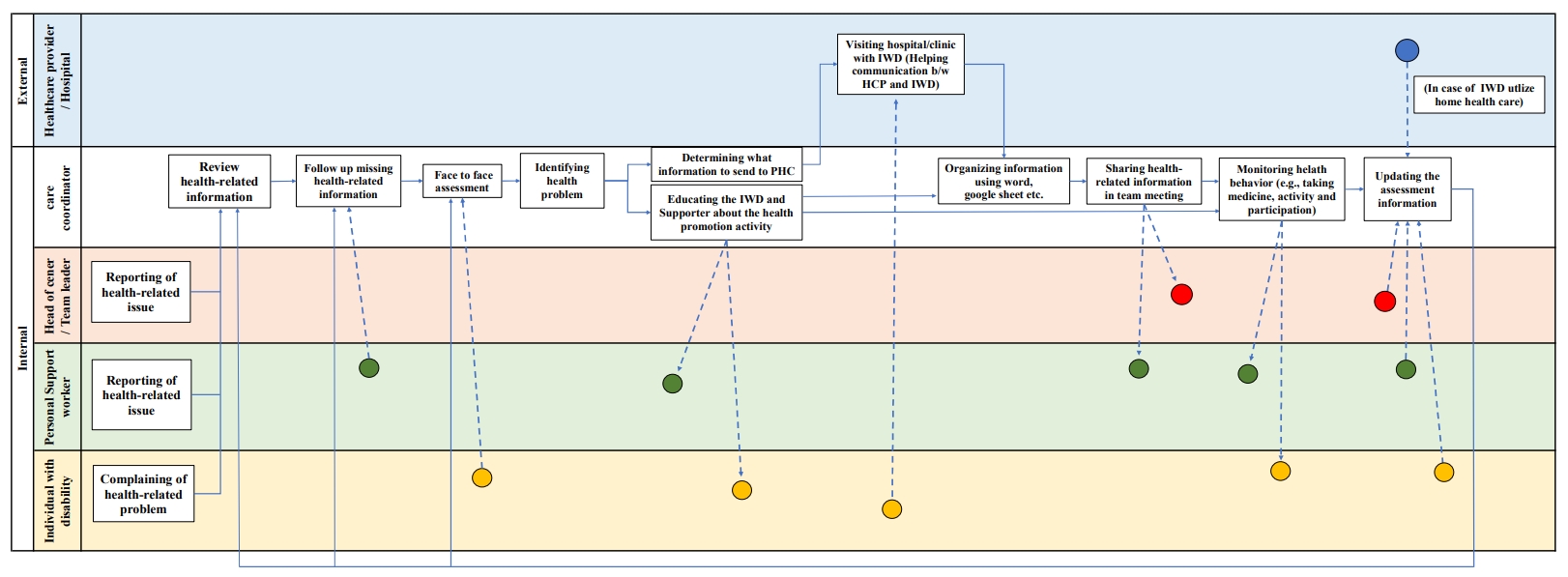
This study conducted a work-system analysis using the Systems Engineering Initiative for Patient Safety (SEIPS) framework to assess the flow of health-related information, and the current status of health management tasks for individuals with disabilities (IWD) in supportive housing.
Methods
This qualitative study utilized focus groups. Participants included a head of supportive housing, a team leader, a care coordinator and three personal support workers for IWD. Semi-structured interviews were guided by the SEIPS framework to explore the components of persons, tasks, tools and technology, organization, and environments.
Results
This study identified five key themes within the five SEIPS components: (1) disparities in role identity and health literacy among staff, (2) challenges in health care support reflecting a person-centered approach, (3) barriers in health-related information exchange and communication tools, (4) needs for organizational strategies or information communication, and (5) needs for integrating health-related information across external healthcare institutions. Additionally, 10 sub-themes were identified.
Conclusions
These findings provide a comprehensive system-wide perspective and offer insights into the systematic approaches needed to improve healthcare processes and structures within disability supportive housing. Specifically, healthcare providers and effective tools for integrating health-related information are identified as critical components. -
Citations
Citations to this article as recorded by- Personal Assistant Service Patterns and Health Behaviors Among Adults with Disabilities: A Latent Class Analysis
Min Ji Kang, Ju Young Yoon
Research in Community and Public Health Nursing.2026; 37: 358. CrossRef
- Personal Assistant Service Patterns and Health Behaviors Among Adults with Disabilities: A Latent Class Analysis
- 2,844 View
- 143 Download
- 1 Crossref
Review Paper
- A review of domestic and international contexts for establishing a communication platform for early-career nurse scientists
- Jeung-Im Kim, Jin-Hee Park, Hye Young Kim, Mi Yu, Sun Joo Jang, Yeonsoo Jang, Sangeun Jun
- J Korean Acad Nurs 2025;55(2):317-325. Published online May 27, 2025
- DOI: https://doi.org/10.4040/jkan.25041
-
Abstract
PDFePub
- Purpose
As nursing continues to advance through digital health, clinical specialization, and interdisciplinary research, early-career nurse scientists are central to advancing innovation. However, Korea lacks a structured platform to support their research, collaboration, and career development. This review aimed to identify the needs of early-career nurse scientists and examine international best practices to guide the creation of an effective communication platform.
Methods
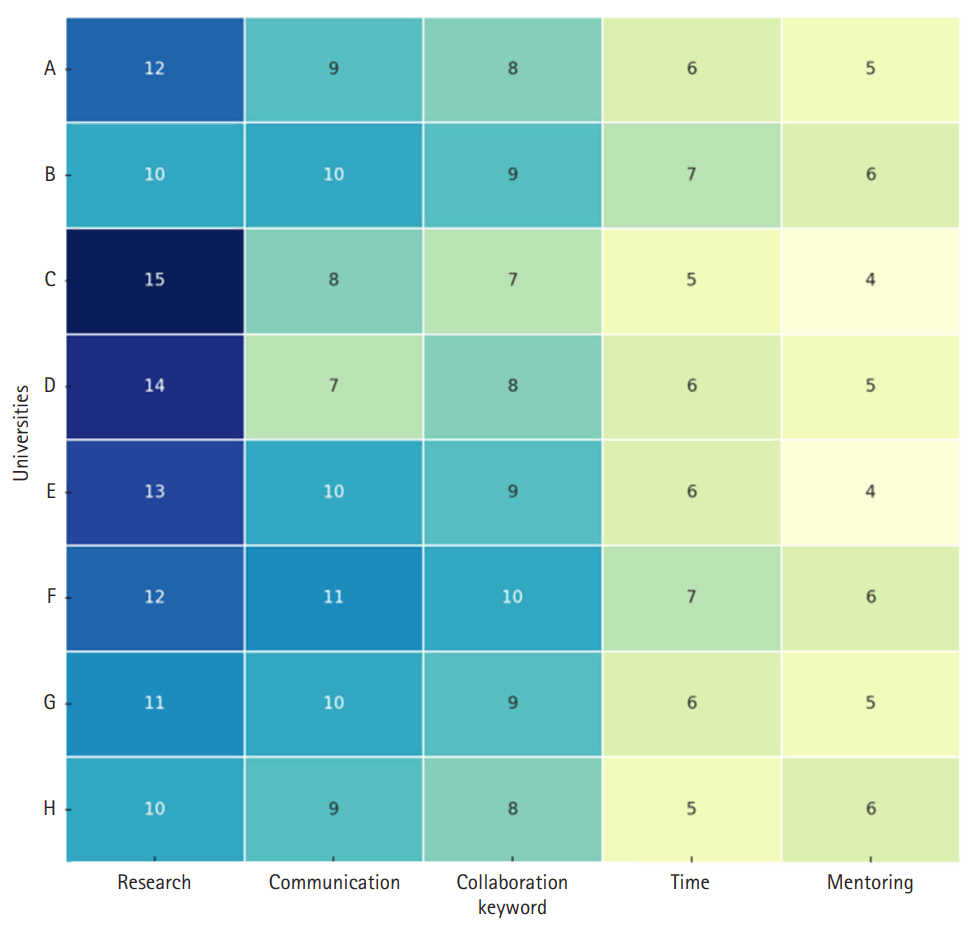
This study involved a secondary analysis of the final report from the project “Establishment of a communication platform for young nursing scientists,” carried out by the Korean Society of Nursing Science. The report comprises data from focus group interviews with domestic graduate students and early-career researchers, a literature review of international communication and support systems, and a global policy analysis related to young nursing scientists. Based on this report, the present review synthesizes key findings and draws implications for the development of a communication platform in Korea.
Results
International examples, such as grant writing programs, mentoring initiatives, and digital collaboration hubs, showed positive outcomes in strengthening research capacity and promoting the professional growth of nurse scientists. Based on these findings, key considerations for platform development include: (1) establishing clear leadership and a participatory governance model; (2) providing demand-driven content such as research guides, mentoring, and mental health resources; (3) implementing mechanisms to ensure sustainability, content quality, and user data protection; and (4) designing an integrated platform that fosters synergy across research, policy development, education, and global networking.
Conclusion
A digital platform for early-career nurse scientists should function not merely as an information portal, but also as dynamic infrastructure for collaboration, mentorship, and growth. It is recommended that the Korean Society of Nursing Science spearhead this initiative, with governmental support, to enhance the research capacity and expand the global engagement of Korean nursing scientists.
- 3,499 View
- 109 Download
Research Papers
- Effectiveness of a mobile application for tracking symptoms and enhancing symptom management among breast cancer patients receiving chemotherapy in Bangkok, Thailand: a non-randomized controlled trial
- Duangrat Kaveenuntachai, Supawan Jaiboon, Bualuang Sumdaengrit, Chureeporn Silaguntsuti, Arveewan Vittayatigonnasak, Pornchan Sailamai
- J Korean Acad Nurs 2025;55(2):178-190. Published online May 27, 2025
- DOI: https://doi.org/10.4040/jkan.25011
-
Abstract
PDFePub
- Purpose
This study evaluated the effectiveness of a mobile application in tracking symptoms and improving symptom management and quality of life (QoL) among breast cancer patients undergoing chemotherapy in Thailand.
Methods
A non-randomized controlled trial was used, with 25 participants in the intervention group and 25 in the control group. Research instruments included a demographic data form, the NCI-PRO-CTCAE Items-Thai-Thailand version 1.0, and the European Organization for Research and Treatment of Cancer Quality of Life Core Questionnaire and Breast Cancer-Specific Module.
Results
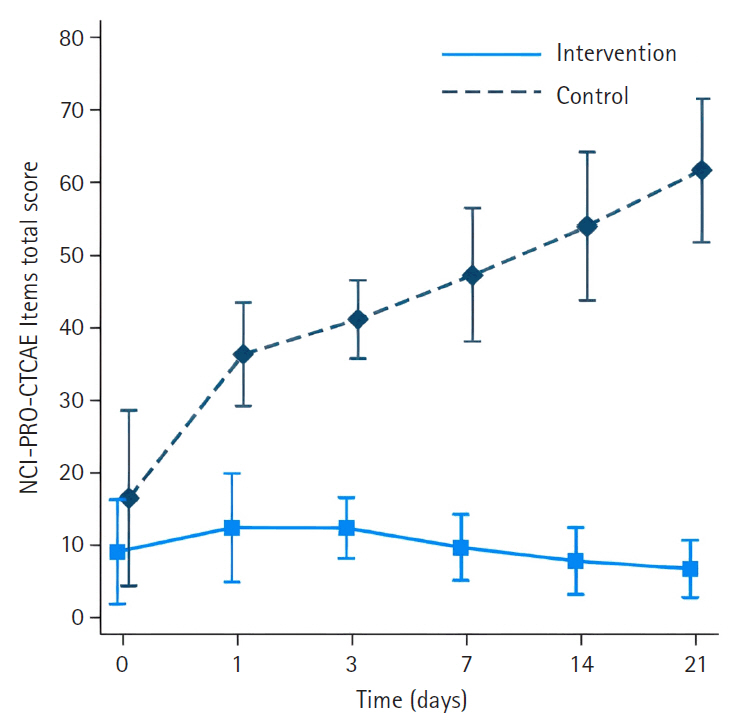
The intervention group had significantly less severe side effects than the control group, with mean differences of –23.33 (95% confidence interval [CI], –27.82 to –18.83) on day 1, –28.18 (95% CI, –33.22 to –23.14) on day 3, –34.63 (95% CI, –40.18 to –29.08) on day 7, –42.56 (95% CI, –48.72 to –36.40) on day 14, and –51.31 (95% CI, –58.13 to –44.48) on day 21 (p<.001 for all). On day 21, participants in the intervention group reported significantly higher scores in the Global Health QoL and Functional Scales compared to the control group (p<.001). Additionally, intervention group participants reported lower scores on the Symptom Scales and higher scores on the Functional Scales than those in the control group (p<.001).
Conclusion
The ChemoPro application helped manage chemotherapy-related symptoms and was associated with improved symptom monitoring and QoL. Nonetheless, the study was limited by a small sample size and restriction to Android users. Future research with larger and more diverse populations is recommended before broader implementation in clinical practice. -
Citations
Citations to this article as recorded by- Effectiveness of a digital health intervention on the supportive care needs and quality of life in Mexican patients with breast cancer: a randomized clinical trial
Saúl Eduardo Contreras-Sánchez, Svetlana V. Doubova, Rocío Grajales-Álvarez, Ricardo Villalobos-Valencia, Abdel Karim Dip-Borunda, José Gustavo Nuñez-Cerrillo, Alma Diana Huerta-López, Álvaro José Montiel-Jarquín, Arturo García-Galicia, Enrique Isay Talam
BMC Cancer.2026;[Epub] CrossRef - Systematic review of patient-reported outcome item libraries in cancer research: an EORTC Quality of Life Group study
Rosemary Peacock, Christopher Bedding, Bonnie Pacheco, Hayat Hamzeh, Claire Piccinin, Alexandra Gilbert
JNCI: Journal of the National Cancer Institute.2026; 118(6): 971. CrossRef - Digital PRO collection methods during chemotherapy: A scoping review of tools, platforms, and psychometric properties
G. Hari Prakash, Tejaswini BD, Sony Sequeira, Mohammed Mujaheed Hussain, Anush Nayak
Measurement and Evaluations in Cancer Care.2026; 4: 100036. CrossRef - Response pathways and clinical workflow integration of digital symptom management platforms for breast cancer: A scoping review
Jing Yu, Shouze Jin, Yuening Liu, Rui Chen, Yuxin Liu, Hong Ji, Lijuan Wang
Asia-Pacific Journal of Oncology Nursing.2026; : 101029. CrossRef
- Effectiveness of a digital health intervention on the supportive care needs and quality of life in Mexican patients with breast cancer: a randomized clinical trial
- 6,305 View
- 336 Download
- 3 Web of Science
- 4 Crossref
- A non-face-to-face diabetes self-management program based on self-efficacy theory and health literacy: a non-randomized controlled trial
- Jung Hee Lee, Soo Jin Lee
- J Korean Acad Nurs 2025;55(2):165-177. Published online May 23, 2025
- DOI: https://doi.org/10.4040/jkan.25009

-
Abstract
PDFePub
- Purpose
This study aimed to assess the impact of a non-face-to-face diabetes self-management program based on self-efficacy theory and focusing on health literacy.
Methods
A quasi-experimental, nonequivalent control group pre–post design was used. Participants from a community health promotion center were included if they (1) were 30–70 years of age, (2) had type 2 diabetes with glycated hemoglobin (HbA1c) ≥6.5%, and (3) had internet access via computers or mobile devices. The 8-week program was developed based on self-efficacy theory, and it included virtual education using an online platform, telephone counseling, videos, and social networking site activities considering health literacy. Fasting blood glucose levels, HbA1c levels, diabetes self-efficacy, social support, depression, and self-management behaviors were assessed. Data were analyzed using the independent t-test, paired t-test, and others.
Results
Post-test results showed that the intervention group had significantly lower fasting blood glucose levels and improved diabetes self-efficacy, social support, and self-management behaviors compared with the control group. An analysis of the pre-to-post changes in scores indicated that the intervention group had significantly greater improvements in fasting blood glucose levels, diabetes self-efficacy, and overall diabetes self-management behaviors than those observed in the control group.
Conclusion
Non-face-to-face programs based on self-efficacy theory that consider health literacy can provide effective diabetes management support to patients when in-person diabetes management at community health centers is challenging. -
Citations
Citations to this article as recorded by- Knowledge, attitude, and practice of foot care and associated factors among high-risk diabetic foot patients: A cross-sectional study in Shanghai, China
Hu Yan-ni, Cai Hong, Zhang Wei, Ma Li-li, Zhuang Hui-ren
Journal of Tissue Viability.2026; 35(4): 101044. CrossRef
- Knowledge, attitude, and practice of foot care and associated factors among high-risk diabetic foot patients: A cross-sectional study in Shanghai, China
- 5,618 View
- 389 Download
- 1 Web of Science
- 1 Crossref
- The effects of a lifestyle intervention for men in infertile couples in South Korea: a non-randomized controlled trial
- Yun Mi Kim, Ju-Hee Nho
- J Korean Acad Nurs 2025;55(2):191-204. Published online April 16, 2025
- DOI: https://doi.org/10.4040/jkan.24104

-
Abstract
PDFePub
- Purpose
This study aimed to evaluate the effects of an interaction model of client health behavior (IMCHB)-based lifestyle intervention on health-promoting behaviors, infertility stress, fertility-related quality of life, and semen quality in men in infertile couples.
Methods
This study used a quasi-experimental, non-equivalent control group, pretest-posttest design, with participants divided into an experimental group (n=17) and a control group (n=19). The 16-session, 8-week intervention included components such as reproductive health education, physical activity, nutritional management, and stress management. Data collection occurred between July 1, 2021 and September 27, 2022. The outcomes measured included health-promoting behaviors, infertility stress, fertility-related quality of life, and sperm quality (volume, total motility, immobility, concentration, and normal morphology).
Results
The experimental group showed significant improvements in health-promoting behaviors (z=–2.27, p=.023) and reductions in infertility stress (t=–2.40, p=.022) compared to the control group. Total sperm motility (F=4.39, p=.045) and normal morphology (z=2.86, p=.017) were also significantly higher in the experimental group than in the control group.
Conclusion
The IMCHB-based lifestyle intervention significantly increased health-promoting behaviors, reduced infertility stress, and improved key sperm parameters, indicating its effectiveness in supporting the reproductive health of men in infertile couples. -
Citations
Citations to this article as recorded by- Psychological Stress and Male Infertility: Oxidative Stress as the Common Downstream Pathway
Aris Kaltsas, Stamatis Papaharitou, Fotios Dimitriadis, Michael Chrisofos, Nikolaos Sofikitis
Biomedicines.2026; 14(2): 259. CrossRef
- Psychological Stress and Male Infertility: Oxidative Stress as the Common Downstream Pathway
- 5,205 View
- 178 Download
- 1 Web of Science
- 1 Crossref
- Development of a well-dying awareness scale for middle-aged adults in Korea: a mixed-methods study
- Yu Jin Jung, Eun Joung Choi
- J Korean Acad Nurs 2025;55(2):285-300. Published online March 28, 2025
- DOI: https://doi.org/10.4040/jkan.24121
-
Abstract
PDFePub
- Purpose
This study aimed to develop a valid and reliable tool to measure awareness of well-dying among middle-aged adults.
Methods
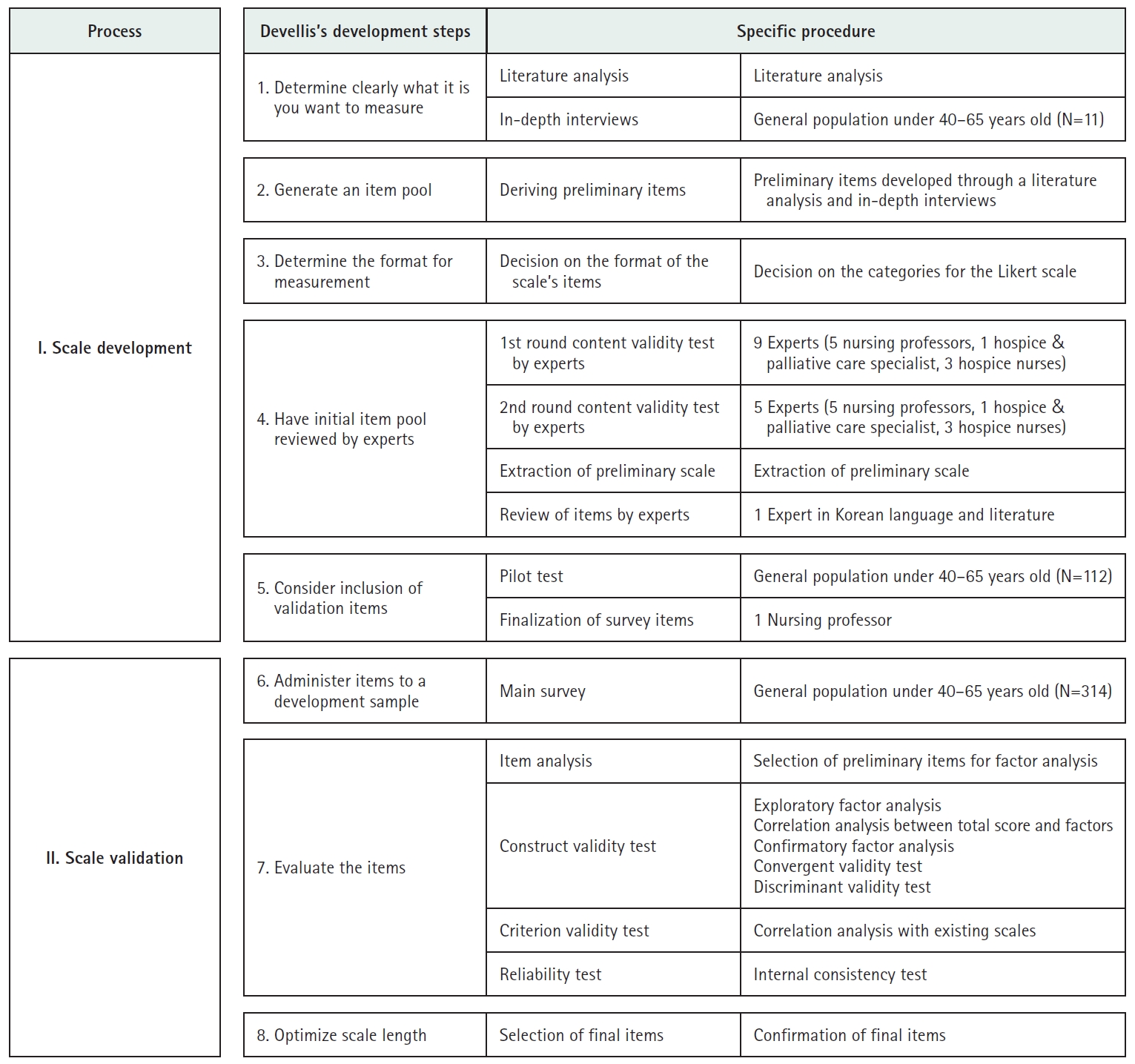
A mixed-methods approach was adopted, consisting of a qualitative phase to identify the characteristics of well-dying and a quantitative phase to validate the instrument with middle-aged participants. Initially, 76 items were generated through a literature review and in-depth interviews, and these were reduced to 35 items through expert validation. A pilot survey was conducted with 112 individuals aged 40–65, selected via quota sampling from 17 administrative regions in South Korea. Based on the pilot survey results, the instrument was refined to 32 items for the main survey. The main survey included 314 participants recruited through quota sampling in Busan and Ulsan Metropolitan Cities and Gyeongsang Region. Exploratory factor analysis (EFA), confirmatory factor analysis (CFA), and reliability testing were performed to validate the instrument.
Results
The final scale comprised 23 items across six factors. EFA demonstrated an explanatory power of 69.1%, with factor loadings ranging from 0.53 to 0.88. CFA confirmed the instrument’s validity, and reliability was established with a Cronbach’s α of .93.
Conclusion
This instrument is a validated and reliable tool for measuring middle-aged individuals’ awareness of well-dying. It can serve as an effective resource for evaluating and assessing well-dying awareness in the middle-aged population. -
Citations
Citations to this article as recorded by- The Influence of Self-Esteem and Attitudes toward Organ Donation and Euthanasia on Attitudes toward Advance Directives in Married Middle-Aged Adults:
A Cross-Sectional Study
Eun-Ho Ha
Research in Community and Public Health Nursing.2026; 37: 136. CrossRef
- The Influence of Self-Esteem and Attitudes toward Organ Donation and Euthanasia on Attitudes toward Advance Directives in Married Middle-Aged Adults:
A Cross-Sectional Study
- 4,495 View
- 278 Download
- 1 Crossref
Review Paper
- Effectiveness of non-pharmacological interventions to reduce internalized stigma in people with severe mental illness: a systematic review and meta-analysis
- Soyoung Kim, Sun Hyoung Bae, Myung-Sun Hyun
- J Korean Acad Nurs 2025;55(1):1-18. Published online February 25, 2025
- DOI: https://doi.org/10.4040/jkan.24072
-
Abstract
PDFePub
- Purpose
This study systematically reviewed and analyzed the effects of non-pharmacological interventions on internalized stigma among people with severe mental illness.
Methods
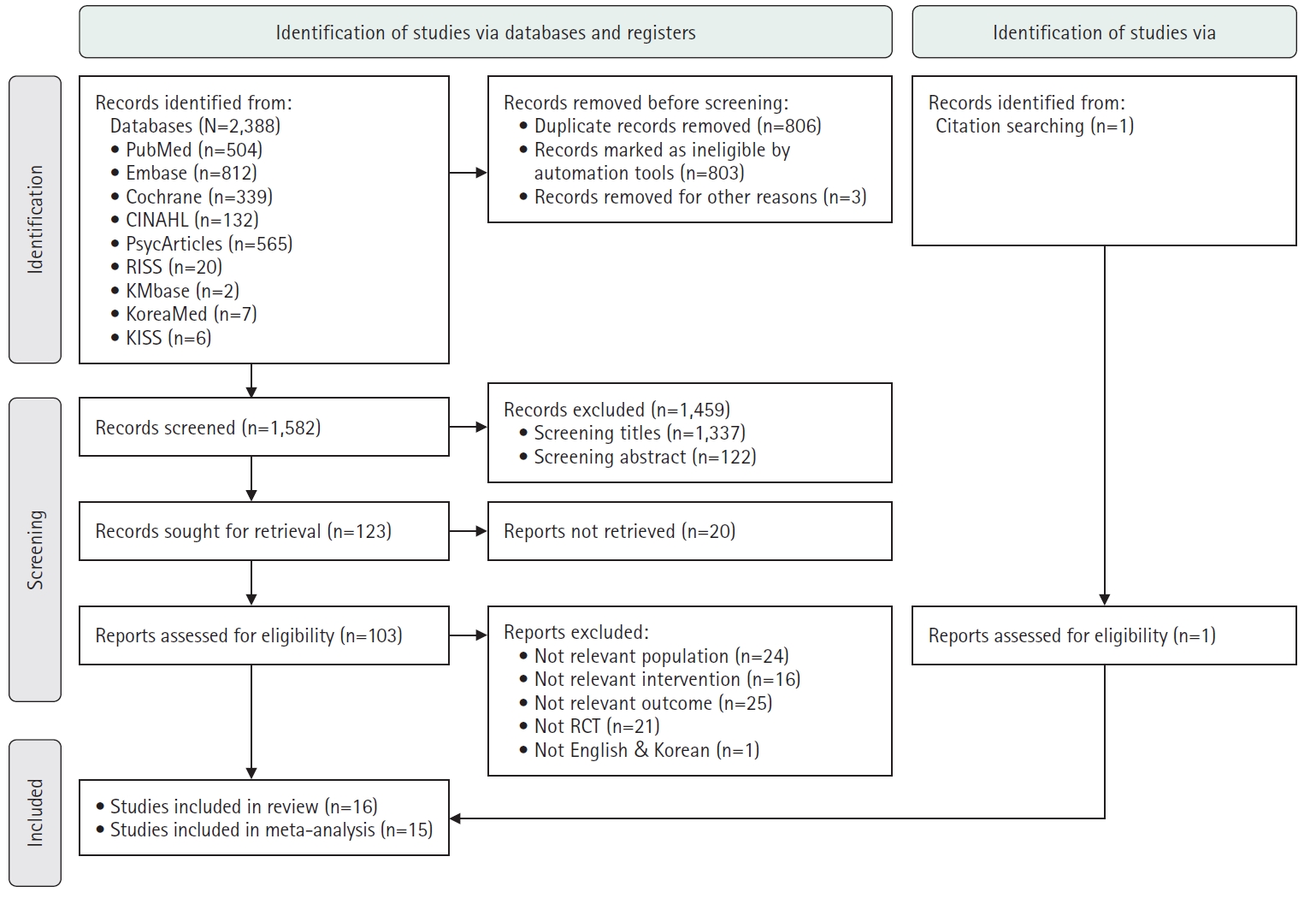
A systematic review and meta-analysis were conducted following the Cochrane Intervention Research Systematic Review Manual and Preferred Reporting Items for Systematic Review and Meta-Analysis guidelines. This study targeted people with severe mental illness as the population, interventions aimed at reducing internalized stigma, comparisons with control groups, and internalized stigma as the outcome. A literature search was performed across multiple databases, including PubMed, EMBASE, the Cochrane Library, CINAHL, PsycArticles, RISS, KMbase, and KoreaMed. The risk of bias was evaluated using the Cochrane Risk of Bias 2.0 tool. Effect sizes were computed using Hedges’s g, and subgroup analyses were conducted with Comprehensive Meta-Analysis software version 4.0.
Results
Of 2,388 papers, 15 were included in the meta-analysis. The overall effect size (Hedges’s g) of the intervention was –0.60 (95% confidence interval, –1.01 to –0.19), indicating a statistically significant reduction in internalized stigma (Z=–2.88, p=.004). Subgroup analyses revealed that the intervention type (p=.008) and session length (p=.011) were significant moderators influencing the effectiveness of the interventions.
Conclusion
Tailoring interventions by considering variables such as the intervention type and session length could enhance the effectiveness of non-pharmacological interventions for reducing internalized stigma among people with severe mental illness (PROSPERO: CRD42023418561). -
Citations
Citations to this article as recorded by- Determinants of Mental Health Help-Seeking Behavior Among Korean Adults: A Population-Based Study Using the 2023 Korea National Health and Nutrition Examination Survey
Moonhee Gang, Ga-Ae Kim, Joonyeong Lee, Farhatun Nisaa Shoeb
Journal of Psychosocial Nursing and Mental Health Services.2026; : 1. CrossRef - Effectiveness of a Rational Emotive Behavior Therapy-Based Recovery Promotion Program for Psychiatric Inpatients: A Quasi-Experimental Study
Ju Yeon Kim, Hyun Mee Cho, Won Hee Jun
Journal of the American Psychiatric Nurses Association.2026;[Epub] CrossRef - Opportunities to Improve Prescription Opioid Management in Advanced Cancer: A Concept Mapping Approach to Intervention Development
Hailey W. Bulls, Sarah Orris, Anna Gogiberidze, Justin A. Scott, Desiree R. Azizoddin, Kelly W. Harris, Burel R. Goodin, Cristina Murray-Krezan, Jane M. Liebschutz, Ellen M Lavoie Smith, Yael Schenker, Jessica S. Merlin, Jessica G. Burke
The Journal of Pain.2026; : 106457. CrossRef
- Determinants of Mental Health Help-Seeking Behavior Among Korean Adults: A Population-Based Study Using the 2023 Korea National Health and Nutrition Examination Survey
- 6,926 View
- 496 Download
- 2 Web of Science
- 3 Crossref
Research Papers
- Factors influencing smartphone overdependence in university students: an ecological model: a descriptive study
- Jeong Soon Yu, Myung Soon Kwon
- J Korean Acad Nurs 2025;55(1):64-80. Published online February 20, 2025
- DOI: https://doi.org/10.4040/jkan.24092
-
Abstract
PDFePub
- Purpose
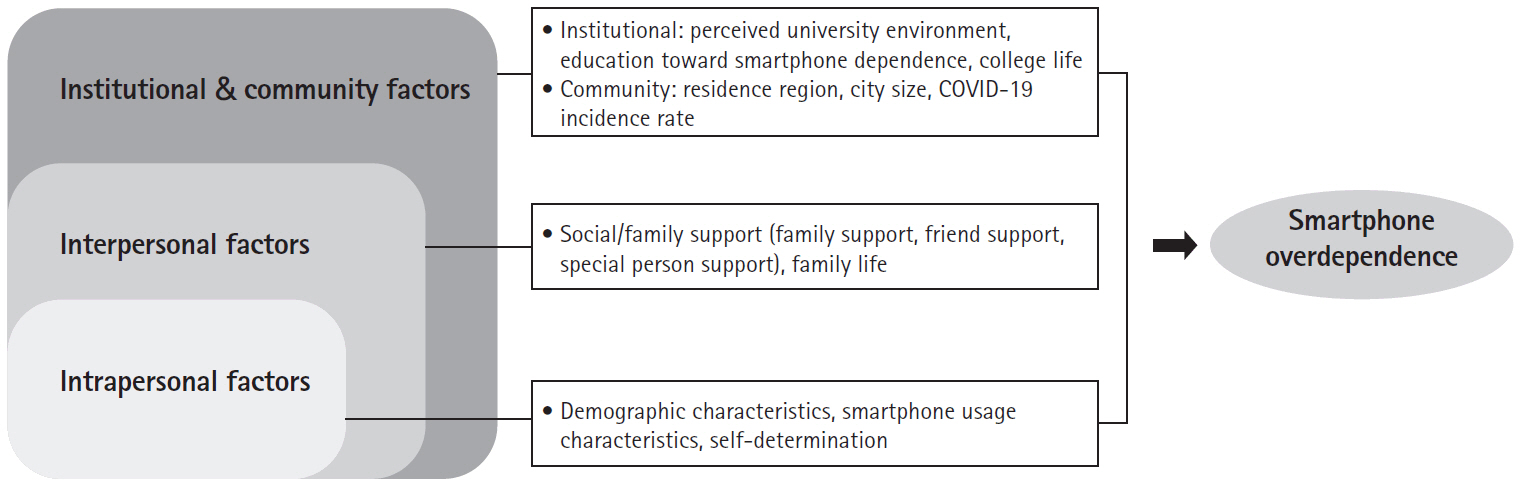
This study investigated the factors influencing smartphone overdependence in university students using an ecological model and descriptive research.
Methods
Data were collected from 482 students at 13 universities in the six regions in South Korea from October 20, 2020, to March 25, 2021. Data analysis involved descriptive statistics, the chi-square test, the independent samples t-test, analysis of variance, and hierarchical multiple regression.
Results
The significant ecological factors influencing smartphone overdependence included self-awareness of smartphone overdependence (β=.33, p<.001), autonomy (β=–.25, p<.001), average daily smartphone usage time (β=.18, p<.001), gender (β=.15, p=.001), college year (β=.15, p=.020), forming relationships with others as a motivation for smartphone use (β=–.15, p=.008), friend support (β=.14, p=.006), and age (β=–.12, p=.047). The model explained 34.9% of the variance.
Conclusion
The study emphasized the role of personal and interpersonal factors, in smartphone overdependence among university students. Tailored intervention strategies are necessary to address smartphone overdependence, considering the unique characteristics of students’ environments. A significant aspect of this study is that it provides an explanation of the multidimensional factors contributing to smartphone overdependence among university students, including intrapersonal, interpersonal, and environmental influences. -
Citations
Citations to this article as recorded by- Research on the application behavior of generative artificial intelligence learning of college students based on self-determination theory
Xu Fang, Junci Feng
Frontiers in Psychology.2026;[Epub] CrossRef
- Research on the application behavior of generative artificial intelligence learning of college students based on self-determination theory
- 5,417 View
- 240 Download
- 1 Web of Science
- 1 Crossref
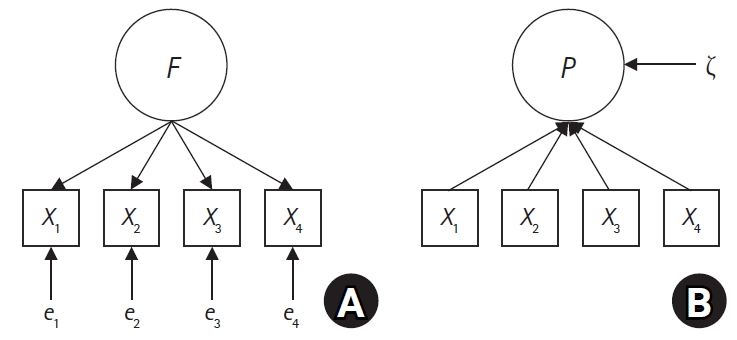
- Formative versus reflective measurement models in nursing research: a secondary data analysis of a cross-sectional study in Korea
- Eun Seo Park, Young Il Cho, Hyo Jin Kim, YeoJin Im, Dong Hee Kim
- J Korean Acad Nurs 2025;55(1):107-118. Published online February 19, 2025
- DOI: https://doi.org/10.4040/jkan.24095
-
Abstract
PDFePub
- Purpose
This study aimed to empirically verify the impact of measurement model selection on research outcomes and their interpretation through an analysis of children’s emotional and social problems measured by the Pediatric Symptom Checklist (PSC) using both reflective and formative measurement models. These models were represented by covariance-based structural equation modeling (CB-SEM) and partial least squares SEM (PLS-SEM), respectively.
Methods
This secondary data analysis evaluated children’s emotional and social problems as both reflective and formative constructs. Reflective models were analyzed using CB-SEM, while formative models were assessed using PLS-SEM. Comparisons between these two approaches were based on model fit and parameter estimates.
Results
In the CB-SEM analysis, which assumed a reflective measurement model, a model was not identified due to inadequate fit indices and a Heywood case, indicating improper model specification. In contrast, the PLS-SEM analysis, assuming a formative measurement model, demonstrated adequate reliability and validity with significant path coefficients, supporting the appropriateness of the formative model for the PSC.
Conclusion
The findings indicate that the PSC is more appropriately analyzed as a formative measurement model using PLS-SEM, rather than as a reflective model using CB-SEM. This study highlights the necessity of selecting an appropriate measurement model based on the theoretical and empirical characteristics of constructs in nursing research. Future research should ensure that the nature of measurement variables is accurately reflected in the choice of statistical models to improve the validity of research outcomes. -
Citations
Citations to this article as recorded by- The strategic role of proactivity and socioemotional wealth in family firm success
Felipe Hernández-Perlines, Luis Araya-Castillo, Mercedes Castro-Nuño
Journal of Innovation & Knowledge.2026; 18: 101097. CrossRef - What Makes the Structural Equation Model (SEM) Challenging? A Review of Methodological, Statistical, and Practical Challenges
Loso Judijanto, Sri Nurhayati
WSEAS TRANSACTIONS ON INFORMATION SCIENCE AND APPLICATIONS.2026; 23: 447. CrossRef
- The strategic role of proactivity and socioemotional wealth in family firm success
- 3,886 View
- 206 Download
- 1 Web of Science
- 2 Crossref
- The Effects of a Self-Efficacy Theory-Based Exercise Program for Patients Undergoing with Total Knee Arthroplasty
- Kyung-Hye Park, Hee-Young Kang
- J Korean Acad Nurs 2024;54(4):547-562. Published online October 22, 2024
- DOI: https://doi.org/10.4040/jkan.24027
-
Abstract
PDF
 Supplementary MaterialePub
 Purpose This study was performed to develop a self-efficacy theory-based exercise program for total knee arthroplasty (TKA) and to test the program’s efficacy in ameliorating knee pain and restoring function as measured by lower extremity muscle strength, 3 meter walking time, Korean Western Ontario McMaster Index (WOMAC), exercise self-efficacy, and length of hospital stay for TKA patients.
Methods This quasi-experimental study incorporating a non-equivalent control group and pretest-posttest non-synchronized design non-synchronous design was applied to assess self-efficacy reinforcement strategies based on self-efficacy theory. The exercise program consisted of the following steps: TKA, education to prevent postoperative complications, and muscle strength exercises. Respective exercise and control groups included 29 and 27 participants. The experimental group received eight sessions of the program from three weeks before TKA to four weeks after TKA. Collected data were analyzed using the chi-square test, Mann–Whitney U test, and ranked ANCOVA and t-tests using IBM SPSS Statistics 23.
Results Experimental group showed significant improvement in lower extremity muscle strength (F = 8.63,
p = .005), 3 meter walking time (z = - 5.02,p < .001), WOMAC index (z = - 2.22,p = .027), self-efficacy for exercise (z = - 3.29,p = .001), and length of hospital stay (t = - 2.11,p = .040) compared to the control group. No significant differences in knee pain and range of motion were observed.Conclusion These findings indicate that a self-efficacy theory-based exercise program can be an effective exercise strategy that patients undergoing TKA can easily follow at home without assistance. It is thus recommended as an exercise intervention for TKA patients.
-
Citations
Citations to this article as recorded by- Self-efficacy and implementation intentions in home rehabilitation of stroke patients: the parallel mediating role of recurrence risk perception and outcome expectations
Xiaowen Jiang, Qiuxue Sun, Rong Tang, Shuxian Liu, Xi Chen, Yumei Lv
Frontiers in Psychology.2025;[Epub] CrossRef - Factors Influencing Decision-Making and Rehabilitation Among Older Women Who Underwent Total Knee Replacement: A Qualitative Study in Taiwan
Ching Han Huang, Yun Yee Chen, Shu Wen Chen, Chen Ti Wang, Mei Hsiang Lin
Patient Preference and Adherence.2025; Volume 19: 3931. CrossRef
- Self-efficacy and implementation intentions in home rehabilitation of stroke patients: the parallel mediating role of recurrence risk perception and outcome expectations
- 5,439 View
- 399 Download
- 2 Web of Science
- 2 Crossref
- Development and Effectiveness of Progressive Simulation Education Program on Medication Safety for Nursing Students
- Se-Young Jung, Eun-Young Kim
- J Korean Acad Nurs 2024;54(4):563-576. Published online October 14, 2024
- DOI: https://doi.org/10.4040/jkan.24054
-
Abstract
PDFePub
Purpose This study aimed to develop and verify a progressive simulation education program aimed at enhancing nursing students’ medication safety competency.
Methods A non-equivalent control group pretest-posttest design was adopted. The participants were 40 third-year nursing students with no prior simulation education experience, comprising 20 each in the experimental and control groups. The experimental treatment utilized a hybrid simulation approach incorporating both full-body mannequins and standardized patients and was, conducted over three sessions with durations of 65, 80, and 95 minutes for the first, second, and third sessions, respectively, for a total of 240 minutes. The program was constructed based on Jeffries’ simulation model.
Results The levels of medication safety competencies, communication self-efficacy, learning self-efficacy, and problem-solving abilities of the experimental group were significantly higher than that of the control group.
Conclusion Our results confirm that the program effectively improves nursing students’ medication safety competence, communication self-efficacy, learning self-efficacy, and problem-solving ability. Therefore, this program can serve as a basis for developing educational strategies related to medication safety for nursing education institutions. Furthermore, the program is anticipated to have a positive impact on novice nurses’ education and practice in clinical settings.
-
Citations
Citations to this article as recorded by- Safety-centered simulation education using the 360-degree video room of errors: A mixed-methods study
Jiyoung Kim, Yeji Kim, Hyunji Park, Jiyeong Won, Jiwon Yun, Yuran Lee
Clinical Simulation in Nursing.2026; 111: 101899. CrossRef - Efficacy of Simulation Systems in Educational Interventions for New Graduate Nurses
Moon-Hee Kang, Eunju Seo
Journal of information and communication convergence engineering.2026; 24(3): 327. CrossRef
- Safety-centered simulation education using the 360-degree video room of errors: A mixed-methods study
- 7,235 View
- 572 Download
- 1 Web of Science
- 2 Crossref
- Development of the Hybrid Clinical Practicum Environment Scale for Nursing Students
- Seoyoung Yoon, Hye-Ah Yeom
- J Korean Acad Nurs 2024;54(3):340-357. Published online August 31, 2024
- DOI: https://doi.org/10.4040/jkan.24016
-
Abstract
PDF
- Purpose
This study aimed to develop a Hybrid Clinical Practicum Environment Scale for Nursing Students (HCPES-NS) and verify its validity and reliability.
Methods
The HCPES-NS was constructed following the DeVellis guidelines. The initial items were written based on a literature review and individual in-depth interviews. Content validity was verified through an expert panel review. To confirm the validity and reliability of the scale, a survey was conducted with 449 nursing students enrolled in 12 nursing colleges. Data were analyzed using item analysis, exploratory factor analysis, confirmatory factor analysis, concurrent validity, and reliability tests.
Results
Factor analysis showed that the HCPES-NS consists of 15 items on five subdomains: clinical site atmosphere, interpersonal relationship, alternative online practicum contents, provision of learning information, and clinical performance facilitation. A higher score indicated a more positive perception of the clinical practicum environment. The concurrent validity of the HCPES-NS was confirmed by its positive correlation with the Clinical Learning Environment Scale (r = .77). The Cronbach’s α reliability of the HCPES-NS was .84.
Conclusion
The HCPES-NS is both valid and reliable. This scale reflects the clinical practicum environment and includes an online practicum factor. It may be used effectively by faculty members and educators to evaluate nursing students’ perceptions of clinical practicum environments. -
Citations
Citations to this article as recorded by- Measurement properties of instruments assessing the clinical learning environment in health professions education: a COSMIN-based systematic review
Matthias Michael Walter, Alexander P Schurz, Nele Adriaenssens, Evert Zinzen, Slavko Rogan
Journal of Educational Evaluation for Health Professions.2026; 23: 14. CrossRef - Environmental and Individual Factors Associated with Clinical Practice Stress in Korean Nursing Students: A Scoping Review
Ui Rim Song
Korean Journal of Adult Nursing.2025; 37(4): 355. CrossRef
- Measurement properties of instruments assessing the clinical learning environment in health professions education: a COSMIN-based systematic review
- 5,146 View
- 139 Download
- 1 Web of Science
- 2 Crossref
- Sleep Deprivation and Fatigue among Nurses Working Consecutive Night Shifts: A Prospective Observational Study
- Ari Min, Jisu Seo, Minkyung Kang, Hye Chong Hong
- J Korean Acad Nurs 2024;54(2):139-150. Published online May 31, 2024
- DOI: https://doi.org/10.4040/jkan.23164
-
Abstract
PDF
- Purpose
This study aimed to identify changes in sleep patterns and fatigue levels during consecutive night shifts among shift nurses and to determine the association between sleep parameters and increased fatigue levels during work.
Methods
This prospective observational study employing ecological momentary assessments was conducted using data collected from 98 shift nurses working in Korean hospitals between June 2019 and February 2021. The sleep patterns were recorded using actigraphy. The participants reported their fatigue levels at the beginning and end of each night shift in real time via a mobile link. Linear mixed models were used for the analysis.
Results
Nurses spent significantly less time in bed and had shorter sleep durations during consecutive night shifts than on off-duty days, whereas their wake times after sleep onset were much longer on off-duty days than on on-duty days. Fatigue levels were higher on the second and third night-shift days than on the first night-shift days. A shorter time spent in bed and asleep was associated with a greater increase in fatigue levels at the end of the shift than at the beginning.
Conclusion
Nurses experience significant sleep deprivation during consecutive night shifts compared with off-duty days, and this sleep shortage is associated with a considerable increase in fatigue levels at the end of shifts. Nurse managers and administrators must ensure sufficient intershift recovery time during consecutive night shifts to increase the time spent in bed and sleeping. -
Citations
Citations to this article as recorded by- A Text Network Analysis of Nurse Managers’ Feedback Journals
Naru Kang, Shinhye Ahn, Hye Won Jeong
CIN: Computers, Informatics, Nursing.2026;[Epub] CrossRef - Comparative Effects of Music Therapy Versus White Noise on Sleep Quality and Psychological Resilience of Night-Shift Nurses: Retrospective Cohort Study
WenQing Zhang, Yan Li, Fang Li
Noise and Health.2026; 28(130): 62. CrossRef - Relationship Between Occupational Characteristics and Telomere Length in Female Nurses Aged 20–39 Years: A Cross-Sectional Study
Jeonghye Yun, Hyunjung Lee
Healthcare.2026; 14(12): 1657. CrossRef - Sleep deprivation: a comprehensive review of multisystem impacts, underlying mechanisms, and emerging interventions
Yong-Zheng Fan, Guo-Dong Liu, An-Na Zhang, Yu Wang, Yu-Qing Cheng
Frontiers in Neurology.2026;[Epub] CrossRef - The intervention effect of caffeine oral tablets on mental fatigue induced by nap deprivation: based on assessments of heart rate variability, cognitive performance and subjective fatigue—a pilot study
Yong-Zheng Fan, Shuai-Yi Li, Xiao-Lei Lin, An-Na Zhang, Yu Wang, Ke-Feng Huang, Wen-Xian Song
Frontiers in Public Health.2026;[Epub] CrossRef - Sleep quality, insomnia, chronic fatigue, and work performance in three-shift and fixed-night-shift nurses: a comparative cross-sectional study
Ji Eun Lee, Dong Yeon Kim, Hye Hyeon Shin, Su Hyeon Kim, Hee Young Choi
Journal of Korean Biological Nursing Science.2026; 28(3): 428. CrossRef - Associations of Insomnia, Fatigue, and Overtime Work With Self‐Reported Medication Errors Among Perianesthesia Nurses: A Cross‐Sectional Study
Yulim Kang, Eun Young Choi, Wonhee Baek, Chang Park, Ari Min
International Nursing Review.2026;[Epub] CrossRef - Predictors of osteoporosis self-efficacy among young and middle-aged female nurses based on self-efficacy theory and the health belief model: evidence from a tertiary hospital in Eastern China
Mingyan Xie, Zhanping Jin, Saihong Cai, Qinhong Xu
Frontiers in Public Health.2026;[Epub] CrossRef - Self-Reported Fatigue and Fatigue-Attributed Thoughts of Leaving the Current Job Among Internal Medicine Nurses: An Exploratory Cross-Sectional Study
Biljana Filipović, Milena Gabrić, Danijela Kundrata, Boris Ilić, Franjo Liška, Irena Kovačević
Healthcare.2026; 14(20): 3363. CrossRef - Effectiveness of digital cognitive behavioral therapy for insomnia in nurses with shift work sleep disorder: Results of a randomized controlled trial
Hanna A. Brückner, Johanna Ell, Lina Kalon, Jana Strahler, Antje Ducki, Dieter Riemann, Claudia Buntrock, Kai Spiegelhalder, Dirk Lehr
International Journal of Nursing Studies.2025; 169: 105112. CrossRef - Fatigue and coping strategies among Chinese night-shift nurses: a cross-sectional study
Bin He, Yanle Zhang, Shengjun Qian, Qun Ye, Ying Ren, Zhan Wang
BMC Nursing.2025;[Epub] CrossRef - Investigating the associations between weekend catch-up sleep and insulin resistance: NHANES cross-sectional study
Xianling Liu, Aihui Chu, Xiahao Ding
BMC Medicine.2025;[Epub] CrossRef - Sleep Quality in Shift-Working Nurses: Subjective and Objective Evaluation
Željka Dujmić, Štefica Mikšić, Ivana Barać, Josip Samardžić, Lea Maršić, Petar Samardžić, Zvjezdana Gvozdanović, Ivana Jelinčić, Blaženka Kljajić Bukvić, Marija Barišić, Davorka Čavar-Lovrić, Ružica Mrkonjić, Ivica Mihaljević, Nikolina Farčić
International Journal of Environmental Research and Public Health.2025; 23(1): 64. CrossRef
- A Text Network Analysis of Nurse Managers’ Feedback Journals
- 17,452 View
- 658 Download
- 10 Web of Science
- 13 Crossref
- Psychometric Properties of the Fall Risk Perception Questionnaire-Short Version for Inpatients in Acute Care Hospitals
- Jeeeun Choi, Sujin Lee, Eunjin Park, Sangha Ku, Sunhwa Kim, Wonhye Yu, Eunmi Jeong, Sukhee Park, Yusun Park, Hye Young Kim, Sung Reul Kim
- J Korean Acad Nurs 2024;54(2):151-161. Published online May 31, 2024
- DOI: https://doi.org/10.4040/jkan.23127
-
Abstract
PDF
- Purpose
Patients’ perception of fall risk is a promising new indicator for fall prevention. Therefore, a fall risk perception questionnaire that can be used rapidly and repeatedly in acute care settings is required. This study aimed to develop a short version of the fall risk perception questionnaire (Short-FRPQ) for inpatients.
Methods
For the psychometric measurements, 246 inpatients were recruited from an acute care hospital. The construct (using confirmatory factor analysis and discriminant validity of each item), convergent, and known-group validities were tested to determine the validity of the Short-FRPQ. McDonald’s omega coefficient was used to examine the internal consistency of reliability.
Results
In the confirmatory factor analysis, the fit indices of the Short-FRPQ, comprising 14 items and three factors, appeared to be satisfactory. The Short-FRPQ had a significantly positive correlation with the original scale, the Korean Falls Efficacy Scale-International, and the Morse Fall Scale. The risk of falls group, assessed using the Morse Fall Scale, had a higher score on the Short-FRPQ. McDonald’s omega coefficient was .90.
Conclusion
The Short-FRPQ presents good reliability and validity. As patient participation is essential in fall interventions, evaluating the fall risk perception of inpatients quickly and repeatedly using scales of acceptable validity and reliability is necessary. -
Citations
Citations to this article as recorded by- Gyógytornász-fizioterapeuták időskori eleséssel kapcsolatos tudásának, attitűdjének és gyakorlatának felmérésére szolgáló kérdőív kifejlesztése és validálása
András Simon, Anna Zsófia Kubik, Edit Boros, Richárdné Mayer, Éva Kovács
Orvosi Hetilap.2026; 167(21): 811. CrossRef
- Gyógytornász-fizioterapeuták időskori eleséssel kapcsolatos tudásának, attitűdjének és gyakorlatának felmérésére szolgáló kérdőív kifejlesztése és validálása
- 5,234 View
- 209 Download
- 1 Web of Science
- 1 Crossref
- Analysis of the Adequacy of Nurse Staffing Level through the Estimation of Nursing Activity Hours and Implementation of Focus Group Interviews in a Tertiary Hospital: Using a Mixed-Method Design
- Hyun-Joo Kim, Sun-Hee Lee, Jai-Jung Lee, Sun-Suk Seong, Hee Yang, Hyang-Yuol Lee
- J Korean Acad Nurs 2024;54(2):237-249. Published online May 31, 2024
- DOI: https://doi.org/10.4040/jkan.22142
-
Abstract
PDF
- Purpose
This study aimed to examine the adequacy of current nurse staffing levels by identifying nursing activities and workload.
Methods
The study used a mixed-method design. A nursing activity survey was conducted using the work sampling method over 2 working days with 119 general ward nurses. A focus group interview was conducted with 12 nurses. Quantitative and qualitative data were analyzed using SPSS 20.0 and content analysis, respectively.
Results
The most amount of time was spent on medication (in direct nursing) and electronic medical record documentation (in indirect nursing). The appropriate nurse-to-patient ratio is 1:7.7 for the day shift, 1:9.0 for the evening shift, and 1:11.9 for the night shift. However, the current nurse-to-patient ratio is 1:9.4, 1:11.0, and 1:13.8 for the day, evening, and night shifts, respectively. Therefore, the current nurse staffing level is insufficient for the workload. In the focus group interview, the main reasons cited for being unable to complete tasks within working hours were communication and coordination, and the nursing electronic medical record. The essential nursing activities of basic nursing and emotional support were overlooked owing to a heavy workload. Therefore, an adequate nurse staffing level should be higher than the measured quantitative workload.
Conclusion
These results suggest the general wards of tertiary hospitals should evaluate the adequacy of their current nurse staffing and allocate sufficient nurses to improve patient safety and nursing care quality. -
Citations
Citations to this article as recorded by- Impacts of Hematologic Cancer Ward Nurses' Professional Autonomy, Role Conflict and Nursing Work Environment on Clinical Decision-Making Ability
Min Jung Kim, Hye Sook Min
Asian Oncology Nursing.2026; 26(1): 41. CrossRef - Experiences of Surgical Ward Nurses During a Healthcare Service Disruption in Korea: A Qualitative Study
Sehyeon Im, Haeng-Mi Son
Asian Nursing Research.2026; 20(3): 337. CrossRef - Nurses' Experience Working with Substitute Nurses
Hye Mi Kim, Yeon Hee Kim, Jeong Hye Kim
Journal of Korean Association for Qualitative Research.2025; 10(3): 208. CrossRef - Development and Preliminary Evaluation of a Generative AI-Based Adaptive Aptitude Assessment Agent for Nursing Students
Eunmin Hong, Sujin Shin, Jaehwa Choi, Miji Lee, Minjae Lee, Subin Yu, Jinseon Ko
Journal of Korea Society for Simulation in Nursing.2025; 13(2): 81. CrossRef
- Impacts of Hematologic Cancer Ward Nurses' Professional Autonomy, Role Conflict and Nursing Work Environment on Clinical Decision-Making Ability
- 4,789 View
- 369 Download
- 2 Web of Science
- 4 Crossref
- The Effects of Stress Vulnerability and Parental Burnout on Mental Health in Women with Early School-Age Children during the COVID-19 Pandemic: Mediating Effect of Spirituality
- Mijung Yeom, Min Kwon
- J Korean Acad Nurs 2024;54(1):106-117. Published online February 29, 2024
- DOI: https://doi.org/10.4040/jkan.23150
-
Abstract
PDF
- Purpose
This study examined the effects of stress vulnerability and parental burnout on the mental health of women with early schoolaged children, with a focus on the mediating role of spirituality.
Methods
A survey was conducted among 171 women with early schoolaged children in Gyeonggi Province, Gangwon Province, and Seoul. Data were collected from September to December 2022 using the Korean-Symptom Check List 95, the Parental Burnout Assessment, and the Spirituality Assessment Scale. The data were analyzed using structural equation modeling with SPSS/WIN 22.0 and AMOS 20.0.
Results
The study model demonstrated a good fit, explaining 40.5% of the variance in mental health through stress vulnerability, parental burnout, and spirituality. Spirituality had a significant direct impact on mental health. Additionally, participants’ spirituality directly influenced their mental health, while stress vulnerability and parental burnout indirectly affected their mental health and were mediated through spirituality.
Conclusion
Stress vulnerability and parental burnout are negatively associated with mental health, while spirituality partially mediates these effects. Implementing a program to promote spirituality is suggested to assist mothers in recognizing the value and meaning of parenting activities during nursing interventions for mental health. -
Citations
Citations to this article as recorded by- Interplay of the ENS and Microbiota With Murine Gut Epithelium‐Derived Organoids in Aging
Tinh Thi Nguyen, Dennis Schapelhouman, Katharina Fischer, Jia‐Xuan Chen, Mario Dejung, Fridolin Kielisch, Julia Varga, Johannes Piepgras, Matthew Ahn, Oliver Tüscher, Peter Baumann, Sandra Schick, Kristina Endres
Aging Cell.2026;[Epub] CrossRef
- Interplay of the ENS and Microbiota With Murine Gut Epithelium‐Derived Organoids in Aging
- 3,509 View
- 99 Download
- 1 Crossref
- Factors Influencing the Intention for Continual Fertility Treatments by the Women Undergoing Assisted Reproductive Technology Procedures: A Cross-Sectional Study
- Miok Kim, Minkyung Kim, Minkyung Ban
- J Korean Acad Nurs 2024;54(1):59-72. Published online February 29, 2024
- DOI: https://doi.org/10.4040/jkan.23095
-
Abstract
PDF
- Purpose
This cross-sectional study aimed to identify factors influencing the intention for continual fertility treatments among women undergoing assisted reproductive technology (ART).
Methods
A total of 197 women were recruited through convenience sample from fertility hospitals in Gyeonggi-do and Busan, South Korea. Data were collected using a self-report questionnaire incorporating measures of uncertainty; Depression Anxiety Stress Scales; Fatigue Severity Scale; Coping Scale for Infertility-Women; spousal support; treatment environment; and intention for continual fertility treatment. Descriptive statistics, chi-square tests, t-tests, and logistic regression analysis were conducted using IBM SPSS 26.0.
Results
As many as 70.6% of the participants expressed an intention for continual fertility treatments. Logistic regression analysis revealed that factors such as uncertainty (odds ratio [OR] = 0.44, 95% confidence interval [CI] 0.20~0.95), active coping (OR = 4.04, 95% CI 1.11~14.71), treatment environment (OR = 2.77, 95% CI 1.26~6.07), and the duration of marriage (OR = 2.61, 95% CI 1.24~5.49) were significantly related with this intention.
Conclusion
These findings underscore the significance of uncertainty management, having proactive coping strategies, having supportive treatment environments, and considering the duration of marriage concerning women’s intention for continual fertility treatment in the context of ART. The implications of these results extend to the development of nursing intervention programs aimed at providing crucial support for women undergoing ART and seeking to continue their infertility treatment. -
Citations
Citations to this article as recorded by- Effects of Uncertainty on Depression in Women Undergoing Assisted Reproductive Technology: The Mediating Role of Perceived Stigma and the Moderated Mediation by Spousal Support
Miok Kim
Nursing & Health Sciences.2026;[Epub] CrossRef - Effectiveness and Safety of Korean Medicine in Treating Female Infertility: A Prospective Multicenter Observational Study
Hyo-Jeong Jung, Dong-Il Kim, Su-Ji Choi, Jang-Kyung Park, Jin-Moo Lee
International Journal of Women's Health.2025; Volume 17: 1771. CrossRef - The experiences of infertile women discontinuing in vitro fertilization treatment: a grounded theory approach
Eunmi Park, Yeoungsuk Song
Journal of Korean Academy of Nursing.2025; 55(3): 440. CrossRef - Psychiatric Considerations of Infertility
Yoon Jung Hwang, Junhee Lee, Jihyun Hwang, Hyeonhee Sim, Namwoo Kim, Tae-Suk Kim
Psychiatry Investigation.2024; 21(11): 1175. CrossRef
- Effects of Uncertainty on Depression in Women Undergoing Assisted Reproductive Technology: The Mediating Role of Perceived Stigma and the Moderated Mediation by Spousal Support
- 4,562 View
- 185 Download
- 4 Web of Science
- 4 Crossref
- Development of Nursing Clinical Judgment Scale
- Shi Nae Kwon, Hyojung Park
- J Korean Acad Nurs 2023;53(6):652-665. Published online December 31, 2023
- DOI: https://doi.org/10.4040/jkan.23042
-
Abstract
PDF
- Purpose
This study aimed to develop a nursing clinical judgment scale (NCJS) and verify its validity and reliability in assessing the clinical judgment of nurses.
Methods
A preliminary instrument of the NCJS comprising 38 items was first developed from attributes and indicators derived from a literature review and an in-depth/focus interview with 12 clinical nurses. The preliminary tool was finalized after 7 experts conducted a content validity test based on a data from a preliminary survey of 30 hospital nurses in Korea. Data were collected from 443 ward, intensive care unit, emergency room nurses who voluntarily participated in the survey through offline and online for the verification of the construct validity and reliability of the scale.
Results
The final scale comprised 23 items scored on a 5-point Likert scale. Six factors – integrated data analysis, evaluation and reflection on interventions, evidence on interventions, collaboration among health professionals, patient-centered nursing, and collaboration among nurse colleagues – accounted for 64.9% of the total variance. Confirmatory factor analysis supported the fit of the measurement model, comprising six factors (root mean square error of approximation = .07, standardized root mean square residual = .04, comparative fit index = .90). Cronbach’s α for all the items was .92.
Conclusion
The NCJS is a valid and reliable tool that fully reflects the characteristics of clinical practice, and it can be used effectively to evaluate the clinical judgment of Korean nurses. Future research should reflect the variables influencing clinical judgment and develop an action plan to improve it. -
Citations
Citations to this article as recorded by- Functional connectivity theory-based neurophysiological profiles associated with emotional competence and clinical judgment in nursing students: A cluster analysis
Young Kyung Cho
Nurse Education Today.2027; 168: 107421. CrossRef - The role of immersive extended reality for the development and evaluation of clinical reasoning in health professions education: A scoping review
Sophie Lansley, Jared McSweeney, Jasmine Rutere, Harish Thampy
Medical Teacher.2026; : 1. CrossRef - How the nursing work environment moderates the relationship between clinical judgment and person-centered care among intensive care unit nurses
Mi Hwa Seo, Eun A. Kim, Hae Ran Kim, Mohammad Jamil Rababa
PLOS ONE.2025; 20(1): e0316654. CrossRef - Effects of Critical Thinking Disposition, Clinical Judgement, and Nurse–Physician Collaboration on Triage Competency Among Triage Nurses
Ji-Won Song, Hyung-Ran Park
Healthcare.2025; 13(4): 405. CrossRef - Effectiveness of a virtual reality nursing simulation for pediatric pneumonia care: a Korean pilot study using a single-group pre-post test design
Eun Joo Kim, Seong Kwang Kim, Sung Sook Song
Child Health Nursing Research.2025; 31(4): 198. CrossRef - The Influence of Clinical Nurses' Clinical Judgment, Nursing Work Environment and Ethical Nursing Competence on Patient Safety Nursing Activities
Eunseo Hong, Hyojung Park
Journal of Korean Public Health Nursing.2025; 39(3): 368. CrossRef
- Functional connectivity theory-based neurophysiological profiles associated with emotional competence and clinical judgment in nursing students: A cluster analysis
- 9,962 View
- 529 Download
- 4 Web of Science
- 6 Crossref
- A Caring Program for Health Promotion among Women Who Have Experienced Trauma: A QuasiExperimental Pilot Study
- Goun Kim, Heejung Kim, Jeongok Park, Hee Sun Kang, Soojin Kim, Sunah Kim
- J Korean Acad Nurs 2023;53(5):500-513. Published online October 31, 2023
- DOI: https://doi.org/10.4040/jkan.22120
-
Abstract
PDF
- Purpose
Women are more vulnerable to post-traumatic stress (PTS) than men, causing several health problems. Nurses should understand and work with women who have experienced trauma and provide interventions to promote their physical, social, and mental health.
Methods
This quasi-experimental pilot study used a one-group pre-test/post-test design. Data were collected from 14 women recruited between December 2019 and May 2020 from a self-sufficiency support center in South Korea for sexually-exploited women who had experienced trauma. The program consisted of six one-on-one intervention sessions per week for six weeks. Each session averaged 60~120 minutes. Participants were assessed at pre-test, post-test, and one-month follow-up. Changes in outcome variables over time were analyzed using the Wilcoxon signed-rank and Friedman tests.
Results
The caring program for health promotion was divided into six sessions: understanding the self, sharing traumatic events and negative emotions, reframing the meaning of traumatic events, identifying thoughts and physical and emotional responses, developing health promotion activities, and maintaining a positive attitude during the process of change. As a result of the caring program, PTS (F = 36.33, p < .001), depression (F = 24.45, p < .001), health-promoting behaviors (F = 7.06, p = .004), and self-esteem (F = 19.74, p < .001) among the participants differed significantly at pre-test, post-test, and follow-up.
Conclusion
This study provides foundational information for the implementation of a theory-driven program by nurses in clinical and community settings to provide comprehensive care for women who have experienced trauma. -
Citations
Citations to this article as recorded by- Development and Effectiveness of an Interpersonal Relationship Improvement Program for Inpatients with Chronic Schizophrenia: Quasi-experimental/Non-randomised Evaluation
Jae-Eun Choi, Jeongyee Bae
Journal of Korean Academy of psychiatric and Mental Health Nursing.2025; 34(2): 188. CrossRef - Prediction and Feature Selection of Mastectomy-Related Post Traumatic Stress Disorder (PTSD) Using Machine Learning Among Breast Cancer Patients in Bangladesh
Syed Billal Hossain, Md. Mizanoor Rahman, Kapashia Binte Giash, Md. Hazrat Ali, Mst. Asma Akter, A.B.M. Alauddin Chowdhury
Cancer Informatics.2025;[Epub] CrossRef
- Development and Effectiveness of an Interpersonal Relationship Improvement Program for Inpatients with Chronic Schizophrenia: Quasi-experimental/Non-randomised Evaluation
- 7,120 View
- 89 Download
- 1 Web of Science
- 2 Crossref
- A Structural Equation Model on Social Re-Adjustment of Stroke Patients: Based on Roy’s Adaptation Model
- Jungmi Kim, Hwasoon Kim
- J Korean Acad Nurs 2023;53(4):480-495. Published online August 31, 2023
- DOI: https://doi.org/10.4040/jkan.22140
-
Abstract
PDF
- Purpose
This study aimed to develop and test a structural equation model on social re-adjustment of individuals with stroke based on a literature review and Roy’s adaptation model.
Methods
This study involved 321 participants who had a stroke and visited the outpatient department after discharge. The hypothetical model was developed based on Roy’s adaptation model and a comprehensive review of previous literature on the topic. The model comprised four exogenous variables (neurological damage, gender [man], age, and social support) and five endogenous variables (activities of daily living, acceptance of disability, depression, rehabilitation motivation, and social re-adjustment). The data were analyzed using SPSS Windows software version 22.0 and AMOS 23.0.
Results
Out of 28 research hypotheses, 18 were supported, and they indicated approximately 64% probability of social re-adjustment. Social re-adjustment is directly and significantly affected by age, social support, activities of daily living, and depression. Social re-adjustment is indirectly affected by neurological impairment, gender (men), age, social support, and rehabilitation motivation.
Conclusion
Continuous assistance and care should be provided for individuals with disabilities caused by sudden neurological damage to facilitate gradual improvement in their social re-adjustment. To enhance social re-adjustment, especially among older adults, newly developed interventions should focus on improving their activities of daily living, preventing depression, and enhancing support from family and healthcare personnel. -
Citations
Citations to this article as recorded by- Gender differences in factors influencing post-stroke community integration: Cross sectional, correlational study
Jungmi Kim, Hwasoon Kim
Geriatric Nursing.2026; 70: 104048. CrossRef - Roy Adaptation Model-Based nursing care improves quality of life for elderly burn patients
Yudan Wang
American Journal of Translational Research.2025; 17(6): 4679. CrossRef - The Effects of Aromatherapy on Stroke Symptoms in Stroke Patients: A Systematic Review and Meta-Analysis
A Reum Lim, Hyun Kyoung Kim
Korean Journal of Adult Nursing.2024; 36(2): 85. CrossRef
- Gender differences in factors influencing post-stroke community integration: Cross sectional, correlational study
- 4,939 View
- 421 Download
- 2 Web of Science
- 3 Crossref
- Psychometric Properties of the Korean Version of Self-Efficacy for HIV Disease Management Skills
- Gwang Suk Kim, Layoung Kim, Mi-So Shim, Seoyoung Baek, Namhee Kim, Min Kyung Park, Youngjin Lee
- J Korean Acad Nurs 2023;53(3):295-308. Published online June 30, 2023
- DOI: https://doi.org/10.4040/jkan.23016
-
Abstract
PDF
- Purpose
This study evaluated the validity and reliability of Shively and colleagues’ self-efficacy for HIV disease management skills (HIVSE) among Korean participants.
Methods
The original HIV-SE questionnaire, comprising 34 items, was translated into Korean using a translation and back-translation process. To enhance clarity and eliminate redundancy, the author and expert committee engaged in multiple discussions and integrated two items with similar meanings into a single item. Further, four HIV nurse experts tested content validity. Survey data were collected from 227 individuals diagnosed with HIV from five Korean hospitals. Construct validity was verified through confirmatory factor analysis. Criterion validity was evaluated using Pearson’s correlation coefficients with the new general self-efficacy scale. Internal consistency reliability and test-retest were examined for reliability.
Results
The Korean version of HIV-SE (K-HIV-SE) comprises 33 items across six domains: “managing depression/mood,” “managing medications,” “managing symptoms,” “communicating with a healthcare provider,” “getting support/help,” and “managing fatigue.” The fitness of the modified model was acceptable (minimum value of the discrepancy function/degree of freedom = 2.49, root mean square error of approximation = .08, goodnessof-fit index = .76, adjusted goodness-of-fit index = .71, Tucker-Lewis index = .84, and comparative fit index = .86). The internal consistency reliability (Cronbach’s α = .91) and test-retest reliability (intraclass correlation coefficient = .73) were good. The criterion validity of the K-HIV-SE was .59 (p < .001).
Conclusion
This study suggests that the K-HIV-SE is useful for efficiently assessing self-efficacy for HIV disease management. -
Citations
Citations to this article as recorded by- Providing 2 Types of mHealth Interventions to Support Self-Management Among People Living With HIV: Randomized Clinical Trial
Gwang Suk Kim, Layoung Kim, Seoyoung Baek, Sooyoung Kwon, Ji Min Kim, Jun Yong Choi, Jae-Phil Choi
JMIR mHealth and uHealth.2025; 13: e60905. CrossRef - Factors associated with health-related quality of life among people living with HIV in South Korea: Tobit regression analysis
Gwang Suk Kim, Layoung Kim, SangA Lee, Mi-So Shim, Youngjin Lee, Seoyoung Baek, Claus Kadelka
PLOS ONE.2024; 19(5): e0303568. CrossRef - Three cycles of mobile app design to improve HIV self-management: A development and evaluation study
Gwang Suk Kim, Layoung Kim, Seoyoung Baek, Mi-So Shim, SangA Lee, Ji Min Kim, Jong Yae Yoon, Jin Kim, JunYong Choi, Jae-Phil Choi
DIGITAL HEALTH.2024;[Epub] CrossRef
- Providing 2 Types of mHealth Interventions to Support Self-Management Among People Living With HIV: Randomized Clinical Trial
- 4,095 View
- 82 Download
- 3 Web of Science
- 3 Crossref
- The Effect of Socioeconomic Status to Depression of Perimenopause Women: Pathway Analysis Using the Reserve Capacity Model
- Mi-Ran Park, Hye Seung Choi, Ju-Young Lee
- J Korean Acad Nurs 2023;53(2):249-259. Published online April 30, 2023
- DOI: https://doi.org/10.4040/jkan.22133
-
Abstract
PDF
- Purpose
Based on the Reserve Capacity Model, this study investigated the effects of pre- and postmenopausal women’s socioeconomic status (SES) on depression, focusing on the mediating effects of self-esteem, happiness, and family relationship satisfaction with social network relationships.
Methods
This cross-sectional study involved secondary analysis of national data on 771 perimenopause women gathered from the 16th Korea Welfare Panel Study (KOWEPS) 2021. A path analysis model was constructed to evaluate the relationship between SES, social network satisfaction, self-esteem, perceived health status, and depression. Data were analyzed using ADANCO 2.3.1 and Mplus 8.4.
Results
Although SES had no direct effect on depression, it did affect depression through self-esteem, happiness, and satisfaction with family relationships.
Conclusion
The findings of this study indicate that perimenopausal women’s personal resources—psychosocial variables such as self-esteem and happiness—had a higher effect on depression than tangible reserves like SES. Therefore, interventions for enhancing self-esteem and happiness may prevent depression in perimenopausal women effectively. -
Citations
Citations to this article as recorded by- Effects of Socioeconomic Status on the Health of Menopausal Mothers in Multicultural Families in Korea: A Test of the Reserve Capacity Model
Miran Park, Ju-Young Lee
Journal of Immigrant and Minority Health.2025; 27(2): 277. CrossRef
- Effects of Socioeconomic Status on the Health of Menopausal Mothers in Multicultural Families in Korea: A Test of the Reserve Capacity Model
- 2,955 View
- 75 Download
- 1 Web of Science
- 1 Crossref
- Effects of Clinical Nurses’ Job Crafting on Organizational Effectiveness Based on Job DemandsResource Model
- Eun Young Lee, Eungyung Kim
- J Korean Acad Nurs 2023;53(1):129-143. Published online February 28, 2023
- DOI: https://doi.org/10.4040/jkan.22138
-
Abstract
PDF
- Purpose
This study aimed to examine the mediating effects of clinical nurses’ job crafting on organizational effectiveness based on the job demands-resources model proposed by Bakker and Demerouti (2017).
Methods
The participants consisted of 393 nurses working in nursing units of a tertiary general hospital located in Cheongju region. The data, collected using questionnaire from August 9 to August 20, 2021, were analyzed using SPSS 23.0 and AMOS 27.0.
Results
The goodness-of-fit (GoF) test results on the modified model (χ 2 = 2.7, GFI = .94, SRMR = .03, RMSEA = .06, NFI = .92, CFI = .94, TLI = .92, AGFI = .90), indicated that the GoF index satisfied the recommended level. Regarding the effects of each variable on organizational effectiveness, job crafting showed statistically significant direct (β = .48, p < .001), indirect (β = .23, p < .001), and total effects (β = .71, p < .001). Burnout showed statistically significant direct effect (β = - .17, p < .001). Work engagement showed statistically significant direct (β = .41, p < .001) and total effects (β = .41, p < .001). The factors explaining organizational effectiveness were job crafting, burnout, and work engagement, which had an explanatory power of 76.7%.
Conclusion
Nurses’ job crafting is an important mediating factor for enhancing the organizational effectiveness of nursing organizations. Hospitals should develop job-crafting success cases and related education and training programs as a strategy for enhancing the job crafting of nurses and, consequently organizational effectiveness. -
Citations
Citations to this article as recorded by- Examining the status quo and related factors of clinical nurses’ spare-time planning
Nana Liang, Xiaoyan Wang, Jishun Ren, Yajun Zhang, Xiaohui Liu, Lihong Ka, Juan Zhao, HongXia Tao
Frontiers in Public Health.2026;[Epub] CrossRef - Regulatory Focus Mediates the Relationship Between Psychological Capital and Team Job Crafting: A Cross-Sectional Study
Shuo Wang, Jie Yuan, Xiaojie Fang, Yulian Wei, Junjie Ma, Xuebing Jing
Sage Open Nursing.2026;[Epub] CrossRef - Job crafting as an ex-ante burnout management strategy in healthcare organisations: an emerging market perspective
Poonam Pal, Rahul Bodhi, Shatrughan Yadav
Journal of Health Organization and Management.2026; : 1. CrossRef - Influence of Positive Nursing Organizational Culture and Job Self-Efficacy on Core Competency in Chemotherapy Nursing
Gie Ok Noh
Asian Oncology Nursing.2026; 26(3): 149. CrossRef - Hospital Nurses’ Professional Quality of Life Model: A Cross‐Sectional Study Based on the Expanded Job Demands‐Resources Model
Younghee Kim, Mi Yu, Jacopo Fiorini
Journal of Nursing Management.2025;[Epub] CrossRef - The impact of grit and job crafting on organizational commitment and job satisfaction among hospital nurses in Korea
Mi-Suk Hyun
Medicine.2025; 104(45): e45890. CrossRef - Effects of Attitude Toward Interdepartmental Transfer, Career Growth Opportunity, and Role Breadth Self-Efficacy on Job Crafting among Nurses with Transfer Experience
Yu Jin Lee, Chung Hee Woo
Journal of Korean Academy of Fundamentals of Nursing.2025; 32(4): 497. CrossRef - Job Crafting as the Missing Link: Understanding Its Role in Nurses’ Work Engagement
Kyungjin Lee, Ja Kyung Seo, Seung Eun Lee, Yunhong Liu
Journal of Nursing Management.2025;[Epub] CrossRef - Commitment to Organizational Change in Clinical Nurses: A Structural Model Applying Lewin's Change Theory
Mihwa Hong, Sujeong Han
Journal of Korean Academy of Fundamentals of Nursing.2024; 31(1): 38. CrossRef
- Examining the status quo and related factors of clinical nurses’ spare-time planning
- 5,579 View
- 236 Download
- 6 Web of Science
- 9 Crossref
- Determinants of Problem Drinking by Regional Variation among Adult Males in Single-Person Households: Geographically Weighted Regression Model Analysis
- Junggeun Ahn, Heeseung Choi, Jiu Kim
- J Korean Acad Nurs 2023;53(1):101-114. Published online February 28, 2023
- DOI: https://doi.org/10.4040/jkan.22131
-
Abstract
PDF
- Purpose
This study aimed to identify regional differences in problem drinking among adult males in single-person households and predict the determinants.
Methods
This study used data from the 2019 Community Health Survey. Geographically weighted regression analysis was performed on 8,625 adult males in single-person households who had been consuming alcohol for the past year. The Si-Gun-Gu was selected as the spatial unit.
Results
The top 10 regions for problem drinking among adult males in single-person households were located in the Jeju-do and Jeollanam-do areas near the southern coast, whereas the bottom 10 regions were located in the Incheon and northern Gyeonggi-do areas. Smoking, economic activity, and educational level were common factors affecting problem drinking among this population. Among the determinants of regional disparities in problem drinking among adult males in single-person households, personal factors included age, smoking, depression level, economic activity, educational level, and leisure activity, while regional factors included population and karaoke venue ratio.
Conclusion
Problem drinking among adult males in single-person households varies by region, and the variables affecting each particular area differ. Therefore, it is necessary to develop interventions tailored to individuals and regions that reflect the characteristics of each region by prioritizing smoking, economic activity, and educational level as the common factors. -
Citations
Citations to this article as recorded by- Analysis of factors associated with unmet dental care needs using geographically weighted regression
Ji-Yeon Lim, Sang-Hee Lee
Journal of Korean Academy of Oral Health.2025; 49(2): 72. CrossRef
- Analysis of factors associated with unmet dental care needs using geographically weighted regression
- 2,486 View
- 49 Download
- 1 Crossref
- Effect of Digital Health Interventions on Psychotic Symptoms among Persons with Severe Mental Illness in Community: A Systematic Review and Meta-Analysis
- Eunjin Oh, Moonhee Gang
- J Korean Acad Nurs 2023;53(1):69-86. Published online February 28, 2023
- DOI: https://doi.org/10.4040/jkan.22121
-
Abstract
PDF
- Purpose
This study aimed to evaluate the effects of digital health interventions on the psychotic symptoms among people with severe mental illness in the community.
Methods
A systematic review and meta-analysis were conducted in accordance with the Cochrane Intervention Research Systematic Review Manual and PRISMA. A literature search was conducted of published randomized controlled trials (RCTs) for digital health interventions from January 2022 to April 2022. RevMan software 5.3 was used for quality assessment and meta-analysis.
Results
A total 14 studies out of 9,864 studies were included in the review, and 13 were included in meta-analysis. The overall effect size of digital health interventions on psychotic symptoms was - 0.21 (95% CI = - 0.32 to - 0.10). Sub-analysis showed that the reduction of the psychotic symptoms was effective in the schizophrenia spectrum group (SMD = - 0.22; 95% CI = - 0.36 to - 0.09), web (SMD = - 0.41; 95% CI = - 0.82 to 0.01), virtual reality (SMD = - 0.33; 95% CI = - 0.56 to - 0.10), mobile (SMD = - 0.15; 95% CI = - 0.28 to - 0.03), intervention period of less than 3 months (SMD = - 0.23; 95% CI = - 0.35 to - 0.11), and non-treatment group (SMD = - 0.23; 95% CI = - 0.36 to - 0.11).
Conclusion
These findings suggest that digital health interventions alleviate psychotic symptoms in patients with severe mental illnesses. However, well-designed digital health studies should be conducted in the future. -
Citations
Citations to this article as recorded by- A Review of Mobile App-Based Psychosocial Intervention for Personal and Clinical Recovery for People With Psychosis
Dowon You, Narae Jeong
Korean Journal of Schizophrenia Research.2024; 27(1): 1. CrossRef
- A Review of Mobile App-Based Psychosocial Intervention for Personal and Clinical Recovery for People With Psychosis
- 4,209 View
- 132 Download
- 1 Crossref
- The Experience of Gynecologic Cancer in Young Women: A Qualitative Study
- Sung-Jin Kim, Hyunjeong Shin
- J Korean Acad Nurs 2023;53(1):115-128. Published online February 28, 2023
- DOI: https://doi.org/10.4040/jkan.22119
-
Abstract
PDF
- Purpose
This study aimed to understand the experiences of women under 40 years of age with gynecologic cancer.
Methods
Semi-structured individual in-depth interviews were conducted with 14 Korean female patients aged 21~39 years with gynecologic cancer. The data were analyzed using Corbin and Strauss' grounded theory approach, including open coding, context analysis, and integrating categories.
Results
Grounded theory analysis revealed nine categories and a core category of ‘the journey to find my life after losing the life as a typical woman.’ The categories that emerged as the conditions are ‘Unwelcomed guest, cancer,’ ‘Completely devastated life as an ordinary woman,’ ‘Uncertain future,’ ‘Losing my physical characteristics as a woman,’ and ‘Life tied with treatments.’ The actions/interactions were ‘Decrease of interpersonal relationships,’ ‘A lonely battle to overcome alone,’ and ‘The power to overcome hardships.’ The consequence was ‘Live my own life.’ Conclusion: This study contributes to the development of a substantive theory of the experience of gynecologic cancer in young women, which has been on the rise in recent years. The study’s results are expected to be used as a basis for providing nursing care to help young women with gynecologic cancer adapt to their disease. -
Citations
Citations to this article as recorded by- The Mediating Effects of Negative Affect and Cancer Coping in the Relationship between Perceived Stress and Health-Related Quality of Life among Gynecological Cancer Survivors: A Cross-Sectional Study
Yeon-woo Kim, Sunki Kim, Hye-Ja Park
Korean Journal of Adult Nursing.2025; 37(3): 266. CrossRef - Exploring the Disease Experience in Women with PCOS: A Qualitative Content Analysis
Miok Kim, Su Jeong Yi
Healthcare.2025; 13(24): 3243. CrossRef - ORGAN LOSS AS A TRIGGER OF IDENTITY CRISIS IN WOMEN WITH MALIGNANT TUMORS OF THE REPRODUCTIVE SYSTEM (literature review)
Valentyn BELYAK, Rostyslav BILOBRYVKA
Ukrains kyi Visnyk Psykhonevrolohii.2025; : 123. CrossRef - Illness Experiences of Young Adult Thyroid Cancer Patients Receiving Radioactive Iodine Treatment
Hyeon Ae Lee, Sue Kyung Sohn
Asian Oncology Nursing.2025; 25(4): 195. CrossRef - Factors Influencing Oncofertility in Gynecological Cancer Patients: Application of Mixed Methods Study
Minji Kim, Juyoung Ha
Journal of Korean Academy of Nursing.2024; 54(3): 418. CrossRef
- The Mediating Effects of Negative Affect and Cancer Coping in the Relationship between Perceived Stress and Health-Related Quality of Life among Gynecological Cancer Survivors: A Cross-Sectional Study
- 2,695 View
- 116 Download
- 3 Web of Science
- 5 Crossref
- The Moderating Effect of Organizational Justice on the Relationship between Self-Efficacy and Nursing Performance in Clinical Nurses
- Ju-Ra Kim, Yukyung Ko, Youngjin Lee, Chun-Ja Kim
- J Korean Acad Nurs 2022;52(5):511-521. Published online October 31, 2022
- DOI: https://doi.org/10.4040/jkan.22076
-
Abstract
PDF
- Purpose
This study aimed to examine the moderating effect of organizational justice on the relationship between self-efficacy and nursing performance among clinical nurses.
Methods
In January 2021, a cross-sectional survey was conducted with 224 clinical nurses recruited from a university-affiliated hospital in Suwon, South Korea. Participants completed online-based, self-report structured questionnaires. Collected data were analyzed using multiple regression and a simple model of PROCESS macro with a 95% bias-corrected bootstrap confidence interval.
Results
Self-efficacy and organizational justice were found to be significant predictors of nursing performance. These two predictors explained the additional 34.8% variance of nursing performance in the hierarchical regression model, after adjusting the other covariates. In addition, organizational justice moderated the relationship between self-efficacy and nursing performance among the clinical nurses. In particular, at low self-efficacy level, participants with high organizational justice had higher nursing performance compared to those with low organizational justice.
Conclusion
Enhancing organizational justice can be used as an organizational strategy for improving the organizational culture in terms of distribution, procedure, and interaction. Ultimately, these efforts will contribute to the improvement of nursing performance through a synergistic effect on organizational justice beyond nurses’ individual competency and self-efficacy. -
Citations
Citations to this article as recorded by- Workplace spirituality and well-being: roles of organizational justice and thriving at work
Arjun Kumar Shrestha, Bhawana Tamrakar
Management Decision.2026; : 1. CrossRef - Transformational Leadership and Nurse Job Performance Through Self‐Efficacy in Chinese Tertiary Hospitals
Yuan Jiang
Nursing Open.2026;[Epub] CrossRef - The Effects of Self-Efficacy, Work Engagement, and Work–Life Balance on Job Embeddedness among Nurses in Public Health Institutions
Ji-eun Kim, Yongsuk Kim
Journal of Korean Public Health Nursing.2026; 40(2): 180. CrossRef - Balancing efficiency and fairness in an output-based agency relationship: an empirical investigation of the cognitive factors favouring a win–win situation
Filippo Ferrari
Evidence-based HRM: a Global Forum for Empirical Scholarship.2025; 13(5): 866. CrossRef - Work-family balance mediates self-efficacy and subjective well-being among nurses in Chinese intensive care units: A cross-sectional study
Lating Zhang, Xianzhen Jin, Na Cheng, Ruhua Wang, Xinhui Liang, Haiyan Fan, Xue Jiang
Applied Nursing Research.2025; 82: 151932. CrossRef - Relationship between resilience and self-efficacy among Iranian nurses: a cross-sectional study during the post-Corona era
Saeed Ghasempour, Ali Abbasi, Mohammad Hasan Basirinezhad, Ali Dadgari, Hossein Ebrahimi
BMC Nursing.2024;[Epub] CrossRef - Effects of Nurse-Nurse Collaboration and Nurse-Physician Collaboration on Nursing Performance in Nurses: The Mediating Effect of Patient Safety Management Activities
JaHyun Kim, Seok Hee Jeong, Hee Sun Kim, Sunmi Kim
Journal of Korean Academy of Nursing Administration.2024; 30(4): 343. CrossRef - The Impact of Self-Efficacy on Nurses’ Well-Being: Does Digital Competence Matter?
Yali Li, Qi Jing, Taiwen Feng, Xiaoling Yang
Journal of Korean Academy of Nursing.2023; 53(4): 385. CrossRef
- Workplace spirituality and well-being: roles of organizational justice and thriving at work
- 3,493 View
- 177 Download
- 7 Web of Science
- 8 Crossref
- The Development of Automated Personalized Self-Care (APSC) Program for Patients with Type 2 Diabetes Mellitus
- Gaeun Park, Haejung Lee, Ah Reum Khang
- J Korean Acad Nurs 2022;52(5):535-549. Published online October 31, 2022
- DOI: https://doi.org/10.4040/jkan.22046
-
Abstract
PDF
- Purpose
The study aimed to design and develop an automated personalized self-care (APSC) program for patients with type 2 diabetes mellitus. The secondary aim was to present a clinical protocol as a mixed-method research to test the program effects.
Methods
The APSC program was developed in the order of analysis, design, implementation, and evaluation according to the software development life cycle, and was guided by the self-regulatory theory. The content validity, heuristics, and usability of the program were verified by experts and patients with type 2 diabetes mellitus.
Results
The APSC program was developed based on goal setting, education, monitoring, and feedback components corresponding to the phases of forethought, performance/volitional control, and self-reflection of self-regulatory theory. Using the mobile application, the participants are able to learn from educational materials, monitor their health behaviors, receive weekly-automated personalized goals and feedback messages, and use an automated conversation system to solve the problems related to self-care. The ongoing two-year study utilizes a mixed method design, with 180 patients having type 2 diabetes mellitus randomized to receive either the intervention or usual care. The participants will be reviewed for self-care self-efficacy, health behaviors, and health outcomes at 6, 12, 18, and 24 months. Participants in the intervention group will be interviewed about their experiences.
Conclusion
The APSC program can serve as an effective tool for facilitating diabetes health behaviors by improving patients’ self-care self-efficacy and self-regulation for self-care. However, the clinical effectiveness of this program requires further investigation. -
Citations
Citations to this article as recorded by- Natural language processing-based chatbots for chronic disease self-management: A systematic review of implementation and health outcomes
Ga In Han, Hi Jae Lee, Youn-Jung Son
DIGITAL HEALTH.2026;[Epub] CrossRef - Effectiveness of mHealth-Based Self-Management Interventions on Self-Efficacy in Patients With Type 2 Diabetes: A Systematic Review and Meta-Analysis
Junhee Ahn, Youngran Yang, Ji Young Kim, Jihyon Pahn, Yura Jang
The Science of Diabetes Self-Management and Care.2025; 51(5): 517. CrossRef - Impact of Mobile App-Based Self-Monitoring Engagement on Self-Care Self-Efficacy, Health Behaviors, and Hemoglobin A1c Among Patients With Type 2 Diabetes Mellitus: A Secondary Analysis of a Randomized Controlled Trial
Gaeun Park, Haejung Lee, Min Jin Lee, Ahreum Khang
Western Journal of Nursing Research.2025; 47(12): 1180. CrossRef - A systematic review of pulmonary rehabilitation nursing interventions for patients with chronic obstructive pulmonary disease
Da-Jung Kim
Journal of Exercise Rehabilitation.2025; 21(5): 234. CrossRef - Adherence-based experiences with a personalized self-care program for type 2 diabetes in South Korea: a mixed-methods study
Haejung Lee, DaeEun Lee, Mihwan Kim
Journal of Korean Biological Nursing Science.2025; 27(4): 706. CrossRef - Participation experience in self-care program for type 2 diabetes: A mixed-methods study
Mihwan Kim, Haejung Lee, Gaeun Park, Ah Reum Khang
Journal of Korean Gerontological Nursing.2024; 26(1): 31. CrossRef - Long‐Term Effects of an Automated Personalized Self‐Care Program for Patients With Type 2 Diabetes
Haejung Lee, Gaeun Park, DaeEun Lee, Ah Reum Khang, Min Jin Lee
Nursing & Health Sciences.2024;[Epub] CrossRef - Automated Personalized Self-care Program for Patients With Type 2 Diabetes Mellitus: A Pilot Trial
Gaeun Park, Haejung Lee, Yoonju Lee, Myoung Soo Kim, Sunyoung Jung, Ah Reum Khang, Dongwon Yi
Asian Nursing Research.2024; 18(2): 114. CrossRef - Healthcare coaching program for youth with type 1 diabetes in South Korea: a pilot study
Dae Eun Lee, Haejung Lee, Chong Kun Cheon, Ju Young Yoon
Child Health Nursing Research.2024; 30(1): 17. CrossRef - The Association between the Low-density Lipoprotein-Cholesterol to High-density Lipoprotein-Cholesterol Ratio and the Incidence of Type 2 Diabetes Mellitus in Korean Adults: A Secondary Data Analysis Using a Community-based Cohort Study in Korea
Bo-Kyoung Cha
Journal of Korean Academy of Fundamentals of Nursing.2023; 30(1): 66. CrossRef
- Natural language processing-based chatbots for chronic disease self-management: A systematic review of implementation and health outcomes
- 5,272 View
- 166 Download
- 7 Web of Science
- 10 Crossref
- A Longitudinal Study of the Reciprocal Relationship between Depression and Income among Korean Older Men and Women
- Jeong Lee, Gyeong-Suk Jeon
- J Korean Acad Nurs 2022;52(4):451-463. Published online August 31, 2022
- DOI: https://doi.org/10.4040/jkan.22052
-
Abstract
PDF
- Purpose
This study examined the reciprocal relationships between depression and income, and gender differences in these relationships among older adults in South Korea.
Methods
Using 2015 to 2019 of the Korea Welfare Panel Study (KoWePS), we studied 6,070 older adults (2,394 men and 3,676 women) aged 60 years over in 2015. The generalized estimating equation was employed to explore the effect of an individual income on depression and the reverse causal link-that of depression on income.
Results
The study found the reciprocal relationships between income and depression. Income has a significant impact on depression. Higher-income was linked to decreased risks of the Center for Epidemiologic Studies Depression (CES-D) scores among older adults (B = - 0.121, p < 0.001). Estimates of the reverse causal link show that higher CES-D scores were also linked to income reduction among Korean older adults (B = - 0.007, p < 0.001). In addition, we also observed gender differences in the impact of income on depression but not in the reverse causal link. Income has more detrimental to psychological consequence for older men (B = - 0.108, p < 0.001) than older women (B = - 0.057, p < 0.001).
Conclusion
The finding implies that both psychological and social protection policies for the elderly are needed in view of gender perspective. -
Citations
Citations to this article as recorded by- Risk factors of depression among the baby boomer generation: A cross-sectional study using the 2022 Korean Community Health Survey
Kyoung Mi Kim, Hye Jung Jun
Journal of Korean Gerontological Nursing.2025; 27(3): 308. CrossRef
- Risk factors of depression among the baby boomer generation: A cross-sectional study using the 2022 Korean Community Health Survey
- 3,001 View
- 50 Download
- 1 Crossref
- Structural Equation Modeling for Quality of Life of Mothers of Children with Developmental Disabilities: Focusing on the Self-Help Model
- Mi Ran Yang, Mi Yu
- J Korean Acad Nurs 2022;52(3):308-323. Published online June 30, 2022
- DOI: https://doi.org/10.4040/jkan.22013
-
Abstract
PDF
- Purpose
This study aimed to construct and test a predictive model for the quality of life (QOL) in mothers of children with developmental disabilities (DB). The hypothesized model included severity of illness, distress, uncertainty, self-help, and parenting efficacy as influencing factors, QOL as a consequence based on the Braden’s Self-Help Model.
Methods
The data were collected through a direct and online surveys from 206 mothers in 8 locations, including welfare or daycare centers, developmental treatment centers, and The Parents’ Coalition for the Disabled located in two provinces of Korea. Data were analysed using SPSS/WIN 23.0 and AMOS 21.0 program.
Results
The fit indices of the predictive model satisfied recommended levels; χ2 = 165.79 (p < .001), normed χ2 (χ2 /df) = 2.44, RMR = .04, RMSEA = .08, GFI = .90, AGFI = .85, NFI = .91, TLI = .93, CFI = .95. Among the variables, distress (β = - .46, p < .001), parenting efficacy (β = .22, p < .001), and self-help (β = .17, p = .018) had direct effects on QOL. Severity of illness (β = - .61, p = .010) and uncertainty (β = - .08, p = .014) showed indirect effects. The explanatory power of variables was 61.0%.
Conclusion
The study results confirm the utility of Braden’s Self-Help Model. They provide a theoretical basis for improving QOL in mothers of children with DB. Nursing intervention strategies that can relieve mothers’ distress and uncertainty related to disease and enhance parenting efficacy and self-help behavior should be considered. -
Citations
Citations to this article as recorded by- Factors associated with uncertainty in parents of children with developmental disabilities: A scoping review
Heejung Choi, GyeongAe Seomun, Jeongeun Song
Disability and Health Journal.2026; 19(1): 101962. CrossRef - Moderating role of informational support in the relationship between credible authority and parental uncertainty in developmental disabilities: a preliminary study
Heejung Choi, GyeongAe Seomun, Sung-Min Son
Disability and Rehabilitation.2025; 47(20): 5237. CrossRef - Adaptation and validation of the Korean version of the parental perception of uncertainty scale (K-PPUS) in parents of children with developmental disabilities
Heejung Choi, GyeongAe Seomun
Journal of Pediatric Nursing.2025; 82: 47. CrossRef - Pilot Study to Develop the Korean Screening Index of Early Development-Parent Form
Hyo-Jeong Jeon, Eun-Kyoung Goh, Min-Jung Kim, Eun-Seol Kim
Korean Journal of Child Studies.2025; 46(2): 37. CrossRef - Exploring parental uncertainty and information needs for children with developmental disabilities: A qualitative study
Heejung Choi
Journal of Pediatric Nursing.2025; 84: 328. CrossRef - The impact of maternal adverse childhood experiences on children's quality of life: the moderating role of self-esteem and the mediating role of maternal quality of life
Eunjeong Cho, Yeon Jeong Heo, Eunha Ryoo, Hye Jin Kim
Frontiers in Global Women's Health.2025;[Epub] CrossRef - The Relation among Uncertainty, Social Support, Care Burden of Mothers having Children with Developmental Disabilities
Kyoung Eun Jeong, Min Hyun Suk
Research in Community and Public Health Nursing.2023; 34: 117. CrossRef
- Factors associated with uncertainty in parents of children with developmental disabilities: A scoping review
- 2,592 View
- 57 Download
- 5 Web of Science
- 7 Crossref
- Influence of Learning Presence of Non-Face-to-Face Class Experience in Nursing Students on Academic Achievement: Mediating Effect of Learning Flow and Moderated Mediation of Digital Literacy
- Eui Jeong Ryu, Keum Seong Jang, Eun A Kim
- J Korean Acad Nurs 2022;52(3):278-290. Published online June 30, 2022
- DOI: https://doi.org/10.4040/jkan.21241
-
Abstract
PDF
- Purpose
This study aimed to identify the mediating effect of learning flow and the moderated mediation effect of digital literacy on the effect of the learning presence of non-face-to-face class experience in nursing students on academic achievement.
Methods
Participants were 272 nursing students from six universities in two different cities. A self-report questionnaire was used to measure learning presence, learning flow, digital literacy, and academic achievement. Analysis was performed using SPSS 26.0 and SPSS PROCESS Macro (4.0).
Results
The mediating effect of learning flow on the effect of learning presence on academic achievement was 0.42, and the moderated mediation index of digital literacy was 0.17. Learning flow showed a mediating effect on the relationship between learning presence and academic achievement. Digital literacy had a moderated mediation effect on the relationship between learning presence and academic achievement that was mediated by learning flow.
Conclusion
The intensity of the mediating effect of nursing students’ learning presence on academic achievement through learning flow increases as the level of digital literacy increases. These results suggest that educational programs considering the level of learning presence, learning flow, and digital literacy are required to promote the academic achievement of nursing college students. -
Citations
Citations to this article as recorded by- The relationship between freshmen’s perceived social support and learning flow: the chain mediating role of perceived stress and depression
Ye Lin, Xixi Wang, Zhengmei Zhou, Yan Li, Li Liu, Yuanyuan Zhang, Zijiao Zhou, Xiaona Li
BMC Psychology.2026;[Epub] CrossRef - Academic Performance in Nursing Education Through Digital Competencies and AI Integration: A Systematic Review
Lorena Espina-Romero, Jorge Izaguirre Olmedo, Angélica Ochoa-Díaz, Omar El Kadi Janbeih, Karla Rojas Jimenez, Hugo Benzaquen Hinope
Encyclopedia.2026; 6(7): 143. CrossRef - Predictors of Self‐Regulated Learning in AI‐Supported Language Education: A Social Cognitive Theory Perspective
Qian Wang, Yongliang Wang
European Journal of Education.2026;[Epub] CrossRef - Competencias digitales y su relación con el aprendizaje en estudiantes de enfermería: una revisión sistemática
Ricardo Gustavo Toapanta Chisaguano, Melany Julieth Aseicha Diaz, Lesly Fernanda Quishpe Umatambo, Jonathan Ismael Cepeda Quishpe, Evelin Cristina Quisupangui Lema
Arandu UTIC.2026; 13(3): 2207. CrossRef - Understanding students’ willingness to engage in international academic exchanges through self-determination theory: Evidence from SEM, NCA, and fsQCA
Jieping Xu, Minghao Ren
Learning and Motivation.2026; 96: 102365. CrossRef - A Systematic Review and Meta-Analysis of Information Literacy Competencies and Associated Variables among Korean Nursing Students
Shin Hyang Kim, Jong Mi Lim
Journal of Korean Academy of Nursing Administration.2025; 31(4): 358. CrossRef - The influence of nursing students’ digital literacy on academic achievement in a blended learning environment: Parallel multiple mediation effects of learning presence
Ja Hyeon Ha, Eun Ju Choi
The Journal of Korean Academic Society of Nursing Education.2025; 31(4): 452. CrossRef - Study on the Attitudes toward Artificial Intelligence and Digital Literacy of Dental Hygiene Students
Seon-Ju Sim, Ji-Hye Kim, Min-Hee Hong, Su-Min Hong, Myung-Jin Lee
Journal of Dental Hygiene Science.2024; 24(3): 171. CrossRef - The influence of e-learning digital literacy on cognitive flexibility and learning flow in nursing students
Jeongim Lee, Su Ol Kim
Journal of Korean Biological Nursing Science.2023; 25(2): 87. CrossRef - The Impact of Self-Efficacy on Nurses’ Well-Being: Does Digital Competence Matter?
Yali Li, Qi Jing, Taiwen Feng, Xiaoling Yang
Journal of Korean Academy of Nursing.2023; 53(4): 385. CrossRef - Relationship between learning flow and academic performance among students: a systematic evaluation and meta-analysis
Zhang Jinmin, Fang Qi
Frontiers in Psychology.2023;[Epub] CrossRef
- The relationship between freshmen’s perceived social support and learning flow: the chain mediating role of perceived stress and depression
- 3,780 View
- 241 Download
- 8 Web of Science
- 11 Crossref
- Development and Effects of a Person-Centered Fall Prevention Program for Older Adults with Dementia in Long-Term Care Hospitals: For Older Adults with Dementia and Caregivers in LongTerm Care Hospitals
- Jeong Ok Lim, Mee Ock Gu
- J Korean Acad Nurs 2022;52(3):341-358. Published online June 30, 2022
- DOI: https://doi.org/10.4040/jkan.21230
-
Abstract
PDF
- Purpose
This study examined the effects of a person-centered fall prevention program for older adults with dementia in long-term care hospitals.
Methods
A nonequivalent control group pretest-posttest design was used. The study sample included 42 older adults with dementia (experimental group: 21, control group: 21) and 42 caregivers (experimental group: 21, control group: 21). The program comprised 48 sessions held over 12 weeks and included exercise intervention with resistance and balance, dance walking (45~60 min, three times/week), cognitive and emotional intervention (35~50 min, once per week), and person-centered fall prevention education (10 min, once per week). The program for caregivers consisted of six educational sessions (i.e., fall prevention competency enhancement and person-centered care strategy education, 80 min, once per week) for six weeks. Data were collected before participation and 12 weeks after program completion from February 18 to May 12, 2019. Data analysis was conducted using the chi-square test, t-test, and Mann―Whitney U test with SPSS/WIN 21.0.
Results
The experimental group of older adults with dementia showed significant improvement in physical and cognitive functions, and a decrease in depression, and behavioral and psychological symptoms, when compared with the control group. caregivers in the experimental group exhibited significant improvement in fall-related knowledge and person-centered care of older adults with dementia compared to the control group.
Conclusion
The study findings indicate that this program was effective as a nursing intervention for fall prevention among older adults with dementia in long-term care hospitals. -
Citations
Citations to this article as recorded by- Influencing factors of depressive and anxiety symptoms among caregivers of Alzheimer's disease patients: A cross-sectional study
Chengfei Duan, Mo Zhu, Xia Li, Ling Yue
Journal of Alzheimer’s Disease.2026; 109(3): 1264. CrossRef - Summary of best evidence on fall interventions for older adults with dementia in long-term care institutions
Bin Zhou, Fen Wu, HongXiu Chen, XiuYing Hu
Geriatric Nursing.2026; 72: 104150. CrossRef - The mediating effect of resilience on the relationship between competence in dementia care and empathetic practices among nurses: a cross-sectional study
Shaimaa Mohamed Amin, Mohamed H. R. Atta, Sameer A. Alkubati, Heba Ahmed Mohammed El-Fadawy, Soher Ahmed Awad Abdelaziz, Ahmed Abdelwahab Ibrahim El-Sayed, Haitham Mokhtar Mohamed Abdallah, Nesreen AbdelMonaem AbdelSataar AbouZeid, Sally Mohammed Farghaly
Frontiers in Psychology.2026;[Epub] CrossRef - Factors Affecting Fall Incidents at Long-term Care Hospitals: Using Data from the Korea Patient Safety Reporting and Learning System
Soojin Chung, Jeongim Lee
Journal of Health Informatics and Statistics.2025; 50(1): 96. CrossRef - Current Trends of Exercise Programs for Improving Cognitive Function in Older Adults
Jae-Hyun Lee, Wooyeon Jo, Jaeho Jin, Yaxiong Zheng, Soyoon Lee, Se-Yeon Jang, Minseo Kim, Young-Jin Moon, Hye Gwang Jeong, Sang Ki Lee
Exercise Science.2024; 33(3): 254. CrossRef - Factors Influencing Dementia Care Competence among Care Staff: A Mixed-Methods Systematic Review Protocol
Jinfeng Zhu, Jing Wang, Bo Zhang, Xi Zhang, Hui Wu
Healthcare.2024; 12(11): 1155. CrossRef - Falls in Patients of Medical Institutions in South Korea: A Literature Review
Jongwon Choi, Woochol Joseph Choi
Physical Therapy Korea.2023; 30(1): 1. CrossRef - A Study on Emotions to Improve the Quality of Life of South Korean Senior Patients Residing in Convalescent Hospitals
Aeju Kim, Yucheon Kim, Jongtae Rhee, Songyi Lee, Youngil Jeong, Jeongeun Lee, Youngeun Yoo, Haechan Kim, Hyeonji So, Junhyeong Park
International Journal of Environmental Research and Public Health.2022; 19(21): 14480. CrossRef
- Influencing factors of depressive and anxiety symptoms among caregivers of Alzheimer's disease patients: A cross-sectional study
- 4,677 View
- 309 Download
- 5 Web of Science
- 8 Crossref
- Development and Evaluation of an Integrated Health Management Program for Psychiatric Patients with Metabolic Syndrome
- Yun Bock Kwak, Ji Young Kim
- J Korean Acad Nurs 2022;52(3):261-277. Published online June 30, 2022
- DOI: https://doi.org/10.4040/jkan.21222
-
Abstract
PDF
- Purpose
This study developed an integrated health management program for metabolic syndrome in psychiatric patients and examined its effects on self-efficacy, healthy lifestyle, physiological indicators, knowledge of metabolic syndrome, attitudes toward healthy behavior, and social support.
Methods
A non-equivalent control group pretest posttest design was used. The participants were 65 psychiatric patients with metabolic syndrome in psychiatric rehabilitation centers, with 33 in the experimental group and 32 in the control group. The experimental group participants engaged in daily mobile application and walking exercises three times a week for more than 40 minutes over 8 weeks, while those in the control group were provided education booklets. The outcomes were measured using self-report questionnaires, anthropometrics, and blood analyses. Intervention effects were analyzed using the independent t-test, Mann—Whitney U test, ANCOVA, and Ranked ANCOVA.
Results
The experimental group showed a significant increase in self-efficacy (F = 8.85, p = .004, ηp2 = .13) and knowledge of metabolic syndrome (t = 2.60, p = .012, d = 0.60) compared to the control group. Additionally, the experimental group demonstrated a significant decrease in waist circumference (Z = - 2.34, p = .009, d = 0.58) and body mass index (Z = - 1.91, p = .028, d = 0.47) compared to the control group.
Conclusion
The integrated health management program for psychiatric patients with metabolic syndrome is effective in improving self-efficacy and knowledge of metabolic syndrome and decreasing physiological indicators such as waist circumference and body mass index. -
Citations
Citations to this article as recorded by- User evaluation of a mobile education application for the management of metabolic syndrome among cancer survivors
Ji-Su Kim, Minhae Kim, Yeji Seo
European Journal of Oncology Nursing.2023; 63: 102276. CrossRef - Development and Evaluation of a Web-Based Self-Management Program for Korean Adult Patients with Irritable Bowel Syndrome Based on the Information–Motivation–Behavioral Skills Model
Seohyeon Hwang, Woori Na, Dayoung Oh, Cheongmin Sohn
Applied Sciences.2023; 13(12): 6915. CrossRef - Effect of Patient Safety Training Program of Nurses in Operating Room
Peijia Zhang, Xin Liao, Jie Luo
Journal of Korean Academy of Nursing.2022; 52(4): 378. CrossRef
- User evaluation of a mobile education application for the management of metabolic syndrome among cancer survivors
- 3,843 View
- 151 Download
- 4 Web of Science
- 3 Crossref
- Effect of Virtual Reality Program for Alleviating Behavioral and Psychological Symptoms of Dementia Patients
- Seon-Min Park, Seung-Yi Choi, Jung-Hee Kim
- J Korean Acad Nurs 2022;52(2):121-133. Published online April 30, 2022
- DOI: https://doi.org/10.4040/jkan.22008
-
Abstract
PDF
- Purpose
This study examined the impact of a virtual reality intervention program based on psychological needs on behavioral and psychological symptoms, apathy, and quality of life (QOL) in patients with dementia or mild cognitive impairment living in nursing facilities.
Methods
This study is nonequivalent control group pretest-posttest design of quasi-experimental study. The study collected data from November 18, 2020 to July 24, 2021 from patients with dementia or mild cognitive impairment (30 in the experimental group and 30 in the control group) at three nursing facilities in G city using self-reporting and caregiver-informant reporting methods. The analysis employed the chi-square test, Fisher’s exact test, paired t-test, independent t-test, Wilcoxon signed rank test, Mann–Whitney U, repeated measures ANOVA, GEE, using SPSS/WIN 27.0.
Results
The severity of behavioral and psychological symptoms (Wald χ2 = 2.68, p = .102) and the care burden of caregivers (Wald χ2 = 1.72, p = .190) were not significant and was no significant time and group interaction effect (Wald χ2 = 0.63, p = .426, Wald χ2 = 0.52, p =. 471). The difference in apathy and QOL score were statistically significant for the group-time interaction (F = 43.65, p < .001; F = 4.35, p= .041).
Conclusion
The virtual reality intervention program of this study shows a positive effect on the apathy reduction and QOL of patients with dementia or mild cognitive impairment residing in nursing facilities. -
Citations
Citations to this article as recorded by- Effectiveness of a Virtual Reality Immersion Process as a Nonpharmacological Intervention for Behavioral and Psychological Symptoms of Dementia and Immediate Well-Being in People Living in Nursing Homes: Randomized Controlled Trial
Marion Giroux, Floriane Delphin-Combe, Marianne Rion, Mohamed Nour Temedda, Virginie Dauphinot, Stéphanie Tripoz-Dit-Masson, Clémence Grangé, Antoine Garnier-Crussard, Sophie Dautricourt
JMIR Formative Research.2026; 10: e95542. CrossRef - The effectiveness of nursing interventions for elderly dementia patients based on virtual reality technology: A systematic review and meta-analysis
Jun Wen, Hong Yan, Siyu Wang, Jialan Xu, Zitong Zhou
Ageing Research Reviews.2024; 93: 102135. CrossRef - Development of the “living well” concept for older people with dementia
Jiyoung Kim, Nayeon Shin
BMC Geriatrics.2023;[Epub] CrossRef
- Effectiveness of a Virtual Reality Immersion Process as a Nonpharmacological Intervention for Behavioral and Psychological Symptoms of Dementia and Immediate Well-Being in People Living in Nursing Homes: Randomized Controlled Trial
- 3,266 View
- 143 Download
- 3 Web of Science
- 3 Crossref
- Experience of Peer Support Work among People with Mental Illness in the Community: A Grounded Theory Approach
- Myung Sun Hyun, Hyunlye Kim, Kyoung A Nam, Su Young Kim
- J Korean Acad Nurs 2022;52(2):187-201. Published online April 30, 2022
- DOI: https://doi.org/10.4040/jkan.21208
-
Abstract
PDF
- Purpose
This study discovered a substantive theory of the experience and process of peer support work among people with mental illness.
Methods
The participants were members of community-based mental health facilities and had been working as peer supporters for more than six months. The data were collected through in-depth interviews with twelve participants and analyzed using Corbin and Strauss’s grounded theory approach.
Results
The core category was “becoming a healer going with patients in the journey of recovery,” and the core phenomenon was “identity confusion as a peer supporter.” The causal conditions were “starting peer support work without certainty” and “standing at the boundary between the therapist and patient.” The intervening conditions were “willingness to become a successful peer supporter,” “feeling a sense of homogeneity with the patient,” “accepting the mental illness,” and “support from people around.” The action and interaction strategies were “letting go of greed,” “being open about oneself,” “developing professional skills,” “maintaining wellness in the body and mind,” and “being with the patient.” The consequences were “becoming a useful person,” “changing attitude toward life,” “expansion of the sense of self-existence,” “recovering from mental illness,” and “discovering a role as peer supporter.” Finally, the substantive theory of “becoming a healer going with patients in the journey of recovery” was derived.
Conclusion
This study provides a holistic understanding of peer support work and the implications of interventions to help people with mental illness in a person-centered recovery process. -
Citations
Citations to this article as recorded by- Community Program Participation Experience of Peer Recovery Coaches for Substance Use Disorders Based on a Caring Perspective: A Qualitative Study
Kyung Im Kang, Chan Mi Kang
Nursing Open.2026;[Epub] CrossRef - Recovery Identity Formation among Peer Supporters: A Qualitative Meta-Synthesis
Kuem Sun Han, Jihye Shin, Miran Jung, Soo Yeon Lee, Hee Jin Moon
Journal of Korean Academy of psychiatric and Mental Health Nursing.2025; 34(4): 370. CrossRef - A model for the involvement of service users as instructors into the psychiatric nursing curriculum in Korea: A qualitative study on participation experience
Suyoun Ahn, Soyoung Shin, Jaewon Joung
International Journal of Mental Health Nursing.2024; 33(4): 917. CrossRef - Experience of Mental Health Professionals Collaborating with Peer Supporters in a Community Mental Health Service Team
Sowon Lee, Boyoung Kim, Chung Kil Park
International Journal of Mental Health Promotion.2024; 26(4): 251. CrossRef - Experience of Peer Supporters for Patients with Schizophrenia
Hae Kyung Jo, Se Na Ryu
Journal of Korean Academy of psychiatric and Mental Health Nursing.2023; 32(3): 280. CrossRef
- Community Program Participation Experience of Peer Recovery Coaches for Substance Use Disorders Based on a Caring Perspective: A Qualitative Study
- 3,669 View
- 84 Download
- 3 Web of Science
- 5 Crossref
- Incidence and Risk Factors of Dyslipidemia after Menopause
- Ihn Sook Jeong, Hae Sun Yun, Myo Sung Kim, Youn Sun Hwang
- J Korean Acad Nurs 2022;52(2):214-227. Published online April 30, 2022
- DOI: https://doi.org/10.4040/jkan.21188
-
Abstract
PDF
- Purpose
This study was aimed at investigating the incidence and risk factors of dyslipidemia in menopausal women using a Korean community-based longitudinal study.
Methods
The subjects were 245 postmenopausal women without dyslipidemia who had participated in the Ansan-Ansung cohort study from 2001~2002 (baseline) to 2015~2016 (seventh follow-up visit). The dyslipidemia incidence was measured as incidence proportion (%) and incidence rate per 100 person-years. The predictors of developing dyslipidemia were analyzed with Cox’s proportional hazard model.
Results
The incidence of new dyslipidemia during the follow-up period was 78.4% (192 patients), and 11.9 per 100 person-years. Mean duration from menopause to developing dyslipidemia was 5.3 years in new dyslipidemia cases. The triglyceride/high density lipoprotein (TG/HDL-C) ratio at baseline (hazard ratio = 2.20; 95% confidence interval = 1.39~3.48) was independently associated with developing dyslipidemia.
Conclusion
Dyslipidemia occurs frequently in postmenopausal women, principally within five years after menopause. Therefore, steps must be taken to prevent dyslipidemia immediately after menopause, particularly in women with a high TG/HDL-C ratio at the start of menopause. -
Citations
Citations to this article as recorded by- Comparison of the 5-Year Incidence of Dyslipidemia in the Obese and Nonobese Adult Population: Results of the Yazd Health Study (YaHS)
Parisa Peigan, Masoud Mirzaei, Pedro Marques-Vidal, Mohammadtaghi Sarebanhassanabadi
Advanced Biomedical Research.2026;[Epub] CrossRef - Paeonol ameliorates postmenopausal hyperlipidemia by inhibiting COX-2 to suppress GRP78-mediated endoplasmic reticulum stress
Yulong Yang, Hanmeng Hu, Jinjin Yan, Yarong Liu, Xiaoyan Shi, Hongfei Wu, Min Dai
European Journal of Pharmacology.2026; 1019: 178736. CrossRef - Long-Term Effects of Yoga Practice on Metabolic, Hormonal, and Anthropometric Parameters in Climacteric Women
Laura Alves Cota e Souza, Ilka Afonso Reis, Angélica Alves Lima
Journal of Evidence-Based Integrative Medicine.2026;[Epub] CrossRef - Middle-aged Korean women’s experiences of physical activity during the transition to menopause: a grounded theory approach
Hee Jung Cho, Sukhee Ahn
Women's Health Nursing.2025; 31(3): 215. CrossRef - Middle-aged women’s experiences of physical activity for managing menopausal symptoms: a phenomenological study
Hee Jung Cho, Sukhee Ahn
Korean Journal of Women Health Nursing.2023; 29(2): 104. CrossRef - Relationship between sleep duration and prevalence of hypertension among Korean postmenopausal middle-aged women
Eun Young Hong, Hye Ja Gu
Korean Journal of Health Education and Promotion.2023; 40(5): 43. CrossRef - Identification of subgroups with poor lipid control among patients with dyslipidemia using decision tree analysis: the Korean National Health and Nutrition Examination Survey from 2019 to 2021
Hee Sun Kim, Seok Hee Jeong
Journal of Korean Biological Nursing Science.2023; 25(2): 131. CrossRef
- Comparison of the 5-Year Incidence of Dyslipidemia in the Obese and Nonobese Adult Population: Results of the Yazd Health Study (YaHS)
- 2,632 View
- 47 Download
- 5 Web of Science
- 7 Crossref
- Development and Evaluation of Health Empowerment Scale for North Korean Women Defectors
- Semi Lim, Younhee Kang
- J Korean Acad Nurs 2022;52(1):80-91. Published online February 28, 2022
- DOI: https://doi.org/10.4040/jkan.21174
-
Abstract
PDF
- Purpose
This study developed an instrument to evaluate the health empowerment of North Korean women refugees and examined its validity and reliability.
Methods
Through literature review and focused group interviews, 66 preliminary items with three constructs, including perceived control, perceived competence, and goal internalization were selected based on Menon’s psychological health empowerment model. A questionnaire survey was conducted with 239 North Korean women refugees in the community from August 31 to September 4, 2020. Content, construct, convergent, and discriminative validity were evaluated. Cronbach’s α was used to evaluate the reli-ability of scale.
Results
The final instrument consisted of 31 items with three factors that were identified through confirmatory factor analysis. The convergent validity showed that the correlation coefficient was .52 (p < .001), which confirmed the validity of the developed measurement tool. Cronbach’s α for all the items was .94, and Cronbach's α for the factors was .76~.91.
Conclusion
This health empowerment scale has been developed to include aspects of health empowerment, provide a conceptual framework, and offer objective indicators to evaluate the effectiveness of a health education program.
- 1,929 View
- 54 Download
Invited Paper
- Healthcare Considerations for Special Populations during the COVID-19 Pandemic: A Review
- Jeung-Im Kim, YeoJin Im, Ju-Eun Song, Sun Joo Jang
- J Korean Acad Nurs 2021;51(5):511-524. Published online October 31, 2021
- DOI: https://doi.org/10.4040/jkan.21156
-
Abstract
PDF
- The coronavirus disease 2019 (COVID-19) has emerged as a threat to human health and public safety. People of all ages are susceptible to severe acute respiratory syndrome coronavirus 2 infection. However, the clinical manifestations of this infection differ by age. This study purposes to describe healthcare considerations for special populations, such as children, pregnant and lactating women, and older adults, who may have unique healthcare needs, in the pandemic situation. To realize the research purpose, we conducted a review of the practice guidelines of public documents and qualified studies that were published online/offline during a specific period. The review identified current knowledge on care for newborns, children in schools, pregnant women (from antenatal to postpartum care), and older adults suffering from high-risk conditions. Subsequently, we summarize vaccination guidance for special populations and, finally, discuss the issues currently affecting special populations. Therefore, this current knowledge on care for special populations helps nurses to provide accurate information on vaccinations aimed at preventing COVID-19 and protecting the masses from infection. Currently, the scarcity of information on COVID-19 variants necessitates further research on measures to reduce pandemic spread.
-
Citations
Citations to this article as recorded by- Camel Milk as a Functional Food: Nutritional Composition, Health‐Promoting Benefits, and Safety Considerations
Gudisa Bereda, Subasini Uthirapathy, Javed Ahamad
Food Science & Nutrition.2026;[Epub] CrossRef - Global and Regional Burden of Vaccine‐Associated Transverse Myelitis and Potentially Associated With Vaccines From 1967 to 2023: An Analysis of the International Pharmacovigilance Data
Jae E. Lee, Hyesu Jo, Hanseul Cho, Jiyeon Oh, Yi Deun Jeong, Sooji Lee, Jaeyu Park, Hyeon Jin Kim, Yejun Son, Soeun Kim, Hayeon Lee, Louis Jacob, Damiano Pizzol, Ho Geol Woo, Jiyoung Hwang, Dong Keon Yon
Journal of Medical Virology.2025;[Epub] CrossRef - A Preliminary Exploratory Bibliometric Study on COVID-19 and Pregnancy
Fatima Aguirre-Vegas, Jakeline Ramos-Aliaga, Maria E Guerrero, Juan Alvitez, Abigail Temoche, Frank Mayta-Tovalino
Journal of South Asian Federation of Obstetrics and Gynaecology.2025; 17(5): 618. CrossRef - The Use of Therapeutic Plasma Exchange in the Treatment of a Pregnant Woman with COVID-19 Induced Acute Respiratory Distress Syndrome
Sy Duong-Quy, Duc Huynh-Truong-Anh, Thanh Nguyen-Thi-Kim, Tien Nguyen-Quang, Thanh Nguyen-Chi, Nhi Nguyen-Thi-Y, Van Duong-Thi-Thanh, Carine Ngo, Timothy Craig
Pulmonary Therapy.2022; 8(2): 233. CrossRef
- Camel Milk as a Functional Food: Nutritional Composition, Health‐Promoting Benefits, and Safety Considerations
- 3,266 View
- 6 Download
- 3 Web of Science
- 4 Crossref
 First
First Prev
Prev


