
 Submit an article

Search
- Page Path
- HOME > Search
Research Paper
- Latent profile analysis of health and fatigue recovery among shift work nurses and differential associations with participation in a shift work improvement pilot project: a descriptive cross-sectional study
- Eunhee Jung, Eunhye Kim, Suryang Seo, Sunyoung Lee, Sora An, Hyejin Kim, Ye Seul Kim, Youjin Kim, Mijeong Park, Hyoun-Joong Kong, Saram Lee, Yeong Joo Hong, Minho Jung
- J Korean Acad Nurs 2026;56(3):358-369. Published online July 23, 2026
- DOI: https://doi.org/10.4040/jkan.26006
-
 Abstract
 PDF
PDF ePub
ePub - Purpose
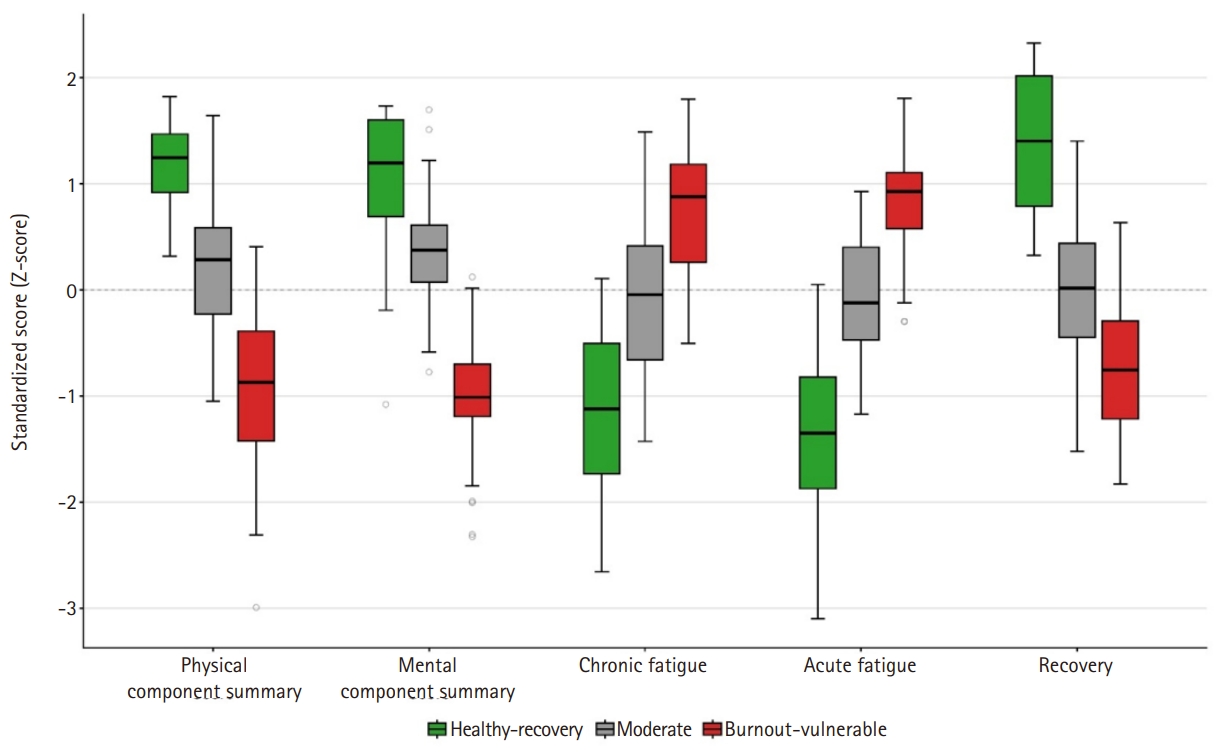
This study aimed to identify latent profiles of shift-work nurses according to perceived health, fatigue, and recovery levels and to examine differences across profiles in work-related outcomes, including sleep quality, work-life balance, job satisfaction, and turnover intention. It also examined whether patterns associated with participation in a shift-work improvement pilot project differed by latent profile.
Methods
This descriptive cross-sectional study included 120 shift-work nurses working in pediatric wards at a tertiary hospital in South Korea. Data were collected from January 14 to 24, 2025. Latent profile analysis was performed using the 36-Item Short Form Health Survey and the Occupational Fatigue Exhaustion Recovery Scale. Differences in outcomes by latent profile membership and pilot-project participation status at the time of data collection were examined using two-way analysis of covariance, with age included as a covariate.
Results
Three latent profiles were identified: Healthy-Recovery (20.8%), Moderate (41.7%), and Burnout-Vulnerable (37.5%). Significant differences among profiles were observed in sleep quality (F=37.37, p<.001), work-life balance (F=50.86, p<.001), job satisfaction (F=12.29, p<.001), and turnover intention (F=12.11, p<.001). A significant interaction between latent profile membership and pilot-project participation was observed for job satisfaction (F=4.77, p=.010, partial η²=.078). Pilot-project participation was associated with significantly higher job satisfaction only in the Healthy-Recovery profile (p=.005).
Conclusion
Associations between pilot-project participation and work-related outcomes differed according to nurses’ health, fatigue, and recovery profiles. These findings indicate that heterogeneity among shift-work nurses should be considered when interpreting work-related outcomes and designing tailored support strategies.
- 874 View
- 83 Download

Review Paper
- Effectiveness of mobile health interventions to improve medication adherence for patients with cardiovascular disease: a systematic review and meta-analysis
- Yeoungsuk Song, Seurk Park, Yuyoung Lee, Sohye Lee
- J Korean Acad Nurs 2026;56(2):148-165. Published online May 22, 2026
- DOI: https://doi.org/10.4040/jkan.26016
-
Abstract
PDFePub
- Purpose
This study systematically reviewed and synthesized the evidence on the effectiveness of mobile health (mHealth) interventions in improving medication adherence among patients with cardiovascular disease.
Methods
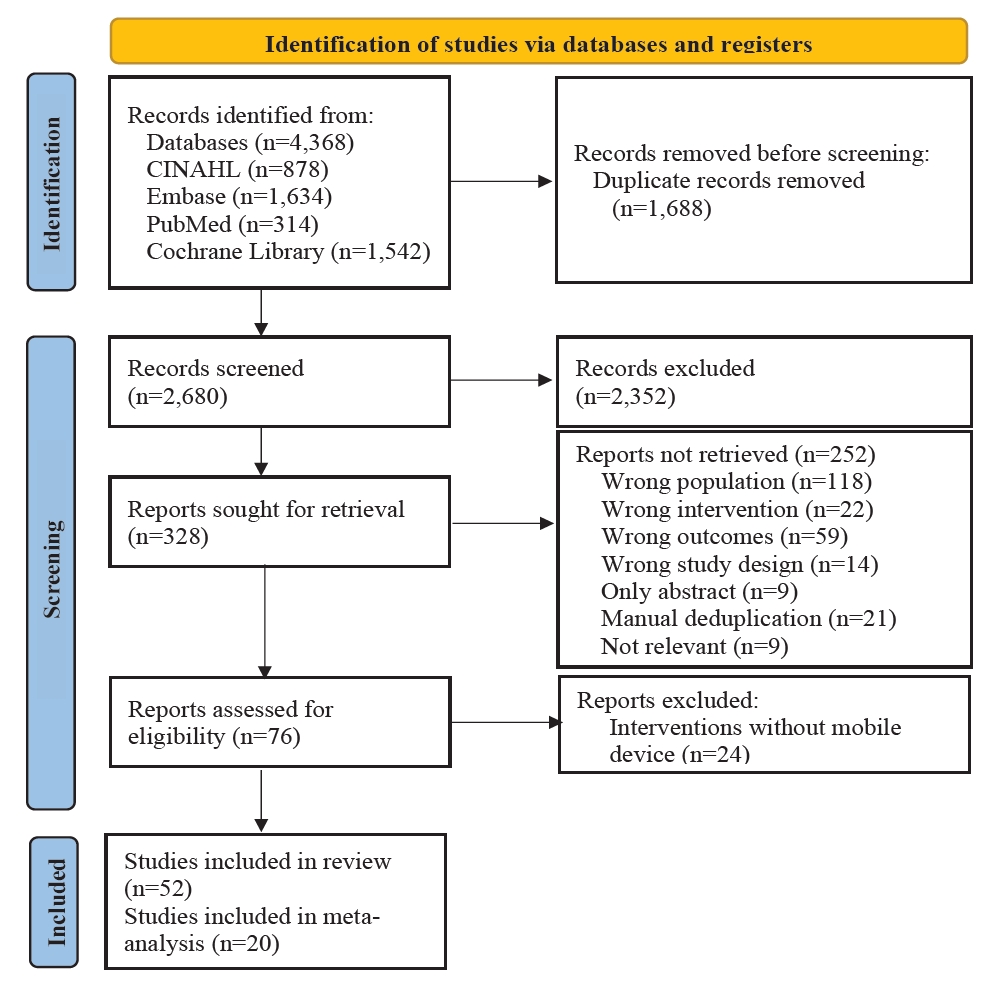
This systematic review included randomized controlled trials that evaluated the effects of mHealth interventions on medication adherence among patients with cardiovascular disease. PubMed, the Cochrane Library, CINAHL, and Embase were searched for peer-reviewed studies and grey literature published in English between January 1, 2013, and July 31, 2025. The Cochrane Risk of Bias 2 (RoB 2) tool was used to assess the risk of bias in the included studies. R software ver. 4.5.2 was used to perform the meta-analysis.
Results
Fifty-two studies were included in the systematic review, of which 20 were included in the meta-analysis. The pooled analysis demonstrated a significant improvement in medication adherence among patients with cardiovascular disease receiving mHealth interventions, with a moderate to large effect size (Hedges’ g=0.72; 95% confidence interval, 0.20–1.25; p<.001), despite substantial heterogeneity (I2=97%). However, a considerable proportion of the included studies were assessed as having a high risk of bias, which may limit the internal validity of the findings. Subgroup analyses indicated that the effects of mHealth interventions on medication adherence did not differ significantly according to intervention type, duration, or outcome measurement tools.
Conclusion
mHealth interventions appear to be effective in improving medication adherence among patients with cardiovascular disease. However, these findings should be interpreted with caution because of the high risk of bias and substantial heterogeneity among the included studies. Future research should explore the use of emerging technologies, such as artificial intelligence and virtual reality, to address medication non-adherence (PROSPERO registration number: CRD42023450502).
- 3,028 View
- 213 Download
Research Paper
- A structural equation model of respiratory infection prevention behaviors among elementary school teachers in South Korea: a cross-sectional study
- Yoon-Ji Lee, JONG-EUN LEE
- J Korean Acad Nurs 2026;56(2):262-275. Published online May 21, 2026
- DOI: https://doi.org/10.4040/jkan.26010
-
Abstract
PDFePub
- Purpose
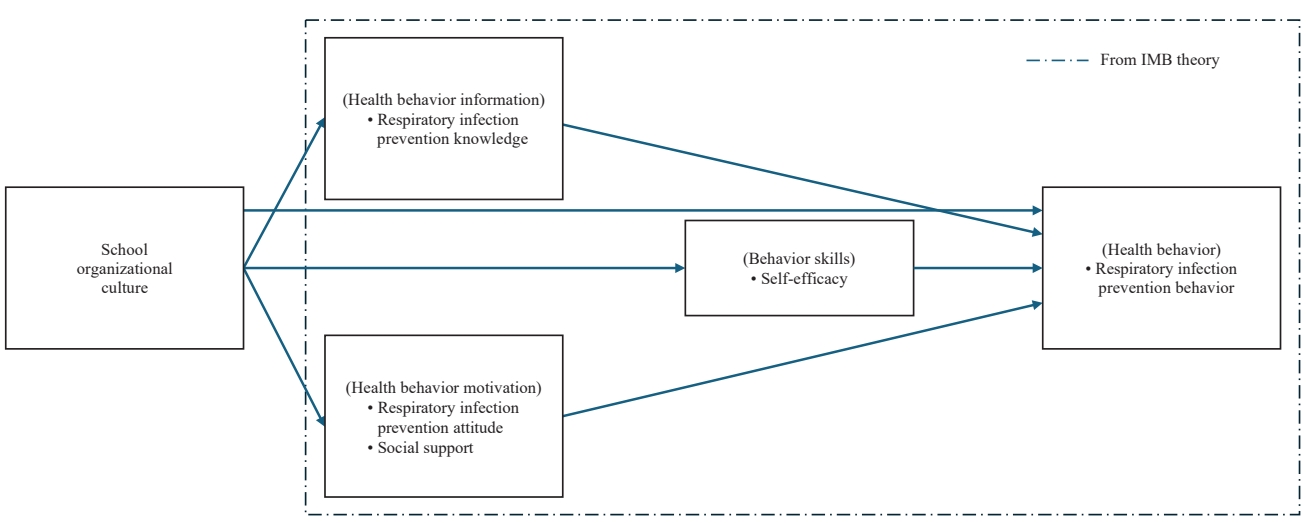
This study aimed to develop and test a structural equation model of respiratory infection prevention behaviors among elementary school teachers based on the Information–Motivation–Behavioral Skills model.
Methods
This study included 250 teachers who were currently working in elementary schools and had experience as homeroom teachers. Data were collected from December 18 to December 31, 2023 using self-reported questionnaires. The proposed model included school organizational culture as the exogenous variable and respiratory infection prevention knowledge, respiratory infection prevention attitude, social support, self-efficacy, and respiratory infection prevention behavior as endogenous variables. Data were analyzed using IBM SPSS for Windows ver. 24.0 and Smart PLS ver. 4.1.
Results
Of the 19 hypothesized paths in the research model, five were statistically significant. School organizational culture had a significant direct effect on respiratory infection prevention knowledge (β=.20, p=.041), social support had a significant direct effect on self-efficacy (β=.33, p=.001), and self-efficacy had a significant direct effect on respiratory infection prevention behaviors (β=.22, p=.021). Respiratory infection prevention attitude (direct: β=.23, p=.029; total: β=.26, p=.008) and school organizational culture (direct: β=.22, p=.017; total: β=.30, p=.002) had significant direct and total effects on respiratory infection prevention behaviors.
Conclusion
To enhance respiratory infection prevention behaviors among elementary school teachers, interventions should focus on strengthening positive attitudes toward infection prevention and improving self-efficacy. Organizational-level strategies, including establishing supportive school organizational cultures, promoting peer support among teachers, and sharing infection prevention practices within schools, are also needed to facilitate and sustain preventive behaviors.
- 1,157 View
- 119 Download
Review Papers
- Variables associated with compliance with standard precautions among hospital nurses: a systematic review and meta-analysis
- Song Hee Park, Seok Hee Jeong, Chang Seop Lee, Young Man Kim
- J Korean Acad Nurs 2026;56(1):1-26. Published online February 27, 2026
- DOI: https://doi.org/10.4040/jkan.25114
-
Abstract
PDF
- Purpose
This study aimed to conduct a systematic review and meta-analysis to identify variables associated with standard precautions compliance among hospital nurses and to comprehensively examine their effect sizes.
Methods
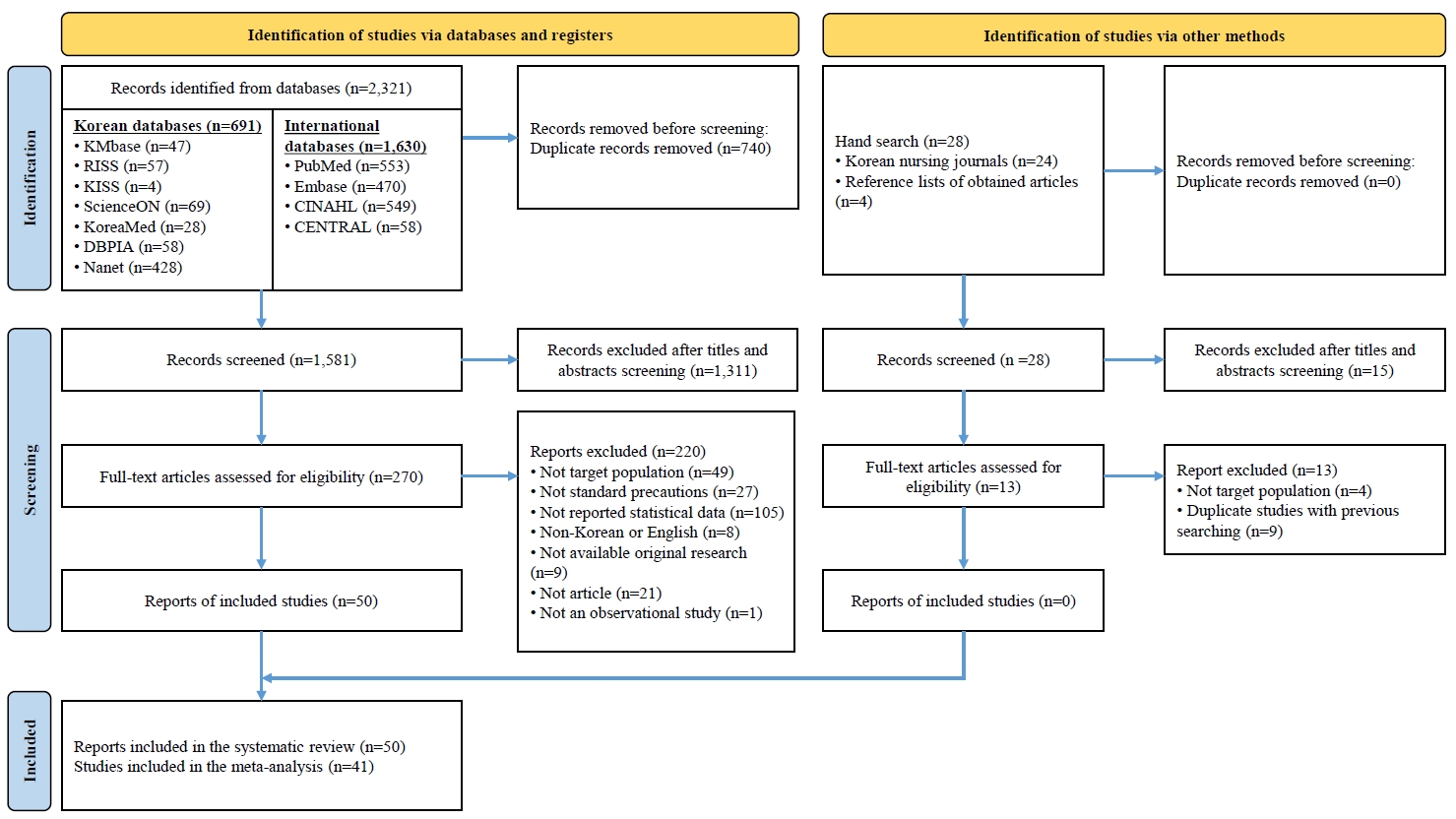
A systematic review and meta-analysis were reported in accordance with the PRISMA and MOOSE guidelines. Studies published in English or Korean were retrieved from KMbase, KoreaMed, KISS, ScienceON, RISS, Nanet, DBpia, PubMed, Embase, CINAHL, and CENTRAL. Data collection was conducted from July 6 to July 16, 2024. To ensure a comprehensive search, no restrictions were placed on the publication period, and studies published up to June 2024 were included in the literature search. Analyses were performed using R ver. 4.4.1.
Results
Of the 2,321 studies screened, 50 were included in the systematic review and 41 were included in the meta-analysis. Variables were categorized according to the ecological model. Among individual-level factors, variables with medium correlation effect sizes (ESr ≥.30) included self-efficacy (ESr=.41; 95% confidence interval [CI], 0.24 to 0.56), perceived barriers (ESr=−.35; 95% CI, −0.59 to −0.05), cues to action (ESr=.34; 95% CI, 0.07 to 0.57), and perceived benefits (ESr=.30; 95% CI, 0.13 to 0.46). Among organizational factors, organizational culture for infection control (ESr=.47; 95% CI, 0.39 to 0.54) and patient safety culture (ESr=.44; 95% CI, 0.35 to 0.53) demonstrated medium effect sizes. Other statistically significant variables with small effect sizes were also identified. No variables were identified within the interpersonal, community, or public policy domains.
Conclusion
This study identified self-efficacy and organizational culture for infection control as key determinants of compliance with standard precautions. Strengthening these factors may reduce healthcare-associated infections and promote safer nursing care (PROSPERO registration number: CRD42024566518). -
Citations
Citations to this article as recorded by
- Factors influencing intensive care unit nurses’ performance of standard precautions in South Korea: a descriptive correlational study
Hana Seo, Nahyun Kim
Journal of Korean Biological Nursing Science.2026; 28(2): 300. CrossRef
- Factors influencing intensive care unit nurses’ performance of standard precautions in South Korea: a descriptive correlational study
- 3,439 View
- 391 Download
- 1 Crossref
- Variables influencing digital health literacy in older adults: a systematic review and meta-analysis
- Jin Hwa Park, Eun Ju Mun
- J Korean Acad Nurs 2025;55(4):651-667. Published online November 27, 2025
- DOI: https://doi.org/10.4040/jkan.25112
-
Abstract
PDFePub
- Purpose
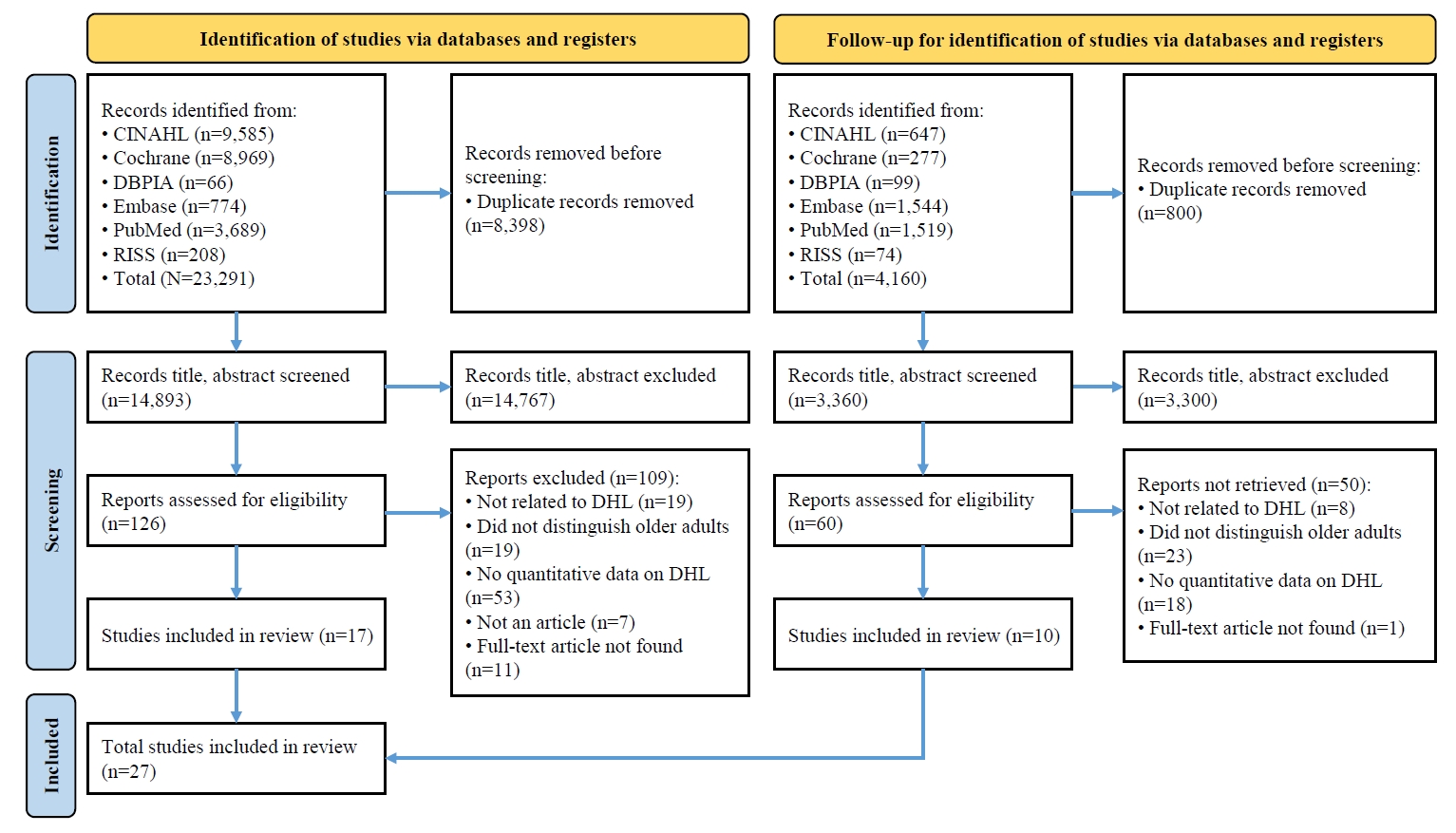
This study aimed to synthesize existing evidence on digital health literacy (DHL) among older adults and to estimate the associations between related influencing factors through a systematic literature review and meta-analysis.
Methods
A systematic review and meta-analysis were conducted in accordance with the Preferred Reporting Items for Systematic Reviews and Meta-Analyses (PRISMA) and Meta-Analysis of Observational Studies in Epidemiology (MOOSE) guidelines. Literature searches were performed across PubMed, EMBASE, Cochrane Library, CINAHL, RISS, and DBPIA. The search and screening process was conducted from December 24, 2023, to March 31, 2025. Effect sizes (ESr) using correlation coefficient for each variable were calculated, and meta-analyses were performed using Microsoft Excel and R version 4.3.1.
Results
Forty-seven variables were identified, including two demographic, six physical, six behavioral, 23 psychosocial, and 10 cognitive factors. Meta-analysis results showed that physical, behavioral, psychosocial, and cognitive factors had significant effects on DHL. Among these, digital information level (ESr=.62; 95% confidence interval [CI], 0.55 to 0.69) within the cognitive domain and technophobia (ESr=−.55; 95% CI, −0.47 to −0.40) within the psychosocial domain demonstrated the largest ESr.
Conclusion
Among factors influencing DHL, digital information level and technophobia showed the strongest associations. These findings suggest that improving DHL in older adults requires a dual approach targeting both cognitive and psychosocial dimensions—enhancing digital information skills while reducing technophobia—to effectively support digital engagement and health empowerment in this population (PROSPERO registration number: CRD42023487486). -
Citations
Citations to this article as recorded by- 고령자를 위한 디지털 헬스 리터러시 측정척도의 적합도 검증
소윤 이
The Korean Journal of Physical Education.2026; 65(2): 157. CrossRef
- 고령자를 위한 디지털 헬스 리터러시 측정척도의 적합도 검증
- 4,752 View
- 379 Download
- 1 Crossref
- Risk factors for the readmission of patients with diabetic ketoacidosis: a systematic review and meta-analysis
- Hyerim Ji, Sun-Kyung Hwang
- J Korean Acad Nurs 2025;55(4):634-650. Published online November 21, 2025
- DOI: https://doi.org/10.4040/jkan.25072
-
Abstract
PDFePub
- Purpose
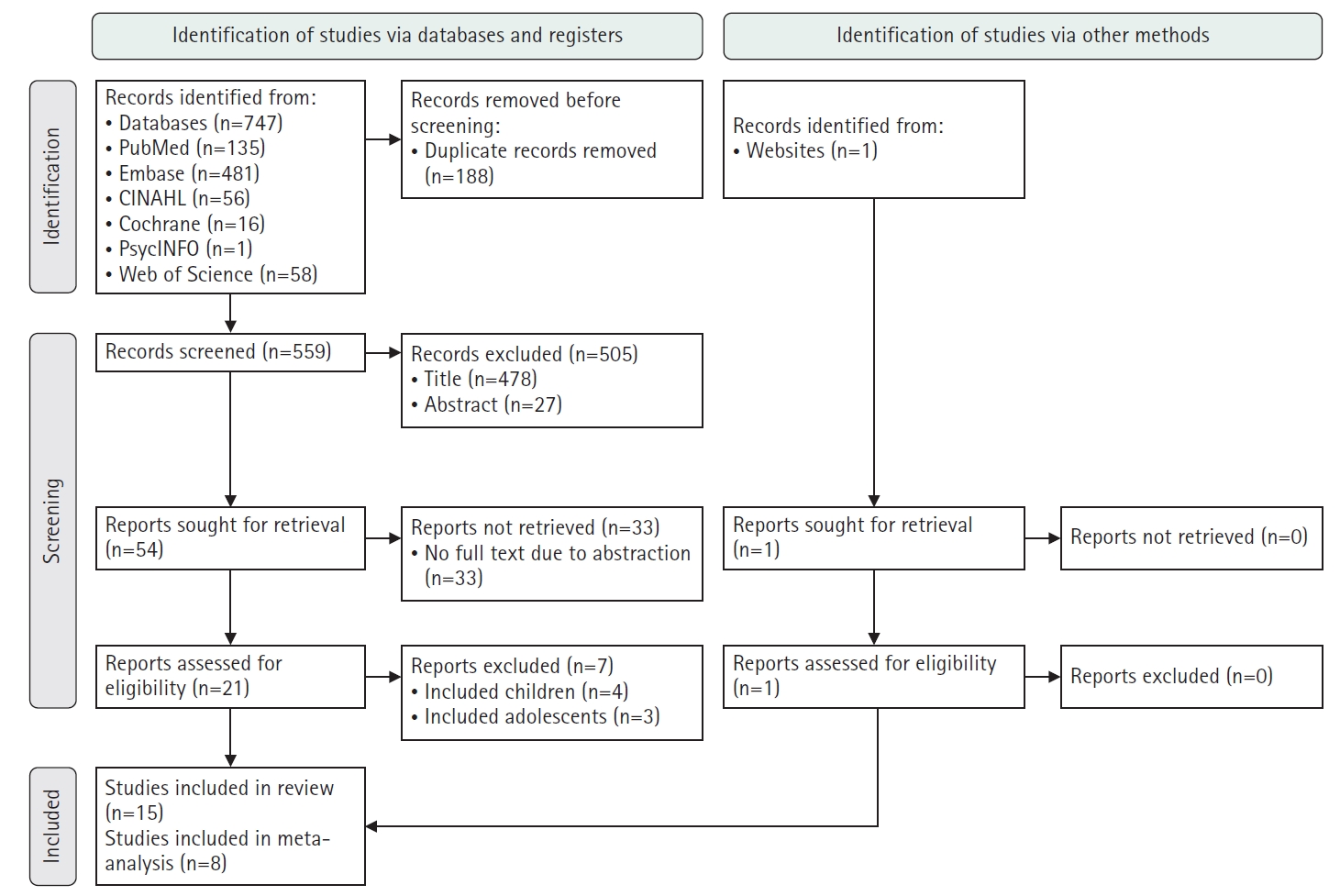
This study aimed to identify risk factors associated with the readmission of patients with diabetic ketoacidosis (DKA) through a systematic review and meta-analysis.
Methods
A systematic literature review was conducted in accordance with the PRISMA guidelines. Relevant studies were retrieved from international databases (PubMed, EMBASE, Cochrane Library, CINAHL, PsycINFO, and Web of Science) and Korean databases (RISS, KoreaMed, KMbase, KISS, and DBpia). Study quality was evaluated using the Newcastle-Ottawa Scale. Meta-analysis was performed using a random-effects model with the Hartung-Knapp-Sidik-Jonkman adjustment to account for the limited number of studies and heterogeneity.
Results
Fifteen studies were included in the review, and eight were eligible for meta-analysis. From the systematic review, 21 risk factors for DKA readmission were identified and categorized into five domains: demographic, socioeconomic, diabetes-related, comorbidity, and health-behavioral factors. In the meta-analysis, significant risk factors included low income, psychiatric disorders, and discharge against medical advice.
Conclusion
This study demonstrates that DKA readmissions result from the complex interplay of multiple clinical and social factors. By identifying these risk factors and suggesting risk-stratification criteria, the findings may support the development of tailored interventions, such as self-management education, integrated mental health care, structured discharge planning, and coordinated post-discharge follow-up.
- 3,201 View
- 345 Download
Research Papers
- Effects of social support on organizational commitment among experienced nurses experiencing department rotation: the mediating effect of organizational socialization
- Young Jun Jang, Jeong A Jeong, Yu Seung Ban, Seon Hwa Park, Eun Jee Lee
- J Korean Acad Nurs 2025;55(3):364-376. Published online August 18, 2025
- DOI: https://doi.org/10.4040/jkan.25042
-
Abstract
PDFePub
- Purpose
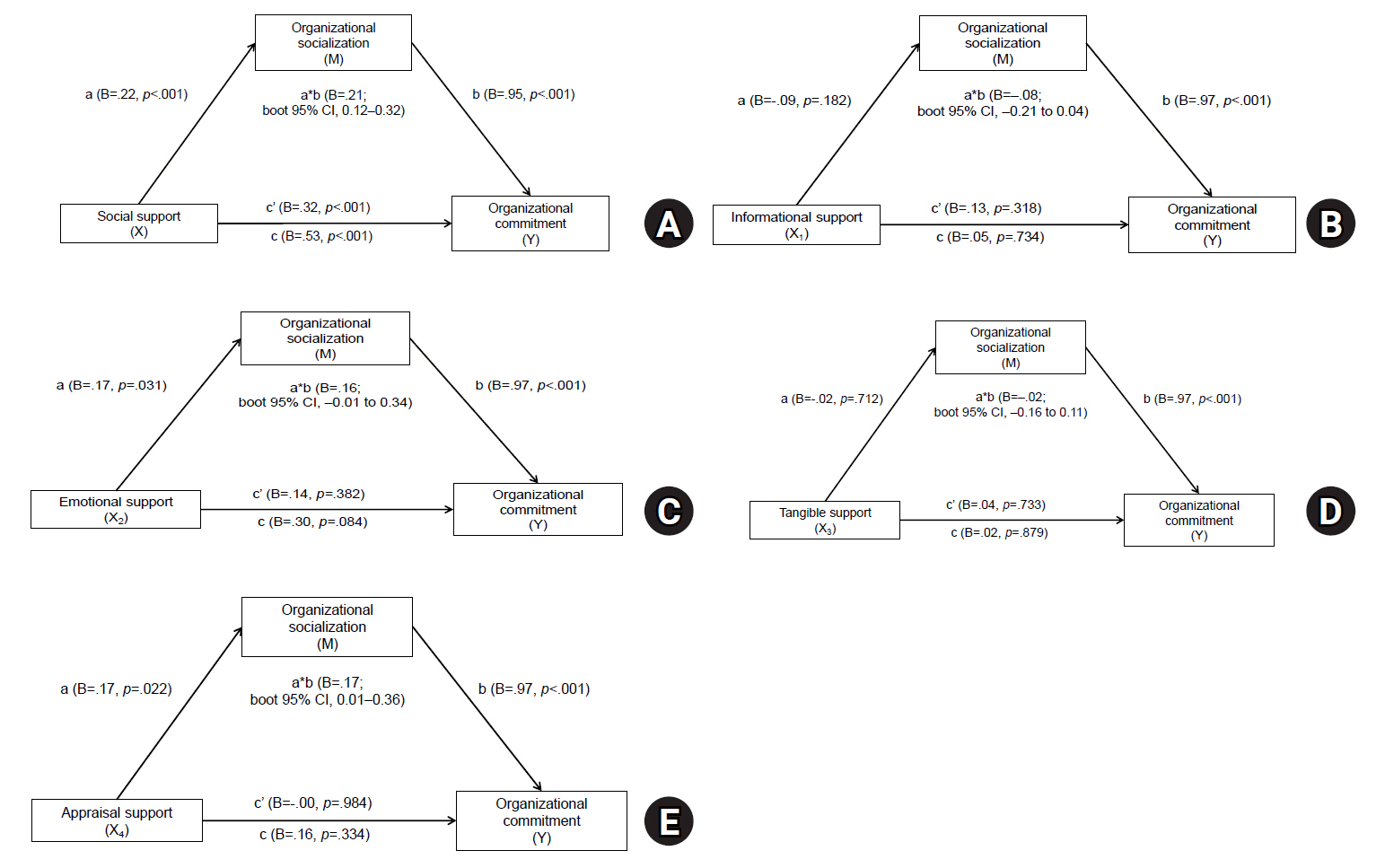
This study explored the mediating role of organizational socialization in the relationship between social support and organizational commitment among nurses in hospitals who had experienced department rotation.
Methods
A descriptive survey design was used with 202 nurses from a tertiary hospital who had experienced department rotation within the past 12 months. Data were collected via an online questionnaire from August 1 to August 30, 2024. Analyses included frequency analysis, descriptive statistics, Pearson correlation, and multiple regression. The mediating effect was tested using IBM SPSS WIN ver. 23.0 and the PROCESS macro (model 4) with 10,000 bootstrap resamples.
Results
Organizational socialization partially mediated the relationship between social support and organizational commitment (B=.21; bootstrapped 95% confidence interval, 0.12–0.32).
Conclusion
The findings suggest that both social support and organizational socialization play essential roles in improving nurses’ organizational commitment following department rotation. Thus, practical programs, such as mentoring systems, should be implemented that both enhance social support and actively promote organizational socialization. These efforts have the potential to help nurses adjust more effectively to new units and ultimately improve retention and performance within healthcare organizations. -
Citations
Citations to this article as recorded by- Why Self‐Leadership Alone Is Not Enough: How Professional Self‐Concept and Organizational Commitment Shape Male Nurses’ Intention to Stay
Donghyeok Lee, Mihwa Shim, Jungmin Lee, Matthew Vandermeulen
Journal of Nursing Management.2026;[Epub] CrossRef - Job Satisfaction among Transferred Nurses: Associations with Work Environment, Peer Support, and Grit
Ji Wan Choi, Ji Yea Lee
Journal of Korean Academy of Nursing Administration.2026; 32(4): 292. CrossRef - The Effects of Organizational Socialization and Nursing Competence on Organizational Commitment among Clinical Nurses
Sangyun Park, Seunghee Lee
Journal of Korean Academy of Nursing Administration.2026; 32(4): 254. CrossRef - The Effects of Nurses’ Dispatch Work Characteristics on Job Embeddedness, Organizational Commitment, and Turnover Intention
Eejee Jung, Gunjeong Lee
Journal of Korean Academy of Nursing Administration.2025; 31(5): 560. CrossRef - Nurses' Experience Working with Substitute Nurses
Hye Mi Kim, Yeon Hee Kim, Jeong Hye Kim
Journal of Korean Association for Qualitative Research.2025; 10(3): 208. CrossRef
- Why Self‐Leadership Alone Is Not Enough: How Professional Self‐Concept and Organizational Commitment Shape Male Nurses’ Intention to Stay
- 3,621 View
- 388 Download
- 1 Web of Science
- 5 Crossref
- Media discourse on physician assistant nurses in South Korea: a text network and topic modeling approach
- Young Gyu Kwon, Daun Jeong, Song Hee Park, Mi Kyung Kim, Chan Woong Kim
- J Korean Acad Nurs 2025;55(3):388-399. Published online July 30, 2025
- DOI: https://doi.org/10.4040/jkan.25038
-
Abstract
PDFePub
- Purpose
This study quantitatively examined the portrayal of physician assistant (PA) nurses in Korean media by integrating text network analysis with latent Dirichlet allocation (LDA) topic modeling.
Methods
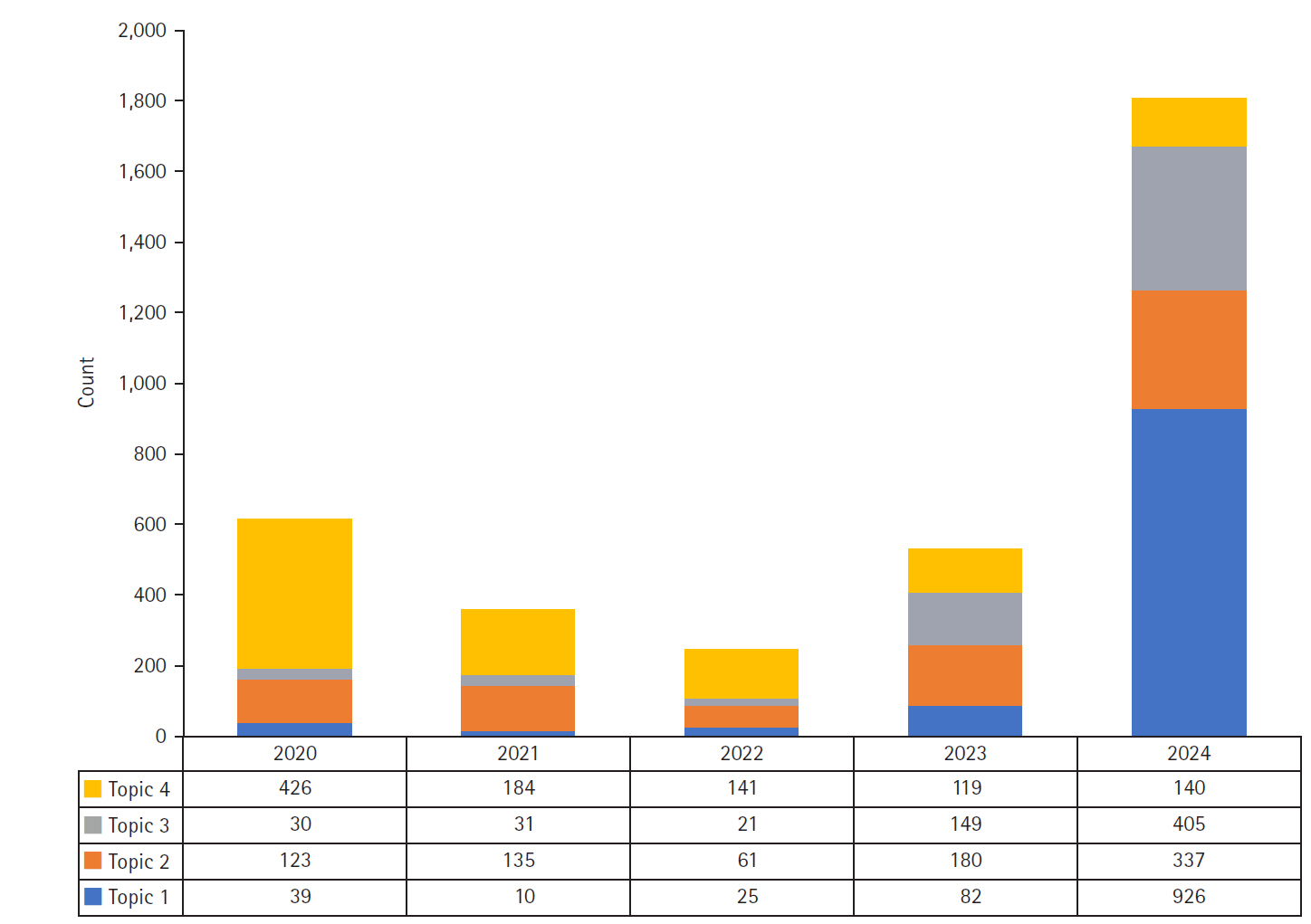
A total of 3,564 news articles published by nine major Korean media outlets between 2020 and 2024 were analyzed. Content analysis was conducted using term frequency-inverse document frequency calculations, network centrality analysis, and LDA topic modeling to extract key terms, map discourse structures, and identify latent topics.
Results
The analysis identified four primary topics in Korean media discourse: “healthcare workforce expansion policies” (30.4%), “hospital clinical practice and operational management” (23.5%), “institutionalization of the PA nursing role” (17.8%), and “COVID-19 response and public health crisis management” (28.3%). High-centrality keywords included “hospital,” “medical,” “patient,” “physician,” “government,” and “nurse,” indicating that the discourse primarily focused on clinical settings. Topic modeling revealed a major shift from pandemic-centered coverage in 2020 to a focus on healthcare workforce policy and PA nurse institutionalization in 2024, coinciding with the passage of the Nursing Act.
Conclusion
This study provides empirical evidence suggesting that the portrayal of PA nurses in Korean media discourse evolved from a peripheral regulatory issue to a central healthcare delivery solution, particularly in the contexts of workforce management, clinical practice, and crisis response. Our findings suggest that PA nurse institutionalization received broader attention when positioned as part of systemic healthcare improvements addressing concrete clinical needs. These results offer valuable insights for policymakers and administrators in framing and implementing workforce policy reforms. -
Citations
Citations to this article as recorded by- Impact of role conflict and job stress on turnover intention among Korean physician assistant nurses: A cross-sectional study
Jin-Won Lee, Eun-Hi Choi, Ji-Sun Back
International Journal of Nursing Sciences.2026; 13(2): 172. CrossRef
- Impact of role conflict and job stress on turnover intention among Korean physician assistant nurses: A cross-sectional study
- 4,647 View
- 155 Download
- 1 Web of Science
- 1 Crossref
- The effects of a lifestyle intervention for men in infertile couples in South Korea: a non-randomized controlled trial
- Yun Mi Kim, Ju-Hee Nho
- J Korean Acad Nurs 2025;55(2):191-204. Published online April 16, 2025
- DOI: https://doi.org/10.4040/jkan.24104

-
Abstract
PDFePub
- Purpose
This study aimed to evaluate the effects of an interaction model of client health behavior (IMCHB)-based lifestyle intervention on health-promoting behaviors, infertility stress, fertility-related quality of life, and semen quality in men in infertile couples.
Methods
This study used a quasi-experimental, non-equivalent control group, pretest-posttest design, with participants divided into an experimental group (n=17) and a control group (n=19). The 16-session, 8-week intervention included components such as reproductive health education, physical activity, nutritional management, and stress management. Data collection occurred between July 1, 2021 and September 27, 2022. The outcomes measured included health-promoting behaviors, infertility stress, fertility-related quality of life, and sperm quality (volume, total motility, immobility, concentration, and normal morphology).
Results
The experimental group showed significant improvements in health-promoting behaviors (z=–2.27, p=.023) and reductions in infertility stress (t=–2.40, p=.022) compared to the control group. Total sperm motility (F=4.39, p=.045) and normal morphology (z=2.86, p=.017) were also significantly higher in the experimental group than in the control group.
Conclusion
The IMCHB-based lifestyle intervention significantly increased health-promoting behaviors, reduced infertility stress, and improved key sperm parameters, indicating its effectiveness in supporting the reproductive health of men in infertile couples. -
Citations
Citations to this article as recorded by- Psychological Stress and Male Infertility: Oxidative Stress as the Common Downstream Pathway
Aris Kaltsas, Stamatis Papaharitou, Fotios Dimitriadis, Michael Chrisofos, Nikolaos Sofikitis
Biomedicines.2026; 14(2): 259. CrossRef
- Psychological Stress and Male Infertility: Oxidative Stress as the Common Downstream Pathway
- 5,188 View
- 178 Download
- 1 Web of Science
- 1 Crossref
Review Paper
- Effectiveness of non-pharmacological interventions to reduce internalized stigma in people with severe mental illness: a systematic review and meta-analysis
- Soyoung Kim, Sun Hyoung Bae, Myung-Sun Hyun
- J Korean Acad Nurs 2025;55(1):1-18. Published online February 25, 2025
- DOI: https://doi.org/10.4040/jkan.24072
-
Abstract
PDFePub
- Purpose
This study systematically reviewed and analyzed the effects of non-pharmacological interventions on internalized stigma among people with severe mental illness.
Methods
A systematic review and meta-analysis were conducted following the Cochrane Intervention Research Systematic Review Manual and Preferred Reporting Items for Systematic Review and Meta-Analysis guidelines. This study targeted people with severe mental illness as the population, interventions aimed at reducing internalized stigma, comparisons with control groups, and internalized stigma as the outcome. A literature search was performed across multiple databases, including PubMed, EMBASE, the Cochrane Library, CINAHL, PsycArticles, RISS, KMbase, and KoreaMed. The risk of bias was evaluated using the Cochrane Risk of Bias 2.0 tool. Effect sizes were computed using Hedges’s g, and subgroup analyses were conducted with Comprehensive Meta-Analysis software version 4.0.
Results
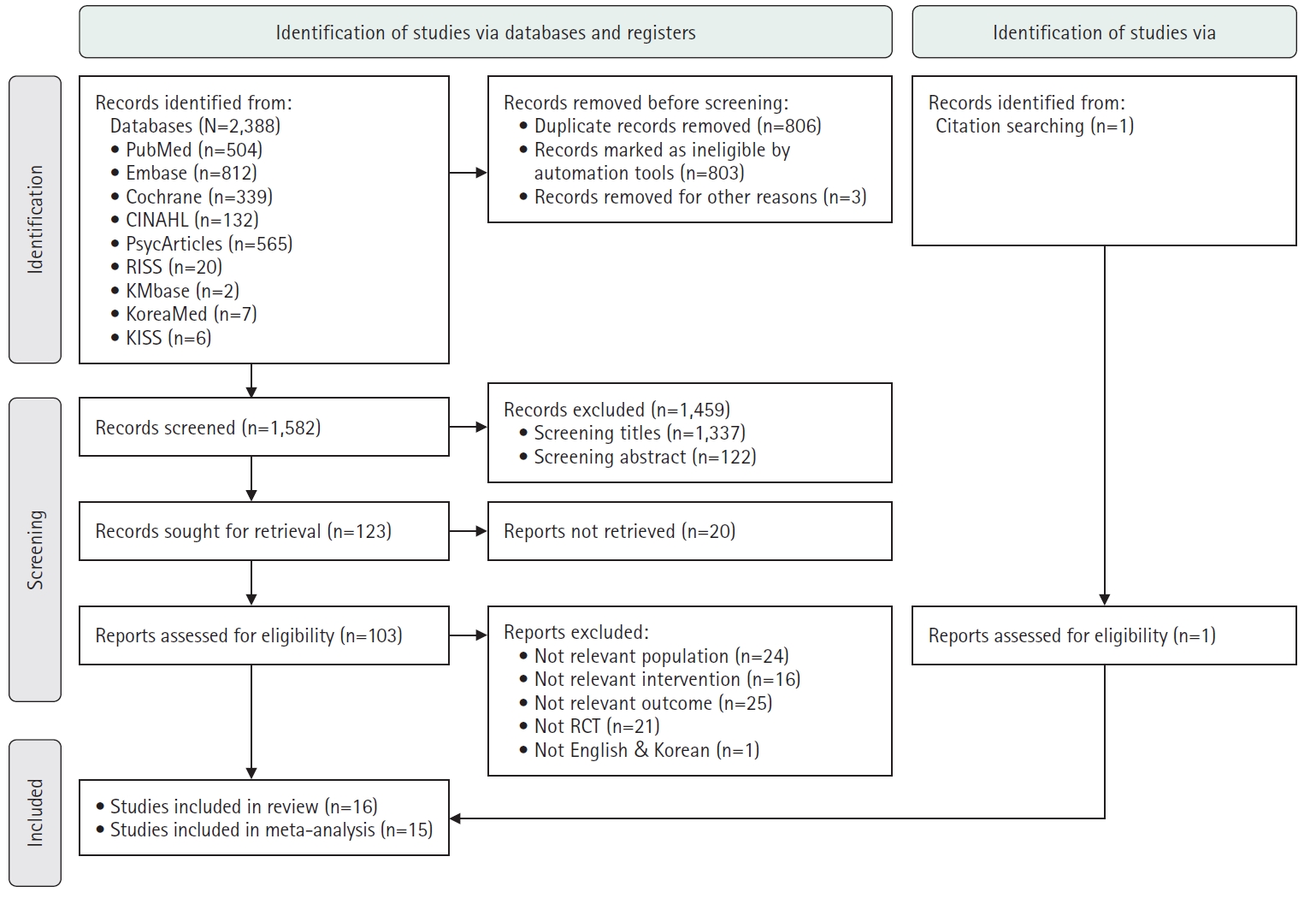
Of 2,388 papers, 15 were included in the meta-analysis. The overall effect size (Hedges’s g) of the intervention was –0.60 (95% confidence interval, –1.01 to –0.19), indicating a statistically significant reduction in internalized stigma (Z=–2.88, p=.004). Subgroup analyses revealed that the intervention type (p=.008) and session length (p=.011) were significant moderators influencing the effectiveness of the interventions.
Conclusion
Tailoring interventions by considering variables such as the intervention type and session length could enhance the effectiveness of non-pharmacological interventions for reducing internalized stigma among people with severe mental illness (PROSPERO: CRD42023418561). -
Citations
Citations to this article as recorded by- Determinants of Mental Health Help-Seeking Behavior Among Korean Adults: A Population-Based Study Using the 2023 Korea National Health and Nutrition Examination Survey
Moonhee Gang, Ga-Ae Kim, Joonyeong Lee, Farhatun Nisaa Shoeb
Journal of Psychosocial Nursing and Mental Health Services.2026; : 1. CrossRef - Effectiveness of a Rational Emotive Behavior Therapy-Based Recovery Promotion Program for Psychiatric Inpatients: A Quasi-Experimental Study
Ju Yeon Kim, Hyun Mee Cho, Won Hee Jun
Journal of the American Psychiatric Nurses Association.2026;[Epub] CrossRef - Opportunities to Improve Prescription Opioid Management in Advanced Cancer: A Concept Mapping Approach to Intervention Development
Hailey W. Bulls, Sarah Orris, Anna Gogiberidze, Justin A. Scott, Desiree R. Azizoddin, Kelly W. Harris, Burel R. Goodin, Cristina Murray-Krezan, Jane M. Liebschutz, Ellen M Lavoie Smith, Yael Schenker, Jessica S. Merlin, Jessica G. Burke
The Journal of Pain.2026; : 106457. CrossRef
- Determinants of Mental Health Help-Seeking Behavior Among Korean Adults: A Population-Based Study Using the 2023 Korea National Health and Nutrition Examination Survey
- 6,915 View
- 496 Download
- 2 Web of Science
- 3 Crossref
Research Paper
- Formative versus reflective measurement models in nursing research: a secondary data analysis of a cross-sectional study in Korea
- Eun Seo Park, Young Il Cho, Hyo Jin Kim, YeoJin Im, Dong Hee Kim
- J Korean Acad Nurs 2025;55(1):107-118. Published online February 19, 2025
- DOI: https://doi.org/10.4040/jkan.24095
-
Abstract
PDFePub
- Purpose
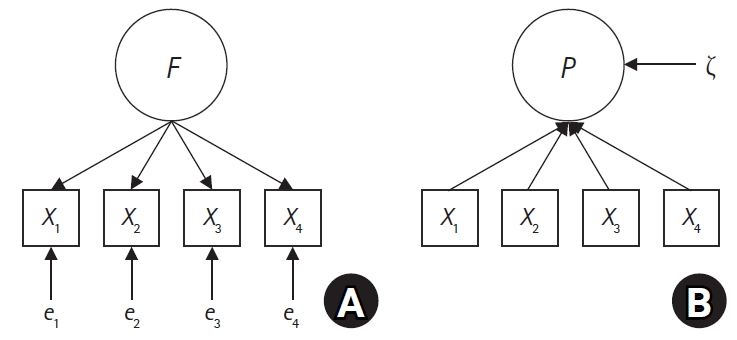
This study aimed to empirically verify the impact of measurement model selection on research outcomes and their interpretation through an analysis of children’s emotional and social problems measured by the Pediatric Symptom Checklist (PSC) using both reflective and formative measurement models. These models were represented by covariance-based structural equation modeling (CB-SEM) and partial least squares SEM (PLS-SEM), respectively.
Methods
This secondary data analysis evaluated children’s emotional and social problems as both reflective and formative constructs. Reflective models were analyzed using CB-SEM, while formative models were assessed using PLS-SEM. Comparisons between these two approaches were based on model fit and parameter estimates.
Results
In the CB-SEM analysis, which assumed a reflective measurement model, a model was not identified due to inadequate fit indices and a Heywood case, indicating improper model specification. In contrast, the PLS-SEM analysis, assuming a formative measurement model, demonstrated adequate reliability and validity with significant path coefficients, supporting the appropriateness of the formative model for the PSC.
Conclusion
The findings indicate that the PSC is more appropriately analyzed as a formative measurement model using PLS-SEM, rather than as a reflective model using CB-SEM. This study highlights the necessity of selecting an appropriate measurement model based on the theoretical and empirical characteristics of constructs in nursing research. Future research should ensure that the nature of measurement variables is accurately reflected in the choice of statistical models to improve the validity of research outcomes. -
Citations
Citations to this article as recorded by- The strategic role of proactivity and socioemotional wealth in family firm success
Felipe Hernández-Perlines, Luis Araya-Castillo, Mercedes Castro-Nuño
Journal of Innovation & Knowledge.2026; 18: 101097. CrossRef - What Makes the Structural Equation Model (SEM) Challenging? A Review of Methodological, Statistical, and Practical Challenges
Loso Judijanto, Sri Nurhayati
WSEAS TRANSACTIONS ON INFORMATION SCIENCE AND APPLICATIONS.2026; 23: 447. CrossRef
- The strategic role of proactivity and socioemotional wealth in family firm success
- 3,865 View
- 206 Download
- 1 Web of Science
- 2 Crossref
Review Paper
- Effects of Non-Pharmacological Interventions on Major Adverse Cardiac Events in Patients Underwent Percutaneous Coronary Intervention: Systematic Review and Meta-Analysis
- Sojeong Jo, Haejung Lee, Gaeun Park
- J Korean Acad Nurs 2024;54(3):311-328. Published online August 31, 2024
- DOI: https://doi.org/10.4040/jkan.24019
-
Abstract
PDF
- Purpose
In this study a systematic review and meta-analysis investigated the impact of non-pharmacological interventions on major adverse cardiac events (MACE) in patients with coronary artery disease who underwent percutaneous coronary intervention (PCI).
Methods
A literature search was performed using PubMed, Cochrane Library, EMBASE, and Cumulative Index to Nursing & Allied Health Literature databases up to November 2023. The risk of bias was assessed using the Cochrane Risk of Bias 2.0 tool. Effect sizes and 95% confidence intervals were calculated using R software (version 4.3.2).
Results
Eighteen randomized studies, involving 2,898 participants, were included. Of these, 16 studies with 2,697 participants provided quantitative data. Non-pharmacological interventions (education, exercise, and comprehensive) significantly reduced the risk of angina, heart failure, myocardial infarction, restenosis, cardiovascular-related readmission, and cardiovascular-related death. The subgroup meta-analysis showed that combined interventions were effective in reducing the occurrence of myocardial infarction (MI), and individual and group-based interventions had significant effects on reducing the occurrence of MACE. In interventions lasting seven months or longer, occurrence of decreased by 0.16 times, and mortality related to cardiovascular disease decreased by 0.44 times, showing that interventions lasting seven months or more were more effective in reducing MI and cardiovascular disease-related mortality.
Conclusion
Further investigations are required to assess the cost-effectiveness of these interventions in patients undergoing PCI and validate their short- and long-term effects. This systematic review underscores the potential of non-pharmacological interventions in decreasing the incidence of MACE and highlights the importance of continued research in this area (PROSPERO registration number: CRD42023462690). -
Citations
Citations to this article as recorded by- Exercise After Coronary Stenting: Potential Effects on in-Stent Restenosis
Luigi Spadafora, Stefano Cacciatore, Monica Salvi, Federico Russo, Lorenzo Lo Sasso, Attilio Lauretti, Francesco Perone, Nicola Pierucci, Pierre Sabouret, Giorgio Zangari, Alfredo De Vito, Giuseppe Biondi Zoccai, Marco Bernardi
Current Atherosclerosis Reports.2026;[Epub] CrossRef
- Exercise After Coronary Stenting: Potential Effects on in-Stent Restenosis
- 4,569 View
- 308 Download
- 1 Web of Science
- 1 Crossref
Research Papers
- Development of the Hybrid Clinical Practicum Environment Scale for Nursing Students
- Seoyoung Yoon, Hye-Ah Yeom
- J Korean Acad Nurs 2024;54(3):340-357. Published online August 31, 2024
- DOI: https://doi.org/10.4040/jkan.24016
-
Abstract
PDF
- Purpose
This study aimed to develop a Hybrid Clinical Practicum Environment Scale for Nursing Students (HCPES-NS) and verify its validity and reliability.
Methods
The HCPES-NS was constructed following the DeVellis guidelines. The initial items were written based on a literature review and individual in-depth interviews. Content validity was verified through an expert panel review. To confirm the validity and reliability of the scale, a survey was conducted with 449 nursing students enrolled in 12 nursing colleges. Data were analyzed using item analysis, exploratory factor analysis, confirmatory factor analysis, concurrent validity, and reliability tests.
Results
Factor analysis showed that the HCPES-NS consists of 15 items on five subdomains: clinical site atmosphere, interpersonal relationship, alternative online practicum contents, provision of learning information, and clinical performance facilitation. A higher score indicated a more positive perception of the clinical practicum environment. The concurrent validity of the HCPES-NS was confirmed by its positive correlation with the Clinical Learning Environment Scale (r = .77). The Cronbach’s α reliability of the HCPES-NS was .84.
Conclusion
The HCPES-NS is both valid and reliable. This scale reflects the clinical practicum environment and includes an online practicum factor. It may be used effectively by faculty members and educators to evaluate nursing students’ perceptions of clinical practicum environments. -
Citations
Citations to this article as recorded by- Measurement properties of instruments assessing the clinical learning environment in health professions education: a COSMIN-based systematic review
Matthias Michael Walter, Alexander P Schurz, Nele Adriaenssens, Evert Zinzen, Slavko Rogan
Journal of Educational Evaluation for Health Professions.2026; 23: 14. CrossRef - Environmental and Individual Factors Associated with Clinical Practice Stress in Korean Nursing Students: A Scoping Review
Ui Rim Song
Korean Journal of Adult Nursing.2025; 37(4): 355. CrossRef
- Measurement properties of instruments assessing the clinical learning environment in health professions education: a COSMIN-based systematic review
- 5,141 View
- 139 Download
- 1 Web of Science
- 2 Crossref
- Concept Analysis of Social Intelligence of Nurses Using Hybrid Model
- Kyung Ran Lee, Na Kyoung Lee, Hee Oh, Kyoung Ae Park
- J Korean Acad Nurs 2024;54(3):459-474. Published online August 31, 2024
- DOI: https://doi.org/10.4040/jkan.23121
-
Abstract
PDF
- Purpose
The purpose of this study was to conduct a concept analysis of social intelligence in nurses so that applying social intelligence to the nursing field.
Methods
In this study, we followed the hybrid model procedure, involving the following steps: First, in the theoretical stage, the attributes and definitions of the concept of social intelligence were determined through literature review. Second, the concepts’ reality was confirmed during fieldwork. In the final analysis stage, the results confirmed in the theoretical and fieldwork stages were compared and analyzed to confirm the properties and definition of the concept.
Results
Nurses’ social intelligence consists of three dimensions: social cognitive nursing competency, human-centered social evolution, and skills for solving complex nursing situations. Nurses’ social intelligence is a professional nursing competency that flexibly coordinates complex nursing situations, developed through accumulating experiences of continuous reflection and relationship expansion based on receptive listening and social sensitivity in clinical interpersonal relationships.
Conclusion
Nurses’ social intelligence is widely used in clinical practice and is shown to have a significant direct and indirect impact on clinical nursing. To effectively apply social intelligence in the clinical context, individual and organizational efforts are required to share and transfer knowledge and capacity-building methods through collective intelligence and education. -
Citations
Citations to this article as recorded by- The Predictive Role of Social Intelligence Dimensions on Critical Thinking Dispositions Among Nurses: A Cross‐Sectional Study in Western Iran
Nahid Sourni, Mahvash Kahrizi, Nader salari, Maryam Janatolmakan, Rostam Jalali
Nursing Open.2026;[Epub] CrossRef
- The Predictive Role of Social Intelligence Dimensions on Critical Thinking Dispositions Among Nurses: A Cross‐Sectional Study in Western Iran
- 3,669 View
- 173 Download
- 2 Web of Science
- 1 Crossref
- The Influence of Diversity Management of Nursing Organization on Organizational Commitment: Double Mediating Effect of Diversity Sensitivity Orientation and Positive Nursing Organizational Culture
- Hwi Gon Jeon, Keum Seong Jang, Eun A Kim
- J Korean Acad Nurs 2024;54(3):403-417. Published online August 31, 2024
- DOI: https://doi.org/10.4040/jkan.23120
-
Abstract
PDF
- Purpose
The aim of this study was to identify the double mediating effect of effect of diversity sensitivity orientation and positive nursing organizational culture between diversity management and organizational commitment.
Methods
Participants were 245 nurses working in six tertiary hospitals located in 3 different regions. Data collection was conducted from February 13, 2023 to March 6, 2023 through online self-reported questionnaire. The data were analyzed by IBM SPSS Statistics 27 and SPSS PROCESS Macro 4.2 program.
Results
The direct effect of diversity management on organizational commitment was significant (β = .21, p < .001). The indirect effect of diversity management on organization commitment was .34 (95% confidence interval [CI] = .23~.47). The double mediating effect of diversity sensitivity orientation and positive nursing organizational culture in the relationship between diversity management and organizational commitment was .02 (95% CI = .00~.05).
Conclusion
Diversity sensitivity orientation and positive nursing organizational culture show double mediating effect on the relationship between diversity management and organizational commitment. Education program and human resource management strategy for enhancing diversity management, diversity sensitivity orientation and positive nursing organizational culture should be provided to improve organizational commitment, and which are needed active support of the association and nursing organization. -
Citations
Citations to this article as recorded by- Impact of Resilience, Emotional Exhaustion, and Communication Competency on Organizational Commitment Among Nurses in a Tertiary Hospital Setting in South Korea: A Cross-Sectional Study
Ho Young Kim, Hee Jeong Kim, Eun Ja Yeun
Sage Open.2025;[Epub] CrossRef - Organizational commitment of nursing staff: Definition of the concept and specifics of measurement (review of foreign publications)
K. V. Kuzmin, L. E. Petrova, V. S. Kharchenko
Kuban Scientific Medical Bulletin.2025; 32(5): 96. CrossRef
- Impact of Resilience, Emotional Exhaustion, and Communication Competency on Organizational Commitment Among Nurses in a Tertiary Hospital Setting in South Korea: A Cross-Sectional Study
- 3,295 View
- 215 Download
- 1 Web of Science
- 2 Crossref
Review Paper
- Factors Related to Emotional Leadership in Nurses Manager: Systematic Review and Meta-Analysis
- Se Young Jang, Chan Mi Park, Eun Hee Yang
- J Korean Acad Nurs 2024;54(2):119-138. Published online May 31, 2024
- DOI: https://doi.org/10.4040/jkan.24026
-
Abstract
PDF
- Purpose
This study aimed to identify research trends related to emotional leadership among nurse managers by conducting a systematic literature review and meta-analysis. This study sought to derive insights that could contribute to improving emotional leadership in nursing practice.
Methods
A systematic review and meta-analysis were conducted according to the Preferred Reporting Items for Systematic Reviews and Meta-Analysis (PRISMA) and Meta-Analysis Of Observational Studies in Epidemiology (MOOSE) guidelines. Databases including PubMed, Cumulative Index to Nursing and Allied Health Literature, Scopus, Web of Science, Research Information Sharing Service, Koreanstudies Information Service System, Korean Medical Database, KoreaMed, ScienceON, and DBpia were searched to obtain papers published in English and Korean. Literature searches and screenings were conducted for the period December 1, 2023 to December 17, 2023. The effect size correlation (ESr) was calculated for each variable and the meta-analysis was performed using the statistical software SPSS 29.0, R 4.3.1.
Results
Twenty-five (four personal, six job, and fifteen organizational) relevant variables were identified through the systematic review. The results of the meta-analysis showed that the total overall effect size was ESr = .33. Job satisfaction (ESr = .40) and leader-member exchange (ESr = .75) had the largest effect size among the job and organizational-related factors.
Conclusion
Emotional leadership helps promote positive changes within organizations, improves organizational effectiveness, and increases member engagement and satisfaction. Therefore, it is considered an important strategic factor in improving organizational performance. -
Citations
Citations to this article as recorded by- Leadership Development Needs of Novice and Advanced Beginner Nurses: A Nationwide Cross-sectional Study Using Proportional Quota Sampling
Sunmi Kim, Seok Hee Jeong
Journal of Korean Academy of Nursing Administration.2026; 32(4): 275. CrossRef - Emotional leadership in health care: A dire need illuminated by pivotal resource cuts
Jacqueline Hoare
South African Journal of Science.2025;[Epub] CrossRef
- Leadership Development Needs of Novice and Advanced Beginner Nurses: A Nationwide Cross-sectional Study Using Proportional Quota Sampling
- 5,922 View
- 287 Download
- 1 Web of Science
- 2 Crossref
Research Papers
- Factors Influencing Sexual Experiences in Adolescents Using a Random Forest Model: Secondary Data Analysis of the 2019~2021 Korea Youth Risk Behavior Web-based Survey Data
- Yoonseok Yang, Ju Won Kwon, Youngran Yang
- J Korean Acad Nurs 2024;54(2):193-210. Published online May 31, 2024
- DOI: https://doi.org/10.4040/jkan.23134
-
Abstract
PDF
- Purpose
The objective of this study was to develop a predictive model for the sexual experiences of adolescents using the random forest method and to identify the “variable importance.” Methods: The study utilized data from the 2019 to 2021 Korea Youth Risk Behavior Web-based Survey, which included 86,595 man and 80,504 woman participants. The number of independent variables stood at 44. SPSS was used to conduct Rao-Scott χ2 tests and complex sample t-tests. Modeling was performed using the random forest algorithm in Python. Performance evaluation of each model included assessments of precision, recall, F1-score, receiver operating characteristics curve, and area under the curve calculations derived from the confusion matrix.
Results
The prevalence of sexual experiences initially decreased during the COVID-19 pandemic, but later increased. “Variable importance” for predicting sexual experiences, ranked in the top six, included week and weekday sedentary time and internet usage time, followed by ease of cigarette purchase, age at first alcohol consumption, smoking initiation, breakfast consumption, and difficulty purchasing alcohol.
Conclusion
Education and support programs for promoting adolescent sexual health, based on the top-ranking important variables, should be integrated with health behavior intervention programs addressing internet usage, smoking, and alcohol consumption. We recommend active utilization of the random forest analysis method to develop high-performance predictive models for effective disease prevention, treatment, and nursing care. -
Citations
Citations to this article as recorded by- Gender differences in the associations among adolescent problem behaviors: a secondary data analysis of the 2023 Korea Youth Risk Behavior Survey
Jaeyoung Lee, So Yeon Park
Child Health Nursing Research.2025; 31(3): 155. CrossRef
- Gender differences in the associations among adolescent problem behaviors: a secondary data analysis of the 2023 Korea Youth Risk Behavior Survey
- 6,370 View
- 99 Download
- 1 Crossref
- Impact of Anthropometric Indices of Obesity on the Risk of Incident Hypertension in Adults with Prehypertension: A Secondary Analysis of a Cohort Study
- Se Young Jang, Jihun Kim, Seonhwa Kim, Eun Sun Lee, Eun Jeong Choi
- J Korean Acad Nurs 2024;54(1):18-31. Published online February 29, 2024
- DOI: https://doi.org/10.4040/jkan.23067
-
Abstract
PDF
- Purpose
This study aimed to investigate the impact of anthropometric indices of obesity (body mass index [BMI], waist circumference, waist hip ratio, and body fat percentage) on the incidence of hypertension in adults with prehypertension.
Methods
A longitudinal study design using secondary data form the Korean Genome and Epidemiology Study was employed. The study included 1,838 adults with prehypertension tracked every two years from 2001 to 2018. Statistical analyses, including frequency assessments, number of cases per 1,000 person-years, log-rank tests, Kaplan-Meier curves, and Cox’s proportional hazards regression, were conducted using SPSS version 25.
Results
Over the observation period (15,783.6 person-years), 1,136 individuals developed hypertension. The incidence of hypertension was significantly higher in the obesity groups defined by BMI (hazard ratio [HR] = 1.33), waist circumference (HR = 1.34), waist hip ratio (HR = 1.29), and body fat percentage (HR = 1.31) compared to the non-obese group. These findings indicate an increased risk of hypertension associated with obesity as measured by these indices.
Conclusion
The study underscores the importance of avoiding obesity to prevent hypertension in individuals with prehypertension. Specifically, BMI, waist circumference, waist hip circumference, and body fat percentage were identified as significant risk factors for hypertension. The results suggest the need for individualized weight control interventions, emphasizing the role of health professionals in addressing the heightened hypertension risk in this population. -
Citations
Citations to this article as recorded by- Anthropometric predictors of hypertension among Moroccan adults: a cross-sectional study
Chourite Chaimaa, Khossossi Hanae, Eljakani Elhoucine, Fedouache Mohammed, Challal Ismail, Zaguiri Mohammed, Mouilly Mustapha
Frontiers in Public Health.2026;[Epub] CrossRef - Investigating the Gut Microbiota Profile in Prehypertensive Individuals Exhibiting Phlegm-Dampness Constitution
Ning Yu, Yaotang Yang, Guangyun Wang, Yanhong Wang, Mei Feng, Peilin Yang, Shuang Liu, Rui-rui Wang, Lei Zhang
Frontiers in Cellular and Infection Microbiology.2025;[Epub] CrossRef - Exploring the Relationship Between Inflammatory Biomarkers and Anthropometric Measures of Obesity in Healthy Adults: A Case Control Study
Dekra El-Aghbary, Rashad Thabet, Mohammed Almorish, Khaled AlSayaghi, Ahmed Elkhalifa
Diabetes, Metabolic Syndrome and Obesity.2025; Volume 18: 3403. CrossRef - Hypertension in College Students: Exploring the Prevalence and Risk Factors
Tabbetha Lopez, Laura Shelby, Yemisi Oguntuwase, Anna Sullivan, Linda Fergus
Food and Nutrition Sciences.2025; 16(02): 187. CrossRef - Association between body roundness index and psoriasis among US adults: a nationwide population-based study
Genlong Bai, Yuting Peng, Qian Liu, Xinyi Shao, Yuan Zhan, Aijun Chen, Jingbo Zhang
Lipids in Health and Disease.2024;[Epub] CrossRef
- Anthropometric predictors of hypertension among Moroccan adults: a cross-sectional study
- 4,738 View
- 160 Download
- 4 Web of Science
- 5 Crossref
- National Petition Analysis Related to Nursing: Text Network Analysis and Topic Modeling
- HyunJung Ko, Seok Hee Jeong, Eun Jee Lee, Hee Sun Kim
- J Korean Acad Nurs 2023;53(6):635-651. Published online December 31, 2023
- DOI: https://doi.org/10.4040/jkan.23052
-
Abstract
PDF
- Purpose
This study aimed to identify the main keyword, network structure, and main topics of the national petition related to “nursing” in South Korea.
Methods
Data were gathered from petitions related to the national petition in Korea Blue House related to the topic “nursing” or “nurse” from August 17, 2017, to May 9, 2022. A total of 5,154 petitions were searched, and 995 were selected for the final analysis. Text network analysis and topic modeling were analyzed using the Netminer 4.5.0 program.
Results
Regarding network characteristics, a density of 0.03, an average degree of 144.483, and an average distance of 1.943 were found. Compared to results of degree centrality and betweenness centrality, keywords such as “work environment,” “nursing university,” “license,” and “education” appeared typically in the eigenvector centrality analysis. Topic modeling derived four topics: (1) “Improving the working environment and dealing with nursing professionals,” (2) “requesting investigation and punishment related to medical accidents,” (3) “requiring clear role regulation and legislation of medical and nonmedical professions,” and (4) “demanding improvement of healthcare-related systems and services.” Conclusion: This is the first study to analyze Korea's national petitions in the field of nursing. This study's results confirmed both the internal needs and external demands for nurses in South Korea. Policies and laws that reflect these results should be developed. -
Citations
Citations to this article as recorded by- Voice of Customer Analysis of Nursing Care in a Tertiary Hospital: Text Network Analysis and Topic Modeling
Hyunjung Ko, Nara Han, Seulki Jeong, Jeong A Jeong, Hye Ryoung Yun, Eun Sil Kim, Young Jun Jang, Eun Ju Choi, Chun Hoe Lim, Min Hee Jung, Jung Hee Kim, Dong Hyu Cho, Seok Hee Jeong
Journal of Korean Academy of Nursing Administration.2024; 30(5): 529. CrossRef - A Study on Internet News for Patient Safety Campaigns: Focusing on Text Network Analysis and Topic Modeling
Sun-Hwa Shin, On-Jeon Baek
Healthcare.2024; 12(19): 1914. CrossRef
- Voice of Customer Analysis of Nursing Care in a Tertiary Hospital: Text Network Analysis and Topic Modeling
- 4,066 View
- 68 Download
- 1 Web of Science
- 2 Crossref
- Development of Nursing Clinical Judgment Scale
- Shi Nae Kwon, Hyojung Park
- J Korean Acad Nurs 2023;53(6):652-665. Published online December 31, 2023
- DOI: https://doi.org/10.4040/jkan.23042
-
Abstract
PDF
- Purpose
This study aimed to develop a nursing clinical judgment scale (NCJS) and verify its validity and reliability in assessing the clinical judgment of nurses.
Methods
A preliminary instrument of the NCJS comprising 38 items was first developed from attributes and indicators derived from a literature review and an in-depth/focus interview with 12 clinical nurses. The preliminary tool was finalized after 7 experts conducted a content validity test based on a data from a preliminary survey of 30 hospital nurses in Korea. Data were collected from 443 ward, intensive care unit, emergency room nurses who voluntarily participated in the survey through offline and online for the verification of the construct validity and reliability of the scale.
Results
The final scale comprised 23 items scored on a 5-point Likert scale. Six factors – integrated data analysis, evaluation and reflection on interventions, evidence on interventions, collaboration among health professionals, patient-centered nursing, and collaboration among nurse colleagues – accounted for 64.9% of the total variance. Confirmatory factor analysis supported the fit of the measurement model, comprising six factors (root mean square error of approximation = .07, standardized root mean square residual = .04, comparative fit index = .90). Cronbach’s α for all the items was .92.
Conclusion
The NCJS is a valid and reliable tool that fully reflects the characteristics of clinical practice, and it can be used effectively to evaluate the clinical judgment of Korean nurses. Future research should reflect the variables influencing clinical judgment and develop an action plan to improve it. -
Citations
Citations to this article as recorded by- Functional connectivity theory-based neurophysiological profiles associated with emotional competence and clinical judgment in nursing students: A cluster analysis
Young Kyung Cho
Nurse Education Today.2027; 168: 107421. CrossRef - The role of immersive extended reality for the development and evaluation of clinical reasoning in health professions education: A scoping review
Sophie Lansley, Jared McSweeney, Jasmine Rutere, Harish Thampy
Medical Teacher.2026; : 1. CrossRef - How the nursing work environment moderates the relationship between clinical judgment and person-centered care among intensive care unit nurses
Mi Hwa Seo, Eun A. Kim, Hae Ran Kim, Mohammad Jamil Rababa
PLOS ONE.2025; 20(1): e0316654. CrossRef - Effects of Critical Thinking Disposition, Clinical Judgement, and Nurse–Physician Collaboration on Triage Competency Among Triage Nurses
Ji-Won Song, Hyung-Ran Park
Healthcare.2025; 13(4): 405. CrossRef - Effectiveness of a virtual reality nursing simulation for pediatric pneumonia care: a Korean pilot study using a single-group pre-post test design
Eun Joo Kim, Seong Kwang Kim, Sung Sook Song
Child Health Nursing Research.2025; 31(4): 198. CrossRef - The Influence of Clinical Nurses' Clinical Judgment, Nursing Work Environment and Ethical Nursing Competence on Patient Safety Nursing Activities
Eunseo Hong, Hyojung Park
Journal of Korean Public Health Nursing.2025; 39(3): 368. CrossRef
- Functional connectivity theory-based neurophysiological profiles associated with emotional competence and clinical judgment in nursing students: A cluster analysis
- 9,943 View
- 527 Download
- 4 Web of Science
- 6 Crossref
- Development of a Reward Scale for Hospital Nurses
- Sun Hee Kim, Eun-Young Kim
- J Korean Acad Nurs 2023;53(5):525-537. Published online October 31, 2023
- DOI: https://doi.org/10.4040/jkan.23057
-
Abstract
PDF
- Purpose
This study aimed to develop and test a reward scale for hospital nurses.
Methods
The initial items were identified through a literature review and focus group interviews with ten hospital nurses. The content validity of the items was evaluated by ten experts. Fifty-one items were derived from the pilot survey. Four hundred eighty-eight nurses participated in the study: 248 for exploratory factor analysis (EFA) and 240 confirmatory factor analysis (CFA). Data were analyzed using item analysis, EFA, CFA, convergent validity, known-group validity, and internal consistency using IBM SPSS Statistics 29.0 and IBM SPSS AMOS 29.0.
Results
The final scale consisted of 31 items and eight factors (decent wage, opportunity to grow and develop, support for special situations, various benefits, flexibility of work, job-related achievement, reflecting career and performance, and recognition), which explained 67.3% of the total variance. The eight-subscale model was validated by CFA. Convergent validity was evaluated by analyzing correlation with intention to leave (r = - .63, p < .001) and job satisfaction (r = .54, p < .001). The known-group validity was evaluated by comparing the reward scales according to age, clinical career, income level and hospital type. The scale was found to be reliable with a Cronbach’s α of .89.
Conclusion
Both the validity and reliability of the reward scale for hospital nurses are verified, which can enhance the understanding of the range of rewards and may assist nurse managers in establishing an effective reward system. -
Citations
Citations to this article as recorded by- KEBIJAKAN WORK-LIFE BALANCE DAN DAMPAKNYA TERHADAP BURNOUT SERTA KINERJA PERAWAT DI RUMAH SAKIT
Sania Nur Azizah, Nur Sabrina Azzahrah, Aep Saefullah
Cakrawala : Jurnal Penelitian Mahasiswa.2026; 1(2): 154. CrossRef - Optimized nursing management in the Central Sterile Supply Department and Gastroenterology Department: a retrospective controlled study
Dali Wang
American Journal of Translational Research.2024; 16(12): 7480. CrossRef - The Impact of Fixed Shift Work of Fixed Night Shift Nurses on Job Engagement and Satisfaction
Jeong-A Bang, HyunSuk Joung, DonHee Lee
Journal of Korean Society for Quality Management.2024; 52(4): 745. CrossRef
- KEBIJAKAN WORK-LIFE BALANCE DAN DAMPAKNYA TERHADAP BURNOUT SERTA KINERJA PERAWAT DI RUMAH SAKIT
- 5,706 View
- 219 Download
- 1 Web of Science
- 3 Crossref
- Development and Validation of a Dignity in Care Scale of Terminally Ill Patients for Nurses
- Yun Sil Ahn, Pok Ja Oh
- J Korean Acad Nurs 2023;53(3):340-358. Published online June 30, 2023
- DOI: https://doi.org/10.4040/jkan.23039
-
Abstract
PDF
- Purpose
This study aimed to develop an instrument to showcase Dignity in Care of Terminally Ill Patients for Nurses and to examine its validity and reliability.
Methods
A total of 58 preliminary items on dignity in care of terminally ill patients for nurses were selected using content validity analysis and expert opinions on 97 candidate items derived through a literature review and qualitative focus group interviews. Questionnaires were administered to 502 nurses caring for terminally ill cancer patients at hospice and palliative care institutions. The data were analyzed using item analysis, exploratory and confirmatory factor analysis, convergent and discriminant validity, and Pearson correlation for criterion validity, reliability was tested using Cronbach’s alpha.
Results
The final instrument consisted of 25 items, with four factors identified through confirmatory factor analysis. Four factors-ethical values and moral attitudes, interaction-based communication, main-taining comfort, professional insight and competence–accounted for 61.8% of the total variance. Cronbach’s ⍺ for total items was .96, and test-retest reliability of intraclass correlation coefficient was .90.
Conclusion
Since its validity and reliability have been verified through various methods, the Dignity in Care Scale of Terminally Ill Patients for Nurses can be used for develop nursing interventions and improve dignity in care of terminally ill patients. -
Citations
Citations to this article as recorded by- Cultural adaptation and psychometric validation of the Korean version of the Intensive care unit Dignified Care Questionnaire (IDCQ)
Sejin Kang, So Hyun Park, Youn-Jung Son
BMC Nursing.2026;[Epub] CrossRef - Hemşirelerde Mesleki Onur Ölçeğinin Türkçe Geçerlik ve Güvenirlik Çalışması
Sinem Öcalan, Mustafa Sabri Kovancı
Sağlık Bilimleri Üniversitesi Hemşirelik Dergisi.2026; 8(1): 61. CrossRef - Development and Psychometric Testing of the Nurses’ Professional Dignity Scale
Michela Piredda, Maddalena De Maria, Rosario Caruso, Anna Marchetti, Giorgia Petrucci, Anna Cerra, Joyce J. Fitzpatrick, Alessandro Stievano
Nursing Reports.2025; 15(4): 127. CrossRef - Concept Analysis of Compassionate Care among Nurses: A Hybrid Model
Ae Kyung Chang, Jin Ah Kim, Yu Kyung Jin, Woo Jung Hong, Yeon Kyung Cho, Ah Young Kim
Journal of Korean Academy of Fundamentals of Nursing.2025; 32(2): 275. CrossRef - Dignity in Care of Older Patients with Cancer in Korea: A Hybrid Model Concept Analysis
Yun Sil Ahn, Pok-Ja Oh, Gye Jeong Yeom
Healthcare.2025; 13(22): 2935. CrossRef - Development and Validation of a Dignity in Care Scale of Terminally Ill Patients for Nurses
Yun Sil Ahn, Pok Ja Oh
Journal of Korean Academy of Nursing.2023; 53(3): 340. CrossRef
- Cultural adaptation and psychometric validation of the Korean version of the Intensive care unit Dignified Care Questionnaire (IDCQ)
- 4,967 View
- 155 Download
- 3 Web of Science
- 6 Crossref
- The Reliability and Validity of the Korean Version of the 5C Psychological Antecedents of Vaccination Scale
- SuYeon Bae, HeeJu Kim
- J Korean Acad Nurs 2023;53(3):324-339. Published online June 30, 2023
- DOI: https://doi.org/10.4040/jkan.23021
-
Abstract
PDF
- Purpose
This study aimed to valuate the reliability and validity of the Korean version of the 5C Psychological Antecedents of Vaccination (K-5C) scale.
Methods
The English version of the 5C scale was translated into Korean, following the World Health Organization guidelines. Data were collected from 316 community-dwelling adults. Content validity was evaluated using the content validity index, while construct validity was evaluated through confirmatory factor analysis. Convergent validity was examined by assessing the correlation with vaccination attitude, and concurrent validity was evaluated by examining the association with coronavirus disease 2019 (COVID-19) vaccination status. Internal consistency and test-retest reliability were also evaluated.
Results
Content validity results indicated an item-level content validity index ranging from .83 to 1, and scale-level content validity index, averaging method was .95. Confirmatory factor analysis supported the fit of the measurement model, comprising a five-factor structure with a 15-item questionnaire (RMSEA = .05, SRMR = .05, CFI = .97, TLI = .96). Convergent validity was acceptable with a significant correlation between each sub-scale of the 5C scale and vaccination attitude. In concurrent validity evaluation, confidence, constraints, and collective responsibility of the 5C scale were significant independent predictors of the current COVID-19 vaccination status. Cronbach’s alpha for each subscale ranged from .78 to .88, and the intraclass correlation coefficient for each subscale ranged from .67 to .89.
Conclusion
The Korean version of the 5C scale is a valid and reliable tool to assess the psychological antecedents of vaccination among Korean adults. -
Citations
Citations to this article as recorded by- Behavioral and psychosocial factors associated with coadministration of COVID-19 and influenza vaccines among the elderly
Sujin Seo, Suyoung Jo, Huiseon Kim, Seunghyun Lee, Hye-Sook Jeong, June-Woo Lee, Ah-Ra Kim, Min Jeong Kang, Myoungsoon You, Dong-Hyun Kim
BMC Public Health.2026;[Epub] CrossRef - COVID-19 vaccine acceptance and 5C psychological antecedents amid the omicron surge in South Korea and China
Minjung Lee, Chenyuan Qin, Yubin Lee, Jie Deng, Myoungsoon You, Jue Liu
Vaccine.2025; 43: 126515. CrossRef - Comparative effectiveness of construal-level messaging in the COVID-19 Vaccine Injury Compensation Program in the Republic of Korea: a randomized controlled trial
Jihyun Moon, Se-Hoon Jeong, Young June Choe, Cho Ryok Kang, Taemi Kim, Dooyoung Kim, Jong-Koo Lee
Osong Public Health and Research Perspectives.2025; 16(5): 486. CrossRef - Discriminative Cut-Offs, Concurrent Criterion Validity, and Test–Retest Reliability of the Oxford Vaccine Hesitancy Scale
Jonathan Kantor, Samantha Vanderslott, Michael Morrison, Robert C. Carlisle
Vaccines.2025; 13(12): 1200. CrossRef
- Behavioral and psychosocial factors associated with coadministration of COVID-19 and influenza vaccines among the elderly
- 2,837 View
- 46 Download
- 4 Web of Science
- 4 Crossref
- Effects of Health Education Using Virtual Reality for Adolescents: A Systematic Review and MetaAnalysis
- SoMi Park, ChaeWeon Chung, Gaeun Kim
- J Korean Acad Nurs 2023;53(2):177-190. Published online April 30, 2023
- DOI: https://doi.org/10.4040/jkan.23003
-
Abstract
PDF
- Purpose
This study aimed to evaluate the effects of health interventions using virtual reality (VR) on improving knowledge, attitudes, and skills; and inducing behavioral change among adolescents.
Methods
This study is a systematic review and meta-analysis following PRISMA guidelines. We searched Cochrane, MEDLINE, Embase, CINAHL, Scopus, Web of Science, and Korean databases between database inception and April 10, 2021. Based on heterogeneity, a random- or fixed-effects model was used, as appropriate, to calculate effect sizes in terms of the standardized mean difference (SMD) and odds ratio (OR). Studies were selected if they verified the effects of health education using VR on adolescents; there was an appropriate control group; and if the effects of education were reported in terms of changes in knowledge, attitudes, skills, or behaviors.
Results
This analysis included six studies (n = 1,086). The intervention groups showed greater responses in knowledge and attitudes (SMD = 0.57, 95% confidence interval (CI) [0.12 to 1.02]), skills related to health behavior (SMD = -0.45, 95% CI [-0.71 to -0.19]), and behavioral change after 12 months (OR = 2.36, 95% CI [1.03 to 5.41]).
Conclusion
The results confirm the effectiveness of health interventions using virtual reality (VR). Although the analysis include a small number of studies, a case can be made for health interventions using VR to be utilized as educational methods and strategies to prevent risky behaviors among adolescents. -
Citations
Citations to this article as recorded by- Comparing Visual Self‐Assessment and Virtual Reality Training for Improving Basic Life Support Competency in Nursing Students: An Educational Study
Mohsen Hamidian, Hamid Salehiniya, Anis Jor, Hakimeh Sabeghi
Health Science Reports.2026;[Epub] CrossRef - Implementation of a Childcare-Based Obesity Prevention Program for Vulnerable Families During the COVID-19 Pandemic: Lessons for School Nurses
Jiyoung Park, Gill ten Hoor, Seohyun Won, Gahui Hwang, Sein Hwang, Siew Tiang Lau
The Journal of School Nursing.2025; 41(5): 579. CrossRef - Development and Evaluation of a Virtual Reality Intervention for Reducing Exposure to Endocrine Disruptors in Female Adolescents: A Pilot Study
SoMi Park, Yun Jeong Hwang, ChaeWeon Chung
Journal for Specialists in Pediatric Nursing.2025;[Epub] CrossRef - Chinese nurses’ perspectives on child-friendly healthcare practice assessment: a qualitative study
Wei Xiao Huang, Mei Chan Chong, Li Yoong Tang, Xiao Xia Liu, Mei Fang, Yun Yun Shen, Xiao Li Guo
BMC Nursing.2025;[Epub] CrossRef - Enhancing anatomy education with virtual reality: integrating three-dimensional models for improved learning efficiency and student satisfaction
Shuliang Niu, Jinlong Zhang, Jiang Lin, Binbin Wang, Jie Yan
Frontiers in Medicine.2025;[Epub] CrossRef
- Comparing Visual Self‐Assessment and Virtual Reality Training for Improving Basic Life Support Competency in Nursing Students: An Educational Study
- 6,142 View
- 144 Download
- 5 Web of Science
- 5 Crossref
- Pathway Analysis on the Effects of Nursing Informatics Competency, Nursing Care Left Undone, and Nurse Reported Quality of Care on Nursing Productivity among Clinical Nurses
- Mi Yu, Se Young Kim, Ji Min Ryu
- J Korean Acad Nurs 2023;53(2):236-248. Published online April 30, 2023
- DOI: https://doi.org/10.4040/jkan.22110
-
Abstract
PDF
- Purpose
Nursing informatics competency is used to manage and improve the delivery of safe, high-quality, and efficient healthcare services in accordance with best practices and professional and regulatory standards. This study examined the relationship between nursing informatics competency (NIC), nursing care left undone, and nurse reported quality of care (NQoC) and nursing productivity. A path model for their effects on nursing productivity among clinical nurses was also established.
Methods
Data were collected using structured questionnaires answered by 192 nurses working in a tertiary hospital located in J city, Korea, and analyzed using SPSS/WIN 23.0 and AMOS 21.0 program.
Results
The fit indices of the alternative path model satisfied recommended levels χ2 = .11 (p= .741), normed χ2 (χ2/df) = .11, SRMR = .01, RMSEA = .00, GFI = 1.00, NFI = 1.00, AIC = 18.11. Among the variables, NIC (β = .44, p < .001), NQoC (β = .35, p < .001) had a direct effect on nursing productivity. Due to the mediating effect of NQoC on the relationship between NIC and nursing productivity, the effect size was .14 (95% CI .08~.24). Meanwhile, nursing care left undone through NQoC in the relationship between NIC and nursing productivity, has a significant mediation effect (estimate .01, 95% CI .00~.03). The explanatory power of variables was 44.0%.
Conclusion
Education and training for enhancing NIC should be provided to improve nursing productivity, quality of care and to reduce missed nursing care. Furthermore, monitoring the quality of nursing care and using it as a productivity index is essential. -
Citations
Citations to this article as recorded by- Influences of the Nursing Informatics Competency and Clinical Decision-Making Ability of Clinical Nurses on Patient Safety Competency
Han Na Kim, Jung Ok Lee
Journal of Fundamental Nursing Science.2026; 33(1): 83. CrossRef - A Systematic Review and Meta-Analysis of Information Literacy Competencies and Associated Variables among Korean Nursing Students
Shin Hyang Kim, Jong Mi Lim
Journal of Korean Academy of Nursing Administration.2025; 31(4): 358. CrossRef - The impact of nursing informatics competency, social influence, and medical information culture on nurses’ intention to use new medical technology in general hospitals
Jeong Ho Ji, Kyungja Kang
The Journal of Korean Academic Society of Nursing Education.2025; 31(4): 484. CrossRef - Effects of digital literacy and nursing informatics competency as job resources on nurses’ burnout and work engagement: a cross-sectional study
Jeehae Chung, Hyesil Jung, Sang Mi Park, Kyeongmin Lee
BMC Nursing.2025;[Epub] CrossRef - Factors Influencing Nursing Care Left Undone by Cancer Ward Nurses
Chung Hee Woo, Yeon Joo Kim
Journal of Korean Academy of Nursing Administration.2025; 31(5): 594. CrossRef
- Influences of the Nursing Informatics Competency and Clinical Decision-Making Ability of Clinical Nurses on Patient Safety Competency
- 4,943 View
- 217 Download
- 1 Web of Science
- 5 Crossref
- Effect of Digital Health Interventions on Psychotic Symptoms among Persons with Severe Mental Illness in Community: A Systematic Review and Meta-Analysis
- Eunjin Oh, Moonhee Gang
- J Korean Acad Nurs 2023;53(1):69-86. Published online February 28, 2023
- DOI: https://doi.org/10.4040/jkan.22121
-
Abstract
PDF
- Purpose
This study aimed to evaluate the effects of digital health interventions on the psychotic symptoms among people with severe mental illness in the community.
Methods
A systematic review and meta-analysis were conducted in accordance with the Cochrane Intervention Research Systematic Review Manual and PRISMA. A literature search was conducted of published randomized controlled trials (RCTs) for digital health interventions from January 2022 to April 2022. RevMan software 5.3 was used for quality assessment and meta-analysis.
Results
A total 14 studies out of 9,864 studies were included in the review, and 13 were included in meta-analysis. The overall effect size of digital health interventions on psychotic symptoms was - 0.21 (95% CI = - 0.32 to - 0.10). Sub-analysis showed that the reduction of the psychotic symptoms was effective in the schizophrenia spectrum group (SMD = - 0.22; 95% CI = - 0.36 to - 0.09), web (SMD = - 0.41; 95% CI = - 0.82 to 0.01), virtual reality (SMD = - 0.33; 95% CI = - 0.56 to - 0.10), mobile (SMD = - 0.15; 95% CI = - 0.28 to - 0.03), intervention period of less than 3 months (SMD = - 0.23; 95% CI = - 0.35 to - 0.11), and non-treatment group (SMD = - 0.23; 95% CI = - 0.36 to - 0.11).
Conclusion
These findings suggest that digital health interventions alleviate psychotic symptoms in patients with severe mental illnesses. However, well-designed digital health studies should be conducted in the future. -
Citations
Citations to this article as recorded by- A Review of Mobile App-Based Psychosocial Intervention for Personal and Clinical Recovery for People With Psychosis
Dowon You, Narae Jeong
Korean Journal of Schizophrenia Research.2024; 27(1): 1. CrossRef
- A Review of Mobile App-Based Psychosocial Intervention for Personal and Clinical Recovery for People With Psychosis
- 4,196 View
- 132 Download
- 1 Crossref
- Keyword Network Analysis and Topic Modeling of News Articles Related to Artificial Intelligence and Nursing
- Ju-Young Ha, Hyo-Jin Park
- J Korean Acad Nurs 2023;53(1):55-68. Published online February 28, 2023
- DOI: https://doi.org/10.4040/jkan.22117
-
Abstract
PDF
- Purpose
The purpose of this study was to identify the main keywords, network properties, and main topics of news articles related to artificial intelligence technology in the field of nursing.
Methods
After collecting artificial intelligence-and nursing-related news articles published between January 1, 1991, and July 24, 2022, keywords were extracted via preprocessing. A total of 3,267 articles were searched, and 2,996 were used for the final analysis. Text network analysis and topic modeling were performed using NetMiner 4.4.
Results
As a result of analyzing the frequency of appearance, the keywords used most frequently were education, medical robot, telecom, dementia, and the older adults living alone. Keyword network analysis revealed the following results: a density of 0.002, an average degree of 8.79, and an average distance of 2.43; the central keywords identified were ’education,’ ‘medical robot,’ and ‘fourth industry.’ Five topics were derived from news articles related to artificial intelligence and nursing: ‘Artificial intelligence nursing research and development in the health and medical field,’ ‘Education using artificial intelligence for children and youth care,’ ‘Nursing robot for older adults care,’ ‘Community care policy and artificial intelligence,’ and ‘Smart care technology in an aging society.’ Conclusion: The use of artificial intelligence may be helpful among the local community, older adult, children, and adolescents. In particular, health management using artificial intelligence is indispensable now that we are facing a super-aging society. In the future, studies on nursing intervention and development of nursing programs using artificial intelligence should be conducted. -
Citations
Citations to this article as recorded by- Mapping the Landscape of AI-Driven Human Resource Management: A Social Network Analysis of Research Collaboration
Mehrdad Maghsoudi, Motahareh Kamrani Shahri, Mehrdad Agha Mohammad Ali Kermani, Rahim Khanizad
IEEE Access.2025; 13: 3090. CrossRef - Characteristics of Online Articles Related to Youth Drug Use: An Analysis Using Keyword Network Analysis
Ji-Min Kim
Journal of Digital Contents Society.2025; 26(11): 3087. CrossRef - The Impact of Artificial Intelligence-Assisted Learning on Nursing Students' Ethical Decision-making and Clinical Reasoning in Pediatric Care
Hyewon Shin, Jennie C. De Gagne, Sang Suk Kim, Minjoo Hong
CIN: Computers, Informatics, Nursing.2024; 42(10): 704. CrossRef - Research trends over 10 years (2010-2021) in infant and toddler rearing behavior by family caregivers in South Korea: text network and topic modeling
In-Hye Song, Kyung-Ah Kang
Child Health Nursing Research.2023; 29(3): 182. CrossRef
- Mapping the Landscape of AI-Driven Human Resource Management: A Social Network Analysis of Research Collaboration
- 8,661 View
- 220 Download
- 2 Web of Science
- 4 Crossref
- Development and Psychometric Evaluation of the Ischemic Stroke Distress Scale (ISDS)
- Jaejin Kang, Yang-Sook Yoo
- J Korean Acad Nurs 2023;53(1):12-27. Published online February 28, 2023
- DOI: https://doi.org/10.4040/jkan.22090
-
Abstract
PDF
- Purpose
This study aimed to develop a scale to measure distress in patients with ischemic stroke and verify its validity and reliability.
Methods
Preliminary items were developed from literature review and in-depth interviews. The final preliminary scale was confirmed through a content validity test of eight experts and a preliminary survey of 10 stroke patients. The participants for psychometric testing were 305 stroke patients in the outpatient clinic. Validity and reliability analyses included item analysis, exploratory and confirmatory factor analysis, convergent validity, known-group validity, and internal consistency of the scale.
Results
The final scale consisted of 17 items and 3 factors. The three distinct factors were ‘self-deprecation, worry about future health, and withdrawal from society’ and this structure was validated using a confirmatory factor analysis. Convergent validity was supported by comparison with the Center for Epidemiologic Studies Depression Scale (r = .54, p < .001) and Brief Illness Perception Questionnaire (r = .67, p < .001). Known-groups validity was verified by dividing groups according to ‘duration since diagnosis’ (t = 2.65, p = .009), ‘presence of sequela’ (t = 10.16, p < .001), and ‘awareness of distress’ (t = 12.09, p < .001). The internal consistency of the scale using Cronbach’s α for the total items was .93.
Conclusion
The Ischemic Stroke Distress Scale is a valid and reliable tool that reflects stroke distress effectively. It is expected to be used as a basic tool to develop various intervention strategies to reduce distress in ischemic stroke patients.
- 2,562 View
- 100 Download
- The Reliability and Validity of Korean Version of the Infertility Stigma Scale (K-ISS)
- Miok Kim, Minkyung Ban
- J Korean Acad Nurs 2022;52(6):582-597. Published online December 31, 2022
- DOI: https://doi.org/10.4040/jkan.22068
-
Abstract
PDF
- Purpose
This study aimed to translate the Infertility Stigma Scale (ISS) into Korean and to evaluate its reliability and validity in the Korean context.
Methods
Data were collected from 350 women who underwent in vitro fertilization (IVF). Data were analyzed using SPSS WIN 25.0 and AMOS 22.0. Content validity was analyzed using the item-level content validity index (I-CVI) and scale-level content validity index/averaging (S-CVI/Ave). The preliminary survey was conducted on 20 women who had experienced IVF at least once to check the level of understanding of the tool and the time required to fill out the questionnaire. Exploratory and confirmatory factor analyses were used to test construct validity. Additionally, hypothesis-testing construct validity were tested. Cronbach’s α was used to assess the reliability.
Results
The Korean-ISS (K-ISS) consists of 25 items, excluding two items from the original ISS questionnaire. Exploratory factor analysis identified four factors, which explained 75.6% of the total variance. The four distinct factors were infertility stigma with self-devaluation (56.8%), public stigma (8.1%), social withdrawal (6.5%), and family stigma (4.2%). In the confirmatory factor analysis, the 25 items in the four-factor structure were validated (χ 2 /df ≤ 3, RMSEA ≤ 10). The hypothesis-testing construct validity of K-ISS against FPI (r = .58∼.71, p < .001) and FQI (r = - .49∼- .65, p < .001) was tested and found to be significant. The internal consistency reliability of the K-ISS, assessed using Cronbach’s α, was .97.
Conclusion
The K-ISS has satisfactory construct validity and reliability; therefore, it can help minimize the negative impact of stigma by measuring the stigma associated with women experiencing infertility. -
Citations
Citations to this article as recorded by- Effects of Uncertainty on Depression in Women Undergoing Assisted Reproductive Technology: The Mediating Role of Perceived Stigma and the Moderated Mediation by Spousal Support
Miok Kim
Nursing & Health Sciences.2026;[Epub] CrossRef - Reliability and validity of the Korean version of the Social Stigmatization Scale
Seungmi Park, Heejung Choi, Hye Ok Park
The Journal of Korean Academic Society of Nursing Education.2026; 32(1): 71. CrossRef - Analysis of influencing factors for social avoidance and distress among infertile patients based on LASSO and XGBoost algorithms
Shengnan Zhao, Suping Zhang, Wei Han, Yaxin Bian, Rong Yue
Journal of Psychosomatic Obstetrics & Gynecology.2026;[Epub] CrossRef - The actor-partner interdependence mediation model of infertility-related stress and subjective happiness in infertile couples: the mediating role of dyadic coping
Eun Jin Kim, Ju-Hee Nho
Journal of Korean Academy of Nursing.2026; 56(3): 421. CrossRef - Development and validation of the infertility stigma scale short form (ISS-SF): A cross-sectional study
Rong Li, Lan Luo, Nan Qin, Minhui Guan, Enuo Peng, Jia Qu, Guangpeng Wang, Shujuan Zhu, Dan Liu, Shuju Wei, Bing Fu, Jun Lei
Journal of Psychosomatic Research.2025; 194: 112160. CrossRef
- Effects of Uncertainty on Depression in Women Undergoing Assisted Reproductive Technology: The Mediating Role of Perceived Stigma and the Moderated Mediation by Spousal Support
- 3,367 View
- 84 Download
- 5 Web of Science
- 5 Crossref
- The Validity and Reliability of the Korean Version of Readiness for Practice Survey for Nursing Students
- Tae Wha Lee, Yoonjung Ji, Yea Seul Yoon
- J Korean Acad Nurs 2022;52(6):564-581. Published online December 31, 2022
- DOI: https://doi.org/10.4040/jkan.22032
-
Abstract
PDF
- Purpose
This study aimed to evaluate the validity and reliability of the Korean version of the Readiness for Practice Survey (K-RPS).
Method
The English Readiness for Practice Survey was translated into Korean using the Translation, Review, Adjudication, Pretesting, and Documentation (TRAPD) method. Secondary data analysis was performed using the dataset from the New Nurse e-Cohort study (Panel 2020) in South Korea. This study used a nationally representative sample of 812 senior nursing students. Exploratory and confirmatory factor analyses were also conducted. Convergent validity within the items and discriminant validity between factors were assessed to evaluate con-struct validity. Construct validity for hypothesis testing was evaluated using convergent and discriminant validity. Ordinary α was used to assess reliability.
Results
The K-RPS comprises 20 items examining four factors: clinical problem solving, learning experience, professional responsibilities, and professional preparation. Although the convergent validity of the items was successfully verified, discriminant validity between the factors was not. The K-RPS construct validity was verified using a bi-factor model (CMIN/DF 2.20, RMSEA .06, TLI .97, CFI .97, and PGFI .59). The K-RPS was significantly correlated with self-esteem (r = .43, p < .001) and anxiety about clinical practicum (r = - .50, p < .001). Internal consistency was reliable based on an ordinary α of .88.
Conclusion
The K-RPS is both valid and reliable and can be used as a standardized Korean version of the Readiness for Practice measurement tool. -
Citations
Citations to this article as recorded by- Changes in retention intention across the student-to-nurse transition: A prospective longitudinal cohort study
Taewha Lee, Yea Seul Yoon, Yoonjung Ji
Nurse Education Today.2026; 167: 107234. CrossRef - Effectiveness of mixed reality-based intubation nursing simulation: A randomized controlled trial
Sun-Hee Moon, Hwi-Gon Jeon, Na-Ru Kang
Nurse Education Today.2026; 164: 107127. CrossRef - How Changes in New Graduate Nurses' Transition Experience Mediate the Link Between Readiness for Practice and Job Embeddedness
Taewha Lee, Eunkyung Kim, Yoonjung Ji
Journal of Advanced Nursing.2026;[Epub] CrossRef - Readiness for Practice among Senior Nursing Students in South Korea: A Cross-sectional Study
Jihye Kim, Kyungmi Lee, Hye Suk Jun
Journal of Korean Academy of Nursing Administration.2025; 31(1): 54. CrossRef - Readiness for Practice Among Nursing College Graduates: A Cross-Sectional Correlation Study
Kim Jihye, Lee Kyungmi
SAGE Open Nursing.2025;[Epub] CrossRef - The Moderating Effect of Grit on Nursing Education Satisfaction and Readiness for Practice Among Nursing Graduates During COVID-19: A Cross-Sectional Study
Lee Kyungmi, Kim Jihye
Pacific Rim International Journal of Nursing Research.2025; 29(4): 862. CrossRef - The influence of nursing informatics competency, clinical practice self efficacy, and grit on clinical practice readiness of nursing students
Hae Ok Kim
The Journal of Korean Academic Society of Nursing Education.2025; 31(4): 440. CrossRef - Effectiveness of an Integrated Simulation Practicum on Readiness for Practice and Self-Confidence in Clinical Decision-Making among Nursing Students
Hyunseon Jeong, Mijung Cho
Journal of Korea Society for Simulation in Nursing.2025; 13(2): 1. CrossRef - The mediating effect of transition shock on the relationship between readiness for practice and turnover intention of new graduate nurses in South Korea: A longitudinal study
Taewha Lee, Eunkyung Kim, Yoonjung Ji
Nurse Education Today.2024; 143: 106394. CrossRef
- Changes in retention intention across the student-to-nurse transition: A prospective longitudinal cohort study
- 6,471 View
- 309 Download
- 6 Web of Science
- 9 Crossref
Review Paper
- Effects of Leadership Styles of Nursing Managers on Turnover Intention of Hospital Nurses: A Systematic Review and Meta-Analysis
- Yunjeong Cho, Seok Hee Jeong, Hee Sun Kim, Young Man Kim
- J Korean Acad Nurs 2022;52(5):479-498. Published online October 31, 2022
- DOI: https://doi.org/10.4040/jkan.22039
-
Abstract
PDF
- Purpose
This study aimed to examine effect sizes of leadership styles of nursing managers on turnover intention of hospital nurses.
Methods
A systematic review and meta-analysis were conducted in accordance with the PRISMA and MOOSE guidelines. Participants were nurses working in hospitals. The intervention involved nursing managers’ leadership styles; the outcome assessed was nurses’ turnover intention. This was an observational study design. Eleven databases were searched to obtain articles published in Korean or English. Of the 14,428 articles reviewed, 21 were included in systematic review and meta-analysis. Comprehensive Meta-Analysis and R software programs were used.
Results
The total effect size r (ESr) was - 0.25 (95% confidence interval: - 0.29 to - 0.20). Effect sizes of each leadership style on turnover intention were as follows: ethical leadership (ESr = - 0.34), transformational leadership (ESr = - 0.28), authentic leadership (ESr = - 0.23), transactional leadership (ESr = - 0.21), and passive avoidant leadership (ESr = 0.13). Ethical leadership was the most effective style in decreasing turnover intention of hospital nurses.
Conclusion
Positive leadership styles of nurse managers effectively decrease turnover intention of hospital nurses, and negative leadership styles of nurse managers effectively increase turnover intention of hospital nurses. The ethical leadership style is the most effective in decreasing turnover intention of hospital nurses; however, it requires careful interpretation as its effects are reported by only two studies. This study contributes to addressing the high turnover rate of hospital nurses and developing positive leadership styles of nurse managers in hospital settings. -
Citations
Citations to this article as recorded by- Cultural Differences in the Relationship Between Negative Leadership Behaviours and Nurses’ Emotional Exhaustion: A Systematic Review
Shiyi Chen, Xinze Zhang, Huan Chen, Feng Zhang, Tao-Hsin Tung, Haixiao Chen, Verónica V. Márquez-Hernández
Journal of Nursing Management.2026;[Epub] CrossRef - Factors Influencing Intention to Leave Among Nurse Managers: A Cross‐Sectional Study
Valentina Simonetti, Ilaria Franconi, Natascia Piermattei, Andrea Faragalli, Marco Fioretti, Donatella Rossolini, Giulia Santamaria, Rosaria Gesuita, Giancarlo Cicolini
Worldviews on Evidence-Based Nursing.2026;[Epub] CrossRef - Turnover intention and associated factors among psychiatric nurses: A systematic review and meta-analysis
Maryam Zarei, Abbas Daneshkohan, Ehsan Zarei
Archives of Psychiatric Nursing.2026; 62: 152129. CrossRef - Integral nursing leadership and its association with job satisfaction and turnover intention among nurses: a cross-sectional study
Fatemeh Dadashzadeh, Saeid Mehri, Alireza Mirzaei, Aghil Habibi Soola
Scientific Reports.2026;[Epub] CrossRef - Leadership research in nursing (2000–2024): a bibliometric analysis of global trends and thematic evolution
Ali Kaplan, Damla Gökalp
Leadership in Health Services.2026; : 1. CrossRef - A Scoping Review of the Impact of Nursing Management Styles on Nurses’ Occupational Health
文丽 李
Nursing Science.2026; 15(09): 256. CrossRef - Leadership Development Needs of Novice and Advanced Beginner Nurses: A Nationwide Cross-sectional Study Using Proportional Quota Sampling
Sunmi Kim, Seok Hee Jeong
Journal of Korean Academy of Nursing Administration.2026; 32(4): 275. CrossRef - The effect of organizational communication and grit on turnover intention of rehabilitation hospital nurses: A cross-sectional correlation study
Inji Ha, Heeok Park, Ji Hun Joung
Journal of Korean Gerontological Nursing.2025; 27(1): 35. CrossRef - Influence of Leadership Styles on Turnover Intentions in Technology Startups
Sheeza Fayyaz, Saima Majeed
Journal of Professional & Applied Psychology .2025; 6(1): 36. CrossRef - Protecting Workers From Rude Customers to Enhance Organizational Identification in Emotional Labor Environments: A Study With Call Center Agents
Hyojeong Kim, Nagesh N Murthy, Anurag Agarwal, Kwangtae Park
Production and Operations Management.2025; 34(10): 3250. CrossRef - Humanistic nursing care management strategies: from formulation to implementation
Jing Lv, Yajie Su, Hongmei Tang, Xiaolin Jiang, Xiaojuan Chen
Frontiers in Public Health.2025;[Epub] CrossRef - When Leadership Drives Nurses Away: Empirical Research Qualitative on High Turnover Rates Reasons
Saleem Al‐Rjoub
Nursing Open.2025;[Epub] CrossRef - Relationship between different leadership styles of nursing managers and nurses’ turnover intention in hospitals: an integrative review
Alicia Jimenez-Caceres, Anna Agusti-Boada, Conxi Caro-Benito, Olga Monistrol
BMC Nursing.2025;[Epub] CrossRef - Structured Subjective Readiness in Situational Leadership: Validating the 4D Model as an Associative Predictor
Dino Giergia, Nikola Drašković, Mario Fraculj
Administrative Sciences.2025; 15(12): 488. CrossRef - Mediating Effect of Leader-Member Exchange on the Ethical Leadership of Nursing Unit Managers and Turnover Intention of Clinical Nurses: A Nationwide Survey using Proportional Quota Sampling
Jihun Kim, Sunmi Kim, Nara Han, Seok Hee Jeong
Journal of Korean Academy of Nursing Administration.2024; 30(1): 42. CrossRef - Effects of Resilience, Nursing Managers’ Empowering Leadership on Turnover Intention among New Nurses: Mediating role of Transition Shock
Hyun Jin Jung, Hyun Kyung Kim, Seok Hee Jeong
Journal of Korean Academy of Nursing Administration.2024; 30(3): 212. CrossRef - Investigation of the relationship between nurses' perception of toxic leadership and their organizational trust levels and turnover intentions
Sultan Türkmen Keskin, Meltem Özduyan Kiliç
Journal of Advanced Nursing.2024; 80(5): 1859. CrossRef - The structural relationship of job stress, job satisfaction, organizational commitment, and turnover intention among youth sports education leaders in Korea
Myung Kyu Jung, Tae Gyeom Jung, Min Woo Jeon, Ji Hae Lee
Frontiers in Psychology.2024;[Epub] CrossRef - Effects of Patient Safety Management System, Leadership, and Communication Types on Nurse’ Patient Safety Management Activities
Eunji Lee, Haejung Lee
Journal of Korean Academy of Nursing Administration.2024; 30(4): 367. CrossRef - Nursing-sensitive Indicators in East Asian Hospitals: A Scoping Review
Jae Jun Lee, Won Jin Seo, Dong Ah Park, Hwa Yeong Oh, Seung Eun Lee
Quality Improvement in Health Care.2024; 30(2): 88. CrossRef - Factors Influencing Nurses Turnover in Saudi Arabia: A Systematic Review
Abdulmajeed M. Albalawi, Glezzeelyne P. Pascua, Sameer A. Alsaleh, Walaa Sabry, Sitti Nursa Ahajan, Jeseela Abdulla, Amal Abdulalim, Suad S. Salih, Sulaiman Al Sabei
Nursing Forum.2024;[Epub] CrossRef - Effects of Nursing Unit Managers’ Authentic Leadership, Transformational Leadership, and Transactional Leadership on Turnover Intention in Advanced Beginner Nurses: Mediation Effects of Positive Psychological Capital
Eun Jeong Kim, Eungyung Kim, Son Ja Lee
Journal of Korean Academy of Nursing Administration.2023; 29(4): 409. CrossRef - Factors related to the organizational silence of Korean nurses: A systematic review and meta-analysis
Kyungja Kang, Jeong-Hee Kim
The Journal of Korean Academic Society of Nursing Education.2023; 29(3): 302. CrossRef
- Cultural Differences in the Relationship Between Negative Leadership Behaviours and Nurses’ Emotional Exhaustion: A Systematic Review
- 10,515 View
- 750 Download
- 14 Web of Science
- 23 Crossref
Research Paper
- An Analysis of Tasks of Nurses Caring for Patients with COVID-19 in a Nationally-Designated Inpatient Treatment Unit
- Minho Jung, Moon-Sook Kim, Joo-Yeon Lee, Kyung Yi Lee, Yeon-Hwan Park
- J Korean Acad Nurs 2022;52(4):391-406. Published online August 31, 2022
- DOI: https://doi.org/10.4040/jkan.22056
-
Abstract
PDF
- Purpose
The purpose of this study was to provide foundational knowledge on nursing tasks performed on patients with COVID-19 in a nationally-designated inpatient treatment unit.
Methods
This study employs both quantitative and qualitative approaches. The quantitative method investigated the content and frequency of nursing tasks for 460 patients (age ≥ 18y, 57.4% men) from January 20, 2020, to September 30, 2021, by analyzing hospital information system records. Qualitative data were collected via focus group interviews. The study involved interviews with three focus groups comprising 18 nurses overall to assess their experiences and perspectives on nursing care during the pandemic from February 3, 2022, to February 15, 2022. The data were examined with thematic analysis.
Results
Overall, 49 different areas of nursing tasks (n = 130,687) were identified based on the Korean Patient Classification System for nurses during the study period. Among the performed tasks, monitoring of oxygen saturation and measuring of vital signs were considered high-priority. From the focus group interview, three main themes and eleven sub-themes were generated. The three main themes are “Experiencing eventfulness in isolated settings,” “All-around player,” and “Reflections for solutions.” Conclusion: During the COVID-19 pandemic, it is imperative to ensure adequate staffing levels, compensation, and educational support for nurses. The study further propose improving guidelines for emerging infectious diseases and patient classification systems to improve the overall quality of patient care. -
Citations
Citations to this article as recorded by- Exploring Nursing Care for Patients With COVID-19 Using International Classification for Nursing Practice–Based Nursing Records
Sumi Sung, Hyesil Jung, Youlim Kim
CIN: Computers, Informatics, Nursing.2024; 42(2): 127. CrossRef - Burnout among Nurses in COVID-19 Designated Units Compared with Those in General Units Caring for Both COVID-19 and Non-COVID-19 Patients
Kyung Ah Woo, Eun Kyoung Yun, JiSun Choi, Hye Min Byun
Journal of Korean Academy of Nursing Administration.2023; 29(4): 374. CrossRef - A Systematic Review of the Functional Ingredients and Physiological Activities of Taraxacum coreanum Nakai
In-Seo Yoo, Ae-Jung Kim
Asian Journal of Beauty and Cosmetology.2023; 21(4): 719. CrossRef
- Exploring Nursing Care for Patients With COVID-19 Using International Classification for Nursing Practice–Based Nursing Records
- 3,245 View
- 37 Download
- 1 Web of Science
- 3 Crossref
Review Paper
- Patient Safety Management Activities of Korean Nurses: A Meta-Analytic Path Analysis
- Seohee Jeong, Seok Hee Jeong
- J Korean Acad Nurs 2022;52(4):363-377. Published online August 31, 2022
- DOI: https://doi.org/10.4040/jkan.22022
-
Abstract
PDF
- Purpose
This study aimed to test a hypothetical model of Korean nurses’ patient safety management activities using meta-analytic path analysis.
Methods
A systematic review, meta-analysis, and meta-analytic path analysis were conducted following the PRISMA and MOOSE guidelines. Seventy-four studies for the meta-analysis and 92 for the meta-analytic path analysis were included. The R software program (Version 3.6.3) was used for data analysis.
Results
Four variables out of 49 relevant variables were selected in the meta-analysis. These four variables showed large effect sizes (ESr = .54) or median effect sizes (ESr = .33∼.40) with the highest k (number of studies) in the individual, job, and organizational categories. The hypothetical model for the meta-analytic path analysis was established using these variables and patient safety management activities. Twelve hypothetical paths were set and tested. Finally, the perception of the importance of patient safety management and patient safety competency directly affected patient safety management activities. In addition, self-efficacy, the perception of the importance of patient safety management, patient safety competency, and patient safety culture, indirectly affected patient safety management activities.
Conclusion
Self-efficacy, the perception of the importance of patient safety management, patient safety competency, and the organization’s patient safety culture should be enhanced to improve nurses’ patient safety management activities. -
Citations
Citations to this article as recorded by- Variables associated with compliance with standard precautions among hospital nurses: a systematic review and meta-analysis
Song Hee Park, Seok Hee Jeong, Chang Seop Lee, Young Man Kim
Journal of Korean Academy of Nursing.2026; 56(1): 1. CrossRef - Impact of Teamwork, Patient Safety Culture, and Operating Room Distractions on Patient Safety Management Activities among Perioperative Nurses
Eun Yeong Lee, Eun Kyeung Song
Journal of Korean Critical Care Nursing.2026; 19(1): 48. CrossRef - Factors influencing patient safety nursing activities among emergency department nurses in Korea: a cross-sectional descriptive study based on the theory of planned behavior
Sojung Park, Jihyun Kim
Journal of Korean Biological Nursing Science.2026; 28(3): 455. CrossRef - Development and validation of patient safety educational booklet to empower anesthesia process owners to improve safety compliance before, during and after anesthesia
Fatemeh Asadi, Azam Saei, Shanam Sedigh Maroufi, Jamileh Abolghasemi
Journal of Education and Health Promotion.2025;[Epub] CrossRef - Development of a patient safety management protocol for nurses in long-term care hospitals
Soon-Ock Kim
Scientific Reports.2025;[Epub] CrossRef - Impact of Clinical Nurses' Patient Safety Competency, Psychological Safety, and Nursing Unit Manager's Safety-Specific Transformational Leadership on Intention to Report Near Misses
Young hyun Cho, Seung Eun Lee, Mi Jeong Kwak, Hyun Joo Lee
Quality Improvement in Health Care.2025; 31(2): 60. CrossRef - The influencing factors of pediatric nurses’ perception of patient safety culture and partnership with patients’ parents on patient safety nursing activities in South Korea: a descriptive study
Seo Jin Lee, Young Ran Han
Child Health Nursing Research.2024; 30(4): 255. CrossRef - Effects of Nurse-Nurse Collaboration and Nurse-Physician Collaboration on Nursing Performance in Nurses: The Mediating Effect of Patient Safety Management Activities
JaHyun Kim, Seok Hee Jeong, Hee Sun Kim, Sunmi Kim
Journal of Korean Academy of Nursing Administration.2024; 30(4): 343. CrossRef - Mediating Effects of Job Satisfaction between Nurses’ Perceptions of Patient Safety Culture and Their Safety Nursing Activities
I Jung Han, Young Ran Han
Journal of Korean Academy of Fundamentals of Nursing.2023; 30(1): 46. CrossRef - The Effects of Professional Autonomy, Job Satisfaction, and Perceived Patient-Safety Culture on Nurses' Patient-Safety Management Activities: A Cross-Sectional Study
Bokja Koak, Junglim Seo, Eunji Song, Haneul Shin, Jaehee Jeon
Korean Journal of Adult Nursing.2023; 35(2): 117. CrossRef
- Variables associated with compliance with standard precautions among hospital nurses: a systematic review and meta-analysis
- 6,097 View
- 339 Download
- 4 Web of Science
- 10 Crossref
Research Papers
- Images of Nurses Appeared in Media Reports Before and After Outbreak of COVID-19: Text Network Analysis and Topic Modeling
- Min Young Park, Seok Hee Jeong, Hee Sun Kim, Eun Jee Lee
- J Korean Acad Nurs 2022;52(3):291-307. Published online June 30, 2022
- DOI: https://doi.org/10.4040/jkan.22002
-
Abstract
PDF
- Purpose
The aims of study were to identify the main keywords, the network structure, and the main topics of press articles related to nurses that have appeared in media reports.
Methods
Data were media articles related to the topic “nurse” reported in 16 central media within a one-year period spanning July 1, 2019 to June 30, 2020. Data were collected from the Big Kinds database. A total of 7,800 articles were searched, and 1,038 were used for the final analysis. Text network analysis and topic modeling were performed using NetMiner 4.4.
Results
The number of media reports related to nurses increased by 3.86 times after the novel coronavirus (COVID-19) outbreak compared to prior. Pre- and post-COVID-19 network characteristics were density 0.002, 0.001; average degree 4.63, 4.92; and average distance 4.25, 4.01, respectively. Four topics were derived before and after the COVID-19 outbreak, respectively. Pre-COVID-19 example topics are “a nurse who committed suicide because she could not withstand the Taewoom at work” andf “a nurse as a perpetrator of a newborn abuse case,” while post-COVID-19 examples are “a nurse as a victim of COVID-19,” “a nurse working with the support of the people,” and “a nurse as a top contributor and a warrior to protect from COVID-19.” Conclusion: Topic modeling shows that topics become more positive after the COVID-19 outbreak. Individual nurses and nursing organizations should continuously monitor and conduct further research on nurses’ image. -
Citations
Citations to this article as recorded by- What do patients value? A retrospective study of compliment letters from a single institution
Young Gyu Kwon, Myeong Namgung, Mi Kyung Kim, Jae Chol Choi, Daun Jeong, Chan Woong Kim
BMJ Open.2026; 16(3): e101505. CrossRef - Influence of Nursing Work Environment and Nursing Professionalism on Medication Safety Competence among Nurses in General Hospitals
Hyeri Kim, Yun-Hee Kim
Journal of Fundamental Nursing Science.2026; 33(1): 72. CrossRef - Nurse retention discourse in YouTube comments: a structural topic modeling analysis
Taewha Lee, JooHyun Lee
Journal of Korean Academy of Nursing.2026; 56(2): 206. CrossRef - Honoring donors: medical students’ reflections on cadaveric dissection
Young Gyu Kwon, Myeong Namgung, Song Hee Park, Mi Kyung Kim, Chan Woong Kim, Hyo Hyun Yoo
BMC Medical Education.2025;[Epub] CrossRef - Analysis of the relative importance of key factors in nursing workforce management for pandemic response in general hospitals and long-term care hospitals
Jeong Eun Cha, Eun Kyoung Yun
Journal of Korean Academy of Nursing.2025; 55(2): 236. CrossRef - Shifting social perceptions of dietitians in Korea after the legislation of nutrition teachers: a keyword network analysis of unstructured data
Yunkyoung Oh, Eunsil Her
Korean Journal of Community Nutrition.2025; 30(3): 214. CrossRef - Media Portrayals of Nurse Retention: A Decade of News With Topic Modeling and Network Analysis
Taewha Lee, JooHyun Lee
International Nursing Review.2025;[Epub] CrossRef - A Text Network Analysis of Research on the Bereaved After Sudden Death Since 2000
Kyung-Ah Kang, Suk-Jung Han, Jiyoung Chun
Journal of Hospice and Palliative Care.2025; 28(4): 160. CrossRef - Voice of Customer Analysis of Nursing Care in a Tertiary Hospital: Text Network Analysis and Topic Modeling
Hyunjung Ko, Nara Han, Seulki Jeong, Jeong A Jeong, Hye Ryoung Yun, Eun Sil Kim, Young Jun Jang, Eun Ju Choi, Chun Hoe Lim, Min Hee Jung, Jung Hee Kim, Dong Hyu Cho, Seok Hee Jeong
Journal of Korean Academy of Nursing Administration.2024; 30(5): 529. CrossRef - Impact of a game-based interprofessional education program on medical students’ perceptions: a text network analysis using essays
Young Gyu Kwon, Myeong Namgung, Song Hee Park, Mi Kyung Kim, Sun Jung Myung, Eun Kyung Eo, Chan Woong Kim
BMC Medical Education.2024;[Epub] CrossRef - Analysis of issues related to nursing law: Examination of news articles using topic modeling
JooHyun Lee, Hyoung Eun Chang, Jaehyuk Cho, Seohyun Yoo, Joonseo Hyeon, Andrea Cioffi
PLOS ONE.2024; 19(8): e0308065. CrossRef - Medical students’ perceptions of improving physician satisfaction and patient care: a text network analysis approach
Young Gyu Kwon, Myeong Namgung, Song Hee Park, Mi Kyung Kim, Hyo Hyun Yoo, Chan Woong Kim
BMC Medical Education.2024;[Epub] CrossRef - Socialisation of children to nurse and nursing images: A Goffman‐inspired thematic analysis of children's picture books in a Swedish context
Stinne Glasdam, Hongxuan Xu, Sigrid Stjernswärd
Nursing Inquiry.2024;[Epub] CrossRef - Agendas on Nursing in South Korea Media: Natural Language Processing and Network Analysis of News From 2005 to 2022
Daemin Park, Dasom Kim, Ah-hyun Park
Journal of Medical Internet Research.2024; 26: e50518. CrossRef - Research trends over 10 years (2010-2021) in infant and toddler rearing behavior by family caregivers in South Korea: text network and topic modeling
In-Hye Song, Kyung-Ah Kang
Child Health Nursing Research.2023; 29(3): 182. CrossRef - The Analysis of Research Trends and Public Awareness of Smart Farms using Text Mining
Sung-Ho Kil, Hye-Mi Park, Eunseok Lee, Jin-Young Kim, Ji-Woo Kim
Journal of People, Plants, and Environment.2023; 26(1): 9. CrossRef - National Petition Analysis Related to Nursing: Text Network Analysis and Topic Modeling
HyunJung Ko, Seok Hee Jeong, Eun Jee Lee, Hee Sun Kim
Journal of Korean Academy of Nursing.2023; 53(6): 635. CrossRef - An analysis of Research Published in the Journal of Korean Academy of Psychiatric and Mental Health Nursing from 2013 to 2022 using Text Network Analysis and Topic Modeling
Eun Jo Kim, Kuem-Sun Han
Journal of Korean Academy of psychiatric and Mental Health Nursing.2023; 32(2): 188. CrossRef - Chronological Changes in the Portrayal of Korean Nurses in TV Documentaries
Eunjin Kim, Gumhee Baek, Aram Cho, Mijin Byun
Journal of Korean Academy of Nursing Administration.2023; 29(4): 341. CrossRef - A topic modeling analysis for Korean online newspapers: Focusing on the social perceptions of nurses during the COVID-19 epidemic period
Soo Jung Chang, Sunah Park, Yedong Son
The Journal of Korean Academic Society of Nursing Education.2022; 28(4): 444. CrossRef
- What do patients value? A retrospective study of compliment letters from a single institution
- 5,643 View
- 103 Download
- 12 Web of Science
- 20 Crossref
- Influence of Learning Presence of Non-Face-to-Face Class Experience in Nursing Students on Academic Achievement: Mediating Effect of Learning Flow and Moderated Mediation of Digital Literacy
- Eui Jeong Ryu, Keum Seong Jang, Eun A Kim
- J Korean Acad Nurs 2022;52(3):278-290. Published online June 30, 2022
- DOI: https://doi.org/10.4040/jkan.21241
-
Abstract
PDF
- Purpose
This study aimed to identify the mediating effect of learning flow and the moderated mediation effect of digital literacy on the effect of the learning presence of non-face-to-face class experience in nursing students on academic achievement.
Methods
Participants were 272 nursing students from six universities in two different cities. A self-report questionnaire was used to measure learning presence, learning flow, digital literacy, and academic achievement. Analysis was performed using SPSS 26.0 and SPSS PROCESS Macro (4.0).
Results
The mediating effect of learning flow on the effect of learning presence on academic achievement was 0.42, and the moderated mediation index of digital literacy was 0.17. Learning flow showed a mediating effect on the relationship between learning presence and academic achievement. Digital literacy had a moderated mediation effect on the relationship between learning presence and academic achievement that was mediated by learning flow.
Conclusion
The intensity of the mediating effect of nursing students’ learning presence on academic achievement through learning flow increases as the level of digital literacy increases. These results suggest that educational programs considering the level of learning presence, learning flow, and digital literacy are required to promote the academic achievement of nursing college students. -
Citations
Citations to this article as recorded by- The relationship between freshmen’s perceived social support and learning flow: the chain mediating role of perceived stress and depression
Ye Lin, Xixi Wang, Zhengmei Zhou, Yan Li, Li Liu, Yuanyuan Zhang, Zijiao Zhou, Xiaona Li
BMC Psychology.2026;[Epub] CrossRef - Academic Performance in Nursing Education Through Digital Competencies and AI Integration: A Systematic Review
Lorena Espina-Romero, Jorge Izaguirre Olmedo, Angélica Ochoa-Díaz, Omar El Kadi Janbeih, Karla Rojas Jimenez, Hugo Benzaquen Hinope
Encyclopedia.2026; 6(7): 143. CrossRef - Predictors of Self‐Regulated Learning in AI‐Supported Language Education: A Social Cognitive Theory Perspective
Qian Wang, Yongliang Wang
European Journal of Education.2026;[Epub] CrossRef - Competencias digitales y su relación con el aprendizaje en estudiantes de enfermería: una revisión sistemática
Ricardo Gustavo Toapanta Chisaguano, Melany Julieth Aseicha Diaz, Lesly Fernanda Quishpe Umatambo, Jonathan Ismael Cepeda Quishpe, Evelin Cristina Quisupangui Lema
Arandu UTIC.2026; 13(3): 2207. CrossRef - Understanding students’ willingness to engage in international academic exchanges through self-determination theory: Evidence from SEM, NCA, and fsQCA
Jieping Xu, Minghao Ren
Learning and Motivation.2026; 96: 102365. CrossRef - A Systematic Review and Meta-Analysis of Information Literacy Competencies and Associated Variables among Korean Nursing Students
Shin Hyang Kim, Jong Mi Lim
Journal of Korean Academy of Nursing Administration.2025; 31(4): 358. CrossRef - The influence of nursing students’ digital literacy on academic achievement in a blended learning environment: Parallel multiple mediation effects of learning presence
Ja Hyeon Ha, Eun Ju Choi
The Journal of Korean Academic Society of Nursing Education.2025; 31(4): 452. CrossRef - Study on the Attitudes toward Artificial Intelligence and Digital Literacy of Dental Hygiene Students
Seon-Ju Sim, Ji-Hye Kim, Min-Hee Hong, Su-Min Hong, Myung-Jin Lee
Journal of Dental Hygiene Science.2024; 24(3): 171. CrossRef - The influence of e-learning digital literacy on cognitive flexibility and learning flow in nursing students
Jeongim Lee, Su Ol Kim
Journal of Korean Biological Nursing Science.2023; 25(2): 87. CrossRef - The Impact of Self-Efficacy on Nurses’ Well-Being: Does Digital Competence Matter?
Yali Li, Qi Jing, Taiwen Feng, Xiaoling Yang
Journal of Korean Academy of Nursing.2023; 53(4): 385. CrossRef - Relationship between learning flow and academic performance among students: a systematic evaluation and meta-analysis
Zhang Jinmin, Fang Qi
Frontiers in Psychology.2023;[Epub] CrossRef
- The relationship between freshmen’s perceived social support and learning flow: the chain mediating role of perceived stress and depression
- 3,773 View
- 241 Download
- 8 Web of Science
- 11 Crossref
- Interorganizational Networks for Smoking Prevention and Cessation: A Blockmodeling Approach
- Eun-Jun Park, Hyeongsu Kim, Kun Sei Lee, Junghee Cho, Jin Hyeong Kim, Ho Jin Jeong, Ji An Lee
- J Korean Acad Nurs 2022;52(2):202-213. Published online April 30, 2022
- DOI: https://doi.org/10.4040/jkan.21192
-
Abstract
PDF
- Purpose
This study examined characteristics and patterns of interorganizational networks for smoking prevention and cessation in Korea.
Methods
We surveyed two community health centers, ninety-five hospitals or clinics, ninety- two pharmacies, and sixty-five health welfare organizations in two districts of Seoul in 2020. Data on the organizations’ characteristics of smoking cessation and interorganizational activities for information sharing, client referral, and program collaboration were collected and analyzed using network statistics and blockmodeling.
Results
Network size was in the order of information sharing, client referral, and program collaboration networks. Network patterns for interorganizational activities on information sharing, client referral, and program collaboration among four organizations were similar between the two districts. Community health centers provided information and received clients from a majority of the organizations. Their interactions were not unidirectional but mutual with other organizations. Pharmacies were involved in information sharing with health welfare organizations and client referrals to hospitals or clinics. Health welfare organizations were primarily connected with the community health centers for client referrals and program collaboration.
Conclusion
A community health center is the lead agency in interorganizational activities for smoking prevention and cessation. However, hospitals or clinics, pharmacies, and health welfare organizations also participate in interorganizational networks for smoking prevention and cessation with diverse roles. This study would be evidence for developing future interorganizational networks for smoking prevention and cessation.
- 1,262 View
- 29 Download
- Validity and Reliability of the Korean Version of the Couple Satisfaction Index
- Suk-Sun Kim, Minji Gil, Daeun Kim, Sunhai Kim, Dayeon Heo, Nan Young Moon
- J Korean Acad Nurs 2022;52(2):228-227. Published online April 30, 2022
- DOI: https://doi.org/10.4040/jkan.21177
-
Abstract
PDF
- Purpose
The study aimed to translate the Couple Satisfaction Index (CSI 32) into Korean, to evaluate the reliability and validity of CSI 32 and short-form (CSI 16, 4) in the Korean context, and to determine a cut-off score for Korean couples.
Methods
Korean Versions of the Couple Satisfaction Index (K-CSI) 32 was translated, back-translated, and reviewed by five bilingual experts. Confirmatory factor analysis (CFA) was conducted with data from a sample of 218 couples (N = 436) to test construct validity. Validity and reliability were evaluated. The receiver’s operating characteristics curve analysis was used to obtain the cut-off score.
Results
The construct validities of K-CSI 32, 16, and 4 were verified using one-factor structures. The results of CFA showed a slightly better fit for K-CSI 16 and 4 than for K-CSI 32. Convergent validity was supported by significant positive correlations of K-CSI with Kansas Marital Satisfaction Scale, Dyadic Adjustment Scale, and Family Relationship Assessment Scale. Moreover, the significant differences in K-CSI between normal and depressive group demonstrated known-group validity. Cut-off scores of 105.5 on K-CSI 32, 50.25 on K-CSI 16, and 13.25 on K-CSI 4 were validated to identify distressed couple relationships.
Conclusion
For clinical practice, the reliable and valid K-CSI 32 has the potential to measure changes in couple satisfaction after couple therapy or interventions. Applying K-CSI 32 may facilitate research on couple and family relationships in nursing and contribute to the discussion on the role of couple satisfaction in mental health. -
Citations
Citations to this article as recorded by- Mediating Effects of Parental Family Adaptation on the Quality of Life of Children With Down Syndrome: A Study of Father–Mother Dyads
Seung Hyeon Yang, Chang Gi Park, Eun Kyoung Choi
Journal of Advanced Nursing.2026; 82(5): 4955. CrossRef - Feasibility of an Online Resilience Program for Mothers With Adverse Childhood Experiences
Hyeseon Yun, Eun Kyoung Choi
Research in Nursing & Health.2026; 49(5): 612. CrossRef - Turkish Adaptation and Psychometric Evaluation of the Family Relationship Assessment Scale (FRAS)
Hanne Nur Özçelik, Yıldız Bilge
Marriage & Family Review.2026; : 1. CrossRef - Adult attachment and hypersexuality: links to couple and sexual satisfaction in a Mexican sample
Diana Mejía-Cruz, Laurent Avila-Chauvet, Luis Villalobos-Gallegos
Frontiers in Psychology.2026;[Epub] CrossRef - Online coaching blended couple‐oriented intervention for preventing depression among Korean middle adulthood: A feasibility study
Minji Gil, Suk‐Sun Kim, Daeun Kim, Sunhai Kim
Family Process.2023; 62(4): 1478. CrossRef
- Mediating Effects of Parental Family Adaptation on the Quality of Life of Children With Down Syndrome: A Study of Father–Mother Dyads
- 7,249 View
- 274 Download
- 4 Web of Science
- 5 Crossref
Review Paper
- Effect of Auriculotherapy on Musculoskeletal Pain: A Systematic Review and Meta-Analysis
- Sun Yeob Choi, Yeo Ju Kim, Bomi Kim
- J Korean Acad Nurs 2022;52(1):4-23. Published online February 28, 2022
- DOI: https://doi.org/10.4040/jkan.21121
-
Abstract
PDF
- Purpose
The aim of this study was to evaluate the effect of auriculotherapy on musculoskeletal pain in adults.
Methods
A total of 885 studies were retrieved from nine databases (PubMed, Scopus, CINAHL, Web of Science, Ovid Medline, Cochrane Library, RISS, KMbase, and KISS). Sixteen studies were selected for meta-analysis, which satisfied the inclusion criteria and the evaluation of risk of bias. Demographic data, auriculotherapy types, intervention characteristics, auricular points, and outcomes related to pain (subjective pain scale, and amount of analgesic) were extracted from all included studies. The effect size of auriculotherapy was analyzed through comprehensive meta analysis 3.0, and the presence of publication bias was analyzed through a funnel plot and Egger’s regression.
Results
The results of the meta-analysis (n = 16) revealed that the auriculotherapy was significantly superior to the control group on present pain in adults (Hedges’ g = - 0.35, 95% Confidence Interval [CI] = - 0.55~- 0.15). According to the results of subgroup analysis, the effect size of auricular acupuncture therapy (Hedges’ g = 0.45, 95% CI = - 0.75~- 0.15) was higher than the auricular acupuncture (Hedges’ g = 0.27, 95% CI = - 0.53~0.00): the longer the intervention period, the greater the effect size.
Conclusion
In this study, auriculotherapy demonstrates a significant reduction in musculoskeletal pain in adults. Therefore, it is necessary to refine the curriculum to include auriculotherapy as a nursing intervention to relieve musculoskeletal pain in adults and encourage its use in clinical settings. -
Citations
Citations to this article as recorded by- Effectiveness of Low-Level Laser Auriculotherapy in the Treatment of Myogenic Temporomandibular Disorders and Anxiety: A Randomized, Placebo-Controlled Trial
Hernán Andrés de la Barra Ortiz, Claudio Chamorro Lange, Richard Eloin Liebano
International Journal of Environmental Research and Public Health.2026; 23(6): 697. CrossRef - Adapting a Smartphone-Based Auricular Point Acupressure Self-Management Program for Rural Chronic Musculoskeletal Pain: Qualitative Study
Jungkyung Min, Peiyin Hung, Jane N. Bolin, Rupsikha Bora, Sarah Pace, Patricia Pitones, Hulin Wu, Jennifer Kawi
Health Services Insights.2026;[Epub] CrossRef - Tailoring an auricular point acupressure self-management program for chronic pain: lessons learned from rural partners
Jungkyung Min, Jennifer Kawi, Rupsikha Bora, Sarah Pace, Tonychris Nnaka, Hulin Wu, Jane Bolin
Frontiers in Pain Research.2026;[Epub] CrossRef - Eficacia de la auriculoterapia con láser de baja intensidad en el tratamiento de los trastornos temporomandibulares miogénicos y la ansiedad: protocolo de un ensayo clínico aleatorizado
Hernán Andrés de la Barra, Matías Acevedo, Matías Figueroa, Benjamín Fuentes, Cristóbal Hoffer, Paola Loyola, Richard Liebano
Revista Médica Clínica Las Condes.2026; 37(4): 507. CrossRef - Effects of Auricular Acupressure on Nurses’ Perceived Stress, Sleep Quality, and Presenteeism
Hyunseo Sim, Younghee Park
Holistic Nursing Practice.2025; 39(1): 15. CrossRef - Effects of Auricular Acupressure on Pain and Stress in Nursing College Students With Cervical Pain: A Single-Blind Placebo-Controlled Trial
Yuna Cho, Eunmi Cho, Eunseol Cho, Yeonju Chae, Eunkyung Choi, Hyeongyeong Yoon
Pain Management Nursing.2025; 26(1): e59. CrossRef - Effect of Auriculotherapy on Stress: A Systematic Review and Meta-Analysis
Sunyeob Choi, Bomi Kim
Journal of Holistic Nursing.2025; 43(4): 336. CrossRef - Comparative Effectiveness of Ear and Body Acupressure for Postoperative Pain in Elderly Women Following Knee Arthroplasty: A Randomized Trial
Fatemeh Ghanbari, Nahid Rejeh, Tahereh Bahrami, Hooman Yahyazadeh, Kiarash Saatchi
Journal of Integrative and Complementary Medicine.2025; 31(11): 987. CrossRef - Estratégias de adaptação dos profissionais de enfermagem com dor musculoesquelética no trabalho hospitalar: uma revisão sistemática
Jorge Gabriel Tuz-Colli, Yolanda Flores-Peña, Heloisa Ehmke Cardoso dos Santos, Fernanda Ludmilla Rossi Rocha, Maria Helena Palucci Marziale
Revista Latino-Americana de Enfermagem.2025;[Epub] CrossRef - Adaptation strategies for nurses with musculoskeletal pain in hospital work: a systematic review
Jorge Gabriel Tuz-Colli, Yolanda Flores-Peña, Heloisa Ehmke Cardoso dos Santos, Fernanda Ludmilla Rossi Rocha, Maria Helena Palucci Marziale
Revista Latino-Americana de Enfermagem.2025;[Epub] CrossRef - Estrategias de adaptación de los profesionales de Enfermería con dolor musculoesquelético en el trabajo hospitalario: revisión sistemática
Jorge Gabriel Tuz-Colli, Yolanda Flores-Peña, Heloisa Ehmke Cardoso dos Santos, Fernanda Ludmilla Rossi Rocha, Maria Helena Palucci Marziale
Revista Latino-Americana de Enfermagem.2025;[Epub] CrossRef - A Systematic Review and Meta-Analysis of Laser Auriculotherapy for Musculoskeletal Pain Management: An Assessment of Its Efficacy
Hernán Andrés de la Barra Ortiz, Nivaldo Parizotto, Mauricio Meyer von Schauensee, Richard Liebano
Journal of Integrative and Complementary Medicine.2025; 31(12): 1056. CrossRef - Adapting and Evaluating a Theory-Driven, Non-Pharmacological Intervention to Self-Manage Pain
Jennifer Kawi, Chao Hsing Yeh, Lauren Grant, Johannes Thrul, Hulin Wu, Paul J. Christo, Lorraine S. Evangelista
Healthcare.2024; 12(10): 969. CrossRef - The State of 21st Century Acupuncture in the United States
Clasina Smith, Bill Reddy, Charis Wolf, Rosa Schnyer, Korina St John, Lisa Conboy, Jen Stone, Lixing Lao
Journal of Pain Research.2024; Volume 17: 3329. CrossRef - The effects of auricular acupressure on blood pressure, stress, and sleep in elders with essential hypertension: a randomized single-blind sham-controlled trial
Bomi Kim, Hyojung Park
European Journal of Cardiovascular Nursing.2023; 22(6): 610. CrossRef
- Effectiveness of Low-Level Laser Auriculotherapy in the Treatment of Myogenic Temporomandibular Disorders and Anxiety: A Randomized, Placebo-Controlled Trial
- 4,747 View
- 203 Download
- 12 Web of Science
- 15 Crossref
Research Papers
- The Development of a Tool for Assessment of Spiritual Distress in Cancer Patients
- Jin Sook Kim, Il-Sun Ko, Su Jin Koh
- J Korean Acad Nurs 2022;52(1):52-65. Published online February 28, 2022
- DOI: https://doi.org/10.4040/jkan.21120
-
Abstract
PDF
- Purpose
This study was conducted to develop a scale to measure spiritual distress in cancer patients.
Methods
A total of 69 preliminary items for the spiritaul distress assessment tool (SDAT) were compiled, based on a literature review, selection of empirically relevant items through concept analysis of hybrid models, confirmation of content validity by experts, cognitive interviews, and a pretest. Self-administered questionnaires were collected between April 1 and July 31, 2018, from 225 cancer patients at four medical institutions and one nursing home. The data were analyzed using item analysis, exploratory factor analysis, convergent and discriminant validity, and Pearson correlation for criterion validity. Reliability was tested by Cronbash’s α coefficient.
Results
The final version of the SDAT consisted of 20 items. Five-factors, loss of peace, burden of family, avoidance of confronting death, guilt and remorse, regret for not being able to apololgize and forgive were extracted, and showed 62.8% of total variance. The factors were confirmed through convergent and discriminant validity. Criterion validity was confirmed by functional assessment chronic illness therapy spiritual well-being scale 12 (FACIT-Sp12). The overall Cronbach’s α was .91, and the coefficients of each subscale ranged from .78~.83.
Conclusion
The SDAT for cancer patients is valid and reliable. It is suggested that the tool can be used to measure spiritual distress in cancer patients. -
Citations
Citations to this article as recorded by- Instruments for Assessing Spirituality in Patients with Chronic or Advanced Illnesses: A Systematic Review of the Last 15 Years
María Ángeles Portillo-Gil, Giancarlo Lucchetti, Rocío De Diego-Cordero
Healthcare.2026; 14(8): 1013. CrossRef - Development of a measurement of doctor-patient communication quality scale
Jiayi Shao, Minhui Wen, Yuqing Zhang, Liping Zhang, Jiangjie Sun
Frontiers in Public Health.2025;[Epub] CrossRef - Validity and reliability of the integrated palliative care outcome scale (IPOS) in Korea: a multicenter study of terminally ill cancer patients
So-Jung Park, Yujin Park, Mira Han, Sun-Hyun Kim, In Cheol Hwang, Go-un Woo, Yoo Jeong Lee, Young Sung Kim, Hyun Jung Jho, Yoon Jung Chang
BMC Palliative Care.2024;[Epub] CrossRef - Family caregivers’ perceived value of caring for older patient: A hybrid model of concept analysis
Seon-Hye Heo, Hye-Ryoung Kim
Journal of Korean Gerontological Nursing.2023; 25(2): 152. CrossRef - Spiritual Distress in Patients with Dyspnea: A Review of Measurement Tools
Leah McCann Klug
Illness, Crisis & Loss.2023; 31(4): 736. CrossRef
- Instruments for Assessing Spirituality in Patients with Chronic or Advanced Illnesses: A Systematic Review of the Last 15 Years
- 3,457 View
- 104 Download
- 3 Web of Science
- 5 Crossref
- Job Analysis of Nurse Care Coordinators for Chronic Illness Management in Primary Care Settings: Using Developing a Curriculum Process
- Ju-Hee Hwang, Yong-Jun Choi, Mi-Sook Kim, Seng-Eun Yi, Yong-Soon Park, Ji-Hyang Kim, Ju-Young Yoon, Dong-Soo Shin
- J Korean Acad Nurs 2021;51(6):758-768. Published online December 31, 2021
- DOI: https://doi.org/10.4040/jkan.21065
-
Abstract
PDF
- Purpose
This study aimed to conduct a job analysis of nurse carecoordinators and to identify the frequency, importance and difficulty of each task of their job.
Methods
A committee for developing a curriculum (DACUM) was formed and members of the committee defined nurse care coordinators’ jobs and enumerated the duties, tasks and task elements by applying the DACUM technique. Then nurse care coordinators enrolled in the pilot project evaluated the frequency, importance and difficulty of each task.
Results
From the job descriptions of nurse care coordinators, we identified 12 duties and 42 tasks. Each task comprised 1~5 task elements. Among tasks, ‘assess the patient’s general health status’ was carried out most frequently. Nurse care coordinators perceived that ‘check vital signs’ and ‘strengthen patient competence to promote health behaviors’ were more important than all other tasks. The most difficult task was ‘develop professionalism as a nurse care coordinator’.
Conclusion
The nurse care coordinators' roles developed in this study will serve as the key guidelines for human resource management of care coordinators. Further, job specifications for nurse care coordinators need to be developed, which is necessary for designing education and training programs. We also need to integrate primary health care as an essential component in nursing education. -
Citations
Citations to this article as recorded by- A study on the Feasibility of a University-Based Multi-Disciplinary Collaborative Service Program Model through Beauty Welfare Services for the Elderly
Se-Hee Lee, Kwang-Young Song, Jin-Na Yu, Bong-Geun Choi, Hae-Jin Park, Sang-In Park
Journal of the Korean Society of Cosmetology.2026; 32(3): 693. CrossRef - Job Analysis of Nurses Working at Dementia Care Centers Using DACUM
Yong-Sun Shin, Jong-Eun Lee
Research in Community and Public Health Nursing.2025; 36: 21. CrossRef - Factors Influencing Care Coordination for Chronic Disease Patients with a Usual Source of Care
Hyunsang Kwon, Ju Young Yoon
Research in Community and Public Health Nursing.2025; 36: 339. CrossRef - Job analysis of vaccination health workers at public health centers and sub‐centers
No‐Yai Park, Chung‐Min Cho, Eun‐Hyun Lee, Jeong‐Mo Park, Young‐Ran Lee, Jeong‐Ik Hong, Geun‐Yong Kwon
Public Health Nursing.2024; 41(4): 723. CrossRef - Development and Analysis of the Job Description for Dementia Care Center Nurses in Korea Using Developing a Curriculum (DACUM)
Hana Ko, SuJung Jung
Journal of Gerontological Nursing.2023; 49(10): 29. CrossRef - Analysis of flow rate and pressure in syringe-based wound irrigation using Bernoulli's equation
Hanna Lee, Ye-kyung Lee, Ji-Yun Park, Jeong-won Han
Scientific Reports.2022;[Epub] CrossRef - A Preliminary Study for the Curriculum Development of Community Care Coordinators: Educational Needs Analysis
Han Nah Park, Ju Young Yoon, Soong-Nang Jang, Hye Jin Nam
Journal of Korean Academy of Community Health Nursing.2022; 33(2): 153. CrossRef
- A study on the Feasibility of a University-Based Multi-Disciplinary Collaborative Service Program Model through Beauty Welfare Services for the Elderly
- 3,603 View
- 97 Download
- 3 Web of Science
- 7 Crossref
- Validity and Reliability of the Turkish Version of the COVID Stress Scale
- Demirgöz Bal Meltem, Dişsiz Melike, Bayri Bingöl Fadime
- J Korean Acad Nurs 2021;51(5):525-536. Published online October 31, 2021
- DOI: https://doi.org/10.4040/jkan.21106
-
Abstract
PDF
- Purpose
The aim of this study was to assess the Turkish adaptation of the COVID Stress Scale (CSS) on the basis of determining the stress caused by the coronavirus disease (COVID-19) pandemic, and to test its validity and reliability.
Methods
The English CSS was translated into Turkish using forward and backward translation. Data were collected online from 360 participants. Construct validity was evaluated using confirmatory factor analysis, exploratory factor analysis, and content validity. Pearson product-moment correlation, Cronbach’s alpha reliability coefficient, and test-retest methods were used to evaluate reliability.
Results
The Turkish version of the CSS has 36 items consistent with the original scale and has five factors: COVID danger and contamination, socioeconomic consequences of COVID, COVID xenophobia, traumatic stress due to COVID, and compulsive checking for COVID. The construct validity of the Turkish version of the CSS was verified by the adjusted goodness of fit index > .85, and comparative fit index > .95. The content validity index of each item was 91%. The corrected item-total correlations of the scale ranged from .51 to .89. Internal consistency was reliable, with a Cronbach’s α of .93.
Conclusion
The Turkish version of the CSS is valid and reliable. It can be used as a measurement tool for the assessment of COVID-related stress. -
Citations
Citations to this article as recorded by- Digital equity in nursing research: A methodological review of nursing studies requiring internet connection
Matthew S. Farmer, Drew Herbert, Christa Torrisi, Arthur Zacharjasz, Gerard Castaneda, Takara Schomberg, Michelle Dardis, Nicole Montgomery, Mary E. Melvin
Nursing Outlook.2026; 74(1): 102667. CrossRef - Psychometric evaluation and item response theory analysis of the COVID Stress Scales in an older adult population
Kylie A. Arsenault, Ying C. MacNab, Gordon J. G. Asmundson, Thomas Hadjistavropoulos
Aging & Mental Health.2025; 29(4): 726. CrossRef - The long-term impact of the covid-19 pandemic on patients with obsessive–compulsive disorder
Büşra Uçar Bostan, Cana Aksoy Poyraz, Beril Kara Esen, Nazife Gamze Usta Sağlam
Medicine.2025; 104(7): e41562. CrossRef - Is there evidence for factorial invariance of the COVID Stress Scales? an analysis of North American and cross-cultural populations
Blake A. E. Boehme, Laura Kinsman, Steven Taylor, Gordon J. G. Asmundson
Frontiers in Psychiatry.2024;[Epub] CrossRef - Psychometric properties of a brief version of the COVID‐19 Stress Scales (CSS‐B) in young adult undergraduates
Tabatha Thibault, Kara Thompson, Matthew Keough, Marvin Krank, Patricia Conrod, Mackenzie Moore, Sherry H. Stewart
Stress and Health.2023; 39(1): 154. CrossRef - Pandemi Sonrası Yoğun Bakım Hemşirelerinde Covid-19 Stres Düzeyinin Belirlenmesi
Elif PAKLACI, Elif KAYA AYDOĞDU, Besey ÖREN
Yoğun Bakım Hemşireliği Dergisi.2023; 27(3): 138. CrossRef - Initial translation and validation of the Brief Version of the COVID-19 Stress Scales (CSS-B)
Razieh Bandari, Majideh Heravi- Karimooi, Mahsa Tebyanian, Hossein Shahcheragh
Payesh (Health Monitor) Journal.2023; 22(5): 617. CrossRef - Does COVID-19 related symptomatology indicate a transdiagnostic neuropsychiatric disorder? - Multidisciplinary implications
Sari Goldstein Ferber, Gal Shoval, Gil Zalsman, Aron Weller
World Journal of Psychiatry.2022; 12(8): 1004. CrossRef - The adaption of the Chinese version of the COVID Stress Scales as a screening instrument of stress: Psychometric properties during the COVID-19 pandemic
Lu Xia, Qiaoping Lian, Haibo Yang, Daxing Wu
Frontiers in Public Health.2022;[Epub] CrossRef
- Digital equity in nursing research: A methodological review of nursing studies requiring internet connection
- 2,181 View
- 11 Download
- 8 Web of Science
- 9 Crossref
Review Paper
- The Effects of Programs on Body-Image Improvement in Adolescents: A Systematic Review and Meta-Analysis
- Hyun Jung Yun, Kyoungsan Seo, Dallong Han
- J Korean Acad Nurs 2021;51(5):597-616. Published online October 31, 2021
- DOI: https://doi.org/10.4040/jkan.21104
-
Abstract
PDF
- Purpose
This study’s objective was to investigate the effects of programs that improve adolescents’ body image, using a systematic review and meta-analysis.
Methods
A literature search was performed in eleven electronic databases, using preferred reporting items for systematic reviews and meta-analysis guidelines. Population characteristics, contents of the programs, and measured outcomes were systematically reviewed from 21 selected studies. To estimate the size of the effects, meta-analysis was conducted using Comprehensive Meta-Analysis software.
Results
The contents of the programs that aimed to improve body image included physical, psychological, interpersonal, and sociocultural interventions. Sixteen studies were meta-analyzed to estimate the effect size of body-image improvement programs. Results showed that the program for body-image improvement had significant effects on body satisfaction (effect size [ES] = 0.56, 95% confidence interval [CI] = 0.23 to 0.89), and body dissatisfaction (ES = - 0.15, 95% CI = - 0.23 to - 0.08).
Conclusion
The program for body image improvement in adolescents includes a combination of physical, psychological, interpersonal relationship, and socio-cultural dimensions. The program that seeks to improve body image appears to be effective at increasing body satisfaction, and at reducing body dissatisfaction in adolescents. Thus, it is necessary to develop and apply multidimensional programs for adolescents to have a positive body image. -
Citations
Citations to this article as recorded by- 청소년의 신체상과 행복감 간의 관계: 가족 의사소통으로 조절된 자아존중감의 매개역할*
종일 여
Journal of Family Relations.2025; 30(1): 55. CrossRef
- 청소년의 신체상과 행복감 간의 관계: 가족 의사소통으로 조절된 자아존중감의 매개역할*
- 4,387 View
- 113 Download
- 1 Crossref
Research Paper
- Validity and Reliability of Korean Version of the Self-Efficacy for Managing Chronic Disease 6-Item Scale
- Sook-Nam Kim, Hyun-Ju Lee, So-Young Kim, Nayoon Lee
- J Korean Acad Nurs 2021;51(5):617-629. Published online October 31, 2021
- DOI: https://doi.org/10.4040/jkan.21069
-
Abstract
PDF
- Purpose
The aim of this study was to examine the validity and reliability of the Korean version of the self-efficacy for managing chronic disease 6-item scale (SECD-6-K).
Methods
The English version of the Self-Efficacy for Managing Chronic Disease 6-item Scale first underwent forward and backward translation procedures. The SECD-6-K was then used to collect data from 350 adults diagnosed with chronic diseases. Content, construct, convergent, discriminant, and criterion validity were all evaluated. Reliability was assessed using Cronbach’s α. SPSS 25.0 and the data were analyzed using AMOS 26.0 software.
Results
The SECD-6-K consists of six items in two domains: disease management and health behavior. The results for construct, convergent, and discriminant validity were good. Exploratory factor analysis produced eigen values between 2.27 and 3.28, with factors total explained cumulative variance of 91.1%. Confirmatory factor analysis supported goodness of fit and reliability for the modified SECD-6-K model. The criterion validity also showed significant correlation with both the Patient Health Questionnaire and 12-item Short-Form Health Survey version 2. Finally, reliability was found to be excellent.
Conclusion
This study identified the high reliability and validity of SECD-6-K. The SECD-6-K is an appropriate tool for determining Korean patients’ self-efficacy in managing their chronic conditions. Therefore, this scale may be used in clinical settings as well as in educational and research settings. -
Citations
Citations to this article as recorded by- Generic instruments for assessing self-management abilities and behaviors in patients with chronic diseases: a COnsensus-based standards for the selection of health measurement INstruments (COSMIN)-based systematic review
Ke Liu, Guangyan Meng, Caixia Li, Shuyi Wang, Xianwen Fan, Qirong Chen
Quality of Life Research.2026;[Epub] CrossRef - Predictors of Functional Improvement in Patients with Chronic Stroke Participating in Group-Based Telerehabilitation: A Post-hoc Analysis of a Randomized Controlled Trial
Hyo-Lyun Ro, HyoSun Lee, Kyeongbong Lee
NeuroRehabilitation.2026; 59(1): 149. CrossRef - Structural model of health-promoting behavior in middle-aged Korean women with hypertension based on the Information–Motivation–Behavioral Skills model: a cross sectional study
Eunju Mun, Jinhwa Park
Women's Health Nursing.2026; 32(2): 139. CrossRef - Factors Influencing Quality of Life in Pancreatic Cancer Patients Undergoing Home-Based Chemotherapy via Disposable Infusion Pumps
hyesun Kim, Inju Hwang, Miyeong Kim, Eunha Bae, Nayeon Lee, Minji Jung, minkyeong Jo
Journal of Fundamental Nursing Science.2026; 33(3): 334. CrossRef - Sociodemographic, Self-Efficacy, and Health-Related Factors According to the Stages of Change in Physical Activity and Dietary Management Among Patients with Metabolic Syndrome: A Secondary Analysis of a Cross-Sectional Study
Haejung Lee, DaeEun Lee
Nursing Reports.2026; 16(10): 347. CrossRef - Path Analysis of Factors Influencing Health-Related Quality of Life for Community-Dwelling Vulnerable Older Adults with Chronic Diseases in Korea
Hyun-Ju Lee
Research in Community and Public Health Nursing.2025; 36: 315. CrossRef - Development of a self-care scale for women with polycystic ovary syndrome: a methodological approach
Miok Kim
Frontiers in Public Health.2025;[Epub] CrossRef - Development and Validation of the Short Form of Core Competencies Scale of Nursing Care for Cancer Patients Undergoing Chemotherapy
Sung Hae Kim, Seyong Lee, Sang Hee Kim, Jung Ok Choi, Gie Ok Noh
Asian Oncology Nursing.2024; 24(4): 184. CrossRef - Factors influencing self-management behaviors in older people with multiple chronic conditions based on the individual and family self-management theory: A cross-sectional study
Youngji Seo, Sunyoung Jung
Journal of Korean Gerontological Nursing.2024; 26(3): 332. CrossRef - Psychometric property of the Japanese version of self-efficacy for managing chronic disease scale in individuals with chronic diseases
Megumi Hazumi, Mayumi Kataoka, Ayako Nakashita, Kentaro Usuda, Michi Miyake, Chiaki Kamikawa, Daisuke Nishi, Naoaki Kuroda
Heliyon.2024; 10(22): e40218. CrossRef - Psychometric properties of the self-efficacy scale for chronic disease management (SEMCD-S) in older Colombian adults
Lorena Cudris-Torres, Stefano Vinaccia Alpi, Álvaro Barrios-Núñez, Natali Gaviria Arrieta, Martha Luz Gómez Campuzano, Giselle Olivella-López, Juan Hernández-Lalinde, Valmore Bermúdez, Olaiza Lobato Pérez, Jorge Armando Niño-Vega, Jorge Navarro-Obeid, Rom
BMC Psychology.2023;[Epub] CrossRef - Effect of Ambulatory Chemotherapy (Portable Infusion Pump Use) Video Education on Knowledge, Self-efficacy and Anxiety of Colorectal Cancer Patients
Eun Hee Choi, Eun Young Park, Young A Park, You Hee Son, Myung Jin Jang
Asian Oncology Nursing.2022; 22(3): 193. CrossRef
- Generic instruments for assessing self-management abilities and behaviors in patients with chronic diseases: a COnsensus-based standards for the selection of health measurement INstruments (COSMIN)-based systematic review
- 6,207 View
- 290 Download
- 8 Web of Science
- 12 Crossref
Review Paper
- Effect of 2% Chlorhexidine Bathing on the Incidence of Hospital-Acquired Infection and Multidrug-Resistant Organisms in Adult Intensive Care Unit Patients: Systematic Review and Meta-Analysis
- Jisu Seo, Rhayun Song
- J Korean Acad Nurs 2021;51(4):414-429. Published online August 31, 2021
- DOI: https://doi.org/10.4040/jkan.21046
-
Abstract
PDF
- Purpose
This systematic review and meta-analysis analyzed the effects of 2% chlorhexidine bathing on the incidence of hospital-acquired infection (HAI) and multidrug-resistant organisms (MDRO) in adult intensive care units.
Methods
PubMed, CINAHL, Cochrane library, and RISS database were systematically searched, and 12 randomized studies were included in the analysis. Comprehensive Meta-Analysis version 3.0 was used to calculate the effect size using the odds ratio (OR) and a 95% confidence interval (CI). Subgroup analysis was performed according to the specific infection and intervention types.
Results
In general, 2% chlorhexidine bathing has a significant effect on the incidence of HAI (OR, 0.59; 95% CI, 0.40~0.86) and MDRO (OR, 0.52; 95% CI, 0.34~0.79). Subgroup analyses show 2% chlorhexidine bathing is effective in bloodstream infections (OR, 0.51; 95% CI, 0.39~0.66) but not for urinary tract infections, ventilator-associated pneumonia infections, and Clostridium difficile infections. Moreover, 2% chlorhexidine bathing alone or its combination with other interventions has a significant effect on the incidence of HAI and MDRO (OR, 0.59; 95% CI, 0.38~0.92).
Conclusion
This meta-analysis reveals that 2% chlorhexidine bathing significantly reduces the incidence of HAI and MDRO in intensive care units. The effect of 2% chlorhexidine bathing on pediatric patients or patients at general wards should be further assessed as a cost-effective intervention for infection control. -
Citations
Citations to this article as recorded by- Effect of bathing with 2% chlorhexidine gluconate every other day on healthcare-associated infections in the medical intensive care unit
Shu-Fen Hsu, Pei-Jung Yu, Hsing-Yu Yang, Te-Yu Wu
Infection Prevention in Practice.2026; 8(2): 100521. CrossRef - Developing Regionally Coordinated Infection Control Strategies for Carbapenem-Resistant and Carbapenemase-Producing Enterobacterales in Acute and Long-Term Care Hospitals: A Delphi Study
Naae Lee, Songhui Lee, Eunmi Kim, Seung Soon Lee, Won Sup Oh, Young Keun Kim, Eun Hee Song, Seungmin Jeong
Journal of Korean Medical Science.2026;[Epub] CrossRef - Implementation of 2% Chlorhexidine Bathing to Reduce Healthcare-Associated Infections Among Patients in the Intensive Care Unit
Hsu-Liang Chang, Tzu-Ying Liu, Po-Shou Huang, Chin-Hwan Chen, Chia-Wen Yen, Hui-Zhu Chen, Shin-Huei Kuo, Tun-Chieh Chen, Shang-Yi Lin, Po-Liang Lu
Microorganisms.2025; 13(1): 65. CrossRef - Can chlorhexidine gluconate baths reduce fungal colonisation in intensive care unit patients?
Teresa Nascimento, João Inácio, Daniela Guerreiro, Patrícia Patrício, Luís Proença, Cristina Toscano, Priscila Diaz, Helena Barroso
Antimicrobial Resistance & Infection Control.2025;[Epub] CrossRef - Trends in central line-associated bloodstream infections in pediatric intensive care units: a single-center study
Yu Gyoung Bak, Won Kyoung Jhang
Archives of Pediatric Critical Care.2024; 2(2): 96. CrossRef - A Systematic Review of Antibiotic Resistance Trends and Treatment Options for Hospital-Acquired Multidrug-Resistant Infections
Walter Y Agyeman, Aakash Bisht, Ankit Gopinath, Ameer Haider Cheema, Keyur Chaludiya, Maham Khalid, Marcellina Nwosu, Srujana Konka, Safeera Khan
Cureus.2022;[Epub] CrossRef
- Effect of bathing with 2% chlorhexidine gluconate every other day on healthcare-associated infections in the medical intensive care unit
- 3,512 View
- 356 Download
- 5 Web of Science
- 6 Crossref
Research Papers
- Topic Modeling and Keyword Network Analysis of News Articles Related to Nurses before and after “the Thanks to You Challenge” during the COVID-19 Pandemic
- Eun Kyoung Yun, Jung Ok Kim, Hye Min Byun, Guk Geun Lee
- J Korean Acad Nurs 2021;51(4):442-453. Published online August 31, 2021
- DOI: https://doi.org/10.4040/jkan.20287
-
Abstract
PDF
- Purpose
This study was conducted to assess public awareness and policy challenges faced by practicing nurses.
Methods
After collecting nurse-related news articles published before and after ‘the Thanks to You Challenge’ campaign (between December 31, 2019, and July 15, 2020), keywords were extracted via preprocessing. A three-step method keyword analysis, latent Dirichlet allocation topic modeling, and keyword network analysis was used to examine the text and the structure of the selected news articles.
Results
Top 30 keywords with similar occurrences were collected before and after the campaign. The five dominant topics before the campaign were: pandemic, infection of medical staff, local transmission, medical resources, and return of overseas Koreans. After the campaign, the topics ‘infection of medical staff’ and ‘return of overseas Koreans’ disappeared, but ‘the Thanks to You Challenge’ emerged as a dominant topic. A keyword network analysis revealed that the word of nurse was linked with keywords like thanks and campaign, through the word of sacrifice. These words formed interrelated domains of ‘the Thanks to You Challenge’ topic.
Conclusion
The findings of this study can provide useful information for understanding various issues and social perspectives on COVID-19 nursing. The major themes of news reports lagged behind the real problems faced by nurses in COVID-19 crisis. While the press tends to focus on heroism and whole society, issues and policies mutually beneficial to public and nursing need to be further explored and enhanced by nurses. -
Citations
Citations to this article as recorded by- Predicting Somatization Risk Among Infectious Disease Disaster Frontline Nurses Using Machine Learning
Sung-Hee Shin, Eun Kyoung Yun
CIN: Computers, Informatics, Nursing.2026;[Epub] CrossRef - Effect of Nursing Professionalism on Turnover Intention among Nurses: The Mediating Effect of Job Embeddedness
Ja In Kim, Seok Hee Jeong, Hyoung Eun Chang, Sunmi Kim
Journal of Korean Academy of Nursing Administration.2025; 31(4): 446. CrossRef - Patent Technology Trends of Oral Health: Application of Text Mining
Hee-Kyeong Bak, Yong-Hwan Kim, Han-Na Kim
Journal of Dental Hygiene Science.2024; 24(1): 9. CrossRef - Agendas on Nursing in South Korea Media: Natural Language Processing and Network Analysis of News From 2005 to 2022
Daemin Park, Dasom Kim, Ah-hyun Park
Journal of Medical Internet Research.2024; 26: e50518. CrossRef - Analysis of issues related to nursing law: Examination of news articles using topic modeling
JooHyun Lee, Hyoung Eun Chang, Jaehyuk Cho, Seohyun Yoo, Joonseo Hyeon, Andrea Cioffi
PLOS ONE.2024; 19(8): e0308065. CrossRef - Research Trends on Cancer-Related Cognitive Impairment in Patients with Non-Central Nervous System Cancer: Text Network Analysis and Topic Modeling
Hee-Jun Kim, Sun Hyoung Bae, Jin-Hee Park
Journal of Korean Academy of Fundamentals of Nursing.2023; 30(3): 313. CrossRef - Perspectives of Frontline Nurses Working in South Korea during the COVID-19 Pandemic: A Combined Method of Text Network Analysis and Summative Content Analysis
SangA Lee, Tae Wha Lee, Seung Eun Lee
Journal of Korean Academy of Nursing.2023; 53(6): 584. CrossRef - Nurses’ Experience in COVID-19 Patient Care
Soojin Chung, Mihyeon Seong, Ju-young Park
Journal of Korean Academy of Nursing Administration.2022; 28(2): 142. CrossRef - A topic modeling analysis for Korean online newspapers: Focusing on the social perceptions of nurses during the COVID-19 epidemic period
Soo Jung Chang, Sunah Park, Yedong Son
The Journal of Korean Academic Society of Nursing Education.2022; 28(4): 444. CrossRef - Images of Nurses Appeared in Media Reports Before and After Outbreak of COVID-19: Text Network Analysis and Topic Modeling
Min Young Park, Seok Hee Jeong, Hee Sun Kim, Eun Jee Lee
Journal of Korean Academy of Nursing.2022; 52(3): 291. CrossRef - Experience of Nurses in Charge of COVID-19 Screening at General Hospitals in Korea
Boo Young Ha, Yun-Sook Bae, Han Sol Ryu, Mi-Kyeong Jeon
Journal of Korean Academy of Nursing.2022; 52(1): 66. CrossRef - An Exploratory Study on Current Nursing Issues in the COVID-19 era through Newspaper Articles: The Application of Text Network Analysis
Young Joo Lee
Journal of Korean Academy of Nursing Administration.2022; 28(3): 307. CrossRef - Analysis of Headline News about Nurses Before and After the COVID-19 Pandemic
Su-Mi Baek, Myonghwa Park
Journal of Korean Academy of Nursing Administration.2022; 28(4): 319. CrossRef - Warmth and competence perceptions of key protagonists are associated with containment measures during the COVID-19 pandemic: Evidence from 35 countries
Maria-Therese Friehs, Patrick F. Kotzur, Christine Kraus, Moritz Schemmerling, Jessica A. Herzig, Adrian Stanciu, Sebastian Dilly, Lisa Hellert, Doreen Hübner, Anja Rückwardt, Veruschka Ulizcay, Oliver Christ, Marco Brambilla, Jonas De keersmaecker, Feder
Scientific Reports.2022;[Epub] CrossRef
- Predicting Somatization Risk Among Infectious Disease Disaster Frontline Nurses Using Machine Learning
- 3,123 View
- 36 Download
- 8 Web of Science
- 14 Crossref
- Validity and Reliability of the Korean Version of Person-Centered Practice Inventory–Staff for Nurses
- Sohyun Kim, Sunghee H Tak
- J Korean Acad Nurs 2021;51(3):363-379. Published online June 30, 2021
- DOI: https://doi.org/10.4040/jkan.21027
-
Abstract
PDF
- Purpose
The purpose of this study was to evaluate the validity and reliability of the Korean version of Person-Centered Practice Inventory– Staff (PCPI-S) for nurses.
Methods
The English PCPI-S was translated into Korean with forward and backward translation. Data were collected from 338 nurses at one general hospital in Korea. Construct validity was evaluated with confirmatory factor analysis, convergent validity, and discriminant validity. Known-group validity was also evaluated. Cronbach’s α was used to assess the reliability.
Results
The PCPI-S Korean version consisted of 51 items in three areas: prerequisites, the care environment, and person-centered process. The comparative fit index (CFI) and values of person-centered care process were improved after engagement and having sympathetic presence items were combined as one component. The construct validity of PCPI-S Korean version was verified using four-factor structures (.05 < RMSEA < .10, AGFI > .70, CFI > .70, and AIC). The convergent validity and discriminant validity of the entire PCPI-S question were verified using a two-factor structures (AVE > .50, construct reliability > .70). There was an acceptable known-group validity with a significant correlation between the PCPI-S level and the degree of person-centered care awareness and education. Internal consistency was reliable with Cronbach’s α .95.
Conclusion
The Korean version of PCPI-S is valid and reliable. It can be used as a standardized Korean version of person-centered care measurement tool. Abbreviation: RMSEA = root mean square error of approximation; AGFI = adjusted goodness of fit index; AIC = Akaike information criterion; AVE = average variance extracted. -
Citations
Citations to this article as recorded by- A Predictive Model for Nursing Students’ Person-Centered Care Competency: Focusing on Patients with Dementia
So-Hee Lim
Healthcare.2026; 14(12): 1683. CrossRef - The moderating effects of nurses’ characteristics on the perceptions and practices of family-centered care for chronically ill children and their families in Saudi Arabia
Nada Alqarawi, Eman Alhalal, Ibrahim Alasqah
BMC Nursing.2025;[Epub] CrossRef - Psychometric validation and cultural adaptation of the family-centered care Questionnaire-Revised for use among nurses in Saudi Arabia
Nada Alqarawi, Ibrahim Alasqah
BMC Nursing.2025;[Epub] CrossRef - Adaptación transcultural y validación del Person-centred Practice Inventory-Staff para la cultura brasileña
Juliana Andrioli Nucci, Edinêis de Brito Guirardello, Ariane Polidoro Dini
Revista Latino-Americana de Enfermagem.2025;[Epub] CrossRef - Cross-cultural adaptation and validation of the Person-centered Practice Inventory-Staff for Brazilian culture
Juliana Andrioli Nucci, Edinêis de Brito Guirardello, Ariane Polidoro Dini
Revista Latino-Americana de Enfermagem.2025;[Epub] CrossRef - Adaptação transcultural e validação do Person-centred Practice Inventory-Staff para a cultura brasileira
Juliana Andrioli Nucci, Edinêis de Brito Guirardello, Ariane Polidoro Dini
Revista Latino-Americana de Enfermagem.2025;[Epub] CrossRef - Influence of Self-Compassion, Burden of BPSD, Communication Behavior, and Nursing Work Environment on Person-Centered Care for Patients with Dementia Among Long-Term Care Hospital Nurses
Yong Min Kim, Mi Heui Jang, Min Jung Sun
Healthcare.2025; 14(1): 15. CrossRef - Impact of Moral Distress, Person-Centred Care, and Nursing Professional Pride on Turnover Intention Among Intensive Care Unit Nurses in South Korea: A Cross-Sectional Study
WonSuk Choi, Younjae Oh
Healthcare.2025; 14(1): 22. CrossRef - Influence of Nursing Professionalism, Nursing Work Environment, and Compassion Competence on Person-Centered Care of Nurses in Comprehensive Nursing Care
Yeon-Jin Lee, Eun-Mi Kim
Journal of Korean Academy of Nursing Administration.2025; 31(5): 572. CrossRef - Person-Centred Care: A Support Strategy for Managing Non-Communicable Diseases
Mateja Lorber, Nataša Mlinar Reljić, Barbara Kegl, Zvonka Fekonja, Gregor Štiglic, Adam Davey, Sergej Kmetec
Healthcare.2024; 12(5): 526. CrossRef - Nurses' practices of children and family-centered care for chronically ill children: A cross-sectional study
Nada Alqarawi, Eman Alhalal
Journal of Pediatric Nursing.2024; 77: 172. CrossRef - Factors Influencing Person-Centered Care Among Psychiatric Nurses in Hospitals
Ji Su Lee, Mi Heui Jang, Min Jung Sun
Healthcare.2024; 12(22): 2269. CrossRef - Translation, Cultural Adaptation, and Validation of the Spanish Version of the Person-Centred Practice Inventory-Staff (PCPI-S)
Ana Carvajal-Valcárcel, Edgar Benitez, Marta Lizarbe-Chocarro, María José Galán-Espinilla, Mónica Vázquez-Calatayud, Begoña Errasti-Ibarrondo, Ana Choperena, Brendan McCormack, Vaibhav Tyagi, Virginia La Rosa-Salas
Healthcare.2024; 12(23): 2485. CrossRef - Validation of the Korean Version of Patient-Centered Care Tool: For Outpatients
Yeo Ju Kim, Gunjeong Lee, Sunyeob Choi
Patient Preference and Adherence.2023; Volume 17: 1525. CrossRef - The influence of Critical Reflection Competency, Nursing Work Environment and Job Crafting on Person-Centered Care in Tertiary Hospital Nurses: A Cross-sectional Study
Jinseon Hwang, Sujin Shin
Korean Journal of Adult Nursing.2023; 35(3): 245. CrossRef - Translation and transcultural adaptation of the Person-Centred Practice Inventory Staff (PCPI-S) for health professionals in Spain
Begoña Errasti-Ibarrondo, Virginia La Rosa-Salas, Marta Lizarbe-Chocarro, Yvonne Gavela-Ramos, Ana Choperena, Leire Arbea Moreno, Mónica Vázquez-Calatayud, María José Galán-Espinilla, Brendan McCormack, Ana Carvajal-Valcárcel
Anales del Sistema Sanitario de Navarra.2023;[Epub] CrossRef - Factors Associated with Person-Centered Care among Hospice Nurses
Sinyoung Kwon, Kyoung Hee Kim
The Korean Journal of Hospice and Palliative Care.2022; 25(2): 66. CrossRef - Moral sensitivity and person‐centred care among mental health nurses in South Korea: A cross‐sectional study
Sun Joo Jang, Eun Hye Kim, Haeyoung Lee
Journal of Nursing Management.2022; 30(7): 2227. CrossRef - Translation and transcultural adaptation of the theoretical Person-Centred Practice Framework to the Spanish context
Ana Choperena, Yvonne Gavela-Ramos, Marta Lizarbe-Chocarro, María José Galán-Espinilla, Begoña Errasti-Ibarrondo, Virginia La Rosa-Salas, Mónica Vázquez-Calatayud, Brendan McCormack, Ana Carvajal-Valcárcel
Anales del Sistema Sanitario de Navarra.2022;[Epub] CrossRef
- A Predictive Model for Nursing Students’ Person-Centered Care Competency: Focusing on Patients with Dementia
- 4,605 View
- 191 Download
- 14 Web of Science
- 19 Crossref
- Development of a Positive Nursing Organizational Culture Measurement Tool
- Mi Jung Kim, Jong Kyung Kim
- J Korean Acad Nurs 2021;51(3):305-319. Published online June 30, 2021
- DOI: https://doi.org/10.4040/jkan.21014
-
Abstract
PDF
- Purpose
The purpose of this study was to develop a measurement tool for a positive nursing organizational culture and to verify its reliability and validity.
Methods
A conceptual framework and construct factors were extracted through an extensive literature review and indepth interviews with nurses. The final version of the preliminary tool for the main survey was confirmed by experts through a content validity test and a preliminary survey of 40 nurses. Subsequently, the final tool was developed using a validity and reliability test containing 43 preliminary items. The final version of the tool was used with 327 hospital nurses in the testing phase for the main survey to assess validity and reliability.
Results
From the factor analysis, 4 factors and 26 items were selected. The factors were positive leadership of the nursing unit manager, pursuit of common values, formation of organizational relationships based on trust, and a fair management system. The entire determination coefficient was 67.7%. These factors were verified through convergent, discriminant, and concurrent validity testing. The internal consistency reliability was acceptable (Cronbach’s α = .95).
Conclusion
Both the validity and reliability of the scale were confirmed demonstrating its utility for measuring positive nursing organizational culture. It is expected to be used for education, research, and practical performance policies regarding the nursing organizational culture. -
Citations
Citations to this article as recorded by- Factors Affecting Workplace Bullying Among Nurses: A Secondary Analysis According to Career Stage
Sun Joo Jang, Haeyoung Lee
Clinical Nursing Research.2026; 35(1): 48. CrossRef - Factors Affecting Workplace Bullying Among Intensive Care Unit Nurses and Their Needs for Improving Organizational Culture: A Mixed‐Methods Study
Eunhye Kim, Sun Joo Jang, Yujeong Kim, Haeyoung Lee, Shashank Kaushik
Journal of Nursing Management.2026;[Epub] CrossRef - The Influence of Clinical Nurses’ Ethical Sensitivity, Positive Nursing Organizational Culture, and Caring Efficacy on Person-Centered Care in General Hospitals
Soo Jeong Kim, So Young Choi
Journal of Korean Academy of Nursing Administration.2026; 32(2): 104. CrossRef - Impacts of Hematologic Cancer Ward Nurses' Professional Autonomy, Role Conflict and Nursing Work Environment on Clinical Decision-Making Ability
Min Jung Kim, Hye Sook Min
Asian Oncology Nursing.2026; 26(1): 41. CrossRef - Factors associated with geriatric nursing performance of nurses in orthopedic units: A cross-sectional descriptive study
Hui Yeong Kim, So Young Shin
Journal of Korean Gerontological Nursing.2026; 28(3): 287. CrossRef - Positive Organizational Culture Mediates Job Esteem and Work Engagement Among Clinical Nurses in South Korea: A Cross‐Sectional Study
Ji-Eun Cha, Eun-Hi Choi, Shashank Kaushik
Nursing Forum.2026;[Epub] CrossRef - Person‐Centred Care Among Intensive Care Unit Nurses: The Role of Delirium Care Burden, Nursing Competency and Positive Organisational Culture
Jae Eun Jang, Sangjin Ko
Nursing in Critical Care.2026;[Epub] CrossRef - Influence of Positive Nursing Organizational Culture and Job Self-Efficacy on Core Competency in Chemotherapy Nursing
Gie Ok Noh
Asian Oncology Nursing.2026; 26(3): 149. CrossRef - The Effects of Grit, Emergency Nursing Competency, and Positive Nursing Organisational Culture on Burnout Among Nurses in the Emergency Department
Su-Young Moon, Hyung-Ran Park
Behavioral Sciences.2025; 15(4): 486. CrossRef - Development and validation of the Cultural Leadership Scale in Nursing (CLS-N): a methodological study
Kadriye Özkol Kılınç, Havva Öztürk
BMC Nursing.2025;[Epub] CrossRef - Fostering a safe horizon: Nursing organizational culture as a mediator between medication safety climate and reporting intentions for high-alert medication errors among pediatric nursing care
Abdelaziz Hendy, Rasha Kadri Ibrahim, Hosny Maher Sultan, Hanan F. Alharbi, Zeinab Al-Kurdi, Naglaa Hassan Abuelzahab, Taliaa Mohsen Al-Yafeai, Ahmad Ahmeda, Zainab Attia Abdallah, Wesam Taher Almagharbeh, Ghada Ahmed Hassan
Journal of Pediatric Nursing.2025; 85: 103. CrossRef - Factors Affecting Workplace Bullying Perpetration Among Experienced Intensive Care Unit Nurses: A Secondary Analysis Focusing on Narcissistic Personality, Perfectionistic Self‐Presentation, and Mentalization
Sun Joo Jang, Jeehae Chung, Haeyoung Lee, Talat Islam
Journal of Nursing Management.2025;[Epub] CrossRef - Effects of digital literacy and nursing informatics competency as job resources on nurses’ burnout and work engagement: a cross-sectional study
Jeehae Chung, Hyesil Jung, Sang Mi Park, Kyeongmin Lee
BMC Nursing.2025;[Epub] CrossRef - The Influence of Diversity Management of Nursing Organization on Organizational Commitment: Double Mediating Effect of Diversity Sensitivity Orientation and Positive Nursing Organizational Culture
Hwi Gon Jeon, Keum Seong Jang, Eun A Kim
Journal of Korean Academy of Nursing.2024; 54(3): 403. CrossRef - Development and validation of a quality of healthy work environment instrument for shift nurses
Sun-Hwa Shin, Eun-Hye Lee
BMC Nursing.2024;[Epub] CrossRef - Hospital organisational health as a mediator between positive nursing organisational culture, caring behaviour, and quality of nursing care
Bo Ram Ku, Mi Yu
Humanities and Social Sciences Communications.2024;[Epub] CrossRef - Factors Influencing Hospital Nurses’ Workplace Bullying Experiences Focusing on Meritocracy Belief, Emotional Intelligence, and Organizational Culture: A Cross‐Sectional Study
Insil Jang, Sun Joo Jang, Sun Ju Chang, Miyuki Takase
Journal of Nursing Management.2024;[Epub] CrossRef - The Influence of Ethical Nursing Competence and Positive Nursing Organizational Culture on Person-Centered Care in Intensive Care Unit Nurses: A Cross-Sectional Survey
Jae Eun Lee, Hye-Young Jang
Journal of Korean Academy of Fundamentals of Nursing.2024; 31(3): 304. CrossRef - Effects of Personality Traits and Mentalization on Workplace Bullying Experiences among Intensive Care Unit Nurses
Sun Joo Jang, Eunhye Kim, Haeyoung Lee, Amanda Jane Henderson
Journal of Nursing Management.2023; 2023: 1. CrossRef - Pathological narcissism, interpersonal cognitive distortions, and workplace bullying among nurses: A cross‐sectional study
Sun Joo Jang, Haeyoung Lee
Journal of Nursing Management.2022; 30(7): 3051. CrossRef
- Factors Affecting Workplace Bullying Among Nurses: A Secondary Analysis According to Career Stage
- 5,607 View
- 292 Download
- 16 Web of Science
- 20 Crossref
- Factors Influencing Re-Employment of Newly Graduated Nurses: Longitudinal Study
- Yun Kyung Oh, Eun-Young Kim
- J Korean Acad Nurs 2021;51(2):162-172. Published online April 30, 2021
- DOI: https://doi.org/10.4040/jkan.20158
-
Abstract
PDF
- Purpose
The purpose of this study was to identify factors influencing the re-employment of newly graduated nurses.
Methods
A longitudinal design was employed. The participants in this online survey study were 138 newly graduated nurses who had left their first jobs. Data were collected from June 2019 to January 2020 and analyzed using descriptive statistics, chi-square tests, t-tests, Cox’s proportional hazards models with the IBM SPSS ver. 26.0 for Windows program.
Results
About 76.1% of the participants were re-employed within one year of leaving their first jobs and the average period until re-employment was about 14 weeks. Cox’s proportional hazards models revealed that factors affecting re-employment among newly graduated nurses were social support (hazard ratio [HR] = 1.39, 95% confidence interval [CI] = 1.01~1.91; p = .042), job search efficacy (HR = 1.33, 95% CI = 1.01~1.77;p = .047), and extrinsic outcome expectation (HR = 1.39, 95% CI = 1.08~1.79; p = .010).
Conclusion
Social support, job search efficacy, and extrinsic outcome expectation can play a significant role in the re-employment of newly graduated nurses. It is necessary to establish strategies to enhance their social support, job search efficacy, and extrinsic outcome expectation in order to increase the re-employment of newly graduated nurses. -
Citations
Citations to this article as recorded by- Turnover Rates and Factors Associated With Turnover: A Longitudinal Analysis of the Retention Period of Clinical Nurses in Korea Using National Data
Yunmi Kim, Hyun-Young Kim
Policy, Politics, & Nursing Practice.2024; 25(2): 83. CrossRef - Analysis of longitudinal causal relationships between gender role attitudes and labor market participation of young women in Korea
Hanryeo Lim, Sungpyo Hong
International Sociology.2023; 38(1): 73. CrossRef - Re-employment Hospital Types of Early Career Nurses and Changes in Work-Life Balance
Eun-Young Kim, Yun-Kyung Oh
STRESS.2022; 30(3): 163. CrossRef - The Validity and Reliability of the Korean Version of Readiness for Practice Survey for Nursing Students
Tae Wha Lee, Yoonjung Ji, Yea Seul Yoon
Journal of Korean Academy of Nursing.2022; 52(6): 564. CrossRef - Retention Rates and the Associated Risk Factors of Turnover among Newly Hired Nurses at South Korean Hospitals: A Retrospective Cohort Study
Yunmi Kim, Hyun-Young Kim
International Journal of Environmental Research and Public Health.2021; 18(19): 10013. CrossRef
- Turnover Rates and Factors Associated With Turnover: A Longitudinal Analysis of the Retention Period of Clinical Nurses in Korea Using National Data
- 3,479 View
- 53 Download
- 4 Web of Science
- 5 Crossref
- The Effect of Neighborhood Characteristics and Friends’ Smoking Status on the Habitual Smoking Onset in Adolescents
- You-Jung Choi, Gwang Suk Kim
- J Korean Acad Nurs 2021;51(1):54-67. Published online February 28, 2021
- DOI: https://doi.org/10.4040/jkan.20212
-
Abstract
PDF
- Purpose
The aim of this study was threefold, to longitudinally examine the risk of habitual smoking onset in adolescents, to delineate the effects of neighborhood characteristics and friends’ smoking status on the habitual smoking onset, and to investigate whether the association between friends’ smoking status and habitual smoking onset was moderated by neighborhood characteristics.
Methods
This study conducted multilevel discrete-time survival analysis, using cohort data from the 3rd to 6th waves of the Korean Child and Youth Panel Survey, which excluded habitual smokers, matched with 2010 census data on respondents’ residence.
Results
Habitual smoking onset risk increased from the 8th to the 11th grade, and then slightly decreased from the 11th to the 12th grade. Friends’ smoking status (B = 0.60, p < .001), smoking rate (B = 0.06, p = .038), and the number of tobacco outlets in the respondents’ neighborhood (B = 0.51, p = .003) were positively associated with habitual smoking onset risk. Furthermore, the association between friends’ smoking status and habitual smoking onset risk was moderated by the number of tobacco outlets in the neighborhood. Specifically, the association was stronger in neighborhoods with more tobacco outlets (B = 0.58, p = .048).
Conclusion
Friends’ smoking status and living in neighborhoods that are more susceptible to smoking increase the risk of habitual smoking. The number of tobacco outlets in the neighborhood enhances the peer effect of adolescent’s smoking behavior. Therefore, policies or interventions designed to reduce youth’s tobacco use should focus on not only on reducing peer smoking, but also restricting smoking by adults and the number of neighborhood tobacco outlets. -
Citations
Citations to this article as recorded by- Association Between Addictive Behaviors and Mental Health Among Korean Adolescents: A Gender Comparison
Jaeyoung Lee
Journal of Korean Maternal and Child Health.2025; 29(2): 74. CrossRef - Family socio-economic status and parental education anxiety: the mediating role of perception of the “double reduction” policy and the moderating role of parental education expectations
Jinfang Niu, Jie Fang, Zhanyong Qi
Frontiers in Psychiatry.2025;[Epub] CrossRef - The development and evaluation of an I-message smoking prevention program for high school students: A randomized controlled trial
Song Hwa Chae, Bu Kyung Park
The Journal of Korean Academic Society of Nursing Education.2025; 31(2): 161. CrossRef - Effects of the “double reduction” policy on the commercial tutoring sector in China
Nan Zhao, Chunyan Shi, Chenyang Wang
International Journal of Educational Development.2024; 105: 102989. CrossRef - School Nurses’ Experiences and Needs in COVID-19 Pandemic Response: A Qualitative Study
Kyoungsan Seo, Se-an Kim, Young June Choe, Jihyun Moon
The Journal of School Nursing.2023;[Epub] CrossRef - A Study on the Factors Influencing Smoking in Multicultural Youths in Korea
Jin-Hee Park, Mi-Jin Kim, Hee-Joo Lee
Healthcare.2023; 11(10): 1437. CrossRef
- Association Between Addictive Behaviors and Mental Health Among Korean Adolescents: A Gender Comparison
- 2,791 View
- 34 Download
- 3 Web of Science
- 6 Crossref
Review Paper
- A Meta-Analytic Path Analysis on the Outcome Variables of Nursing Unit Managers’ Transformational Leadership: Systemic Review and Meta-Analysis
- Sunmi Kim, Seok Hee Jeong
- J Korean Acad Nurs 2020;50(6):757-777. Published online December 31, 2020
- DOI: https://doi.org/10.4040/jkan.20205
-
Abstract
PDF
- Purpose
The purpose of this study was to identify the outcome variables of nursing unit managers’ transformational leadership and to test a hypothetical model using meta-analytic path analysis.
Methods
A systematic review and meta-analysis were conducted in accordance with PRISMA guidelines. Data analysis, conducted using R version 3.6.2 software, included 49 studies for the meta-analysis and 119 studies for meta-analytic path analysis.
Results
In the meta-analysis, four out of 32 outcome variables were selected. These four variables were empowerment, nursing performance, job satisfaction, and organizational commitment, which showed larger effect sizes than the median and more than five k. The hypothetical model for the meta-analytic path analysis was established by using these four variables and transformational leadership. A total of 22 hypothetical paths including nine direct effects and 13 indirect effects were set and tested. The meta-analytic path analysis showed that transformational leadership had direct effects on the four variables. Finally, eight direct effects, 12 indirect effects, and six mediating effects were statistically significant, and the hypothetical model was verified.
Conclusion
Nursing unit managers can use the transformational leadership to improve empowerment, nursing performance, job satisfaction, and organizational commitment of nurses. This study empirically showed the importance of transformational leadership of nursing managers. This finding will be used as evidence to develop strategies for enhancing transformational leadership, empowerment, nursing performance, job satisfaction, and organizational commitment in nursing science and practice. -
Citations
Citations to this article as recorded by- Strategies Employed by Nursing Managers Within a Transformational Approach: A Qualitative Study
Gholamhossein Mahmoudirad, Ayob Akbari, Suja P. Davis
Nursing Research and Practice.2025;[Epub] CrossRef - Using Behaviour Diagnostics to Identify Enablers and Barriers to Optimise Nurse and Midwife Manager Leadership Time
Julie Considine, Philippa Blencowe, Naida Lumsden, Jordana Schlieff, Judy Currey, Abdulqadir J. Nashwan
Journal of Nursing Management.2025;[Epub] CrossRef - Leadership Development in Undergraduate Nursing Students: A Scoping Review
Patrícia Costa, Joana Pereira Sousa, Tiago Nascimento, Paulo Cruchinho, Elisabete Nunes, Filomena Gaspar, Pedro Lucas
Nursing Reports.2025; 15(5): 160. CrossRef - Effect of Nursing Managers’ Ethical Leadership on Clinical Nurse Empowerment, Performance, and Organizational Commitment
Jihun Kim, Seok Hee Jeong, Hee Sun Kim, Myung Ha Lee
Journal of Nursing Research.2025; 33(4): e400. CrossRef - Transformational Leadership, Psychological Empowerment, and Organizational Citizenship Behaviors among Nursing Workforce: A Single Mediation Analysis
Ibrahim Abdullatif Ibrahim, Ahmed Hashem El-Monshed, Marwan Altheeb, Mohamed Gamal El-Sehrawy, Abdulqadir J. Nashwan
Journal of Nursing Management.2024; 2024: 1. CrossRef - Personal and organisational attributes that support transformational leadership in acute healthcare: scoping review
Julie Considine, Jenny Dempster, Nga Man Wendy Wong, Noelleen Kiprillis, Leanne Boyd
Australian Health Review.2024; 48(3): 274 . CrossRef - Leadership styles and transformational leadership skills among nurse leaders in Qatar, a cross‐sectional study
Amer Al‐Thawabiya, Kalpana Singh, Badriya Abdulla Al‐Lenjawi, Albara Alomari
Nursing Open.2023; 10(6): 3440. CrossRef - Effects of Leadership Styles of Nursing Managers on Turnover Intention of Hospital Nurses: A Systematic Review and Meta-Analysis
Yunjeong Cho, Seok Hee Jeong, Hee Sun Kim, Young Man Kim
Journal of Korean Academy of Nursing.2022; 52(5): 479. CrossRef - Patient Safety Management Activities of Korean Nurses: A Meta-Analytic Path Analysis
Seohee Jeong, Seok Hee Jeong
Journal of Korean Academy of Nursing.2022; 52(4): 363. CrossRef - Nurses' ethical leadership and related outcome variables: Systematic review and meta‐analysis
Sunmi Kim, Seok Hee Jeong, Myoung Hee Seo
Journal of Nursing Management.2022; 30(7): 2308. CrossRef
- Strategies Employed by Nursing Managers Within a Transformational Approach: A Qualitative Study
- 4,500 View
- 217 Download
- 10 Web of Science
- 10 Crossref
 First
First Prev
Prev


