
 Submit an article

Search
- Page Path
- HOME > Search
Research Papers
- Illness experience of head and neck cancer patients: an interpretative phenomenological analysis
- Min Ryu, Suhye Kwon
- J Korean Acad Nurs 2026;56(3):408-420. Published online August 18, 2026
- DOI: https://doi.org/10.4040/jkan.26027
-
 Abstract
 PDF
PDF ePub
ePub - Purpose
Head and neck cancer is frequently diagnosed at an advanced stage and is associated with substantial mortality. Patients also experience major physical limitations and psychosocial distress. This study explored the subjective meaning of illness experiences among patients with head and neck cancer using interpretative phenomenological analysis (IPA).
Methods
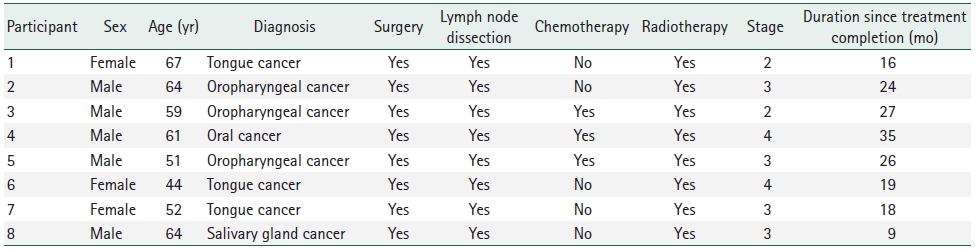
This qualitative study used IPA to examine the experiences of eight adults with stage II–IV head and neck cancer recruited from two university hospitals. All participants had undergone surgery followed by radiotherapy or chemoradiotherapy at least 6 months before data collection. Data were collected through in-depth interviews conducted from February to June 2022 and were analyzed using the cyclical IPA procedure.
Results
Four superordinate themes were identified: (1) being overwhelmed by lamentation and fear when confronting a late-diagnosed illness; (2) confronting human limitations during treatment undertaken for survival; (3) losing daily life and selfhood while living in a body that had not recovered; and (4) reconstructing life beyond the fear of recurrence. Participants experienced diagnosis and treatment as traumatic and described persistent functional impairments and painful sequelae.
Conclusion
These findings provide an in-depth understanding of the illness experiences of patients with head and neck cancer and offer evidence to inform nursing interventions that support adaptation and quality of life.
- 713 View
- 39 Download

- Concept mapping study of positive patient experiences among family members of nursing home residents in South Korea
- Hyoungshim Choi, InJa Choi, Jui Kim
- J Korean Acad Nurs 2026;56(3):318-330. Published online July 29, 2026
- DOI: https://doi.org/10.4040/jkan.26021
-
Abstract
PDFePub
- Purpose
This study focused on identifying key components and dimensions of positive patient experiences perceived by family members of nursing home residents in South Korea, which may inform strength-based quality improvement in nursing home care.
Methods
Data were collected from May 8, 2023, to July 18, 2023, through interviews with 19 family members of nursing home residents aged 65 years or older who had lived in the facility for at least 30 days. Interview data were used to develop empirical statements on the nature of residents’ experiences as perceived by family members. These data were then analyzed using concept mapping to identify components of positive patient experiences from the perspectives of family members of nursing home residents in Korea.
Results
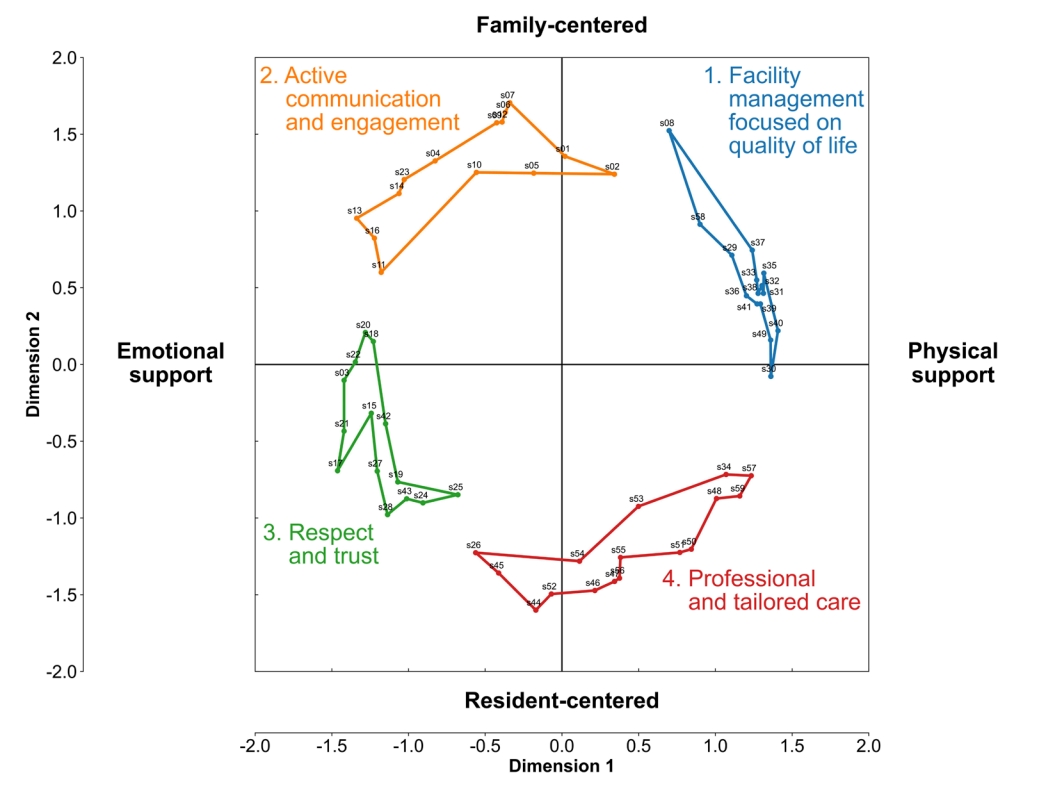
Multidimensional scaling and hierarchical cluster analysis yielded 59 core statements, two dimensions, and four clusters of positive patient experiences. The two dimensions were type of support (physical vs. emotional) and centrality of care (resident-centered vs. family-centered). The four clusters of positive patient experiences were “facility management focused on quality of life,” “active communication and engagement,” “respect and trust,” and “professional and personalized care.”
Conclusion
These findings provide insight into the experiences valued by family members of older adults in nursing homes. The concept map may inform development of a patient experience index tailored to family members of nursing home residents.
- 850 View
- 52 Download
- A qualitative exploration of acute stroke patients’ experiences with aphasia in Korea
- Jiyeon Kang, Hyunyoung Heo
- J Korean Acad Nurs 2025;55(4):621-633. Published online November 25, 2025
- DOI: https://doi.org/10.4040/jkan.25132
-
Abstract
PDFePub
- Purpose
This study aimed to explore the lived experiences of patients with acute stroke-related aphasia within the Korean healthcare context.
Methods
A qualitative research design using inductive content analysis was employed, following the Consolidated Criteria for Reporting Qualitative Research guidelines. Fourteen adults with acute stroke-related aphasia participated in one-on-one, in-depth interviews conducted between January and May 2025. Participants were recruited through purposive sampling until theoretical saturation was reached. Data were analyzed using an inductive qualitative content analysis approach.
Results
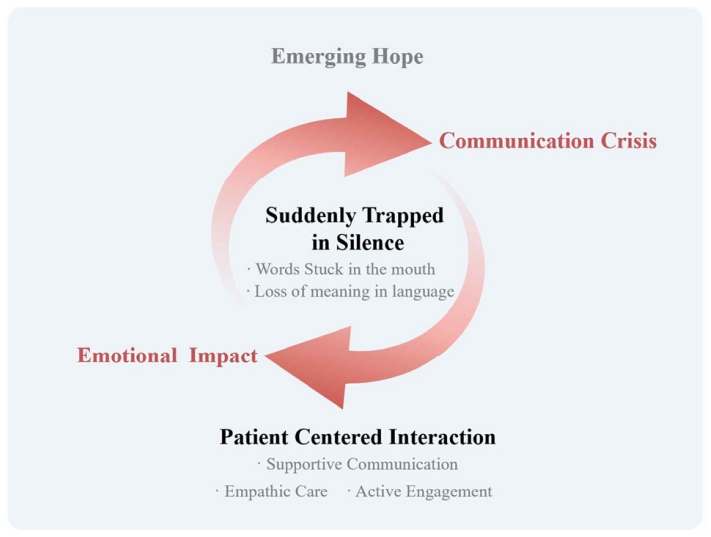
Five main categories emerged: “suddenly trapped in silence” described the abrupt loss of language, including the inability to articulate intended words and understand others; “emotional impact” captured psychological shock and feelings of loss; “communication crisis” encompassed expressive difficulties, exclusion from decision-making, and social withdrawal; “patient-centered interaction” highlighted supportive communication, empathic care, and active engagement by others; and “emerging hope” reflected signs of recovery, self-directed efforts, and anticipation of improvement. These categories converged into the overarching theme, “communication beyond language,” illustrating how patients sought meaningful interaction despite linguistic limitations.
Conclusion
Acute aphasia extends beyond a language disorder to encompass profound emotional and social experiences. Although communication barriers exist, meaningful interaction remains possible through empathetic, person-centered approaches. Healthcare professionals should recognize that patients with aphasia retain cognitive competence despite expressive limitations. These findings underscore the need to integrate emotional sensitivity into clinical care and to develop training programs that enhance person-centered communication skills in stroke rehabilitation settings.
- 2,916 View
- 228 Download
Review Paper
- Risk factors for the readmission of patients with diabetic ketoacidosis: a systematic review and meta-analysis
- Hyerim Ji, Sun-Kyung Hwang
- J Korean Acad Nurs 2025;55(4):634-650. Published online November 21, 2025
- DOI: https://doi.org/10.4040/jkan.25072
-
Abstract
PDFePub
- Purpose
This study aimed to identify risk factors associated with the readmission of patients with diabetic ketoacidosis (DKA) through a systematic review and meta-analysis.
Methods
A systematic literature review was conducted in accordance with the PRISMA guidelines. Relevant studies were retrieved from international databases (PubMed, EMBASE, Cochrane Library, CINAHL, PsycINFO, and Web of Science) and Korean databases (RISS, KoreaMed, KMbase, KISS, and DBpia). Study quality was evaluated using the Newcastle-Ottawa Scale. Meta-analysis was performed using a random-effects model with the Hartung-Knapp-Sidik-Jonkman adjustment to account for the limited number of studies and heterogeneity.
Results
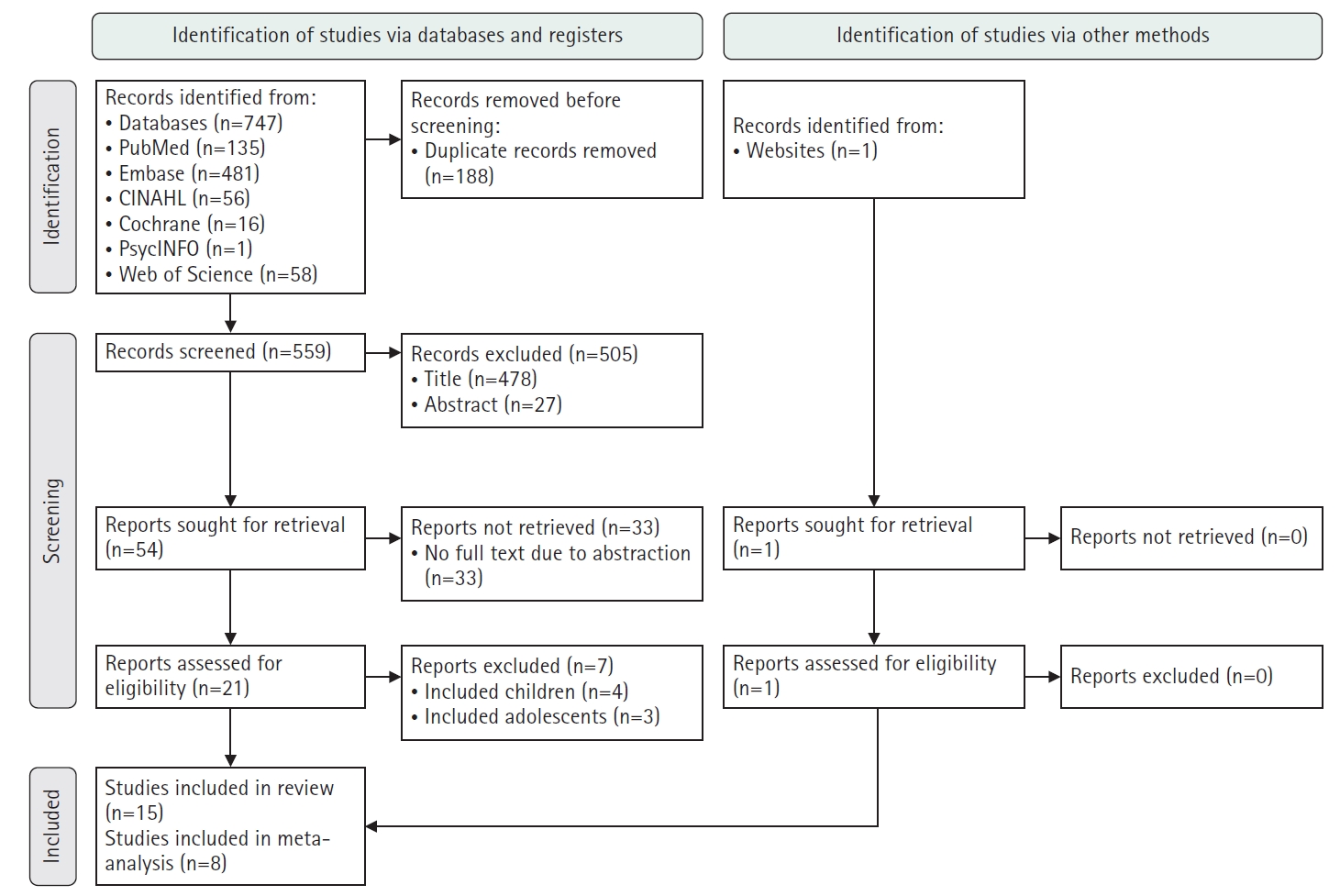
Fifteen studies were included in the review, and eight were eligible for meta-analysis. From the systematic review, 21 risk factors for DKA readmission were identified and categorized into five domains: demographic, socioeconomic, diabetes-related, comorbidity, and health-behavioral factors. In the meta-analysis, significant risk factors included low income, psychiatric disorders, and discharge against medical advice.
Conclusion
This study demonstrates that DKA readmissions result from the complex interplay of multiple clinical and social factors. By identifying these risk factors and suggesting risk-stratification criteria, the findings may support the development of tailored interventions, such as self-management education, integrated mental health care, structured discharge planning, and coordinated post-discharge follow-up.
- 3,211 View
- 345 Download
Research Papers
- Development of a machine learning-based prediction model for early hospital readmission after kidney transplantation: a retrospective study
- Hye Jin Chong, Ji-hyun Yeom
- J Korean Acad Nurs 2025;55(4):528-542. Published online November 21, 2025
- DOI: https://doi.org/10.4040/jkan.25030
-
Abstract
PDFePub
- Purpose
This study aimed to develop and validate a machine learning-based prediction model for early hospital readmission (EHR) post-kidney transplantation.
Methods
The study was conducted at the organ transplantation center of a university hospital, utilizing data from 470 kidney transplant recipients. We built and trained four machine learning models and tested them to identify the strongest EHR predictors. Predictive performance was evaluated using confusion matrices and the area under the receiver operating characteristic curve (ROC AUC).
Results
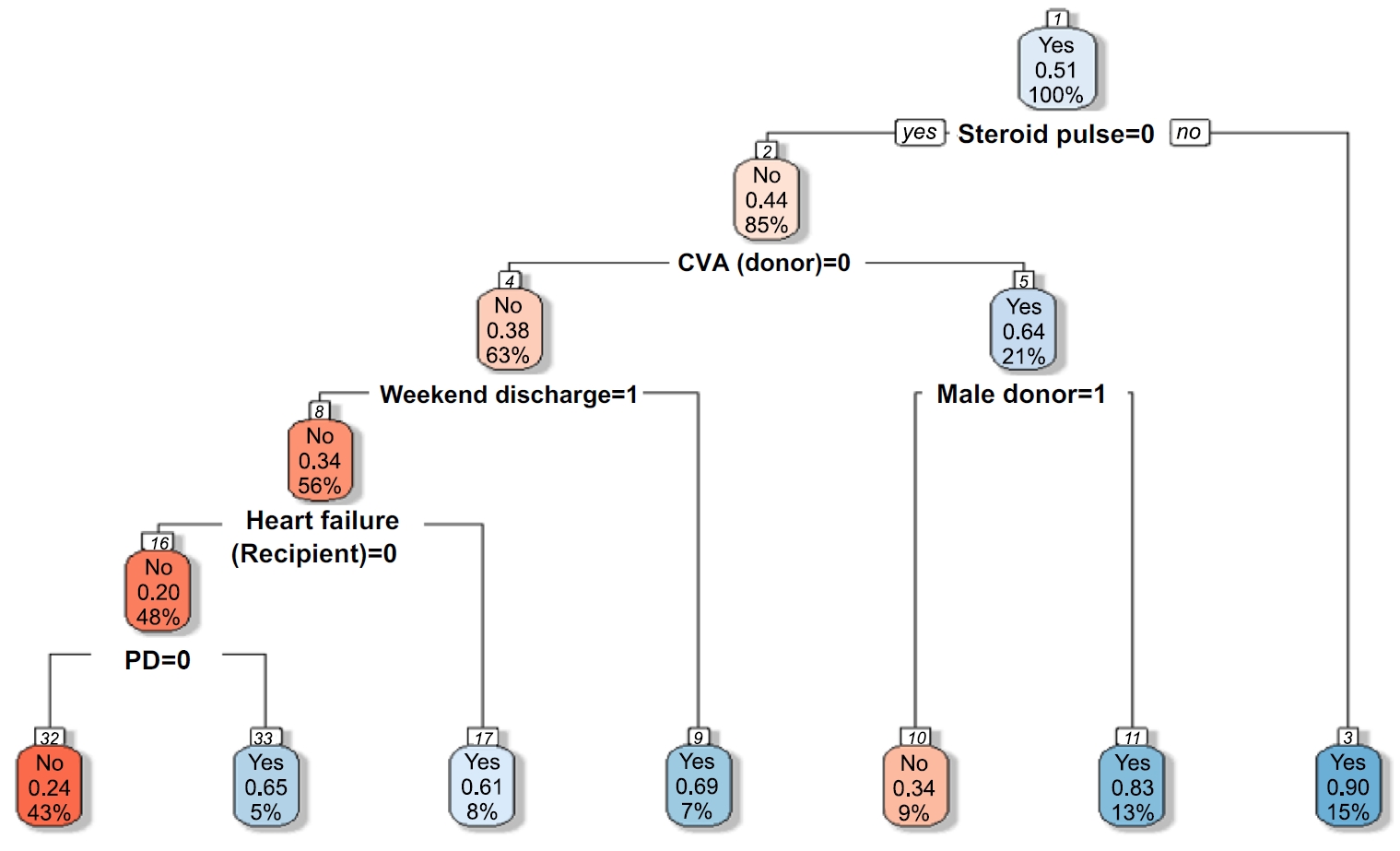
Among the 470 kidney transplant recipients with a mean age of 46.1 ± 12.02 years, 322 (68.5%) were males, and 74 (15.7%) were readmitted within 30 days after kidney transplantation. In total, 241 (51.2%) recipients were found to have experienced EHR after applying the random over-sampling examples method. The random forest model achieved the best performance, with an ROC AUC of .87 (validation set) and .82 (test set). The 15 most important features were steroid pulse therapy (recipient), cerebrovascular accident (recipient), heart failure (recipient), male sex (donor), cardiovascular disease (recipient), weekend discharge (recipient), peritoneal dialysis (recipient) cerebrovascular accident as the cause of brain death (donor), current smoker (recipient), cardiac arrest (donor), previous kidney transplantation (recipient), age (donor), hypertension (donor), male sex (recipient), and dialysis duration (recipient).
Conclusion
Our framework demonstrated strong predictive interpretability. It can support appropriate and effective clinical decision-making by assisting transplant professionals in stratifying recipients based on their risk of EHR. prioritizing post-discharge care and follow-up for high-risk individuals, and allocating targeted interventions such as closer monitoring or education.
- 2,519 View
- 227 Download
- Impact of an integrated disease-specific nursing care model on parental anxiety and depression in severe hypospadias patients in China: a randomized controlled trial
- Ruijuan Wu, Lucai Jia, Biyu Ding, Ying Li, Yaqing Cao, Zhaojun Shi, Yanfang Yang
- J Korean Acad Nurs 2025;55(3):327-341. Published online August 12, 2025
- DOI: https://doi.org/10.4040/jkan.24147
-
Abstract
PDFePub
- Purpose
This study aimed to explore the effects of an integrated disease-specific nursing care model on alleviating perioperative and post-surgical anxiety and depression in parents of children with severe hypospadias.
Methods
Parents of children with severe hypospadias were recruited and randomly allocated into a control group (n=87), which received standard nursing care, and an intervention group (n=93), which was given an integrated disease-specific nursing intervention in addition to standard care. Parental anxiety and depression were measured using the Self-Rating Anxiety Scale (SAS) and Self-Rating Depression Scale (SDS) at admission, discharge, and 6-month follow-up post-surgery.
Results
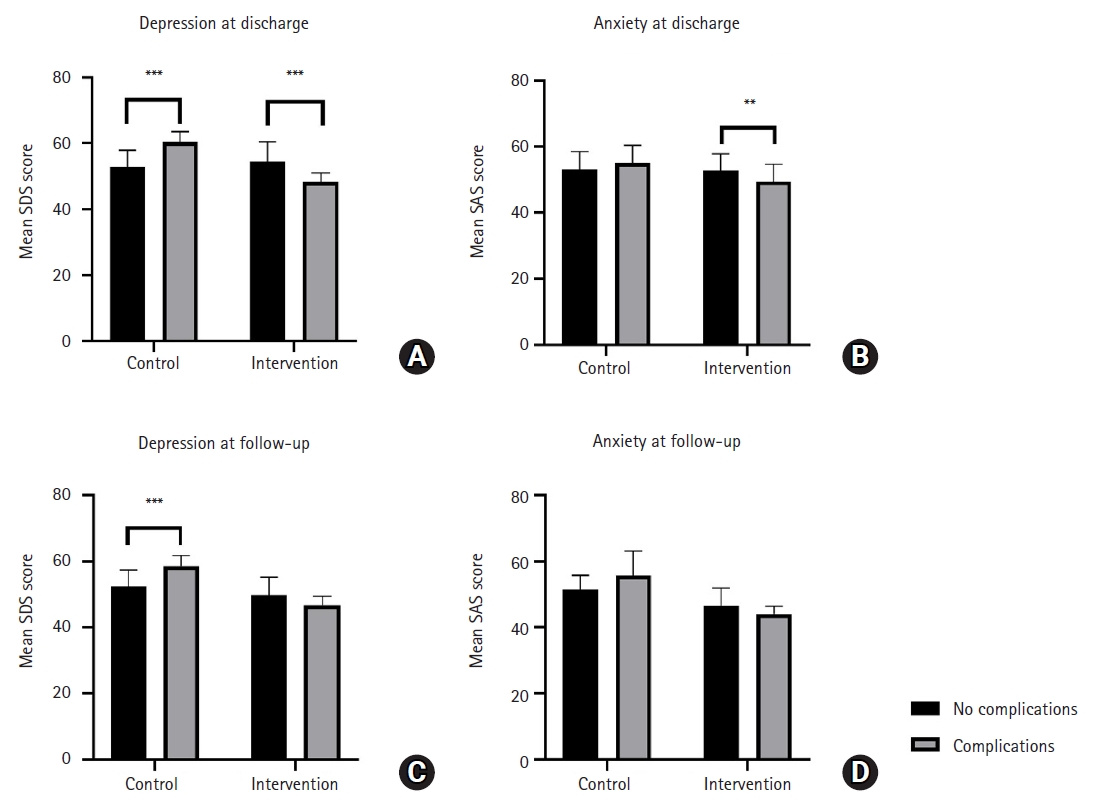
A linear mixed-effects model showed that SAS and SDS scores in the intervention group decreased to a significantly greater extent over time, from admission to follow-up, compared to the control group. Post-hoc analysis showed a trend for increased parental anxiety and depression among patients with complications at discharge and follow-up for the control group. Meanwhile, the intervention group exhibited a trend for decreased parental anxiety and depression among patients with complications at discharge and follow-up.
Conclusion
The integrated disease-specific nursing model significantly alleviated parental anxiety and depression over time compared to standard care, highlighting its effectiveness in supporting families of children with severe hypospadias. Notably, the intervention appeared to mitigate the negative emotional impact of postoperative and follow-up complications, suggesting its potential as a targeted approach to improve both emotional well-being and overall care outcomes.
- 4,215 View
- 219 Download
- Mediating effect of grit on the influence of nurses’ silence behavior on medication safety competence: a cross-sectional study
- Haengsuk Kim, Wanju Park
- J Korean Acad Nurs 2025;55(1):81-92. Published online February 20, 2025
- DOI: https://doi.org/10.4040/jkan.24088
-
Abstract
PDFePub
- Purpose
This study investigated the mediating effect of grit in the relationship between silence behavior and medication safety competence among nurses.
Methods
The study included 166 nurses from four university hospitals and general hospitals in Seoul and Gyeonggi-do, South Korea. Data were collected from March 1 to 10, 2024, using self-report questionnaires. Data were analyzed using the t-test, analysis of variance, Scheffé’s test, and Pearson’s correlation coefficients with IBM SPSS Statistics ver. 23.0 (IBM Corp.). A mediation analysis was performed using Hayes’s PROCESS macro model 4 and the bootstrapping method.
Results
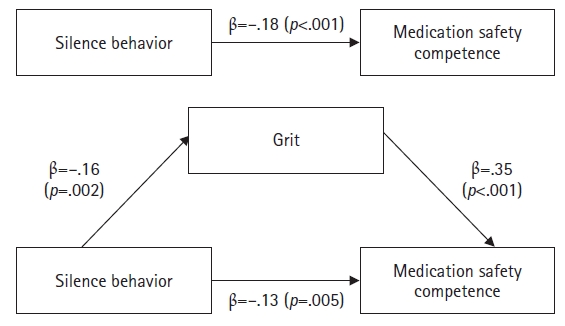
Medication safety competence showed significant correlations with silence behavior (r=–.21, p=.008) and grit (r=.43, p<.001). Furthermore, grit partially mediated the relationship between silence behavior and medication safety competence.
Conclusion
This study indicates that grit is a significant mediator in the relationship between silence behavior and medication safety competence. Therefore, an integrated approach that reduces silence behavior and promotes grit is essential for strengthening nurses’ medication safety competence. Ultimately, these strategies will help ensure patient safety by improving medication safety competence.
- 8,225 View
- 623 Download
- Factors Affecting the Intention to Use Smartmonitor-Based Mobile Health in Middle-Aged in Patients Applying the Technology Acceptance Model II
- Ol Eum Joo, Yi Kyung Ha
- J Korean Acad Nurs 2024;54(4):620-632. Published online November 13, 2024
- DOI: https://doi.org/10.4040/jkan.24091
-
Abstract
PDFePub
Purpose This study aimed to identify factors that influence the intention to use smart monitor-based mobile health (SBM) technology among middle-aged inpatients, based on the technology acceptance model II (TAM II).
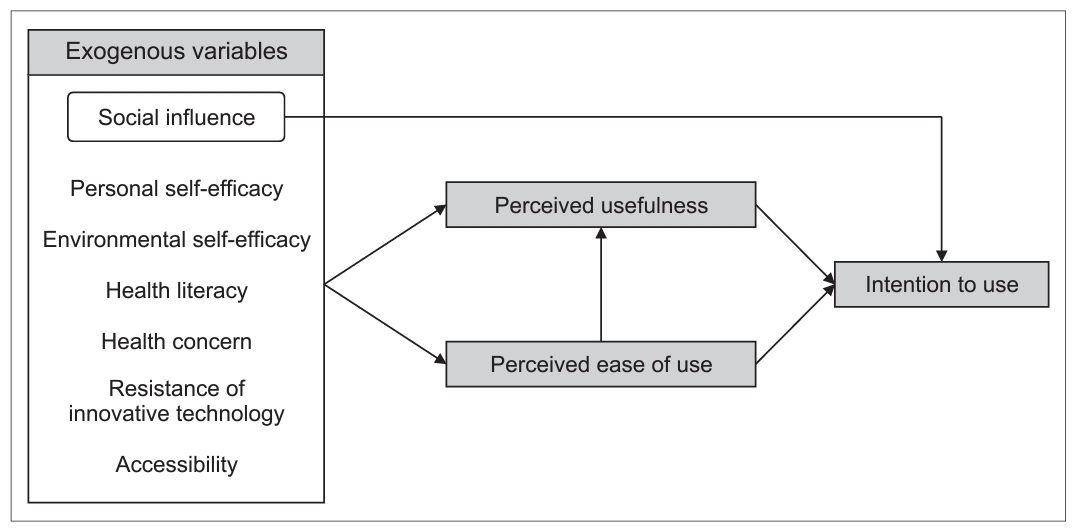
Methods A total of 222 participants were surveyed. Data were analyzed using SPSS Statistics 23.0 and IBM SPSS Amos 23. Seven exogenous variables–social influence (SI), personal self-efficacy, (PSE), environmental self-efficacy (ESE), health literacy, health concerns, resistance to innovative technology (RIT), accessibility (AC)– and three endogenous variables–perceived ease of use (PEOU), perceived usability (PU), and intention to use (ITU)–were investigated.
Results The hypothesized path model demonstrated a good fit for the data. SI (β = .13,
p = .042), PU (β = .46,p < .001), and PEOU (β = .16,p = .008) had significant direct effects on the ITU, which explained 39.5% of the variance. Additionally, SI (β = .27,p < .001), ESE (β = .16,p = .010), RIT (β = - .12,p = .026), AC (β = .28,p < .001), and PEOU (β = .20,p = .001) indirectly affected ITU through PU, which explained 50.7% of the variance. Furthermore, PSE (β = .38,p < .001) indirectly influenced ITU via PEOU, which explained 38.4% of the variance.Conclusion This study demonstrates that the TAM II can be used to effectively predict ITU in SBMs among middle-aged inpatients. To expand the intention to use SBMs, it is necessary to develop SBMs that include content and programs that promote PU, SI, and PEOU.
-
Citations
Citations to this article as recorded by
- Research on the implementation path of digital-intelligent healthcare based on the TAM model from the perspective of high-quality development
Zijue Qi, Huize Han, Yidayetula Abuduaini, Aikeda Litipu, Jun Li
BMC Health Services Research.2026;[Epub] CrossRef
- Research on the implementation path of digital-intelligent healthcare based on the TAM model from the perspective of high-quality development
- 2,922 View
- 122 Download
- 1 Web of Science
- 1 Crossref
- The Effects of a Self-Efficacy Theory-Based Exercise Program for Patients Undergoing with Total Knee Arthroplasty
- Kyung-Hye Park, Hee-Young Kang
- J Korean Acad Nurs 2024;54(4):547-562. Published online October 22, 2024
- DOI: https://doi.org/10.4040/jkan.24027
-
Abstract
PDF
 Supplementary MaterialePub
 Purpose This study was performed to develop a self-efficacy theory-based exercise program for total knee arthroplasty (TKA) and to test the program’s efficacy in ameliorating knee pain and restoring function as measured by lower extremity muscle strength, 3 meter walking time, Korean Western Ontario McMaster Index (WOMAC), exercise self-efficacy, and length of hospital stay for TKA patients.
Methods This quasi-experimental study incorporating a non-equivalent control group and pretest-posttest non-synchronized design non-synchronous design was applied to assess self-efficacy reinforcement strategies based on self-efficacy theory. The exercise program consisted of the following steps: TKA, education to prevent postoperative complications, and muscle strength exercises. Respective exercise and control groups included 29 and 27 participants. The experimental group received eight sessions of the program from three weeks before TKA to four weeks after TKA. Collected data were analyzed using the chi-square test, Mann–Whitney U test, and ranked ANCOVA and t-tests using IBM SPSS Statistics 23.
Results Experimental group showed significant improvement in lower extremity muscle strength (F = 8.63,
p = .005), 3 meter walking time (z = - 5.02,p < .001), WOMAC index (z = - 2.22,p = .027), self-efficacy for exercise (z = - 3.29,p = .001), and length of hospital stay (t = - 2.11,p = .040) compared to the control group. No significant differences in knee pain and range of motion were observed.Conclusion These findings indicate that a self-efficacy theory-based exercise program can be an effective exercise strategy that patients undergoing TKA can easily follow at home without assistance. It is thus recommended as an exercise intervention for TKA patients.
-
Citations
Citations to this article as recorded by- Self-efficacy and implementation intentions in home rehabilitation of stroke patients: the parallel mediating role of recurrence risk perception and outcome expectations
Xiaowen Jiang, Qiuxue Sun, Rong Tang, Shuxian Liu, Xi Chen, Yumei Lv
Frontiers in Psychology.2025;[Epub] CrossRef - Factors Influencing Decision-Making and Rehabilitation Among Older Women Who Underwent Total Knee Replacement: A Qualitative Study in Taiwan
Ching Han Huang, Yun Yee Chen, Shu Wen Chen, Chen Ti Wang, Mei Hsiang Lin
Patient Preference and Adherence.2025; Volume 19: 3931. CrossRef
- Self-efficacy and implementation intentions in home rehabilitation of stroke patients: the parallel mediating role of recurrence risk perception and outcome expectations
- 5,445 View
- 399 Download
- 2 Web of Science
- 2 Crossref
- An Exploratory Study on Non-Contact Nursing Experiences of Clinical Nurses during the COVID-19 Pandemic
- Hye Min Byun, Eun Kyoung Yun
- J Korean Acad Nurs 2024;54(3):446-458. Published online August 31, 2024
- DOI: https://doi.org/10.4040/jkan.24045
-
Abstract
PDF
- Purpose
This study aimed to understand the non-contact nursing experiences of clinical nurses during the COVID-19 pandemic.
Methods
A qualitative research design applying thematic analysis was used. The participants were purposive sampled from three institutes: a tertiary hospital, a general hospital, and a residential treatment center in Seoul. Data were collected between December 2021 and January 2022 through individual in-depth interviews with 12 clinical nurses. The data were analyzed using Braun and Clarke’s method to identify the meaning of the participants’ experiences.
Results
During the COVID-19 pandemic, the fields where the participants performed non-contact nursing included intensive care units and isolation wards of hospitals, a residential treatment center, and home cares. Their tasks in non-contact nursing commonly involved remote monitoring using digital devices or equipment, consultation and education. From their experiences performing tasks in these fields, the four theme clusters and nine themes were derived. The four theme clusters are as follows: (1) Confusion of nursing role; (2) Conflict due to insufficient support system; (3) Concern about the quality of nursing; (4) Reflection on the establishment of nursing professionalism.
Conclusion
This study highlights the necessity for institutionalizing professional nursing areas, nursing education, and practical support by clarifying the purpose and goals of non-contact nursing and developing nursing knowledge through frameworks. -
Citations
Citations to this article as recorded by- Telecare legislation priorities: A Delphi study grounded in ethical challenges
Seongyu Han, Eun Kyoung Yun
Nursing Ethics.2026; 33(2): 488. CrossRef - A systematic review of pulmonary rehabilitation nursing interventions for patients with chronic obstructive pulmonary disease
Da-Jung Kim
Journal of Exercise Rehabilitation.2025; 21(5): 234. CrossRef
- Telecare legislation priorities: A Delphi study grounded in ethical challenges
- 3,169 View
- 114 Download
- 2 Web of Science
- 2 Crossref
- Structural Topic Modeling Analysis of Patient Safety Interest among Health Consumers in Social Media
- Nari Kim, Nam-Ju Lee
- J Korean Acad Nurs 2024;54(2):266-278. Published online May 31, 2024
- DOI: https://doi.org/10.4040/jkan.23156
-
Abstract
PDF
- Purpose
This study aimed to investigate healthcare consumers’ interest in patient safety on social media using structural topic modeling (STM) and to identify changes in interest over time.
Methods
Analyzing 105,727 posts from Naver news comments, blogs, internet cafés, and Twitter between 2010 and 2022, this study deployed a Python script for data collection and preprocessing. STM analysis was conducted using R, with the documents’ publication years serving as metadata to trace the evolution of discussions on patient safety.
Results
The analysis identified a total of 13 distinct topics, organized into three primary communities: (1) “Demand for systemic improvement of medical accidents,” underscoring the need for legal and regulatory reform to enhance accountability; (2) “Efforts of the government and organizations for safety management,” highlighting proactive risk mitigation strategies; and (3) “Medical accidents exposed in the media,” reflecting widespread concerns over medical negligence and its repercussions. These findings indicate pervasive concerns regarding medical accountability and transparency among healthcare consumers.
Conclusion
The findings emphasize the importance of transparent healthcare policies and practices that openly address patient safety incidents. There is clear advocacy for policy reforms aimed at increasing the accountability and transparency of healthcare providers. Moreover, this study highlights the significance of educational and engagement initiatives involving healthcare consumers in fostering a culture of patient safety. Integrating consumer perspectives into patient safety strategies is crucial for developing a robust safety culture in healthcare. -
Citations
Citations to this article as recorded by- Nurses’ Experiences and Perspectives on the Shift System Improvement Pilot Project: A Structural Topic Modeling Analysis
JooHyun Lee, Dae Seong Lee, Jiyun Yu, Yewon Cho, Su Yeon Han, Hyoung Eun Chang
Journal of Korean Academy of Nursing Administration.2026; 32(2): 82. CrossRef - Nurse retention discourse in YouTube comments: a structural topic modeling analysis
Taewha Lee, JooHyun Lee
Journal of Korean Academy of Nursing.2026; 56(2): 206. CrossRef - Topic Modeling of Nursing Documentation in Hemodialysis Units: A Mixed‐Methods Study of Nursing Surveillance Activities
Mi-Kyoung Cho, Hye-Young Kim, Hyohjung Lee, Yoon Hee Cho, Justin Fontenot, Ph.D., RN, NEA-BC
Journal of Nursing Management.2026;[Epub] CrossRef - From Posts to Protection: Understanding User-Generated Safety Content on Reddit
Mashael Yousef Almoqbel
International Journal of Computational and Experimental Science and Engineering.2025;[Epub] CrossRef
- Nurses’ Experiences and Perspectives on the Shift System Improvement Pilot Project: A Structural Topic Modeling Analysis
- 3,369 View
- 94 Download
- 2 Web of Science
- 4 Crossref
- Psychometric Properties of the Fall Risk Perception Questionnaire-Short Version for Inpatients in Acute Care Hospitals
- Jeeeun Choi, Sujin Lee, Eunjin Park, Sangha Ku, Sunhwa Kim, Wonhye Yu, Eunmi Jeong, Sukhee Park, Yusun Park, Hye Young Kim, Sung Reul Kim
- J Korean Acad Nurs 2024;54(2):151-161. Published online May 31, 2024
- DOI: https://doi.org/10.4040/jkan.23127
-
Abstract
PDF
- Purpose
Patients’ perception of fall risk is a promising new indicator for fall prevention. Therefore, a fall risk perception questionnaire that can be used rapidly and repeatedly in acute care settings is required. This study aimed to develop a short version of the fall risk perception questionnaire (Short-FRPQ) for inpatients.
Methods
For the psychometric measurements, 246 inpatients were recruited from an acute care hospital. The construct (using confirmatory factor analysis and discriminant validity of each item), convergent, and known-group validities were tested to determine the validity of the Short-FRPQ. McDonald’s omega coefficient was used to examine the internal consistency of reliability.
Results
In the confirmatory factor analysis, the fit indices of the Short-FRPQ, comprising 14 items and three factors, appeared to be satisfactory. The Short-FRPQ had a significantly positive correlation with the original scale, the Korean Falls Efficacy Scale-International, and the Morse Fall Scale. The risk of falls group, assessed using the Morse Fall Scale, had a higher score on the Short-FRPQ. McDonald’s omega coefficient was .90.
Conclusion
The Short-FRPQ presents good reliability and validity. As patient participation is essential in fall interventions, evaluating the fall risk perception of inpatients quickly and repeatedly using scales of acceptable validity and reliability is necessary. -
Citations
Citations to this article as recorded by- Gyógytornász-fizioterapeuták időskori eleséssel kapcsolatos tudásának, attitűdjének és gyakorlatának felmérésére szolgáló kérdőív kifejlesztése és validálása
András Simon, Anna Zsófia Kubik, Edit Boros, Richárdné Mayer, Éva Kovács
Orvosi Hetilap.2026; 167(21): 811. CrossRef
- Gyógytornász-fizioterapeuták időskori eleséssel kapcsolatos tudásának, attitűdjének és gyakorlatának felmérésére szolgáló kérdőív kifejlesztése és validálása
- 5,238 View
- 209 Download
- 1 Web of Science
- 1 Crossref
- Analysis of the Adequacy of Nurse Staffing Level through the Estimation of Nursing Activity Hours and Implementation of Focus Group Interviews in a Tertiary Hospital: Using a Mixed-Method Design
- Hyun-Joo Kim, Sun-Hee Lee, Jai-Jung Lee, Sun-Suk Seong, Hee Yang, Hyang-Yuol Lee
- J Korean Acad Nurs 2024;54(2):237-249. Published online May 31, 2024
- DOI: https://doi.org/10.4040/jkan.22142
-
Abstract
PDF
- Purpose
This study aimed to examine the adequacy of current nurse staffing levels by identifying nursing activities and workload.
Methods
The study used a mixed-method design. A nursing activity survey was conducted using the work sampling method over 2 working days with 119 general ward nurses. A focus group interview was conducted with 12 nurses. Quantitative and qualitative data were analyzed using SPSS 20.0 and content analysis, respectively.
Results
The most amount of time was spent on medication (in direct nursing) and electronic medical record documentation (in indirect nursing). The appropriate nurse-to-patient ratio is 1:7.7 for the day shift, 1:9.0 for the evening shift, and 1:11.9 for the night shift. However, the current nurse-to-patient ratio is 1:9.4, 1:11.0, and 1:13.8 for the day, evening, and night shifts, respectively. Therefore, the current nurse staffing level is insufficient for the workload. In the focus group interview, the main reasons cited for being unable to complete tasks within working hours were communication and coordination, and the nursing electronic medical record. The essential nursing activities of basic nursing and emotional support were overlooked owing to a heavy workload. Therefore, an adequate nurse staffing level should be higher than the measured quantitative workload.
Conclusion
These results suggest the general wards of tertiary hospitals should evaluate the adequacy of their current nurse staffing and allocate sufficient nurses to improve patient safety and nursing care quality. -
Citations
Citations to this article as recorded by- Impacts of Hematologic Cancer Ward Nurses' Professional Autonomy, Role Conflict and Nursing Work Environment on Clinical Decision-Making Ability
Min Jung Kim, Hye Sook Min
Asian Oncology Nursing.2026; 26(1): 41. CrossRef - Experiences of Surgical Ward Nurses During a Healthcare Service Disruption in Korea: A Qualitative Study
Sehyeon Im, Haeng-Mi Son
Asian Nursing Research.2026; 20(3): 337. CrossRef - Nurses' Experience Working with Substitute Nurses
Hye Mi Kim, Yeon Hee Kim, Jeong Hye Kim
Journal of Korean Association for Qualitative Research.2025; 10(3): 208. CrossRef - Development and Preliminary Evaluation of a Generative AI-Based Adaptive Aptitude Assessment Agent for Nursing Students
Eunmin Hong, Sujin Shin, Jaehwa Choi, Miji Lee, Minjae Lee, Subin Yu, Jinseon Ko
Journal of Korea Society for Simulation in Nursing.2025; 13(2): 81. CrossRef
- Impacts of Hematologic Cancer Ward Nurses' Professional Autonomy, Role Conflict and Nursing Work Environment on Clinical Decision-Making Ability
- 4,790 View
- 369 Download
- 2 Web of Science
- 4 Crossref
- Development of Nursing Clinical Judgment Scale
- Shi Nae Kwon, Hyojung Park
- J Korean Acad Nurs 2023;53(6):652-665. Published online December 31, 2023
- DOI: https://doi.org/10.4040/jkan.23042
-
Abstract
PDF
- Purpose
This study aimed to develop a nursing clinical judgment scale (NCJS) and verify its validity and reliability in assessing the clinical judgment of nurses.
Methods
A preliminary instrument of the NCJS comprising 38 items was first developed from attributes and indicators derived from a literature review and an in-depth/focus interview with 12 clinical nurses. The preliminary tool was finalized after 7 experts conducted a content validity test based on a data from a preliminary survey of 30 hospital nurses in Korea. Data were collected from 443 ward, intensive care unit, emergency room nurses who voluntarily participated in the survey through offline and online for the verification of the construct validity and reliability of the scale.
Results
The final scale comprised 23 items scored on a 5-point Likert scale. Six factors – integrated data analysis, evaluation and reflection on interventions, evidence on interventions, collaboration among health professionals, patient-centered nursing, and collaboration among nurse colleagues – accounted for 64.9% of the total variance. Confirmatory factor analysis supported the fit of the measurement model, comprising six factors (root mean square error of approximation = .07, standardized root mean square residual = .04, comparative fit index = .90). Cronbach’s α for all the items was .92.
Conclusion
The NCJS is a valid and reliable tool that fully reflects the characteristics of clinical practice, and it can be used effectively to evaluate the clinical judgment of Korean nurses. Future research should reflect the variables influencing clinical judgment and develop an action plan to improve it. -
Citations
Citations to this article as recorded by- Functional connectivity theory-based neurophysiological profiles associated with emotional competence and clinical judgment in nursing students: A cluster analysis
Young Kyung Cho
Nurse Education Today.2027; 168: 107421. CrossRef - The role of immersive extended reality for the development and evaluation of clinical reasoning in health professions education: A scoping review
Sophie Lansley, Jared McSweeney, Jasmine Rutere, Harish Thampy
Medical Teacher.2026; : 1. CrossRef - How the nursing work environment moderates the relationship between clinical judgment and person-centered care among intensive care unit nurses
Mi Hwa Seo, Eun A. Kim, Hae Ran Kim, Mohammad Jamil Rababa
PLOS ONE.2025; 20(1): e0316654. CrossRef - Effects of Critical Thinking Disposition, Clinical Judgement, and Nurse–Physician Collaboration on Triage Competency Among Triage Nurses
Ji-Won Song, Hyung-Ran Park
Healthcare.2025; 13(4): 405. CrossRef - Effectiveness of a virtual reality nursing simulation for pediatric pneumonia care: a Korean pilot study using a single-group pre-post test design
Eun Joo Kim, Seong Kwang Kim, Sung Sook Song
Child Health Nursing Research.2025; 31(4): 198. CrossRef - The Influence of Clinical Nurses' Clinical Judgment, Nursing Work Environment and Ethical Nursing Competence on Patient Safety Nursing Activities
Eunseo Hong, Hyojung Park
Journal of Korean Public Health Nursing.2025; 39(3): 368. CrossRef
- Functional connectivity theory-based neurophysiological profiles associated with emotional competence and clinical judgment in nursing students: A cluster analysis
- 9,962 View
- 529 Download
- 4 Web of Science
- 6 Crossref
- Effects of a Nursing Simulation Learning Module on Clinical Reasoning Competence, Clinical Competence, Performance Confidence, and Anxiety in COVID-19 Patient-Care for Nursing Students
- Ye-Eun Kim, Hee-Young Kang
- J Korean Acad Nurs 2023;53(1):87-100. Published online February 28, 2023
- DOI: https://doi.org/10.4040/jkan.22130
-
Abstract
PDF
- Purpose
This study aimed to develop a nursing simulation learning module for coronavirus disease 2019 (COVID-19) patient-care and examine its effects on clinical reasoning competence, clinical competence, performance confidence, and anxiety in COVID-19 patient care for nursing students.
Methods
A non-equivalent control group pre- and post-test design was employed. The study participants included 47 nursing students (23 in the experimental group and 24 in the control group) from G City. A simulation learning module for COVID-19 patient-care was developed based on the Jeffries simulation model. The module consisted of a briefing, simulation practice, and debriefing. The effects of the simulation module were measured using clinical reasoning competence, clinical competence, performance confidence, and anxiety in COVID-19 patient-care. Data were analyzed using χ 2 -test, Fisher’s exact test, t-test, Wilcoxon signed-rank test, and Mann– Whitney U test.
Results
The levels of clinical reasoning competence, clinical competence, and performance confidence of the experimental group were significantly higher than that of the control group, and the level of anxiety was significantly low after simulation learning.
Conclusion
The nursing simulation learning module for COVID-19 patient-care is more effective than the traditional method in terms of improving students’ clinical reasoning competence, clinical competence, and performance confidence, and reducing their anxiety. The module is expected to be useful for educational and clinical environments as an effective teaching and learning strategy to empower nursing competency and contribute to nursing education and clinical changes. -
Citations
Citations to this article as recorded by- Effects of an acute myocardial infarction simulation on nursing students’ clinical judgment: Integrating faculty- and self-assessments
Hwa Sun Kim
Clinical Simulation in Nursing.2026; 112: 101895. CrossRef - Effectiveness of an augmented reality–facilitated PICC education on PICC knowledge, clinical reasoning, and learning engagement: A block randomized controlled trial
Hui-Chun Hu, Chu-Yu Huang, Shu-Hsing Cheng, Chien-Yu Cheng, Shao-Chung Cheng, Su-Fen Cheng
Clinical Simulation in Nursing.2026; 117: 102005. CrossRef - Escape Room Simulation for Neonatal Seizure Management
Sunyeob Choi, Sungwon Lim
CIN: Computers, Informatics, Nursing.2026;[Epub] CrossRef - Clinical Judgment Model‐Based Critical Reflection Program for Newly Graduated Nurses: A Nonrandomized Controlled Trial
Ae Ran Kim, Jeong Hee Hong, Kyeongsug Kim, Yuna Kim, Jung Min Lee, Heejin Lee, Ji Hyun Yoon, Mi Soon Kim
Research in Nursing & Health.2025; 48(2): 234. CrossRef - Exploring nursing students' experiences with virtual patient-based health assessment simulation program: A qualitative study
Shinhye Ahn, Hye Won Jeong
Nurse Education Today.2025; 153: 106826. CrossRef - Effects of Multi-Patient Simulation Education on Nursing Students’ Communication Competence and Clinical Reasoning
Minji Kown, Jihyun Park
Journal of Korea Society for Simulation in Nursing.2025; 13(1): 29. CrossRef - Development and Evaluation of a Simulation Training Program for Neonatal Intensive Care Unit Nurses on Severe Respiratory
Emergency among Extremely Low Birth Weight Infants
Youngae Song, Jaehee Lee, Jiyoon Kang, Heekyung Kang, Junghee Lee, Inkyung Bong
Journal of Korea Society for Simulation in Nursing.2025; 13(1): 15. CrossRef - Effects of Diabetes Home-Visiting Healthcare Simulation Education on Nursing Students Using Virtual Reality
Young-Sun Ha, Yong-Kyung Park, Hye-Sun Byun, Kyeng-Jin Kim, Moon-Ji Choi
Journal of Digital Contents Society.2025; 26(9): 2501. CrossRef - Development and Effects of a Virtual Reality-Based Educational Application to Enhance Clinical Practice Competence in Nursing Students
Yun-Ha Choi
Journal of Digital Contents Society.2025; 26(11): 3165. CrossRef - Mediating Effect of Simulation Confidence on the Relationship between Simulation Immersion and Clinical Reasoning among Nursing Students
Eun-Hee Choi
Journal of Korea Society for Simulation in Nursing.2025; 13(2): 31. CrossRef - Educational Needs for Developing a Simulation-Based Program to Enhance Patient Safety Competency in Nursing Students
Ji-Won Han, Sun-Young Jung
Journal of Korea Society for Simulation in Nursing.2025; 13(2): 109. CrossRef - The impact of unfolding case studies combined with think-aloud strategies on the clinical reasoning and self-directed learning abilities of postgraduate students: A mixed methods study
Yuehai Yu, Yuanjing Qiao, Yaoyao Zhu, Hao Pei, Yuting Wang, Qingyang Zhu, Shuo Liu
Nurse Education in Practice.2024; 80: 104132. CrossRef - Effect of Infection Control Simulation Based on a Negative Pressure Isolation Room Using Mixed Reality
Kyeng-Jin Kim, Joonyoung Lee, Moon-Ji Choi
CIN: Computers, Informatics, Nursing.2024; 42(8): 608. CrossRef - Expectations and concerns about transitioning to face-to-face learning among Korean nursing students: A mixed methods study
Hyeongsuk Lee, Hye Jin Yoo, Chao Gu
PLOS ONE.2024; 19(1): e0296914. CrossRef
- Effects of an acute myocardial infarction simulation on nursing students’ clinical judgment: Integrating faculty- and self-assessments
- 9,124 View
- 192 Download
- 7 Web of Science
- 14 Crossref
Review Paper
- Patient Safety Management Activities of Korean Nurses: A Meta-Analytic Path Analysis
- Seohee Jeong, Seok Hee Jeong
- J Korean Acad Nurs 2022;52(4):363-377. Published online August 31, 2022
- DOI: https://doi.org/10.4040/jkan.22022
-
Abstract
PDF
- Purpose
This study aimed to test a hypothetical model of Korean nurses’ patient safety management activities using meta-analytic path analysis.
Methods
A systematic review, meta-analysis, and meta-analytic path analysis were conducted following the PRISMA and MOOSE guidelines. Seventy-four studies for the meta-analysis and 92 for the meta-analytic path analysis were included. The R software program (Version 3.6.3) was used for data analysis.
Results
Four variables out of 49 relevant variables were selected in the meta-analysis. These four variables showed large effect sizes (ESr = .54) or median effect sizes (ESr = .33∼.40) with the highest k (number of studies) in the individual, job, and organizational categories. The hypothetical model for the meta-analytic path analysis was established using these variables and patient safety management activities. Twelve hypothetical paths were set and tested. Finally, the perception of the importance of patient safety management and patient safety competency directly affected patient safety management activities. In addition, self-efficacy, the perception of the importance of patient safety management, patient safety competency, and patient safety culture, indirectly affected patient safety management activities.
Conclusion
Self-efficacy, the perception of the importance of patient safety management, patient safety competency, and the organization’s patient safety culture should be enhanced to improve nurses’ patient safety management activities. -
Citations
Citations to this article as recorded by- Variables associated with compliance with standard precautions among hospital nurses: a systematic review and meta-analysis
Song Hee Park, Seok Hee Jeong, Chang Seop Lee, Young Man Kim
Journal of Korean Academy of Nursing.2026; 56(1): 1. CrossRef - Impact of Teamwork, Patient Safety Culture, and Operating Room Distractions on Patient Safety Management Activities among Perioperative Nurses
Eun Yeong Lee, Eun Kyeung Song
Journal of Korean Critical Care Nursing.2026; 19(1): 48. CrossRef - Factors influencing patient safety nursing activities among emergency department nurses in Korea: a cross-sectional descriptive study based on the theory of planned behavior
Sojung Park, Jihyun Kim
Journal of Korean Biological Nursing Science.2026; 28(3): 455. CrossRef - Development and validation of patient safety educational booklet to empower anesthesia process owners to improve safety compliance before, during and after anesthesia
Fatemeh Asadi, Azam Saei, Shanam Sedigh Maroufi, Jamileh Abolghasemi
Journal of Education and Health Promotion.2025;[Epub] CrossRef - Development of a patient safety management protocol for nurses in long-term care hospitals
Soon-Ock Kim
Scientific Reports.2025;[Epub] CrossRef - Impact of Clinical Nurses' Patient Safety Competency, Psychological Safety, and Nursing Unit Manager's Safety-Specific Transformational Leadership on Intention to Report Near Misses
Young hyun Cho, Seung Eun Lee, Mi Jeong Kwak, Hyun Joo Lee
Quality Improvement in Health Care.2025; 31(2): 60. CrossRef - The influencing factors of pediatric nurses’ perception of patient safety culture and partnership with patients’ parents on patient safety nursing activities in South Korea: a descriptive study
Seo Jin Lee, Young Ran Han
Child Health Nursing Research.2024; 30(4): 255. CrossRef - Effects of Nurse-Nurse Collaboration and Nurse-Physician Collaboration on Nursing Performance in Nurses: The Mediating Effect of Patient Safety Management Activities
JaHyun Kim, Seok Hee Jeong, Hee Sun Kim, Sunmi Kim
Journal of Korean Academy of Nursing Administration.2024; 30(4): 343. CrossRef - Mediating Effects of Job Satisfaction between Nurses’ Perceptions of Patient Safety Culture and Their Safety Nursing Activities
I Jung Han, Young Ran Han
Journal of Korean Academy of Fundamentals of Nursing.2023; 30(1): 46. CrossRef - The Effects of Professional Autonomy, Job Satisfaction, and Perceived Patient-Safety Culture on Nurses' Patient-Safety Management Activities: A Cross-Sectional Study
Bokja Koak, Junglim Seo, Eunji Song, Haneul Shin, Jaehee Jeon
Korean Journal of Adult Nursing.2023; 35(2): 117. CrossRef
- Variables associated with compliance with standard precautions among hospital nurses: a systematic review and meta-analysis
- 6,128 View
- 340 Download
- 4 Web of Science
- 10 Crossref
Research Papers
- Effect of Patient Safety Training Program of Nurses in Operating Room
- Peijia Zhang, Xin Liao, Jie Luo
- J Korean Acad Nurs 2022;52(4):378-390. Published online August 31, 2022
- DOI: https://doi.org/10.4040/jkan.22017
-
Abstract
PDF
- Purpose
This study developed an in-service training program for patient safety and aimed to evaluate the impact of the program on nurses in the operating room (OR).
Methods
A pretest–posttest self-controlled survey was conducted on OR nurses from May 6 to June 14, 2020. An in-service training program for patient safety was developed on the basis of the knowledge–attitude–practice (KAP) theory through various teaching methods. The levels of safety attitude, cognition, and attitudes toward the adverse event reporting of nurses were compared to evaluate the effect of the program. Nurses who attended the training were surveyed one week before the training (pretest) and two weeks after the training (posttest).
Results
A total of 84 nurses participated in the study. After the training, the scores of safety attitude, cognition, and attitudes toward adverse event reporting of nurses showed a significant increase relative to the scores before the training (p < .001). The effects of safety training on the total score and the dimensions of safety attitude, cognition, and attitudes toward nurses’ adverse event reporting were above the moderate level.
Conclusion
The proposed patient safety training program based on KAP theory improves the safety attitude of OR nurses. Further studies are required to develop an interprofessional patient safety training program. In addition to strength training, hospital managers need to focus on the aspects of workflow, management system, department culture, and other means to promote safety culture. -
Citations
Citations to this article as recorded by- Implementation strategies by leaders and health professionals to improve the safety climate in the operating room: a scoping review
Rosilene Alves Ferreira, Eduardo José Ferreira Santos, Olga Maria Pimenta Lopes Ribeiro, Danielle Mendonça Henrique, Flavia Giron Camerini, Andressa Aline Bernardo Bueno, Soraia Cristina de Abreu Pereira, Vivian Schutz, Marcia Valeria Rosa Lima, Cintia Si
BMJ Open.2026; 16(1): e109055. CrossRef - Mapping Interventions to Promote Safety Culture in the OR: A Scoping Review
Caroline Pease, Janet A. Curran, Rebekah Bercovici, Caitlin van Bilsen, Alannah Delahunty‐Pike, Christine Pritchett, Leah Boulos, Tanya Vandale
AORN Journal.2026; 123(3): 231. CrossRef - Correlation analysis of satisfaction with subspecialty management model in operating rooms: a cross-sectional survey in China
W. Wang, J. Shen, Y. Ma, Y. Chen, R. Gong, Q. Qian, Y. Sun
BMC Nursing.2025;[Epub] CrossRef - Effect of Counting Error Prevention Training on Operating Room Nurses’ Counting Error Prevention Awareness and Perceptions of Patient Safety
Myung Jin JANG, Mi Kyung HONG, Mi Jeong LEE, Kyung A LEE, Yang Ok KIM, Jin A JEON, Hana KO
Korean Journal of Health Promotion.2024; 24(1): 20. CrossRef
- Implementation strategies by leaders and health professionals to improve the safety climate in the operating room: a scoping review
- 8,017 View
- 297 Download
- 4 Web of Science
- 4 Crossref
- The Development of a Tool for Assessment of Spiritual Distress in Cancer Patients
- Jin Sook Kim, Il-Sun Ko, Su Jin Koh
- J Korean Acad Nurs 2022;52(1):52-65. Published online February 28, 2022
- DOI: https://doi.org/10.4040/jkan.21120
-
Abstract
PDF
- Purpose
This study was conducted to develop a scale to measure spiritual distress in cancer patients.
Methods
A total of 69 preliminary items for the spiritaul distress assessment tool (SDAT) were compiled, based on a literature review, selection of empirically relevant items through concept analysis of hybrid models, confirmation of content validity by experts, cognitive interviews, and a pretest. Self-administered questionnaires were collected between April 1 and July 31, 2018, from 225 cancer patients at four medical institutions and one nursing home. The data were analyzed using item analysis, exploratory factor analysis, convergent and discriminant validity, and Pearson correlation for criterion validity. Reliability was tested by Cronbash’s α coefficient.
Results
The final version of the SDAT consisted of 20 items. Five-factors, loss of peace, burden of family, avoidance of confronting death, guilt and remorse, regret for not being able to apololgize and forgive were extracted, and showed 62.8% of total variance. The factors were confirmed through convergent and discriminant validity. Criterion validity was confirmed by functional assessment chronic illness therapy spiritual well-being scale 12 (FACIT-Sp12). The overall Cronbach’s α was .91, and the coefficients of each subscale ranged from .78~.83.
Conclusion
The SDAT for cancer patients is valid and reliable. It is suggested that the tool can be used to measure spiritual distress in cancer patients. -
Citations
Citations to this article as recorded by- Instruments for Assessing Spirituality in Patients with Chronic or Advanced Illnesses: A Systematic Review of the Last 15 Years
María Ángeles Portillo-Gil, Giancarlo Lucchetti, Rocío De Diego-Cordero
Healthcare.2026; 14(8): 1013. CrossRef - Development of a measurement of doctor-patient communication quality scale
Jiayi Shao, Minhui Wen, Yuqing Zhang, Liping Zhang, Jiangjie Sun
Frontiers in Public Health.2025;[Epub] CrossRef - Validity and reliability of the integrated palliative care outcome scale (IPOS) in Korea: a multicenter study of terminally ill cancer patients
So-Jung Park, Yujin Park, Mira Han, Sun-Hyun Kim, In Cheol Hwang, Go-un Woo, Yoo Jeong Lee, Young Sung Kim, Hyun Jung Jho, Yoon Jung Chang
BMC Palliative Care.2024;[Epub] CrossRef - Family caregivers’ perceived value of caring for older patient: A hybrid model of concept analysis
Seon-Hye Heo, Hye-Ryoung Kim
Journal of Korean Gerontological Nursing.2023; 25(2): 152. CrossRef - Spiritual Distress in Patients with Dyspnea: A Review of Measurement Tools
Leah McCann Klug
Illness, Crisis & Loss.2023; 31(4): 736. CrossRef
- Instruments for Assessing Spirituality in Patients with Chronic or Advanced Illnesses: A Systematic Review of the Last 15 Years
- 3,467 View
- 104 Download
- 3 Web of Science
- 5 Crossref
- Nurses’ Experience with Caring for COVID-19 Patients in a Negative Pressure Room Amid the Pandemic Situation
- Eun-Young Noh, Young Jun Chai, Hyun Jeong Kim, Eunjin Kim, Yeon-Hwan Park
- J Korean Acad Nurs 2021;51(5):585-596. Published online October 31, 2021
- DOI: https://doi.org/10.4040/jkan.21148
-
Abstract
PDF
- Purpose
The purpose of this study was to explore nurses’ experience with caring for COVID-19 patients in a negative pressure room amid the spread of the pandemic.
Methods
This study was a qualitative research, and focus group interviews were used to collect data. Three focus groups comprising 19 nurses were interviewed from February 17 to 25, 2021. All interviews were recorded and transcribed verbatim with the consent of the participants. The verbatim transcripts were scrutinized using thematic analysis.
Results
Two main themes emerged from the analysis: ‘Struggling in an isolated space’ and ’Limitations of nursing infrastructure and system’. The nurses caring for COVID-19 patients experienced anxiety and fear about the infection, physical exhaustion, emotional burnout, and a sense of duty as a nurse. They also acknowledged the lack of guidelines, increased task and burden, limitations of nursing care, and the demand for improving the limitations of the nursing system.
Conclusion
The results of this study demonstrate that nurses caring for COVID-19 patients encounter physical and emotional problems within the limited healthcare system. The study suggests that comprehensive interventions are needed for nurses. Furthermore, detailed guidelines, strengthening of nursing personnel, and improvements to the nursing system are vital to effectively cope with the pandemic. The government and medical institutions should be aware of the needs of nurses and what they are going through, and make efforts to improve the quality of life of healthcare workers and create a safe healthcare environment. -
Citations
Citations to this article as recorded by- Improving safety and efficiency in isolation rooms using an Internet of Things remote control system for infusion pumps: Usability test
Jeongok Park, Junghyen Lim, Youngkyung Kim
DIGITAL HEALTH.2026;[Epub] CrossRef - Factors Influencing Posttraumatic Growth among Nurses in COVID-19 Isolation Wards in Tertiary Hospitals
Ye Seul Im, Hyun Kyung Kim
Journal of Korean Academy of Fundamentals of Nursing.2025; 32(2): 233. CrossRef - Experiences of Person‐Centred Care Among Nurses in COVID‐19 Wards: A Qualitative Study
Myoungsuk Kim, Yongmi Lee, Hyun‐Ju Kang
Nursing Open.2025;[Epub] CrossRef - An Exploratory Study on Non-Contact Nursing Experiences of Clinical Nurses during the COVID-19 Pandemic
Hye Min Byun, Eun Kyoung Yun
Journal of Korean Academy of Nursing.2024; 54(3): 446. CrossRef - Nurses’ intention to care of COVID-19 patients in hospitals dedicated to infectious disease in South Korea: application of the theory of planned behavior and verification of the moderating effect of ethical nursing competence
Mira Mo, Seongmi Moon, Eun Kyeung Song
BMC Nursing.2024;[Epub] CrossRef - Nurses' perceptions of medical service robots in negative‐pressure isolated wards and in general wards: A cross‐sectional survey
Jung Hwan Lee, In Ho Han, Jong Hwan Park, Kye‐Hyung Kim, Jaehyun Hwang, Dong Hwan Kim, Jae Il Lee, Kyoung Hyup Nam
Nursing Open.2024;[Epub] CrossRef - Korean Hospital Nurses’ Experiences with COVID-19: A Meta-Synthesis of Qualitative Findings
Suk-Jung Han, Hee-Jung Hong, Bok-Soon Shin
Healthcare.2024; 12(9): 903. CrossRef - Improving Emerging Infectious Disease Control Based on the Experiences of South Korean Nurses During the COVID-19 Pandemic: A Qualitative Systematic Review
Ha-Young Park, In-Sun Yeom
Journal of Korean Academy of Fundamentals of Nursing.2024; 31(1): 1. CrossRef - Need for Information and Communication Technology during COVID-19: An Exploratory Study Using Nurses’ Activity Diaries
Hyeongsuk Lee, Dongmin Lee, Seungmin Lee
Healthcare Informatics Research.2023; 29(3): 256. CrossRef - Factors Influencing SARS-CoV-2 Infection Control Practices of Nurses Caring for COVID-19 Patients in South Korea: Based on Health Belief Model
Dain Jeong, Young Eun
International Journal of Environmental Research and Public Health.2023; 20(4): 3223. CrossRef - Perspectives of Frontline Nurses Working in South Korea during the COVID-19 Pandemic: A Combined Method of Text Network Analysis and Summative Content Analysis
SangA Lee, Tae Wha Lee, Seung Eun Lee
Journal of Korean Academy of Nursing.2023; 53(6): 584. CrossRef - Experiences of Psychiatric Nurses Working in a Closed Psychiatric Unit during the COVID-19 Pandemic
Ji Young Kim, Hyun Kyung Kim
Journal of Korean Academy of psychiatric and Mental Health Nursing.2023; 32(4): 374. CrossRef - Experiences of Caring for Cohort-Isolated Patients among Nurses in Locked Psychiatric Units
Hyeran An, Kyungmi Kim, Jongeun Lee, Sunhwa Won
Healthcare.2023; 11(19): 2650. CrossRef - Effect of Anxiety and Calling on Professional Quality of Life in COVID-19 Dedicated Nurses in Korea
Minjung Moon, Kyoungsan Seo
Healthcare.2022; 10(9): 1797. CrossRef - Critical role of information and communication technology in nursing during the COVID‐19 pandemic: A qualitative study
Hye Jin Yoo, Hyeongsuk Lee
Journal of Nursing Management.2022; 30(8): 3677. CrossRef - Correlation between COVID-19 and Nurses’ Job Stress and Burnout
Seyoung Yun, Song Vogue Ahn
Health Insurance Review & Assessment Service Research.2022; 2(2): 202. CrossRef - Experience of Nurses in Charge of COVID-19 Screening at General Hospitals in Korea
Boo Young Ha, Yun-Sook Bae, Han Sol Ryu, Mi-Kyeong Jeon
Journal of Korean Academy of Nursing.2022; 52(1): 66. CrossRef - Frontline nurses' burnout and its associated factors during the COVID-19 pandemic in South Korea
Eun-Young Noh, Yeon-Hwan Park, Young Jun Chai, Hyun Jeong Kim, Eunjin Kim
Applied Nursing Research.2022; 67: 151622. CrossRef - Emergency nurses' attitudes, perceptions about personal protective equipment and willingness to care for COVID‐19 patients: A descriptive, cross‐sectional study
Ha‐Ra Jang, Ji‐Soo Kim
Journal of Nursing Management.2022; 30(7): 2514. CrossRef - Clinical Field and Alternative Clinical Practice Experience in a Pandemic Situation of Nursing Students Who Have Experienced Clinical Practice before COVID-19
Hyeran An, Sunnam Park, Jongeun Lee
International Journal of Environmental Research and Public Health.2022; 19(20): 13372. CrossRef - Fourth Industrial Revolution and Nursing Research
Young Whee Lee
Journal of Korean Academy of Nursing.2022; 52(1): 1. CrossRef - Nurses’ Experience in COVID-19 Patient Care
Soojin Chung, Mihyeon Seong, Ju-young Park
Journal of Korean Academy of Nursing Administration.2022; 28(2): 142. CrossRef
- Improving safety and efficiency in isolation rooms using an Internet of Things remote control system for infusion pumps: Usability test
- 3,387 View
- 35 Download
- 17 Web of Science
- 22 Crossref
- Untact Visit Service Development Based on an Application Reflecting the Circumstances during COVID-19: Focusing on Utilization in the Pediatric Intensive Care Units
- Dahae Woo, Hanui Yu, Hyo Jin Kim, Minyoung Choi, Dong Hee Kim
- J Korean Acad Nurs 2021;51(5):573-584. Published online October 31, 2021
- DOI: https://doi.org/10.4040/jkan.21143
-
Abstract
PDF
- Purpose
This study aimed to develop an untact visit service based on an application that can be utilized in the pediatric intensive care unit (PICU) during COVID-19.
Methods
This study adopted the double diamond process of service design comprising the discovery, defining, and development stages.
Results
We developed an untact visit service based on an application that considered the child’s status, schedule, photo, and video messages, and so on. Moreover, we derived a service flow regarding the required roles and the type of flow shown between each stakeholder.
Conclusion
Considering the ongoing pandemic, the untact visit service is designed to increase rapport and participation of parents, share the child’s information in real-time, and provide one-stop service without increasing healthcare providers’ work. It will be a useful visit service that can be applied and evaluated in various hospital settings and the PICU. -
Citations
Citations to this article as recorded by- Effects of Video Visitation on Pain, Anxiety, Comfort, and Family Caregivers’ Anxiety in Intensive Care Unit Patients after Pulmonary Resection
Jimyeong Kim, Minyoung Kim
Journal of Korean Critical Care Nursing.2026; 19(1): 36. CrossRef - Factors affecting pediatric nurses’ development of partnerships with parents of hospitalized children: An evaluation based on the stress-coping adaptation model
In Young Cho, So Hyoung Hong, Ji Yeong Yun
Journal of Child Health Care.2025; 29(1): 53. CrossRef - Correlation between oral health knowledge, demand for remote education tools, and self-efficacy among parents of children and adolescents
Min-Ji Park, Herry Novrinda, Jae-Young Lee
Journal of Korean Society of Dental Hygiene.2025; 25(1): 69. CrossRef - Development and Effects of a Family-centered Care Application for Intensive Care Unit Families Based on the Facilitated Sensemaking Model : Focusing on Family Satisfaction, Family Stress, and Self-Efficacy
Yun Ha Oak, Eun Ha Kim
Journal of Korean Critical Care Nursing.2025; 18(2): 1. CrossRef - Experiences of Family Members With Visitation Prohibition for Critically Ill Patients
Sunjung Kim, Sunghee H. Tak
Western Journal of Nursing Research.2024; 46(11): 854. CrossRef - Factors influencing neonatal intensive care unit nurses' parent partnership development
Eun Kyoung Kim, In Young Cho, Ji Yeong Yun, Bobae Park
Journal of Pediatric Nursing.2023; 68: e27. CrossRef - National Petition Analysis Related to Nursing: Text Network Analysis and Topic Modeling
HyunJung Ko, Seok Hee Jeong, Eun Jee Lee, Hee Sun Kim
Journal of Korean Academy of Nursing.2023; 53(6): 635. CrossRef - Relationship between parental stress and post‐traumatic stress disorder: The moderating effect of visitation restrictions in paediatric intensive care units during COVID‐19
Young Il Cho, Hyo Jin Kim, Dong Hee Kim
Nursing in Critical Care.2023; 28(5): 808. CrossRef - Need for Information and Communication Technology during COVID-19: An Exploratory Study Using Nurses’ Activity Diaries
Hyeongsuk Lee, Dongmin Lee, Seungmin Lee
Healthcare Informatics Research.2023; 29(3): 256. CrossRef - Effects of a Noncontact Visit Program in the NICU for the Prevention of COVID-19
Hye Young Ahn, Hee Jee Jo, Hyun Jeong Ko
Healthcare.2023; 11(15): 2152. CrossRef - The Development of Automated Personalized Self-Care (APSC) Program for Patients with Type 2 Diabetes Mellitus
Gaeun Park, Haejung Lee, Ah Reum Khang
Journal of Korean Academy of Nursing.2022; 52(5): 535. CrossRef
- Effects of Video Visitation on Pain, Anxiety, Comfort, and Family Caregivers’ Anxiety in Intensive Care Unit Patients after Pulmonary Resection
- 2,504 View
- 39 Download
- 8 Web of Science
- 11 Crossref
- Effects of Second Victim Experiences after Patient Safety Incidents on Nursing Practice Changes in Korean Clinical Nurses: The Mediating Effects of Coping Behaviors
- Seohee Jeong, Seok Hee Jeong
- J Korean Acad Nurs 2021;51(4):489-504. Published online August 31, 2021
- DOI: https://doi.org/10.4040/jkan.21089
-
Abstract
PDF
- Purpose
This study was investigated the mediating effect of coping behaviors in the relationship between the second victim experiences after patient safety incidents and the nursing practice changes.
Methods
A cross-sectional survey was performed using structured questionnaires. Participants were 218 clinical nurses in general tertiary hospitals in South Korea. Data were collected through an online survey and snowball sampling from August 11 to September 6 2020. Data were analyzed using SPSS 23.0 program. A mediation analysis was performed using multiple regression and a simple mediation model applying the PROCESS macro with 95% bias-corrected bootstrap confidence interval.
Results
The mean scores of second victim experiences was 3.41/5. Approach coping (β = .55, p < .001) and the avoidant coping (β = - .23, p = .001) showed mediation effects in the relationship between second victim experiences and constructive change in nursing practice. Avoidant coping (β = .29, p < .001) showed a mediation effect in the relationship between second victim experiences and defensive change in nursing practice.
Conclusion
Coping behaviors has a mediating effect on the relationship between second victim experiences and nursing practice changes. To ensure that nurses do not experience second victim, medical institutions should have a culture of patient safety that employs a systematic approach rather than blame individuals. They also need to develop strategies that enhance approach coping and reducing avoidant coping to induce nurses’ constructive practice changes in clinical nurses in experiencing second victims due to patient safety incidents. -
Citations
Citations to this article as recorded by- Influences of Clinical Nurses’ Second Victim Experience after Patient Safety Incidents, Individual and Organizational Support, and Job Satisfaction on Turnover Intention
Hyeran Kang, Jeong-Hee Kim
Journal of Korean Academy of Nursing Administration.2026; 32(1): 58. CrossRef - Factors influencing negative outcomes for nurses who experience patient safety incidents: An integrative review
Hanseulgi Lee, Nam‐Ju Lee, Nari Kim
International Nursing Review.2025;[Epub] CrossRef - How does just culture reduce negative work outcomes through second victim distress and demand for support in clinical nurses? A path analysis
Seohee Jeong, Sunmi Kim, Hyoung Eun Chang, Seok Hee Jeong
BMC Nursing.2025;[Epub] CrossRef - Changes in Nursing Practice Among Clinical Nurses After Experiencing a Patient Safety Incident: Partial Least Squares Structural Equation Modeling
Sunmi Kim, Seohee Jeong, Seok Hee Jeong, Majd Mrayyan
Journal of Nursing Management.2025;[Epub] CrossRef - Predictors of Nurses' Reporting Level by the Types of Patient Safety Incidents
Ju-Hee Kang, Yeojin Yi
Journal of Korean Academy of Nursing Administration.2025; 31(4): 434. CrossRef - The Relationship of Medication Safety Competence, Second Victim Experiences, Second Victim Support, and Negative Work Outcomes among Clinical Nurses
Ahlim Chang, Youngjin Lee, Minkyung Kang, Ji Yea Lee
Journal of Korean Academy of Nursing Administration.2025; 31(5): 493. CrossRef - “Learn from Errors”: Post-traumatic growth among second victims
Huanhuan Huang, Tong Liu, Ying Peng, Xingyao Du, Qi Huang, Qinghua Zhao, Mingzhao Xiao, Yetao Luo, Shuangjiang Zheng
BMC Public Health.2024;[Epub] CrossRef - Nurse Leader Perspectives and Experiences on Caregiver Support Following a Serious Medical Error
Marie M. Prothero, Madeline Sorhus, Katherine Huefner
JONA: The Journal of Nursing Administration.2024; 54(12): 664. CrossRef - Prevalence of the second victim phenomenon among intensive care unit nurses and the support provided by their organizations
Maria Kappes, Pilar Delgado‐Hito, Verónica Riquelme Contreras, Marta Romero‐García
Nursing in Critical Care.2023; 28(6): 1022. CrossRef - The mediating role of coping styles in the relationship between second victim experience and professional quality of life among nurses: a cross-sectional study
Xizhao Li, Chong Chin Che, Yamin Li, Ling Wang, Mei Chan Chong
BMC Nursing.2023;[Epub] CrossRef - Associations among workplace incivility, stress coping, and nursing performance in hospital nurses: A path analysis
Eun Ha Kim, Yeojin Yi
Journal of Nursing Scholarship.2023; 55(4): 834. CrossRef - Influence of Clinical Nurses’ Second-Victim Experience and Second-Victim Support in Relation to Patient Safety Incidents on Their Work-Related Outcomes
Su Jin Jung, Youngjin Lee, Sun Hyoung Bae
Journal of Korean Academy of Nursing Administration.2022; 28(4): 331. CrossRef - Profiles of second victim symptoms and desired support strategies among Korean nurses: A latent profile analysis
Eun Young Choi, Jeehee Pyo, Minsu Ock, Haeyoung Lee
Journal of Advanced Nursing.2022; 78(9): 2872. CrossRef
- Influences of Clinical Nurses’ Second Victim Experience after Patient Safety Incidents, Individual and Organizational Support, and Job Satisfaction on Turnover Intention
- 5,064 View
- 151 Download
- 10 Web of Science
- 13 Crossref
- A Concept Analysis of Quality Nursing Care
- I Gede Juanamasta, Yupin Aungsuroch, Joko Gunawan
- J Korean Acad Nurs 2021;51(4):430-441. Published online August 31, 2021
- DOI: https://doi.org/10.4040/jkan.21075
-
Abstract
PDF
- Purpose
This study aimed to perform a concept analysis of quality nursing care.
Methods
Walker and Avant’s concept analysis method was used to carry out this study.
Results
The defining attributes identified were as follows: caring, the nurse-patient relationship, and patient needs. Antecedents included patient characteristics, individual factors (age, education, knowledge, competence, and experience), job position, and environmental factors. The consequences of quality nursing care have significant influence on both patients and nurses.
Conclusion
The findings can aid researchers in obtaining a better understanding of quality nursing care, and stakeholders can consider the factors related to quality nursing care and its consequences to improve the nursing process. -
Citations
Citations to this article as recorded by- A QR code-based intervention to improve nursing documentation quality: a quasi-experimental study
Sajjad Shokri, Sepideh Mohammadi, Mojtaba Qanbari Qalehsari
BMC Nursing.2026;[Epub] CrossRef - A Cross-Cultural Adaptation and Psychometric Validation Study of the Good Nursing Care Scale for Nurses Among Indonesian Nurses
I. Gede Juanamasta, Rapin Polsook, Yupin Aungsuroch, Mary L. Fisher, Abdulkareem S. Iblasi, Bootan Ahmed, Joko Gunawan
Sage Open Nursing.2026;[Epub] CrossRef - The Relationship Between Nurses’ Perception of Family-Centered Care and the Quality of Nursing Care for Hospitalized Children
Sana Khalilzadeh Zia, Masoumeh Aghamohammadi, Nazila Vosoghi
Journal of Kerman University of Medical Sciences.2026; 33: 4212. CrossRef - CPD focus: importance of listening in developing therapeutic relationships
Sophie Louise Waters
Mental Health Practice.2025; 28(3): 37. CrossRef - Psychometric properties of the Chinese version of the quality of nursing care scale among hospital nurses: a bifactor exploratory structural equation modeling analysis
Chiu-Shu Fang, Cheng-Hsien Li, Shu-Ching Ma, Fang-Ming Hwang, Maria Manuela Martins, Fan-Hao Chou
BMC Nursing.2025;[Epub] CrossRef - Effects of high-quality nursing on surgical site wound infections after colostomy in patients with colorectal cancer
Yu Cheng, Yuan-Xing Chen
World Journal of Gastrointestinal Surgery.2024; 16(12): 3835. CrossRef - Emergency room nurses' caring ability and its relationship with patient safety outcomes: A cross-sectional study
Leodoro J. Labrague
International Emergency Nursing.2024; 72: 101389. CrossRef - Prevalence of burnout and its determinants among Indonesian nurses: a multicentre study
I. Gede Juanamasta, Yupin Aungsuroch, Joko Gunawan, Michael Joseph Dino, Rapin Polsook
Scientific Reports.2024;[Epub] CrossRef - Current trends and issues in quality care and patient safety: A discussion with ChatGPT
Joko Gunawan
Journal of Healthcare Administration.2023; 2(1): 1. CrossRef - The ethical principles and caring behavior of Indonesian nurses
Ilkafah Ilkafah, Anestasia Pangestu Mei Tyas, Rini Rachmawaty
Healthcare in Low-resource Settings.2023;[Epub] CrossRef - L’expérience des soins des personnes qui vivent une transplantation hépatique. Recherche phénoménologique descriptive au sein d’un hôpital académique belge
Ivo Manuel Mateus Alves, Chantal Cara, Thierry Gustot, Hélène Lefebvre, Dan Lecocq
Recherche en soins infirmiers.2023; N° 152(1): 42. CrossRef - Strategies and challenges in addressing ethical issues in the hospital context: A phenomenological study of nurse team leaders
Ni Made Nopita Wati, I Gede Juanamasta, Jutharat Thongsalab, Jintana Yunibhand
Belitung Nursing Journal.2023; 9(2): 139. CrossRef - Causal Modelling of Factors Influencing Quality of Nursing Care in China
Xiaolu Xue, Wipada Kunaviktikul, Kulwadee Abhicharttibutra, Orn-Anong Wichaikhum
Pacific Rim International Journal of Nursing Research.2023; 27(3): 417. CrossRef - Reliability and Validity of the Indonesian Version of the McCloskey/Mueller Satisfaction Scale
I. Gede Juanamasta, Yupin Aungsuroch, Mary L. Fisher, Nursalam, Jose Luis Santos
Journal of Nursing Management.2023; 2023: 1. CrossRef - The Therapeutic Nurse–Patient Relationship in Hemodialysis: A Pilot Mixed-Method Study on the Perceived Quality of Nurses’ Attitudes and Caring Behaviors
Claudia Camedda, Gloria Bici, Camilla Elena Magi, Alice Guzzon, Yari Longobucco
Nursing Reports.2023; 13(3): 990. CrossRef - Translation and validation study of the Indonesian version of the practice environment scale of the nursing work index
I Gede Juanamasta, Yupin Aungsuroch, Mary L. Fisher, Siluh Nyoman Alit Nuryani, Ni Nyoman Ayuningsih
International Journal of Nursing Sciences.2023; 10(4): 511. CrossRef - La qualità dell’assistenza infermieristica in ambito oncologico: protocollo di validazione dello strumento Quality of Oncology Nursing Care Scale (QONCS)
Ilaria Marcomini, Francesca Riboni, Maria Mallio, Mattia Bozzetti, Roberta Pendoni, Laura Milani
Dissertation Nursing.2023; 2(2): 138. CrossRef
- A QR code-based intervention to improve nursing documentation quality: a quasi-experimental study
- 12,446 View
- 496 Download
- 15 Web of Science
- 17 Crossref
- Validity and Reliability of the Korean Version of Person-Centered Practice Inventory–Staff for Nurses
- Sohyun Kim, Sunghee H Tak
- J Korean Acad Nurs 2021;51(3):363-379. Published online June 30, 2021
- DOI: https://doi.org/10.4040/jkan.21027
-
Abstract
PDF
- Purpose
The purpose of this study was to evaluate the validity and reliability of the Korean version of Person-Centered Practice Inventory– Staff (PCPI-S) for nurses.
Methods
The English PCPI-S was translated into Korean with forward and backward translation. Data were collected from 338 nurses at one general hospital in Korea. Construct validity was evaluated with confirmatory factor analysis, convergent validity, and discriminant validity. Known-group validity was also evaluated. Cronbach’s α was used to assess the reliability.
Results
The PCPI-S Korean version consisted of 51 items in three areas: prerequisites, the care environment, and person-centered process. The comparative fit index (CFI) and values of person-centered care process were improved after engagement and having sympathetic presence items were combined as one component. The construct validity of PCPI-S Korean version was verified using four-factor structures (.05 < RMSEA < .10, AGFI > .70, CFI > .70, and AIC). The convergent validity and discriminant validity of the entire PCPI-S question were verified using a two-factor structures (AVE > .50, construct reliability > .70). There was an acceptable known-group validity with a significant correlation between the PCPI-S level and the degree of person-centered care awareness and education. Internal consistency was reliable with Cronbach’s α .95.
Conclusion
The Korean version of PCPI-S is valid and reliable. It can be used as a standardized Korean version of person-centered care measurement tool. Abbreviation: RMSEA = root mean square error of approximation; AGFI = adjusted goodness of fit index; AIC = Akaike information criterion; AVE = average variance extracted. -
Citations
Citations to this article as recorded by- A Predictive Model for Nursing Students’ Person-Centered Care Competency: Focusing on Patients with Dementia
So-Hee Lim
Healthcare.2026; 14(12): 1683. CrossRef - The moderating effects of nurses’ characteristics on the perceptions and practices of family-centered care for chronically ill children and their families in Saudi Arabia
Nada Alqarawi, Eman Alhalal, Ibrahim Alasqah
BMC Nursing.2025;[Epub] CrossRef - Psychometric validation and cultural adaptation of the family-centered care Questionnaire-Revised for use among nurses in Saudi Arabia
Nada Alqarawi, Ibrahim Alasqah
BMC Nursing.2025;[Epub] CrossRef - Adaptación transcultural y validación del Person-centred Practice Inventory-Staff para la cultura brasileña
Juliana Andrioli Nucci, Edinêis de Brito Guirardello, Ariane Polidoro Dini
Revista Latino-Americana de Enfermagem.2025;[Epub] CrossRef - Cross-cultural adaptation and validation of the Person-centered Practice Inventory-Staff for Brazilian culture
Juliana Andrioli Nucci, Edinêis de Brito Guirardello, Ariane Polidoro Dini
Revista Latino-Americana de Enfermagem.2025;[Epub] CrossRef - Adaptação transcultural e validação do Person-centred Practice Inventory-Staff para a cultura brasileira
Juliana Andrioli Nucci, Edinêis de Brito Guirardello, Ariane Polidoro Dini
Revista Latino-Americana de Enfermagem.2025;[Epub] CrossRef - Influence of Self-Compassion, Burden of BPSD, Communication Behavior, and Nursing Work Environment on Person-Centered Care for Patients with Dementia Among Long-Term Care Hospital Nurses
Yong Min Kim, Mi Heui Jang, Min Jung Sun
Healthcare.2025; 14(1): 15. CrossRef - Impact of Moral Distress, Person-Centred Care, and Nursing Professional Pride on Turnover Intention Among Intensive Care Unit Nurses in South Korea: A Cross-Sectional Study
WonSuk Choi, Younjae Oh
Healthcare.2025; 14(1): 22. CrossRef - Influence of Nursing Professionalism, Nursing Work Environment, and Compassion Competence on Person-Centered Care of Nurses in Comprehensive Nursing Care
Yeon-Jin Lee, Eun-Mi Kim
Journal of Korean Academy of Nursing Administration.2025; 31(5): 572. CrossRef - Person-Centred Care: A Support Strategy for Managing Non-Communicable Diseases
Mateja Lorber, Nataša Mlinar Reljić, Barbara Kegl, Zvonka Fekonja, Gregor Štiglic, Adam Davey, Sergej Kmetec
Healthcare.2024; 12(5): 526. CrossRef - Nurses' practices of children and family-centered care for chronically ill children: A cross-sectional study
Nada Alqarawi, Eman Alhalal
Journal of Pediatric Nursing.2024; 77: 172. CrossRef - Factors Influencing Person-Centered Care Among Psychiatric Nurses in Hospitals
Ji Su Lee, Mi Heui Jang, Min Jung Sun
Healthcare.2024; 12(22): 2269. CrossRef - Translation, Cultural Adaptation, and Validation of the Spanish Version of the Person-Centred Practice Inventory-Staff (PCPI-S)
Ana Carvajal-Valcárcel, Edgar Benitez, Marta Lizarbe-Chocarro, María José Galán-Espinilla, Mónica Vázquez-Calatayud, Begoña Errasti-Ibarrondo, Ana Choperena, Brendan McCormack, Vaibhav Tyagi, Virginia La Rosa-Salas
Healthcare.2024; 12(23): 2485. CrossRef - Validation of the Korean Version of Patient-Centered Care Tool: For Outpatients
Yeo Ju Kim, Gunjeong Lee, Sunyeob Choi
Patient Preference and Adherence.2023; Volume 17: 1525. CrossRef - The influence of Critical Reflection Competency, Nursing Work Environment and Job Crafting on Person-Centered Care in Tertiary Hospital Nurses: A Cross-sectional Study
Jinseon Hwang, Sujin Shin
Korean Journal of Adult Nursing.2023; 35(3): 245. CrossRef - Translation and transcultural adaptation of the Person-Centred Practice Inventory Staff (PCPI-S) for health professionals in Spain
Begoña Errasti-Ibarrondo, Virginia La Rosa-Salas, Marta Lizarbe-Chocarro, Yvonne Gavela-Ramos, Ana Choperena, Leire Arbea Moreno, Mónica Vázquez-Calatayud, María José Galán-Espinilla, Brendan McCormack, Ana Carvajal-Valcárcel
Anales del Sistema Sanitario de Navarra.2023;[Epub] CrossRef - Factors Associated with Person-Centered Care among Hospice Nurses
Sinyoung Kwon, Kyoung Hee Kim
The Korean Journal of Hospice and Palliative Care.2022; 25(2): 66. CrossRef - Moral sensitivity and person‐centred care among mental health nurses in South Korea: A cross‐sectional study
Sun Joo Jang, Eun Hye Kim, Haeyoung Lee
Journal of Nursing Management.2022; 30(7): 2227. CrossRef - Translation and transcultural adaptation of the theoretical Person-Centred Practice Framework to the Spanish context
Ana Choperena, Yvonne Gavela-Ramos, Marta Lizarbe-Chocarro, María José Galán-Espinilla, Begoña Errasti-Ibarrondo, Virginia La Rosa-Salas, Mónica Vázquez-Calatayud, Brendan McCormack, Ana Carvajal-Valcárcel
Anales del Sistema Sanitario de Navarra.2022;[Epub] CrossRef
- A Predictive Model for Nursing Students’ Person-Centered Care Competency: Focusing on Patients with Dementia
- 4,626 View
- 191 Download
- 14 Web of Science
- 19 Crossref
- Cut-Off Values of the Post-Intensive Care Syndrome Questionnaire for the Screening of Unplanned Hospital Readmission within One Year
- Jiyeon Kang, Yeon Jin Jeong, Jiwon Hong
- J Korean Acad Nurs 2020;50(6):787-798. Published online December 31, 2020
- DOI: https://doi.org/10.4040/jkan.20233
-
Abstract
PDF
- Purpose
This study aimed to assign weights for subscales and items of the Post-Intensive Care Syndrome questionnaire and suggest optimal cut-off values for screening unplanned hospital readmissions of critical care survivors.
Methods
Seventeen experts participated in an analytic hierarchy process for weight assignment. Participants for cut-off analysis were 240 survivors who had been admitted to intensive care units for more than 48 hours in three cities in Korea. We assessed participants using the 18-item Post-Intensive Care Syndrome questionnaire, generated receiver operating characteristic curves, and analysed cut-off values for unplanned readmission based on sensitivity, specificity, and positive likelihood ratios.
Results
Cognitive, physical, and mental subscale weights were 1.13, 0.95, and 0.92, respectively. Incidence of unplanned readmission was 25.4%. Optimal cut-off values were 23.00 for raw scores and 23.73 for weighted scores (total score 54.00), with an area of under the curve (AUC) of .933 and .929, respectively. There was no significant difference in accuracy for original and weighted scores.
Conclusion
The optimal cut-off value accuracy is excellent for screening of unplanned readmissions. We recommend that nurses use the Post-Intensive Care Syndrome Questionnaire to screen for readmission risk or evaluating relevant interventions for critical care survivors. -
Citations
Citations to this article as recorded by- Assessment instruments for post–intensive care syndrome: a COSMIN-based scoping review
Yooun-Joong Jung, Ye Rim Chang, Suk-Kyung Hong, Eui Geum Oh
Journal of Acute Care Surgery.2026; 16(1): 1. CrossRef - Cutoff Values for Screening Post-Intensive Care Syndrome Using the Post-Intensive Care Syndrome Questionnaire
Jiwon Hong, Jiyeon Kang
Journal of Clinical Medicine.2025; 14(11): 3897. CrossRef - Translation and validation of the Chinese version of the post-intensive care syndrome questionnaire
Caidie Yang, Hongmei Wu, Chunmei Luo
BMC Nursing.2025;[Epub] CrossRef - Post‐Intensive Care Syndrome in Family: A Concept Analysis
Jiaqi Wen, Zhenjing Hu, Ziwei Li, Yu Liu, Liting Zhang, Chenchen Zhong
Scandinavian Journal of Caring Sciences.2025;[Epub] CrossRef - Post intensive care syndrome: A review of clinical symptoms, evaluation, intervention
Xiaofang He, Yuwei Song, Yuchun Cao, Liying Miao, Bin Zhu
Heliyon.2024; 10(10): e31278. CrossRef - Screening tools for post–intensive care syndrome and post-traumatic symptoms in intensive care unit survivors: A scoping review
Usha Pant, Krooti Vyas, Shaista Meghani, Tanya Park, Colleen M. Norris, Elizabeth Papathanassoglou
Australian Critical Care.2023; 36(5): 863. CrossRef
- Assessment instruments for post–intensive care syndrome: a COSMIN-based scoping review
- 3,948 View
- 87 Download
- 6 Web of Science
- 6 Crossref
- Motives for Empathy among Clinical Nurses in China: A Qualitative Study
- Yu Zhu, Ming-Mei He, Ji-Min Zhu, Li Huang, Bai-Kun Li
- J Korean Acad Nurs 2020;50(6):778-786. Published online December 31, 2020
- DOI: https://doi.org/10.4040/jkan.20123
-
Abstract
PDF
- Purpose
This study aimed to explore the motives of clinical nurses for experiencing empathy with patients and their families based on a self-determination theory framework.
Methods
Semi-structured face-to-face interviews with twenty-one nurses at four tertiary hospitals in Anhui, China, were conducted, recorded and transcribed. A content analysis with a directed approach was performed.
Results
An analysis of the interview transcripts revealed three categories of empathy motivation: autonomous motivation, controlled motivation and a lack of empathy motivation. Autonomous motivation included personal interests, enjoyment and a sense of value, pure altruism, assimilation, and recognition of the importance of empathy. Controlled motivation highlighted pressures from oneself and others, the possibility of tangible or intangible rewards, and avoidance of adverse effects. Finally, a lack of empathy motivation referred to a lack of intention for empathy and denial of the value of empathy.
Conclusion
This study provides a deep understanding of the motives underlying empathy in nurses. The results reveal the reasons for empathy and may support the development of effective strategies to foster and promote empathy in nurses. -
Citations
Citations to this article as recorded by- From the goodness of our hearts: a scoping review of qualitative literature on altruism as a reward mechanism for nursing
Jacqueline Christianson, Madaline McCarthy, Bonnie Sommers-Olson, Emily Horner, Norah Johnson
BMC Nursing.2026;[Epub] CrossRef - Reframing Burnout: Measuring “Altruistic Execution” to Understand Nurse Burnout
Jacqueline Christianson, Abir Bekhet, Jill Guttormson, Maharaj Singh, Norah L. Johnson
Western Journal of Nursing Research.2024; 46(11): 941. CrossRef - Perception and experience of altruism in graduate nursing students
Xinyu Gu, Yanxia Yang, Hao Gong, Luojing Zhou
Nursing Ethics.2023; 30(7-8): 1125. CrossRef
- From the goodness of our hearts: a scoping review of qualitative literature on altruism as a reward mechanism for nursing
- 2,409 View
- 19 Download
- 3 Web of Science
- 3 Crossref
Original Article
- Analysis of Subgroups with Lower Level of Patient Safety Perceptions Using Decision-Tree Analysis
- Sun Hwa Shin
- J Korean Acad Nurs 2020;50(5):686-698. Published online October 31, 2020
- DOI: https://doi.org/10.4040/jkan.20044
-
Abstract
PDF
- Purpose
This study was aimed to investigate experiences, perceptions, and educational needs related to patient safety and the factors affecting these perceptions.
Methods
Study design was a descriptive survey conducted in November 2019. A sample of 1,187 Koreans aged 20-80 years participated in the online survey. Based on previous research, the questionnaire used patient safety-related and educational requirement items, and the Patient Safety Perception Scale. Descriptive statistics and a decision tree analysis were performed using SPSS 25.0.
Results
The average patient safety perception was 71.71 (± 9.21). Approximately 95.9% of the participants reported a need for patient safety education, and 88.0% answered that they would participate in such education. The most influential factors in the group with low patient safety perceptions were the recognition of patient safety activities, age, preference of accredited hospitals, experience of patient safety problems, and willingness to participate in patient safety education.
Conclusion
It was confirmed that the vulnerable group for patient safety perception is not aware of patient safety activities and did not prefer an accredited hospital. To prevent patient safety accidents and establish a culture of patient safety, appropriate educational strategies must be provided to the general public. -
Citations
Citations to this article as recorded by- Structural Topic Modeling Analysis of Patient Safety Interest among Health Consumers in Social Media
Nari Kim, Nam-Ju Lee
Journal of Korean Academy of Nursing.2024; 54(2): 266. CrossRef - Analysis of Factors Related to Domestic Patient Safety Incidents Using Decision Tree Technique
Jieun Shin, Ji-Hoon Lee, Nam-Yi Kim
Risk Management and Healthcare Policy.2023; Volume 16: 1467. CrossRef - Smoking Awareness and Intention to Quit Smoking in Smoking Female Workers: Secondary Data Analysis
Eun-Hye Lee, Sun-Hwa Shin, Goo-Churl Jeong
International Journal of Environmental Research and Public Health.2022; 19(5): 2841. CrossRef - Development and Effectiveness of a Patient Safety Education Program for Inpatients
Sun Hwa Shin, Mi Jung Kim, Ho Jin Moon, Eun Hye Lee
International Journal of Environmental Research and Public Health.2021; 18(6): 3262. CrossRef
- Structural Topic Modeling Analysis of Patient Safety Interest among Health Consumers in Social Media
- 1,942 View
- 27 Download
- 5 Web of Science
- 4 Crossref
Review Article
- Nurse Staffing and Health Outcomes of Psychiatric Inpatients: A Secondary Analysis of National Health Insurance Claims Data
- Suin Park, Sohee Park, Young Joo Lee, Choon-Seon Park, Young-Chul Jung, Sunah Kim
- J Korean Acad Nurs 2020;50(3):333-348. Published online June 30, 2020
- DOI: https://doi.org/10.4040/jkan.19203
-
Abstract
PDF
- Purpose
The present study investigated the association between nurse staffing and health outcomes among psychiatric inpatients in Koreaby assessing National Health Insurance claims data.
Methods
The dataset included 70,136 patients aged 19 years who were inpatientsin psychiatric wards for at least two days in 2016 and treated for mental and behavioral disorders due to use of alcohol; schizophrenia,schizotypal and delusional disorders; and mood disorders across 453 hospitals. Nurse staffing levels were measured in three ways: registerednurse-to-inpatient ratio, registered nurse-to-adjusted inpatient ratio, and nursing staff-to-adjusted inpatient ratio. Patient outcomesincluded length of stay, readmission within 30 days, psychiatric emergency treatment, use of injected psycholeptics for chemical restraint,and hypnotics use. Relationships between nurse staffing levels and patient outcomes were analyzed considering both patient and systemcharacteristics using multilevel modeling.
Results
Multilevel analyses revealed that more inpatients per registered nurse, adjusted inpatientsper registered nurse, and adjusted inpatients per nursing staff were associated with longer lengths of stay as well as a higher risk of readmission.More adjusted inpatients per registered nurse and adjusted inpatients per nursing staff were also associated with increased hypnoticsuse but a lower risk of psychiatric emergency treatment. Nurse staffing levels were not significantly associated with the use of injectedpsycholeptics for chemical restraint.
Conclusion
Lower nurse staffing levels are associated with negative health outcomes of psychiatricinpatients. Policies for improving nurse staffing toward an optimal level should be enacted to facilitate better outcomes for psychiatricinpatients in Korea. -
Citations
Citations to this article as recorded by- Preventing Serious Reportable and Sentinel Events Within Psychiatric Inpatient Settings—A Scoping Review
Jing Ling Tay, Ting Wang, Ziqiang Li
Journal of Patient Safety.2026;[Epub] CrossRef - The Association Between Nurse Staffing and Conflict and Containment in Acute Mental Health Care: A Systematic Review
Samuel Woodnutt, Simon Hall, Paula Libberton, Jane Ball, Chiara Dall'Ora, Peter Griffiths
International Journal of Mental Health Nursing.2025;[Epub] CrossRef - Relative Associations of Communication Competence, Job Satisfaction, and Organizational Commitment with Nursing Work Performance among Psychiatric Nurses: A Cross-Sectional Study
Hyungsim Yang, Seong Eun Kim
Journal of Korean Academy of psychiatric and Mental Health Nursing.2025; 34(4): 483. CrossRef - Comprehensive Symptom Prediction in Inpatients With Acute Psychiatric Disorders Using Wearable-Based Deep Learning Models: Development and Validation Study
Minseok Hong, Ri-Ra Kang, Jeong Hun Yang, Sang Jin Rhee, Hyunju Lee, Yong-gyom Kim, KangYoon Lee, HongGi Kim, Yu Sang Lee, Tak Youn, Se Hyun Kim, Yong Min Ahn
Journal of Medical Internet Research.2024; 26: e65994. CrossRef - Changing the focus of adverse incident reporting in mental health nursing
Samuel Woodnutt
Mental Health Practice.2024; 27(2): 20. CrossRef - Factors associated with readmissions in psychiatric inpatient care: a prospective cohort study based on hospital registers
Marianna Virtanen, Laura Peutere, Mikko Härmä, Annina Ropponen
BMC Psychiatry.2024;[Epub] CrossRef - Workload and psychosocial risks among nurses in mental health and psychiatry in Chile
Daniela Fuentes‐Olavarría, Matías E. Rodríguez‐Rivas, Javiera Romo‐Neira
International Journal of Mental Health Nursing.2024; 33(4): 869. CrossRef - NEAT: Nurse Effort Assessment Tool—Human Factors Considerations in Designing for Appropriate Staffing
Scott Good, Michael W. Boyce, Leigh V. Evans, Mark Sevilla
Proceedings of the Human Factors and Ergonomics Society Annual Meeting.2024; 68(1): 1680. CrossRef - Developing nurse‐sensitive outcomes in acute inpatient mental health settings—A systematic review
Irene Ngune, Helen Myers, Amanda Cole, Peter Palamara, Robina Redknap, Michael Roche, Diane Twigg
Journal of Clinical Nursing.2023; 32(17-18): 6254. CrossRef - An Exploratory Study on Current Nursing Issues in the COVID-19 era through Newspaper Articles: The Application of Text Network Analysis
Young Joo Lee
Journal of Korean Academy of Nursing Administration.2022; 28(3): 307. CrossRef - Time to readmission in psychiatric inpatients with a therapeutic leave
Tiziana Ziltener, Julian Möller, Lukas Imfeld, Roselind Lieb, Undine E. Lang, Christian G. Huber
Journal of Psychiatric Research.2021; 144: 102. CrossRef - Physical Comorbidity According to Diagnoses and Sex among Psychiatric Inpatients in South Korea
Suin Park, Go-Un Kim, Hyunlye Kim
International Journal of Environmental Research and Public Health.2021; 18(8): 4187. CrossRef
- Preventing Serious Reportable and Sentinel Events Within Psychiatric Inpatient Settings—A Scoping Review
- 10,030 View
- 156 Download
- 7 Web of Science
- 12 Crossref
Original Articles
- Effects of Oral Gargling with Aroma Solution in Psychiatric Inpatients: A Non-Randomized Controlled Trial
- Yun Ah Jung, Hee Sook Kim
- J Korean Acad Nurs 2020;50(2):200-209. Published online April 30, 2020
- DOI: https://doi.org/10.4040/jkan.2020.50.2.200
-
Abstract
PDF
- Purpose
The purpose of this study was to examine the effects of oral gargling with an aromatic solution on xerostomia, objective oral status, and oral health-related quality of life in psychiatric inpatients.
Methods
A nonequivalent control group with a non-synchronized design was used in this study. The experimental group (n=34) received oral gargling with an aroma solution, while the control group (n=33) gargled with 0.9% normal saline. Dependent variables were measured at pre-, post-, and follow-up test. Data were analyzed using an c2-test, Fisher’s exact probability test, t-tests, and repeated measures ANOVA using SPSS/WIN v.21.0.
Results
After the intervention, significant differences were revealed in xerostomia (F=15.30, p <.001), objective oral status (F=38.44, p <.001), and oral health-related quality of life (F=62.70, p <.001) with an interaction effect between group and time.
Conclusion
These findings indicate that gargling with an aroma solution is more effective than 0.9% normal saline for the oral health of psychiatric inpatients. Therefore gargling with an aroma can be safely recommended as a brief, economical, and positive intervention in clinical settings. -
Citations
Citations to this article as recorded by- Application of sugar-free cola solution based on the ICOCFAS score in oral care of non-artificial airway patients with severe neurological conditions
Qingmei Wang, Yuanyuan Fan, Mei Chen, Ping Chen
Frontiers in Medicine.2025;[Epub] CrossRef - The impact of aromatherapy-based oral care on oral conditions, salivary pH, and halitosis in older adults with dementia: Pilot study
Ae Kyung Chang, Bo kyoung Kim, Ah Young Kim
Geriatric Nursing.2023; 53: 109. CrossRef
- Application of sugar-free cola solution based on the ICOCFAS score in oral care of non-artificial airway patients with severe neurological conditions
- 2,217 View
- 24 Download
- 2 Web of Science
- 2 Crossref
- Development and Effect of a Fall Prevention Program Based on the King's Goal Attainment Theory for Fall High-Risk Elderly Patients in Long-Term Care Hospital
- Bom Mi Park, Ho Sihn Ryu, Kyeung Eun Kwon, Chun Young Lee
- J Korean Acad Nurs 2019;49(2):203-214. Published online April 30, 2019
- DOI: https://doi.org/10.4040/jkan.2019.49.2.203
-
Abstract
PDF
Purpose The purpose of this study to develop a fringed fall prevention program based on King's goal attainment theory and education. This study is applied to the personal, interpersonal, and social systems of fall high-risk patients to test its effects.
Methods This study was a nonequivalent control group pre- and post-test design. There were 52 fall high-risk patients in the experimental group and 45 in the control group. The experimental group received six sessions, with the group sessions lasting 60 minutes and the individual sessions lasting 20~30 minutes. Data were analyzed using descriptive statistics, an χ2-test, a paired sample t-test, and a Wilcoxon signed-ranks test utilizing IBM SPSS software.
Results For the 3-month intervention period, the fall prevention program was found to be particularly effective for patients in the experimental group (from 3.38 to 1.69 per 1000 patient days;
p =.044), as opposed to the control group (from 1.94 to 1.49 per 1000 patient days;p =.300). For the 6-month follow up period, the fall prevention program was again found to be effective for patients in the experimental group (from 3.26 to 0.76 per 1000 patient days;p =.049) compared to the control group (from 1.98 to 1.01 per 1000 patient days;p =.368).Conclusion These results indicate that the fringed fall prevention program is very effective in reducing falls, not only during the intervention period, but also after the intervention period has ended. We can therefore recommend this program for use concerning fall high-risk patients in long-term care hospitals.
-
Citations
Citations to this article as recorded by- THE ADOPTION RESEARCH OF TWO-STREAM CONVOLUTIONAL NEURAL NETWORK IN THE RECOGNITION OF FALLS IN THE ELDERLY HEALTHY
SHUANGSHUANG CHEN
Journal of Mechanics in Medicine and Biology.2026;[Epub] CrossRef - Development of an immersive fall management program for nursing students: A usability study
Mi Ok Song, So Young Yun, Domna Banakou
PLOS One.2026; 21(8): e0357026. CrossRef - Recent advances in the identification of related factors and preventive strategies of hip fracture
Yaohui Yu, Yudan Wang, Xiaoli Hou, Faming Tian
Frontiers in Public Health.2023;[Epub] CrossRef - Falls in Patients of Medical Institutions in South Korea: A Literature Review
Jongwon Choi, Woochol Joseph Choi
Physical Therapy Korea.2023; 30(1): 1. CrossRef - Effects of a Fall Prevention Program Based on Goal Attainment Theory for Homebound Older Adults With Osteoarthritis of the Lower Extremities
Chunhee Lee, Heeok Park
Orthopaedic Nursing.2022; 41(6): 414. CrossRef - Effects of Nurse-Led Intervention Programs Based on Goal Attainment Theory: A Systematic Review and Meta-Analysis
Bom-Mi Park
Healthcare.2021; 9(6): 699. CrossRef - EFFECTIVENESS OF EDUCATIONAL INTERVENTIONS FOR FALL PREVENTION: A SYSTEMATIC REVIEW
Maria Aline Moreira Ximenes, Maria Girlane Sousa Albuquerque Brandão, Thiago Moura de Araújo, Nelson Miguel Galindo Neto, Lívia Moreira Barros, Joselany Áfio Caetano
Texto & Contexto - Enfermagem.2021;[Epub] CrossRef - Application Value of Rehabilitation Nursing in Patients with Stroke Based on the Theory of Interactive Standard: A Randomized Controlled Study
Ningning Li, Jun Wang, Mei Zheng, Qunying Ge, Mozaniel Oliveira
Evidence-Based Complementary and Alternative Medicine.2021; 2021: 1. CrossRef - A prospective cohort study of the risk factors for new falls and fragility fractures in self-caring elderly patients aged 80 years and over
Jian Zhou, Bo Liu, Ming-Zhao Qin, Jin-Ping Liu
BMC Geriatrics.2021;[Epub] CrossRef - Development and Effect of a Fall Prevention Program Based on King’s Theory of Goal Attainment in Long-Term Care Hospitals: An Experimental Study
Bom-Mi Park
Healthcare.2021; 9(6): 715. CrossRef - Development of Fall Inducement System based on Pedestrian Biological Data for Fall Reproduction
Jong-il Lee, Jong-Boo Han, Jae Wan Koo, Seokjae Lee, Dong-Seop Sohn, Kap-Ho Seo
Journal of Korea Robotics Society.2020; 15(3): 286. CrossRef
- THE ADOPTION RESEARCH OF TWO-STREAM CONVOLUTIONAL NEURAL NETWORK IN THE RECOGNITION OF FALLS IN THE ELDERLY HEALTHY
- 4,566 View
- 176 Download
- 8 Web of Science
- 11 Crossref
- A Predictive Model on Patient-Centered Care of Hospital Nurses in Korea
- Hyun Jeong, Myonghwa Park
- J Korean Acad Nurs 2019;49(2):191-202. Published online April 30, 2019
- DOI: https://doi.org/10.4040/jkan.2019.49.2.191
-
Abstract
PDF
Purpose Patient-centered care is a widely utilized concept in nursing and health care. However, the key components of patient-centered nursing have not yet been reported. Moreover, previous studies on patient-centered care have mostly focused on components of nursing rather than organizational factors. Therefore, a comprehensive understanding of influential factors of patient-centered care is required.
Methods The purpose of this study was to develop a theoretical model based on person-centered care theory, and the relevant literature and to test the developed model with covariance structure analysis in order to determine the causal paths among the variables.
Results The model fit indices for the hypothetical model were suitable for the recommended level (goodness of fit index=.87, standardized root mean residual=.01, root mean square error of approximation=.06, Tucker-Lewis index=.90, comparative fit index=.92, parsimonious normed fit index=.75). In this study, five of the six paths established in the initial hypothetical model were supported. The variables of teamwork, self-leadership, and empathy accounted for 56.4% of hospital nurses' patient-centered care. Among these, empathy was the strongest predictor of patient-centered care.
Conclusion These results suggest that it is necessary to use strategies to improve self-leadership and empathy. In addition to enhancing the personal factors of nurses, nursing organizations should strive for effective multidisciplinary cooperation with active support for patient-centered care and openness to change.
-
Citations
Citations to this article as recorded by- Influence of Clinical Nursing Competency and Nursing Working Environment of Psychiatric Nurses on Person-Centered Care
Pan Heui Kim
Journal of Korean Academy of psychiatric and Mental Health Nursing.2024; 33(3): 229. CrossRef - Factors Influencing Person-Centered Care Among Psychiatric Nurses in Hospitals
Ji Su Lee, Mi Heui Jang, Min Jung Sun
Healthcare.2024; 12(22): 2269. CrossRef - Factors Associated With Changes in Patient-Centered Care in Undergraduate Nursing Students
Seongkum Heo, Brandy Haley, Patricia Wright, Claudia P. Barone, Michael Anders, Tara Bertulfo, Patricia Troyan
Nursing Education Perspectives.2023; 44(2): 82. CrossRef - Factors associated with the person-centered care competence of nursing students
Ju Young Park, Chung Hee Woo
The Journal of Korean Academic Society of Nursing Education.2022; 28(1): 48. CrossRef - Listening to patients' voices: Applying the design‐thinking method for teaching person‐centered care to nursing students
Myonghwa Park, Thi‐Thanh‐Tinh Giap, Insook Jang, Miri Jeong, Jahyeon Kim
Nursing Forum.2022; 57(1): 9. CrossRef - Factors influencing mental health nurses in providing person-centered care
Suyoun Ahn, Yeojin Yi
Nursing Ethics.2022; 29(6): 1491. CrossRef - Validity and Reliability of Korean Version of the Schwartz Center Compassionate Care Scale*
Seong Eun KIM, Jeong Suk KIM
Korean Journal of Medical Ethics.2022; 25(2): 137. CrossRef - A Meta-Synthesis Study of Person-Centered Care Experience from the Perspective of Nursing Home Residents
Eun-Young Kim, Sung-Ok Chang
International Journal of Environmental Research and Public Health.2022; 19(14): 8576. CrossRef - Effects of health literacy competencies on patient-centered care among nurses
Yaki Yang
BMC Health Services Research.2022;[Epub] CrossRef - Person-Centered Care Experience of Nursing Home Workers: A Qualitative Meta-Synthesis Study
Eun Young Kim, Sung Ok Chang
Journal of Korean Gerontological Nursing.2022; 24(1): 33. CrossRef - Nurse Spiritual Care Therapeutics Scale
Kyung-Ah Kang, Elizabeth Johnston Taylor, Jiyoung Chun
Journal of Hospice & Palliative Nursing.2022; 24(6): E250. CrossRef - Factors Associated with Person-Centered Care among Hospice Nurses
Sinyoung Kwon, Kyoung Hee Kim
The Korean Journal of Hospice and Palliative Care.2022; 25(2): 66. CrossRef - Development and Effects of a Person-Centered Fall Prevention Program for Older Adults with Dementia in Long-Term Care Hospitals: For Older Adults with Dementia and Caregivers in Long-Term Care Hospitals
Jeong Ok Lim, Mee Ock Gu
Journal of Korean Academy of Nursing.2022; 52(3): 341. CrossRef - Role of self‐efficacy in nursing organizational climate: A way to develop nurses' humanistic practice ability
Mengru Bu, Haiqi Ma, Huimin Zhai, Yue Ma, Ningjun Xu
Journal of Nursing Management.2022; 30(7): 2107. CrossRef - Effects of Compassionate Competence, Communication Skills, and Nursing Work Environment on Person-centered Care in General Hospital Nurses who Care for Cancer Patients
Mi Jin Han, Seonho Kim
The Korean Journal of Rehabilitation Nursing.2022; 25(1): 11. CrossRef - Factors Influencing the Performance of Person-centered Care Among Nurses in Designated COVID-19 Hospitals
Hyun-Joung Yun, Jaehee Jeon
Korean Journal of Adult Nursing.2022; 34(4): 413. CrossRef - Hospital Culture and Healthcare Workers' Provision of Patient-Centered Care: A Moderated Mediation Analysis
Xianhong Huang, Yuan Gao, Hanlin Chen, Hao Zhang, Xiaoting Zhang
Frontiers in Public Health.2022;[Epub] CrossRef - Influencing Factors on Performance of Person-Centered Care among Intensive Care Unit Nurses: An Ecological Perspective
Yein Lee, Yunhee Kim
Korean Journal of Adult Nursing.2021; 33(5): 522. CrossRef - Factors Associated with Person-Centered Care among Care Workers at Long-term Care Facilities
Geun-Young Kim, Hye-Young Jang
Journal of Korean Gerontological Nursing.2021; 23(1): 13. CrossRef - A predictive model of the perceptions of patient-centered care among nurses in long-term care hospitals: A cross-sectional study
Myonghwa Park, Hyun Jeong, Thi-Thanh-Tinh Giap
Geriatric Nursing.2021; 42(3): 687. CrossRef - Validity and Reliability of the Korean Version of Person-Centered Practice Inventory-Staff for Nurses
Sohyun Kim, Sunghee H Tak
Journal of Korean Academy of Nursing.2021; 51(3): 363. CrossRef - Hospital Nurses’ Experience of Patient-Centered Nursing
Soojin Chung, Jee-In Hwang
Quality Improvement in Health Care.2021; 27(1): 26. CrossRef - Inducing a sense of worthiness in patients: the basis of patient-centered palliative care for cancer patients in Iran
Mir Hossein Aghaei, Zohreh Vanaki, Eesa Mohammadi
BMC Palliative Care.2021;[Epub] CrossRef - The Effects of the Nursing Practice Environment and Self-leadership on Person-centered Care Provided by Oncology Nurses
Sun-Ui Shin, Hyun-E Yeom
The Korean Journal of Hospice and Palliative Care.2021; 24(3): 174. CrossRef - The influence of health literacy competencies on patient-centered care among clinical nurses
Minyeon Kim, Jieun Cha
The Journal of Korean Academic Society of Nursing Education.2021; 27(2): 132. CrossRef - “Walking in the patient’s shoes”: An innovative training method using storytelling to promote knowledge transfer of patient-centered care in hospital: A quasi-experimental study
Myonghwa Park, Insook Jang, Thi-Thanh-Tinh Giap
Nurse Education in Practice.2021; 56: 103199. CrossRef - Factors affecting to the Person-Centered Care among Critical Care Nurses
Seunghye Choi
Journal of Korean Critical Care Nursing.2020; 13(2): 36. CrossRef - A Concept Analysis on Patient-Centered Care in Hospitalized Older Adults with Multimorbidity
Youn-Jung Son, Heun-Keung Yoon
Journal of Korean Critical Care Nursing.2019; 12(2): 61. CrossRef - The Relationship between Person-Centered Nursing and Family Satisfaction in ICUs
Jiyeon Kang, Eun-Ja Shin
Journal of Korean Critical Care Nursing.2019; 12(3): 1. CrossRef - The Influence of Lateral Violence on Burnout and Empathy with Patients among Nurses: The Moderating Effect of Communication
Soohyun Nam, Boyoung Hwang
Stress.2019; 27(3): 224. CrossRef
- Influence of Clinical Nursing Competency and Nursing Working Environment of Psychiatric Nurses on Person-Centered Care
- 6,788 View
- 249 Download
- 19 Web of Science
- 30 Crossref
- Effects of a Daily Life-Based Physical Activity Enhancement Program for Middle-Aged Women at Risk for Cardiovascular Disease
- Kyung Ae Kim, Seon Young Hwang
- J Korean Acad Nurs 2019;49(2):113-125. Published online April 30, 2019
- DOI: https://doi.org/10.4040/jkan.2019.49.2.113
-
Abstract
PDF
Purpose The purpose of this study was to examine the effects of a daily life-based physical activity enhancement program performed by middle-aged women at risk for cardiovascular disease.
Methods This study used a randomized control group pretest-posttest design. Middle-aged women aged 45 to 64 were recruited from two outpatient cardiology departments, and randomly assigned to an experimental group (n=28) and a control group (n=30). For the experimental group, after providing one-on-one counseling and education, we provided customized text messages to motivate them in daily life. To monitor the practice of physical activity, they also used an exercise diary and mobile pedometer for 12 weeks. Subjects' physical activities (MET-min/week) were measured using the International Physical Activity Questionnaire (IPAQ). Their physiological data were obtained by blood tests using a portable analyzer, and the data were analyzed using the SPSS 21.0/WIN program.
Results There were significant differences in exercise self-efficacy, health behavior, IPAQ score, body fat, body muscle, and fasting blood sugar between the two groups. However, there were no significant differences in total cholesterol, hemoglobin A1c, high-density lipoprotein cholesterol, and waist-to-hip ratio.
Conclusion Strengthening physical activity in daily life without being limited by cost burden and time and space constraints. Therefore, it is essential to motivate middle-aged women at risk for cardiovascular disease to practice activities that are easily performed in their daily lives.
-
Citations
Citations to this article as recorded by- Development and effectiveness of a mobile-based autonomy support program for the prevention of metabolic syndrome in middle-aged women
Miseon Seo, Eun-Young Jun, Hyunjin Oh
Frontiers in Public Health.2024;[Epub] CrossRef - Effects of a Remote Physical Activity Improvement Program on Male Office Workers with Metabolic Syndrome in Their 30s and 40s with Sedentary Behavior: A Randomized Controlled Trial
Kyong Sil Park, Seon Young Hwang
Asian Nursing Research.2024; 18(2): 81. CrossRef - Effects of Breathing Exercises Using Virtual Reality and Schroth Breathing Exercises on the Lung Function of Adults in Their 20s
Byung-Kon Kim, Wook-Jin Lee
The Journal of Korean Physical Therapy.2024; 36(2): 67. CrossRef - Effectiveness of physical activity monitors in adults: systematic review and meta-analysis
Rasmus Tolstrup Larsen, Vibeke Wagner, Christoffer Bruun Korfitsen, Camilla Keller, Carsten Bogh Juhl, Henning Langberg, Jan Christensen
BMJ.2022; : e068047. CrossRef - Trajectories of subjective health status among married postmenopausal women based on the ecological system theory: a longitudinal analysis using a latent growth model
Eun Jin Kim, Ju-Hee Nho
Korean Journal of Women Health Nursing.2022; 28(2): 123. CrossRef - Effect and mechanism of tai chi on blood pressure of patients with essential hypertension: a randomized controlled study
Bo LIN, Qiu JIN, Chunhua LIU, Wenhui ZHAO, Runyuan JI
The Journal of Sports Medicine and Physical Fitness.2022;[Epub] CrossRef - The effect of behaviour change interventions on changes in physical activity and anthropometrics in ambulatory hospital settings: a systematic review and meta-analysis
Stephen Barrett, Stephen Begg, Paul O’Halloran, Owen Howlett, Jack Lawrence, Michael Kingsley
International Journal of Behavioral Nutrition and Physical Activity.2021;[Epub] CrossRef - Factors related to the Identification of Middle-Aged Women Who are Disadvantaged by Cardio-cerebrovascular Disease
Moon Jung Kang, Jee Seon Yi, Chang Seung Park
Korean Journal of Women Health Nursing.2018; 24(2): 185. CrossRef
- Development and effectiveness of a mobile-based autonomy support program for the prevention of metabolic syndrome in middle-aged women
- 3,750 View
- 67 Download
- 7 Web of Science
- 8 Crossref
- Development of the Patient Caring Communication Scale
- Myoung Lyun Heo, Sook Bin Im
- J Korean Acad Nurs 2019;49(1):80-91. Published online February 28, 2019
- DOI: https://doi.org/10.4040/jkan.2019.49.1.80
-
Abstract
PDF
Purpose This study attempted to develop a scale that measures the level of patients' recognition of the nurses' care, based on Watson's caring theory, and confirmed its reliability and validity.
Methods The items were developed through a literature review and an expert content validity test. The questionnaires were administered to 285 inpatients of internal medicine and surgical units at two general hospitals. Construct validity was tested using exploratory and confirmatory factor analysis, and reliability was tested using Cronbach's alpha.
Results This process resulted in a preliminary scale composed of 34 items; We used item analysis and five exploratory factor analyses, and consequently selected 14 items composed of three factors (respect, genuineness, and relationality). The confirmatory factor analysis verified the model fit and convergent and discriminant validity of the final items; criterion validity was confirmed with the positive correlation with the measurement scale of the patient-perceived quality of nursing . The overall scale reliability had a Cronbach's alpha of .92, which indicated internal consistency and reliability.
Conclusion The developed scale showed content, construct, and criterion validity, and reliability, as well as convergent validity for each item and discriminant validity between the factors. This makes it suitable for use in a diverse range of future studies on nurse communication using structural equation models.
-
Citations
Citations to this article as recorded by- Digital Leadership Scale for Clinical Nurses: Development and Validation of an Instrument
Ji-Hyeon Lee, Sun-Young Jung
JMIR Nursing.2026; 9: e82101. CrossRef - Development of the Caring Competence Scale for Family Caregivers of Persons With Mental Disorders
Won Hee Jun
Journal of Psychiatric and Mental Health Nursing.2025; 32(5): 1248. CrossRef - Development and Validation of the Therapeutic Communication Scale in Nursing Students
Soolgi Han, Jinhee Yoo, Kyonghwa Kang
Healthcare.2024; 12(3): 394. CrossRef - A structural model of nursing students’ performing communication skills
Cho Rong Gil, Kyung Mi Sung
The Journal of Korean Academic Society of Nursing Education.2023; 29(2): 148. CrossRef - Nurse’s Evaluation on Health Education in Portuguese Pediatric Hospitals and Primary Care for Children/Young and Parents
Anabela Fonseca Pereira, Joaquim Escola, Vitor Rodrigues, Carlos Almeida
Children.2022; 9(4): 486. CrossRef - Psychometric properties of the Korean version of ComOn coaching for oncology nurses
Myoung Soo Kim, Eun-Jung Bae, Ju-Yeon Uhm
Asia-Pacific Journal of Oncology Nursing.2022; 9(4): 210. CrossRef - Validity and Reliability of Korean Version of the Self-Efficacy for Managing Chronic Disease 6-Item Scale
Sook-Nam Kim, Hyun-Ju Lee, So-Young Kim, Nayoon Lee
Journal of Korean Academy of Nursing.2021; 51(5): 617. CrossRef - Development of the Nursing Start-up Attitude Scale for Student Nurses
Ji Young Lim, Geun Myun Kim, Eun Joo Kim
Journal of Korean Academy of Nursing Administration.2020; 26(4): 388. CrossRef - Validity and Reliability of the Korean Version of the Watson Caritas Patient Score
SookBin IM, MiKyoung CHO, MyoungLyun HEO
Journal of Nursing Research.2020; 28(2): e80. CrossRef
- Digital Leadership Scale for Clinical Nurses: Development and Validation of an Instrument
- 4,223 View
- 168 Download
- 8 Web of Science
- 9 Crossref
- Development of the Patient-Centered Nursing Culture Scale for Hospitals
- Esther Shin, Sook-Hee Yoon
- J Korean Acad Nurs 2019;49(5):613-630. Published online January 15, 2019
- DOI: https://doi.org/10.4040/jkan.2019.49.5.613
-
Abstract
PDF
Abstract Purpose This study aimed to develop a scale measuring the Patient-Centered Nursing Culture (PCNC) and provide a basic tool to improve PCNC in Korea.
Methods A conceptual framework and construct factors were extracted through extensive literature review and in-depth interviews with nursing professionals. In total, 59 items were derived based on the pilot survey. Data were collected from 357 nurses working at general hospitals and analyzed for verifying the reliability and validity of the scale.
Results Nine factors containing 54 items were extracted from the exploratory factor analysis to verify the construct validity. The nine factors were top management leadership, policy and procedure, education and training, middle management leadership, supportive teamwork, nursing workplace environment, professional competence, patient-centered nursing activity, and nurses’ values. These items were verified by convergent, discriminant, and concurrent validity testing. The internal consistency reliability was acceptable (Cronbach's α=.96).
Conclusion The developed PCNC scale is expected to be used as the tool for the development of theory and improvement of PCNC, the empirical testing for cause and effect of PCNC, the development of interventions, education and training programs for improving PCNC, and indicators for evaluation or accreditation of hospital service quality.
-
Citations
Citations to this article as recorded by- Educational programs to improve nursing competency of patient- and family-centered care in intensive care units: A systematic review
Youngshin Joo, Eugene Han, Yeonsoo Jang
Nurse Education Today.2025; 151: 106699. CrossRef - Mediating Effect of Team Effectiveness of the Nursing Unit on the Nursing Work Environment and Patient-Centered Nursing: A Cross-Sectional Study
Se Young Kim, Young Ko
Healthcare.2025; 13(17): 2080. CrossRef - Validation of the Korean Version of Patient-Centered Care Tool: For Outpatients
Yeo Ju Kim, Gunjeong Lee, Sunyeob Choi
Patient Preference and Adherence.2023; Volume 17: 1525. CrossRef - Hospital Nurses’ Experience of Patient-Centered Nursing
Soojin Chung, Jee-In Hwang
Quality Improvement in Health Care.2021; 27(1): 26. CrossRef
- Educational programs to improve nursing competency of patient- and family-centered care in intensive care units: A systematic review
- 3,122 View
- 79 Download
- 4 Web of Science
- 4 Crossref
- Development and Evaluation of Electronic Health Record Data-Driven Predictive Models for Pressure Ulcers
- Seul Ki Park, Hyeoun-Ae Park, Hee Hwang
- J Korean Acad Nurs 2019;49(5):575-585. Published online January 15, 2019
- DOI: https://doi.org/10.4040/jkan.2019.49.5.575
-
Abstract
PDF
Abstract Purpose The purpose of this study was to develop predictive models for pressure ulcer incidence using electronic health record (EHR) data and to compare their predictive validity performance indicators with that of the Braden Scale used in the study hospital.
Methods A retrospective case-control study was conducted in a tertiary teaching hospital in Korea. Data of 202 pressure ulcer patients and 14,705 non-pressure ulcer patients admitted between January 2015 and May 2016 were extracted from the EHRs. Three predictive models for pressure ulcer incidence were developed using logistic regression, Cox proportional hazards regression, and decision tree modeling. The predictive validity performance indicators of the three models were compared with those of the Braden Scale.
Results The logistic regression model was most efficient with a high area under the receiver operating characteristics curve (AUC) estimate of 0.97, followed by the decision tree model (AUC 0.95), Cox proportional hazards regression model (AUC 0.95), and the Braden Scale (AUC 0.82). Decreased mobility was the most significant factor in the logistic regression and Cox proportional hazards models, and the endotracheal tube was the most important factor in the decision tree model.
Conclusion Predictive validity performance indicators of the Braden Scale were lower than those of the logistic regression, Cox proportional hazards regression, and decision tree models. The models developed in this study can be used to develop a clinical decision support system that automatically assesses risk for pressure ulcers to aid nurses.
-
Citations
Citations to this article as recorded by- Effect of an educational intervention on pressure ulcer documentation among tertiary hospital nurses in Jordan
Emran A Abu Aqoulah, Rosliza Abaul Manaf, Suriani Ismail, Salam Bani Hani, Aya Al-Ali
British Journal of Nursing.2025; 34(12): S30. CrossRef - Application of Air Pillows and Left‐Right Lateral Tilt Position to Prevent Increased Risk of Pressure Injuries in Bedridden Patients in the ICU: A Quasi‐Experimental Study
Nur Chayati, Wantonoro Wantonoro, Mahsuna Alfianti, Tiara Marthias
Health Science Reports.2025;[Epub] CrossRef - Development of a Pressure Injury Machine Learning Prediction Model and Integration into Clinical Practice: A Prediction Model Development and Validation Study
Ju Hee Lee, Jae Yong Yu, So Yun Shim, Kyung Mi Yeom, Hyun A Ha, Se Yong Jekal, Ki Tae Moon, Joo Hee Park, Sook Hyun Park, Jeong Hee Hong, Mi Ra Song, Won Chul Cha
Korean Journal of Adult Nursing.2024; 36(3): 191. CrossRef - Could we prove the nursing outcomes utilising clinical data warehouse? Effectiveness of pressure ulcer intervention in Korean tertiary hospital
Moonsook Kim, Se Yeon Park, Meihua Piao, Earom Lim, Soon Hwa Yoo, Minju Ryu, Hyo Yeon Lee, Hyejin Won
International Wound Journal.2023; 20(1): 201. CrossRef - Data‐driven approach to predicting the risk of pressure injury: A retrospective analysis based on changes in patient conditions
Yinji Jin, Ji‐Sun Back, Sun Ho Im, Jong Hyo Oh, Sun‐Mi Lee
Journal of Clinical Nursing.2023; 32(19-20): 7273. CrossRef - Factors Associated with Pressure Injury Among Critically Ill Patients in a Coronary Care Unit
Eunji Ko, Seunghye Choi
Advances in Skin & Wound Care.2022; 35(10): 1. CrossRef - Data-Driven Learning Teaching Model of College English Based on Mega Data Analysis
Jie Zhang, Tongguang Ni
Scientific Programming.2022; 2022: 1. CrossRef
- Effect of an educational intervention on pressure ulcer documentation among tertiary hospital nurses in Jordan
- 3,148 View
- 73 Download
- 6 Web of Science
- 7 Crossref
- Person-Centered Relational Care Experienced by Critical Care Nurses: An Interpretative Phenomenological Analysis Study
- Myoung Sun Jang, Sungjae Kim
- J Korean Acad Nurs 2019;49(4):423-436. Published online January 15, 2019
- DOI: https://doi.org/10.4040/jkan.2019.49.4.423
-
Abstract
PDF
Abstract Purpose The aim of the study was to explore nurses’ experience of person-centered relational care in the context of critical care.
Methods Key interview questions were developed based on the human-to-human relationship model suggested by Travelbee. Data were collected through in-depth interviews with a purposive sample of 11 nurses having more than 2 years of working experience in intensive care units. An interpretative phenomenological analysis was conducted to analyze the data.
Results Four super-ordinate and nine sub-ordinate themes were identified. Emerged super-ordinate themes were as follows: (1) encountering a live person via patient monitoring systems; (2) deep empathic connection; (3) humanistic and compassionate care, and (4) accompanying the journey to the end. Study findings revealed that nurses in intensive care units experienced ‘balancing emotions’ and ‘authenticity’ in caring when entering human-to-human relationships with dying patients. The phenomenon of person-centered relational care in intensive care units was found to subsume intrinsic attributes of empathy, compassion, and trust, similar to the central concepts of Travelbee's theory.
Conclusion The interpretative findings in this study provide deeper understanding of Travelbee's human-to-human relationship model. The technological environment in intensive care units did not hinder experienced nurses from forming human-to-human relationships. These themes need to be emphasized in critical care nursing education as well as in nursing management. The results of this study will contribute to understanding nurse-patient caring relationships in depth, and help improve the quality of nursing care in intensive care units.
-
Citations
Citations to this article as recorded by- Professional Identity Formation in Nursing: The Role of Travelbee's Human-to-Human Relationship Model
İnci İnceleme, Satı Demir
Journal of Gazi University Health Sciences Institute.2025; 7(1): 28. CrossRef - Concept Analysis of Warmth in Nursing
Jee-Won Kim, Mina Park
Journal of Korean Academy of Fundamentals of Nursing.2025; 32(2): 197. CrossRef - Workload, Teamwork, Compassion Competence, and Person-centered Critical Care Nursing among Critical Care Nurses
Hyun A Lee, Myung Sun Hyun, Jin-Hee Park, Eun Ji Seo
Journal of Korean Critical Care Nursing.2025; 18(2): 14. CrossRef - Listening to the voices of healthcare providers involved in the design of a new birthing room: an interpretative phenomenological analysis
Anwar Nader AlKhunaizi, Areej Ghalib Al-Otaibi
BMC Health Services Research.2025;[Epub] CrossRef - Framework of humanistic care for patients in theICU: A preliminary study
Yuchen Zhang, Li Zhao, Meng Zhang, Xiaojing Guo, Chen Xin, Yubiao Gai
Nursing in Critical Care.2024; 29(1): 125. CrossRef - Exploring Healthcare Providers’ and Women’s Perspectives of Labor Companionship during Childbirth: An Interpretative Phenomenological Analysis Study
Anwar Nader AlKhunaizi, Areej Ghalib Al-Otaibi, Manal F. Alharbi, Ghareeb Bahari
Healthcare.2024; 12(9): 869. CrossRef - Experience of Clinical Adaptation among Nurses in Intensive Care Unit
Jin Young Hong, Sue Kyung Sohn
Journal of Korean Critical Care Nursing.2024; 17(1): 1. CrossRef - Self-reflection of a General Ward Nurses on the Experience of End-of-Life Care for a Patient who Decided to Suspend Life-sustaining Treatment: van Manen's Hermeneutic Phenomenological Approach
Hee Jung Hong
Korean Journal of Adult Nursing.2023; 35(3): 273. CrossRef - The impact of family care visitation programme on patients and caregivers in the intensive care unit: A mixed methods study
Hye Jin Yoo, JaeLan Shim
Journal of Clinical Nursing.2023; 32(13-14): 3797. CrossRef - Effective Teaching Behaviors of Clinical Nursing Teachers: A Qualitative Meta-Synthesis
Jian Zhang, Fenhua Zhou, Jinxia Jiang, Xia Duan, Xin Yang
Frontiers in Public Health.2022;[Epub] CrossRef - Nurse Spiritual Care Therapeutics Scale
Kyung-Ah Kang, Elizabeth Johnston Taylor, Jiyoung Chun
Journal of Hospice & Palliative Nursing.2022; 24(6): E250. CrossRef - Person-centred care among intensive care unit nurses: A cross-sectional study
Hyuna Youn, Miyoung Lee, Sun Joo Jang
Intensive and Critical Care Nursing.2022; 73: 103293. CrossRef - The Effect of a Multifaceted Family Participation Program in an Adult Cardiovascular Surgery ICU*
Hye Jin Yoo, JaeLan Shim
Critical Care Medicine.2021; 49(1): 38. CrossRef - Conceptualization of Person-Centered Care in Korean Nursing Literature: A Scoping Review
Ji Yea Lee, Sewon Lee, Eui Geum Oh
Korean Journal of Adult Nursing.2020; 32(4): 354. CrossRef - Critical care nurses’ communication experiences with patients and families in an intensive care unit: A qualitative study
Hye Jin Yoo, Oak Bun Lim, Jae Lan Shim, Liza Heslop
PLOS ONE.2020; 15(7): e0235694. CrossRef
- Professional Identity Formation in Nursing: The Role of Travelbee's Human-to-Human Relationship Model
- 4,256 View
- 134 Download
- 9 Web of Science
- 15 Crossref
- Effects of Mobile Navigation Program in Colorectal Cancer Patients based on Uncertainty Theory
- Kyengjin Kim, Wanju Park
- J Korean Acad Nurs 2019;49(3):274-285. Published online January 15, 2019
- DOI: https://doi.org/10.4040/jkan.2019.49.3.274
-
Abstract
PDF
Abstract Purpose This study aimed to examine the effects of a mobile navigation program on uncertainty, resilience, and growth through uncertainty in colorectal cancer patients.
Methods To verify the effectiveness of the mobile navigation program, 61 participants diagnosed with colorectal cancer undergoing surgery were selected. A nonequivalent control group nonsynchronized design was used to evaluate the program. Uncertainty was measured using the Korean version of the Uncertainty in Illness Scale, resilience was measured using the Korean version of the Connor-Davidson Resilience Scale, and growth through uncertainty was measured using the Growth through Uncertainty Scale.
Results Compared with the control group, patients in the mobile navigation program group showed significant differences in scores for uncertainty (F=7.22,
p =.009) and resilience (F=4.31,p =.042), but not for growth through uncertainty (F=2.76,p =.102).Conclusion These results suggest that the mobile navigation program has positive effects on decreasing uncertainty and increasing resilience among colorectal cancer patients. The mobile navigation program could play a significant role in assisting colorectal cancer patients in regard to the continuity and usability of the program.
-
Citations
Citations to this article as recorded by- Developing and Evaluating a Mobile Application Self-management Program for Patients with Implantable Cardioverter-Defibrillators
Eunhee Jo, Rahyeon Hwang, Jeong-Lim Ryu, Chunja Yoo
CIN: Computers, Informatics, Nursing.2026;[Epub] CrossRef - Design and Validity of a Patient Navigation Program for Adults with Cancer Undergoing Chemotherapy
Gloria Mabel Carrillo González, Jorge Esteban García, Lina Marcela Zuluaga
Aquichan.2026; 25(4): 1. CrossRef - Providing 2 Types of mHealth Interventions to Support Self-Management Among People Living With HIV: Randomized Clinical Trial
Gwang Suk Kim, Layoung Kim, Seoyoung Baek, Sooyoung Kwon, Ji Min Kim, Jun Yong Choi, Jae-Phil Choi
JMIR mHealth and uHealth.2025; 13: e60905. CrossRef - Feasibility and Acceptability of a Mobile App Intervention to Promote Self‐Efficacy and Resilience Among Breast Cancer Patients Undergoing Chemotherapy: A Pilot Randomized Controlled Trial
Hsin‐Tien Hsu, Chih‐Ning Yu, Wan‐Na Sun, Tyng‐Yeu Liang, Shih‐Feng Weng, Erica Yu, Yi‐Fen Hsu
Psycho-Oncology.2025;[Epub] CrossRef - Effects of a Video-based Education Program for Cerebral Angiography on Patients’ Outcomes: A Randomized Controlled Trial
Sung-Hyun Tark, Jee-In Hwang
Quality Improvement in Health Care.2024; 30(1): 76. CrossRef - Influence of Illness Uncertainty on Health Behavior in Individuals with Coronary Artery Disease: A Path Analysis
Hyesun Jeong, Yesul Lee, Jin Sup Park, Yoonju Lee
Journal of Korean Academy of Nursing.2024; 54(2): 162. CrossRef - The Influence of Uncertainty in Illness and Coping on Quality of Life in Colorectal Cancer Patients Receiving Chemotherapy
Jin Ah Kim, Juyoun Yu
Asian Oncology Nursing.2024; 24(2): 63. CrossRef - Development of a nurse navigation program for cancer pain
Miyoung Yoo, Eunyoung E. Suh, Mi Jang, Sunsil Kang
Asia-Pacific Journal of Oncology Nursing.2024; 11(7): 100528. CrossRef - Mobile App for Gynecologic Cancer Support for Patients With Gynecologic Cancer Receiving Chemotherapy in China: Multicenter Randomized Controlled Trial
Huicong Lin, Mingzhu Ye, Yanjuan Lin, Fuhong Chen, Sally Chan, Hongxia Cai, Jiemin Zhu
Journal of Medical Internet Research.2023; 25: e49939. CrossRef - Effects of an interactive coaching intervention on quality of life and psychological factors for colorectal cancer survivors: A single group pre and posttest design
Jaehee Yoon, HyunHae Lee, Heesook Son
European Journal of Oncology Nursing.2023; 66: 102413. CrossRef - The Development of a Mobile Application for Older Adults for Rehabilitation Instructions After Hip Fracture Surgery
YoungJi Ko, Jong-Moon Hwang, Seung-Hoon Baek
Geriatric Orthopaedic Surgery & Rehabilitation.2021;[Epub] CrossRef - Essential Role of Theory in Nursing Research for Advancement of Nursing Science
Soyoung Yu, Ju-Eun Song
Journal of Korean Academy of Nursing.2021; 51(4): 391. CrossRef - A multi‐centre randomized controlled trial of mobile gynaecological cancer support program for patients with gynaecological cancer undergoing chemotherapy: Study protocol
Huicong Lin, Sally Wai‐chi Chan, Mingzhu Ye, Yanlong Wang, Hongli Liu, Min Li, Shengjie Liu, Jiemin Zhu
Journal of Advanced Nursing.2021; 77(5): 2539. CrossRef - The Relationships among Social Support, Bowel Function Symptoms and Uncertainty in Rectal Cancer Patients
Kyungmi Lee, Semi Lim
Journal of Korean Academy of Fundamentals of Nursing.2021; 28(4): 421. CrossRef
- Developing and Evaluating a Mobile Application Self-management Program for Patients with Implantable Cardioverter-Defibrillators
- 2,941 View
- 71 Download
- 12 Web of Science
- 14 Crossref
- Development and Analysis of System Dynamics Model for Predicting on the Effect of Patient Transfer Counseling with Nurses
- Hye Min Byun, Eun Kyoung Yun
- J Korean Acad Nurs 2018;48(5):554-564. Published online October 31, 2018
- DOI: https://doi.org/10.4040/jkan.2018.48.5.554
-
Abstract
PDF
Purpose This study aimed to construct a management model for patient transfer in a multilevel healthcare system and to predict the effect of counseling with nurses on the patient transfer process.
Methods Data were collected from the electronic medical records of 20,400 patients using the referral system in a tertiary hospital in Seoul from May 2015 to April 2017. The data were analyzed using system dynamics methodology.
Results The rates of patients who were referred to a tertiary hospital, continued treatment, and were terminated treatment at a tertiary hospital were affected by the management fee and nursing staffing in a referral center that provided patient transfer counseling. Nursing staffing in a referral center had direct influence on the range of increase or decrease in the rates, whereas the management fee had direct influence on time. They were nonlinear relations that converged the value within a certain period.
Conclusion The management fee and nursing staffing in a referral center affect patient transfer counseling, and can improve the patient transfer process. Our findings suggest that nurses play an important role in ensuring smooth transitions between clinics and hospitals.
-
Citations
Citations to this article as recorded by- Regional imbalance in nursing workforce: a system dynamics approach focusing on wages and job attractiveness
Sohyun Lee, Eun Kyoung Yun
Journal of Korean Academy of Nursing.2026; 56(3): 344. CrossRef
- Regional imbalance in nursing workforce: a system dynamics approach focusing on wages and job attractiveness
- 2,517 View
- 32 Download
- 1 Crossref
- Chronically Ill Patients' Perception of Hospital Nurses
- Byoung-Sook Lee, Mi-Aie Lee, Yong-Sook Eo
- J Korean Acad Nurs 2018;48(3):311-322. Published online June 30, 2018
- DOI: https://doi.org/10.4040/jkan.2018.48.3.311
-
Abstract
PDF
Purpose The purpose of this qualitative research was to investigate chronically ill patients' perception of hospital nurses.
Methods Individual in-depth interviews and qualitative content analysis were used for data collection and analysis respectively. Participants were 13 chronically ill hospitalized patients or outpatients in three universities hospitals. All interviews were recorded and transcribed verbatim. Data were analyzed using the qualitative content analysis suggested by Graneheim and Lundman (2004).
Results Three themes emerged from the 10 sub-themes, which were categorized from the 21 condensed meaning units by interpreting the underlying meanings. The three themes were “person giving comfort and support by caring”, “person facilitating the process of healing”, and “person taking the initiative in power relations”. Two themes involved positive experiences of patients and the other included negative ones.
Conclusion The results showed that the participants perceived the hospital nurses as devoted to caring for patients and facilitating treatments, but authoritative in performing their duty. Based on these results, it is recommended that hospital nurses improve their nursing knowledge, skills and humanistic attitude.
-
Citations
Citations to this article as recorded by- Significado de la cronicidad para el cuidador y la persona cuidada: una revisión integrativa
Claudia Andrea Ramírez-Perdomo, Claudia Patricia Cantillo-Medina, Alix Yaneth Perdomo-Romero , María Elena Rodríguez-Vélez, Lili Andrea Buitrago Malaver, Ana Ligia Escobar Tobón
Avances en Enfermería.2023;[Epub] CrossRef - Person-Centered Care Experience of Nursing Home Workers: A Qualitative Meta-Synthesis Study
Eun Young Kim, Sung Ok Chang
Journal of Korean Gerontological Nursing.2022; 24(1): 33. CrossRef - The Effect of Nursing Competence on Patient-Centered Care among Nurses Caring for Patients with Chronic Disease: The Mediating Effect of Burnout and the Moderating Effect of Nursing Work Environment
Jin-Yeong Ahn, Young Eun
Korean Journal of Adult Nursing.2021; 33(2): 134. CrossRef - Perceptions Related to Nursing and Nursing Staff in Long-Term Care Settings during the COVID-19 Pandemic Era: Using Social Networking Service
Juhhyun Shin, Sunok Jung, Hyeonyoung Park, Yaena Lee, Yukyeong Son
International Journal of Environmental Research and Public Health.2021; 18(14): 7398. CrossRef
- Significado de la cronicidad para el cuidador y la persona cuidada: una revisión integrativa
- 2,372 View
- 22 Download
- 4 Crossref
- Patient Safety Teaching Competency of Nursing Faculty
- Shinae Ahn, Nam-Ju Lee, Haena Jang
- J Korean Acad Nurs 2018;48(6):720-730. Published online January 15, 2018
- DOI: https://doi.org/10.4040/jkan.2018.48.6.720
-
Abstract
PDF
Abstract Purpose The purpose of this study was to investigate patient safety teaching competency of nursing faculty and the extent of teaching patient safety topics in the nursing curriculum.
Methods A national survey was conducted with full-time nursing faculty in 4-year nursing schools. Regional quota sampling method was used. An online survey was sent to 1,028 nursing faculty and 207 of them were completed. Among the 207, we analyzed data from 184 participants. The revised Health Professional Education in Patient Safety Survey was used. Data were analyzed using descriptive statistics, independent t-test, one-way ANOVA, Pearson's correlation analysis, and multiple linear regression analyses.
Results The faculty's self-confidence was lower than their perceived importance of patient safety education. The mean score of teaching patient safety was 3.52±0.67 out of 5, and the contents were mostly delivered through lectures. The extent of faculty's teaching varied depending on faculty's clinical career, teaching subjects, participation in practicum courses, and previous experience of patient safety education. The significant predictors of the extent of teaching patient safety were the faculty's self-confidence in teaching patient safety (β=.39) during clinical practicum, their perceived importance of patient safety education during lectures (β=.23), and the teaching subject (β=.15).
Conclusion To enhance the competency of nursing faculty for effective patient safety education, a patient safety education program tailored to faculty characteristics should be developed and continuously provided for faculty. In addition, it is necessary to improve patient safety curriculum, strengthen clinical and school linkages, and utilize various education methods in patient safety education.
-
Citations
Citations to this article as recorded by- Undergraduate Nursing Students’ Experience in Patient-safety Education and Its Association with Patient-safety Competency: An Exploratory Study
Heejin Lim, Seo-Jin Kim, Ga-Yeon Cho, Seung Eun Lee
Quality Improvement in Health Care.2026; 32(1): 29. CrossRef - Factors influencing patient safety competency in baccalaureate nursing students: A descriptive cross-sectional study
Shinae Ahn
Nurse Education Today.2025; 145: 106498. CrossRef - Transcultural Adaptation and Psychometric Properties of the Persian Version of the Nursing Student Competence Scale (NSCS)
Amir Jalali, Fatemeh Chavoshani, Raheleh Rasad, Niloufar Darvishi, Fatemeh Merati Fashi, Mahbod Khodamorovati, Khalil Moradi
SAGE Open Nursing.2024;[Epub] CrossRef - Comparing the effects of patient safety education using design thinking and case based learning on nursing students’ competence and professional socialization: A quasi-experimental design
Seongmi Moon, Soo Jung Chang
Heliyon.2024; 10(9): e29942. CrossRef - Analysis of the innovative development path of university civic education based on the era of big data
Xingang Chen, Ye Dong
Applied Mathematics and Nonlinear Sciences.2024;[Epub] CrossRef - The effects of flipped learning and gamification on nursing students’ patient safety education: A mixed method study
Soo Jung Chang, Geun Myun Kim, Jeong Ah Kim
Heliyon.2024; 10(8): e29538. CrossRef - Experiences of Patient Safety Education and Factors Affecting the Willingness to Participate in Patient Safety in Undergraduate Nursing Students in South Korea
Sun-Hwa Shin, On-Jeon Baek
Healthcare.2023; 12(1): 54. CrossRef - Evaluating a patient safety course for undergraduate nursing students: A quasi-experimental study
Seung Eun Lee, V. Susan Dahinten
Collegian.2023; 30(1): 75. CrossRef - Continuing professional development among social‐ and health‐care educators
Minna Koskimäki, Marja‐Leena Lähteenmäki, Kristina Mikkonen, Maria Kääriäinen, Camilla Koskinen, Hanne Mäki‐Hakola, Tuulikki Sjögren, Meeri Koivula
Scandinavian Journal of Caring Sciences.2021; 35(2): 668. CrossRef - Nursing Students’ Informal Learning of Patient Safety Management Activities
Nam-Yi Kim
Healthcare.2021; 9(12): 1635. CrossRef - Development and Validation of a Self-Efficacy Scale for Nursing Educators’ Role in Sri Lanka
Shyamamala S. Weerasekara, Jina Oh, Haeryun Cho, Mihae Im
International Journal of Environmental Research and Public Health.2021; 18(15): 7773. CrossRef - Developing an integrated curriculum for patient safety in an undergraduate nursing program: a case study
Yoonjung Ji, Hyeonkyeong Lee, Taewha Lee, Mona Choi, Hyejung Lee, Sanghee Kim, Hyunok Kim Do, Sunah Kim, Sang Hui Chu, Jeongok Park, Young Man Kim, Soyoon Park
BMC Nursing.2021;[Epub] CrossRef - Development and Evaluation of an Informatics System for Nursing Faculty to Improve Patient Safety Teaching Competency
Nam-Ju Lee, Shinae Ahn, Miseon Lee, Haena Jang
Journal of Korean Academy of Nursing Administration.2020; 26(5): 488. CrossRef - Patient safety education in pre‐registration nursing programmes in South Korea
S. E. Lee, V. Susan Dathinten, H. Do
International Nursing Review.2020; 67(4): 512. CrossRef
- Undergraduate Nursing Students’ Experience in Patient-safety Education and Its Association with Patient-safety Competency: An Exploratory Study
- 5,429 View
- 105 Download
- 11 Web of Science
- 14 Crossref
- Development and Validation of a Measurement to Assess Person-centered Critical Care Nursing
- Jiyeon Kang, Young Shin Cho, Yeon Jin Jeong, Soo Gyeong Kim, Seonyoung Yun, Miyoung Shim
- J Korean Acad Nurs 2018;48(3):323-334. Published online January 15, 2018
- DOI: https://doi.org/10.4040/jkan.2018.48.3.323
-
Abstract
PDF
Abstract Purpose The purpose of this study was to develop a scale to measure person-centered critical care nursing and verify its reliability and validity.
Methods A total of 38 preliminary items on person-centered critical care nursing were selected using content validity analysis of and expert opinion on 72 candidate items derived through literature review and qualitative interviews. We conducted a questionnaire survey with 477 nurses who worked in intensive care units. The collected data were analyzed using exploratory factor analysis (EFA) and confirmative factor analysis (CFA) with SPSS and AMOS 24.0 program.
Results EFA was performed with principal axis factor analysis and Varimax rotation. The 15 items in 4 factors that accounted for 50.8% of the total variance were identified by deleting the items that were not meet the condition that the commonality should be .30 or more and the factor loading over .40. We named the factors as compassion, individuality, respect, and comfort, respectively. The correlation coefficient between this scale and the Caring Perception Scale was
r =.57 (p <.001), which determined concurrent validity. The item-total correlation values ranged from .39 to .63, and the internal consistency for the scale was Cronbach's α=.84.Conclusion The reliability and validity of the 15 item person-centered critical care nursing scale were verified. It is expected that the use of this scale would expand person-centered care in critical care nursing.
-
Citations
Citations to this article as recorded by- Cultural adaptation and psychometric validation of the Korean version of the Intensive care unit Dignified Care Questionnaire (IDCQ)
Sejin Kang, So Hyun Park, Youn-Jung Son
BMC Nursing.2026;[Epub] CrossRef - Cross‐Cultural Adaptation and Validation of the Yonsei‐Social Play Evaluation Tool (Y‐SPET) for Preschool Children in the United States: A Delphi Study
Sarah Kim, Rachelle Lydell, Sanghee Yoo, Sarah Tucker, Claudia Hilton, Ickpyo Hong
Child: Care, Health and Development.2026;[Epub] CrossRef - The Influence of Clinical Nurses’ Ethical Sensitivity, Positive Nursing Organizational Culture, and Caring Efficacy on Person-Centered Care in General Hospitals
Soo Jeong Kim, So Young Choi
Journal of Korean Academy of Nursing Administration.2026; 32(2): 104. CrossRef - Person‐Centred Care Among Intensive Care Unit Nurses: The Role of Delirium Care Burden, Nursing Competency and Positive Organisational Culture
Jae Eun Jang, Sangjin Ko
Nursing in Critical Care.2026;[Epub] CrossRef - How the nursing work environment moderates the relationship between clinical judgment and person-centered care among intensive care unit nurses
Mi Hwa Seo, Eun A. Kim, Hae Ran Kim, Mohammad Jamil Rababa
PLOS ONE.2025; 20(1): e0316654. CrossRef - Development and validation of the nurses’ touch comfort evaluation scale in China
Yaohong Liu, Sainan Qiu, Hao Li, Chong Chen, Renhe Yu, Su’e Yuan
BMC Nursing.2025;[Epub] CrossRef - Factors associated with good death for end-of-life patients in the intensive care unit based on nurses’ perspectives: A systematic review
Ifa Hafifah, Wasinee Wisesrith, Noraluk Ua-Kit
Intensive and Critical Care Nursing.2025; 87: 103930. CrossRef - Impact of Interprofessional Communication and Person-centered Care on Perceived Quality of Death in Intensive Care Units by Nurses: A Cross-Sectional Study
Hye-Jin Kim, So-Hi Kwon
Korean Journal of Adult Nursing.2025; 37(2): 153. CrossRef - Trends in person-centered care research: A quantitative content analysis using text network analysis
Dajung Ryu, Hyun Su Lee, Mi Sun Kim
The Journal of Korean Academic Society of Nursing Education.2025; 31(2): 141. CrossRef - Workload, Teamwork, Compassion Competence, and Person-centered Critical Care Nursing among Critical Care Nurses
Hyun A Lee, Myung Sun Hyun, Jin-Hee Park, Eun Ji Seo
Journal of Korean Critical Care Nursing.2025; 18(2): 14. CrossRef - A Predictive Model for Person-Centered Care in Intensive Care Units in South Korea: A Structural Equation Model
Sunmi Kwon, Kisook Kim
Korean Journal of Adult Nursing.2025; 37(4): 467. CrossRef - Analysis of Factors Affecting the Inpatient Satisfaction in Integrated Nursing Care Service Wards using a Healthcare Service Survey Database
Young Shin Cho, Jiwon Hong
Journal of Korean Critical Care Nursing.2024; 17(3): 76. CrossRef - The Influence of Ethical Nursing Competence and Positive Nursing Organizational Culture on Person-Centered Care in Intensive Care Unit Nurses: A Cross-Sectional Survey
Jae Eun Lee, Hye-Young Jang
Journal of Korean Academy of Fundamentals of Nursing.2024; 31(3): 304. CrossRef - Emotional Touch Nursing Competencies Model of the Fourth Industrial Revolution: Instrument Validation Study
Sun-Young Jung, Ji-Hyeon Lee
Asian/Pacific Island Nursing Journal.2024; 8: e67928. CrossRef - Development and validation of a patient-centered communication scale for nurses
Youngshin Joo, Yeonsoo Jang, Chang Gi Park, You Lee Yang
BMC Nursing.2024;[Epub] CrossRef - Development of a cyberbullying victimization scale for adolescents in South Korea
JongSerl Chun, Jinyung Kim, Serim Lee
Children and Youth Services Review.2023; 144: 106744. CrossRef - The effect of nursing work environment on slow nursing among long-term care hospital nurses: A descriptive study
Hyeon-mi Woo
Journal of Korean Gerontological Nursing.2023; 25(2): 206. CrossRef - Birey Merkezli Perioperatif Hemşirelik Ölçeği: Türkçe’ye Uyarlama, Geçerlik ve Güvenirlik Çalışması
Nadide YILMAZ ESENBOĞA, Seher YURT
Ege Üniversitesi Hemşirelik Fakültesi Dergisi.2023; 39(1): 21. CrossRef - Comparison of Nursing Needs and Nursing Performance Perceived by Patients and Nurses in Integrated Nursing Care Service Wards in Small and Medium-Sized Hospitals: A Cross-Sectional Descriptive Study
Hee-Sun Choi, Young Shin Cho
Korean Journal of Adult Nursing.2023; 35(3): 234. CrossRef - Factors Influencing Person-Centered Care among Nurses in COVID-19 Special Care Units at Tertiary General Hospitals: A Cross-Sectional Descriptive Study
Kisook Kim, Sunmi Kwon
Korean Journal of Adult Nursing.2023; 35(2): 127. CrossRef - Moral sensitivity and person‐centred care among mental health nurses in South Korea: A cross‐sectional study
Sun Joo Jang, Eun Hye Kim, Haeyoung Lee
Journal of Nursing Management.2022; 30(7): 2227. CrossRef - Person-Centered Care Experience of Nursing Home Workers: A Qualitative Meta-Synthesis Study
Eun Young Kim, Sung Ok Chang
Journal of Korean Gerontological Nursing.2022; 24(1): 33. CrossRef - Intersections of the arts and art therapies in the humanization of care in hospitals: Experiences from the music therapy service of the University Hospital Fundación Santa Fe de Bogotá, Colombia
Mark Ettenberger, Nayibe Paola Calderón Cifuentes
Frontiers in Public Health.2022;[Epub] CrossRef - The relationship between person-centred care and the intensive care unit experience of critically ill patients: A multicentre cross-sectional survey
Jiyeon Kang, Minju Lee, Young Shin Cho, Jin-Heon Jeong, Sol A Choi, Jiwon Hong
Australian Critical Care.2022; 35(6): 623. CrossRef - Mediating Effect of Communication Competence in the Relationship between Compassion and Patient-Centered Care in Clinical Nurses in South Korea
Miri Jeong, Kawoun Seo
Healthcare.2022; 10(10): 2069. CrossRef - Person-centred care among intensive care unit nurses: A cross-sectional study
Hyuna Youn, Miyoung Lee, Sun Joo Jang
Intensive and Critical Care Nursing.2022; 73: 103293. CrossRef - Factors Influencing the Performance of Person-centered Care Among Nurses in Designated COVID-19 Hospitals
Hyun-Joung Yun, Jaehee Jeon
Korean Journal of Adult Nursing.2022; 34(4): 413. CrossRef - Factors Influencing Nursing Practice for Physical Restraints among Nurses in the Intensive Care Unit
Da Eun Kim, Hye Sook Min
Journal of Korean Critical Care Nursing.2022; 15(3): 62. CrossRef - Effectiveness of blood glucose control protocol for open heart surgery patients
Hye Jin Yoo, Eunyoung E. Suh, JaeLan Shim
Journal of Advanced Nursing.2021; 77(1): 275. CrossRef - Factors Influencing Patient-Centeredness among Korean Nursing Students: Empathy and Communication Self-Efficacy
Jaehee Jeon, Seunghye Choi
Healthcare.2021; 9(6): 727. CrossRef - The Factors Affecting Person-centered Care Nursing in Intensive Care Unit Nurses
Hye Suk Kang, Minjeong Seo
Journal of Korean Critical Care Nursing.2021; 14(3): 14. CrossRef - The Effect of a Multifaceted Family Participation Program in an Adult Cardiovascular Surgery ICU*
Hye Jin Yoo, JaeLan Shim
Critical Care Medicine.2021; 49(1): 38. CrossRef - Impact of Job Engagement on the Quality of Nursing Services: The Effect of Person-Centered Nursing in South Korean Nurses
Hyesun Kim, Kawoun Seo
Healthcare.2021; 9(7): 826. CrossRef - The mediating effect of self-efficacy on the relationship between social anxiety and communication ability in nursing students
Mi-Jin You, Hye-Sook Han
The Journal of Korean Academic Society of Nursing Education.2021; 27(3): 298. CrossRef - Validity and Reliability of the Korean Version of Person-Centered Practice Inventory-Staff for Nurses
Sohyun Kim, Sunghee H Tak
Journal of Korean Academy of Nursing.2021; 51(3): 363. CrossRef - The Effects of the Nursing Practice Environment and Self-leadership on Person-centered Care Provided by Oncology Nurses
Sun-Ui Shin, Hyun-E Yeom
The Korean Journal of Hospice and Palliative Care.2021; 24(3): 174. CrossRef - Factors Associated with Quality of Dying and Death in Korean Intensive Care Units: Perceptions of Nurses
Haeyoung Lee, Seung-Hye Choi
Healthcare.2021; 9(1): 40. CrossRef - Influencing Factors on Performance of Person-Centered Care among Intensive Care Unit Nurses: An Ecological Perspective
Yein Lee, Yunhee Kim
Korean Journal of Adult Nursing.2021; 33(5): 522. CrossRef - Factors affecting to the Person-Centered Care among Critical Care Nurses
Seunghye Choi
Journal of Korean Critical Care Nursing.2020; 13(2): 36. CrossRef - Conceptualization of Person-Centered Care in Korean Nursing Literature: A Scoping Review
Ji Yea Lee, Sewon Lee, Eui Geum Oh
Korean Journal of Adult Nursing.2020; 32(4): 354. CrossRef - Critical care nurses’ communication experiences with patients and families in an intensive care unit: A qualitative study
Hye Jin Yoo, Oak Bun Lim, Jae Lan Shim, Liza Heslop
PLOS ONE.2020; 15(7): e0235694. CrossRef - Development and Validation of a Patient Version of Person-Centered Critical Care Nursing Questionnaire: A Methodological Study
Jiwon Hong, Jiyeon Kang
Sage Open.2020;[Epub] CrossRef - Effects of a person‐centred care intervention in an intensive care unit: Using mixed methods to examine nurses’ perspectives
Hye Jin Yoo, JaeLan Shim
Journal of Nursing Management.2020;[Epub] CrossRef - The Relationship between the Work Environment and Person-centered Critical Care Nursing for Intensive Care Nurses
Jiyeon Kang, Yun Mi Lim
Journal of Korean Critical Care Nursing.2019; 12(2): 73. CrossRef - Development and Validation of a Person-Centered Perioperative Nursing Scale
Soyeung Shin, Jiyeon Kang
Asian Nursing Research.2019; 13(3): 221. CrossRef - The Relationship between Person-Centered Nursing and Family Satisfaction in ICUs
Jiyeon Kang, Eun-Ja Shin
Journal of Korean Critical Care Nursing.2019; 12(3): 1. CrossRef - Development of the Patient Caring Communication Scale
Myoung Lyun Heo, Sook Bin Im
Journal of Korean Academy of Nursing.2019; 49(1): 80. CrossRef - A Concept Analysis on Patient-Centered Care in Hospitalized Older Adults with Multimorbidity
Youn-Jung Son, Heun-Keung Yoon
Journal of Korean Critical Care Nursing.2019; 12(2): 61. CrossRef - The Meanings of Hands among Clinical Nurses in a Tertiary Hospital
Hye Jin Yoo, Eunyoung E. Suh, Yeon Hee Shin, Jung Sun Choi, Kwang Hee Park, Jung Yoon Kim, Hyunsun Kim, Jiyoung Kang
Journal of Korean Critical Care Nursing.2019; 12(3): 50. CrossRef
- Cultural adaptation and psychometric validation of the Korean version of the Intensive care unit Dignified Care Questionnaire (IDCQ)
- 4,721 View
- 183 Download
- 49 Crossref
- Effect of Breathing Exercise Using Panflutes on the Postoperative Compliance, Pulmonary Infections and Life Satisfaction in Elderly Patients Undergoing Spinal Surgery
- Hyun Mi Jo, Hyunsook Shin
- J Korean Acad Nurs 2018;48(3):279-288. Published online January 15, 2018
- DOI: https://doi.org/10.4040/jkan.2018.48.3.279
-
Abstract
PDF
Abstract Purpose The purpose of this study was to examine the effects of breathing exercises performed using panflutes in elderly patients undergoing spinal surgery.
Methods The study design was a nonequivalent control group non-synchronized pre-post test. The study included 24 patients in both the experimental group and the control group. The experimental group completed a daily breathing exercise regimen using panflutes for 30minutes after meals, whereas the control group was provided standard preoperative education, including breathing exercises using incentive spirometers. After the exercise regimen, breathing exercise compliance, pulmonary infections, and life satisfaction were measured in both groups, and the data were analyzed using the SPSS/WIN program.
Results The compliance rate of breathing exercises was significantly higher in the experimental group. The experimental group presented no pulmonary infections in the later period, whereas the control group presented higher pulmonary infection rates in the same period. In addition, the life satisfaction score in the experimental group significantly increased.
Conclusion The breathing exercise program using panflutes for elderly patients undergoing spinal surgery enhanced their breathing exercise compliance and their daily life satisfaction in addition to reducing their pulmonary infection rates.
-
Citations
Citations to this article as recorded by- Pranayama and Breathing Exercises - Types and Its Role in Disease Prevention & Rehabilitation
Naresh Kumar Satyanarayan Dhaniwala, Venkatesh Dasari, Mukunda Naresh Dhaniwala
Journal of Evolution of Medical and Dental Sciences.2020; 9(44): 3325. CrossRef
- Pranayama and Breathing Exercises - Types and Its Role in Disease Prevention & Rehabilitation
- 1,714 View
- 17 Download
- 1 Crossref
- The Effects of an Empowerment Education Program for Kidney Transplantation Patients
- Sung Hee Kim, Hye Sook You
- J Korean Acad Nurs 2017;47(4):445-455. Published online August 31, 2017
- DOI: https://doi.org/10.4040/jkan.2017.47.4.445
-
Abstract
PDF
Purpose This study was conducted to develop an Empowerment Education Program (EEP) for kidney transplant patients and to test the program's effects on uncertainty, self-care ability, and compliance.
Methods The research was conducted using a nonequivalent control group with a pretest-posttest design. The participants were 53 outpatients (experimental group: 25, control group: 28) who were receiving hospital treatment after kidney transplants. After the pre-test, patients in the experimental group underwent a weekly EEP for six weeks. The post-test was conducted immediately after, and four weeks after the program's completion in the same manner as the pre-test. For the control group, we conducted a post-test six and ten weeks after the pre-test, without and program intervention. A repeated measure ANOVA was performed to compare the change scores on main outcomes.
Results Uncertainty was significantly lower in the experimental group than in the control group, both immediately after (t=-3.84,
p =<.001) and 4 weeks after (t=-4.51p =<.001) the program, whereas self-care ability (t=5.81,p =<.001), (t=5.84,p =<.001) and compliance (t=5.07,p =<.001), (t=5.45,p =<.001) were significantly higher.Conclusion Kidney transplant patients who underwent an EEP showed a decrease in uncertainty and an improvement in self-care ability and compliance. Thus, our findings confirmed that an EEP can be an independent intervention method for improving and maintaining the health of kidney transplant patients.
-
Citations
Citations to this article as recorded by- Self-Management Interventions for Kidney Transplant Recipients: A Systematic Review
Hyejin Lee, Chan Mi Kang
Healthcare.2025; 13(15): 1918. CrossRef - The effectiveness of nurse-led interventions on quality of life, medication adherence, anxiety, and depression in kidney transplant recipients: A systematic review and meta-analysis
Seung Yeon Park, Lee Hwa Kwak
The Journal of Korean Academic Society of Nursing Education.2024; 30(3): 263. CrossRef - An integrative literature review of kidney transplantation knowledge tools
Chan Mi Kang, Hyejin Lee, Justyna Gołębiewska
PLOS ONE.2023; 18(1): e0281073. CrossRef - Empowering patients to self-control and self-management of anticoagulant therapy
Andreja Hrovat Bukovšek, Bojana Filej
Pielegniarstwo XXI wieku / Nursing in the 21st Century.2023; 22(2): 79. CrossRef - The Effect of Empowering Education Combined With Mindfulness Meditation Training on Negative Emotion and Quality of Life in Patients With Inflammatory Bowel Disease
Wei-Zhen Xi, Chong-Wu Xu, Ling-Ling Wang
Frontiers in Behavioral Neuroscience.2022;[Epub] CrossRef - Clinical outcomes of a nurse-led post-discharge education program for heart-transplant recipients: A retrospective cohort study
Ji Hyeon Lee, Seok-Min Kang, Young Ah. Kim, Sang Hui Chu
Applied Nursing Research.2021; 59: 151427. CrossRef - Development and evaluation of the Coronary Artery Disease Empowerment Scale (CADES) in Korea
Jiyoung Kim, Nayeon Shin, Kyungmi Lee
Clinical Nursing Research.2021; 30(8): 1241. CrossRef - Development of a Mobile App-Based Self-care Health Diary for Heart Transplant Recipients
Hye Jin Yoo, Eunyoung E. Suh
CIN: Computers, Informatics, Nursing.2021; 39(11): 804. CrossRef - Structural Equation Modeling of Self-Care Behaviors in Kidney Transplant Patients Based on Self-Determination Theory
Hye Won Jeong, Hyang Sook So
Journal of Korean Academy of Nursing.2018; 48(6): 731. CrossRef
- Self-Management Interventions for Kidney Transplant Recipients: A Systematic Review
- 2,660 View
- 40 Download
- 9 Crossref
- The Comparison of the Perceived Needs between Patients with Cancer, their Caregivers, and Nurses According to the Cancer Patient's Phases of Illness
- Young Hee Yang
- Journal of Nurses Academic Society 1997;27(4):787-795. Published online March 30, 2017
- DOI: https://doi.org/10.4040/jnas.1997.27.4.787
-
Abstract
PDF
This descriptive study was conducted to ascertain whether the needs of patients with cancer, their caregivers and their nurses changed according to the illness phases and if the perceived needs of the three groups were different for three categories of nursing needs. At two hospitals in Seoul and Choongnam, three groups of subjects, -patients with cancer(79), caregivers(92), and nurses(72)- responded to a questionnaire consisting of items on educational need(11 items), physical need(8 items), emotional need(9 items) using a 4-point Likert scale. The patients and caregivers were selected according to the phase of the cancer(initial, intermediate or recurred, terminal phases). Finding revealed that the level of perception and degree of satisfaction of the needs were low, just around two points in patients and caregivers. Of the three categories of needs, physical needs were received the highest score and the degree of satisfaction of physical needs was also the highest. There was no significant difference between the level of perception and satisfaction of needs in patients and caregivers according to the phases of the illness and the degree of per reception and the satisfaction of the patients were not significantly different and caregivers showed the same result. There was a significant difference in the level of importance of the needs of nurses according to the phases of the cancer. They perceived emotional needs were the most important in first phase and second phase, physical needs in third phase and the educational needs were more important in the first phase than in any other phase. The degree of importance of needs was significantly lower than the degree to which needs were addressed, according to the nurses response. In a comparison of patient and caregiver's perceived degrees of need, and need satisfaction, and nurse's perceived degree of need provision, patient and caregiver scores were lower than the nurses.
-
Citations
Citations to this article as recorded by- Schizophrenic Patients' Perception and Nurses' Estimation of the Stress during Hospitalization in Psychiatric Ward
ByungJun Kim, Sookbin Im
Korean Journal of Stress Research.2017; 25(3): 201. CrossRef - Effects of Individualized Nutritional Education Programs on the Level of Nutrient Intake and Nutritional Status of Colorectal Cancer Patients Undergoing Palliative Chemotherapy
Kwi Ock Park, Smi Choi-Kwon
Journal of Korean Academy of Nursing.2012; 42(6): 799. CrossRef - Needs of Hospice Care and Quality of Life for Cancer Patients
In Sun Suh, Mi Hwa Shin, Se Hwa Hong
The Korean Journal of Hospice and Palliative Care.2010; 13(2): 89. CrossRef
- Schizophrenic Patients' Perception and Nurses' Estimation of the Stress during Hospitalization in Psychiatric Ward
- 1,127 View
- 0 Download
- 3 Crossref
- An Effect of Nursing-Logotherapy on Purpose in Life and Finding Meaning, and Hope of the patients of Mental Illness
- Jong Ji Lee
- Journal of Nurses Academic Society 1997;27(4):727-739. Published online March 30, 2017
- DOI: https://doi.org/10.4040/jnas.1997.27.4.727
-
Abstract
PDF
The purpose of this study was to present an effective nursing intervention for helping the patients of mental illness by determining the effect of nursing-logotherapy on purpose in life and finding meaning, and hope of the patients of mental illness by developing and applicating program of nursing-logotherapy. The data was collected from March to September in 1995, and its subjects were the patients of mental illness who was appropriate to the standard of this study among the patients of mental illness who hospitalized into Neuro-Psychiatric ward of M. and B. hospital located in Pusan area. They were all 60 subjects, thirty of them for an experimental group and the rest for a control group. The research design was an equivalent control group pre-test and post-test design as an quasiexpe-rimental research and the conceptual framework was an interpersonal model. The data analysis was computerized by using SP-SS/PC+ and hypothesis testing was done with 2-way ANCOVA and simple correlation. Results were summarized as follows : 1. There were significant changes of purpose in life and finding meaning in an experimental group before and after treatment and a control group before and after. 2. There were significant changes of hope in an experimental group before and after treatment and a control group before and after. 3. The positive correlation between purpose in life and finding meaning and hope of the patients of mental illness were observed. Consequently, nursing-logotherapy could significantly increase the purpose in life and finding meaning, and of hope, so it could be said an effective nursing intervention for helping the healing of the patients of mental illness.
-
Citations
Citations to this article as recorded by- The Meaning in Life and Setting the Life Goals in the Youths 18–24 Years Who Were Diagnosed With Psychoactive Substance Use Disorder: A Cross‐Sectional Study
Abdullah Küçük, Saliha Hallaç, Juan Diego Ramos-Pichardo
Perspectives in Psychiatric Care.2026;[Epub] CrossRef - The Effectiveness of Nurse‐Delivered Logotherapy‐Based Interventions: A Systematic Review and Meta‐Analysis
Kyung‐Young Hong, Mi‐Jung Kang
Journal of Psychiatric and Mental Health Nursing.2026; 33(3): 528. CrossRef - Effects of Meaning in Life and Social Support on Posttraumatic Growth in Pancreatic Cancer Survivors
Youjin Kim, Boyoung Hwang
Journal of Korean Academy of psychiatric and Mental Health Nursing.2021; 30(4): 330. CrossRef
- The Meaning in Life and Setting the Life Goals in the Youths 18–24 Years Who Were Diagnosed With Psychoactive Substance Use Disorder: A Cross‐Sectional Study
- 1,308 View
- 4 Download
- 3 Crossref
- Development of Concrete Sensory Information for Patients Undergoing Catheterization
- Cho Ja Kim, Hwa Soon Kim
- Journal of Nurses Academic Society 1997;27(2):433-443. Published online March 30, 2017
- DOI: https://doi.org/10.4040/jnas.1997.27.2.433
-
Abstract
PDF
Cardiac catheterization is a diagnostic procedure which is intrusive and anxiety provoking. Patient education and information offer have been suggested as effective nursing interventions to reduce patients' anxiety and stress. Main objectives of this study are : 1) to develop concrete objectives information for patients undergoing cardiac catheterization ; 2) to analyze the types of information included in the newly developed concrete objective information. The subjects of this study are 11 patients who were admitted to the CCU of a general hospital in Seoul. The subjects were provided with preparatory information about cardiac catheterization by using interview and a booklet. After the procedure, the subjects were asked to describe additional information which they suggest to be added into the booklet and the physical sensations felt during the procedure. The results of the study are summarized as follows : Most subjects were satisfied with the preparatory information that was provided by interview and the booklet before the procedure. But patients suggested several problems related to the content of the booklet. First, they reported difficulty to differentiate the terms-coronary angio gram and cardiac catheterization. Also, some patients expressed that they feared after reading the information about the incision of inguinal area. Subjects responded that the information about the direct process of the test did not reduce their anxiety and the information was not detail enough. Next, most subjects would want to know about the monitor and the sound from monitor. They said that they could not hear instructions from doctor of nurse during the procedure due to tension. Considering above response results, the need for more effective way to provide information, like visual and auditory information through video tape for giving information is suggested. Sensations related to the procedure were the smell coming from sterilization of inguinal area, stinging pain in groin when the doctor inserts a needle into artery, and the sensation of pressure and moving of vessels surrounding neck when the catheter was inserted and visualized on fluoroscopy. Besides, subject reported hot sensation and burning feeling in face and chest area, and nausea when dye is injected by hand. In the analysis of information content, there was 79% agreement on the actual units of analysis that were coded. In the analysis of type of information, procedural information was 60.4%. Concrete objective information was 28.1%, and other information was 11.5%. Agreement of the coders in categorizing the units of information was determined by using Cohen's kappa which corrects for chance agreement. Cohen's kappa was .84.
- 838 View
- 2 Download
- A Study, on the Quality, of Life, Family, Support and Hope of Hospitalized and Home Care Cancer Patients
- Kae Wha Jo, Myung Ja Kim
- Journal of Nurses Academic Society 1997;27(2):353-363. Published online March 30, 2017
- DOI: https://doi.org/10.4040/jnas.1997.27.2.353
-
Abstract
PDF
With the occurrence of cancer, most cancer patients experience various emotional changes such as anxiety, depression, and emotional shock. Especially in our country, cancer has been recognized as an incurable disease resulting in death. The number of cancer patients increases daily. But as the survival rate of cancer patients is also increasing, there is a need to find the better methods of nursing care for cancer patients. The purposes of this paper are as follows : 1) To understand family support and hope and quality of life for the cancer patient both during hospitalization and at home. 2) To determine the relationship between family support, hope and quality of life. To examine the problems, we used a questionnaire and obtained data form the records of 45 home care and 94 hospitalized(in 3 university hospitals) Patients in Taegu area from the period of June 15 to August 15, 1996. SPSS /PC was used for the data analysis and the statistical methods used were the T-test and ANOVA. The results of this paper are as follow : 1 ) In the aspect of family support, there is no difference between hospitalized and home care cancer patients(t=1.63, P>0.01 ). 2) In the aspect of hope, hospitalized cancer patients have a higher score than home care cancer patients (t=3.08, P>0.01 ) 3) In the aspect of quality of life, hospitalized cancer patients have a higher score than home care patients(t=2.96, P<.01). 4) There is a correlation between quality of life and hope with a correlation coefficient r=0.5199 and P=0.000. In addition. the correlation coefficient between quality of life and family support is 4179 with P =0.000. 5) The family support of the cancer patient is influenced by sex(F=9.1863, P<0.01), education(F=4.3641, P<0.01) and the level of life (F=5.5002, P<0.01 ). 6) The hope of cancer patients is influenced by the number of hospitalizations (F=3.6413, P<.05), education(F=B.01 13, P<.01 ) and the level of life (F=5.0649, P <.01 ). 7) The quality of life of cancer patients is influenced by the number of hospitalization( F=5.1167, P<0.05), education( F=3.1590, P<0.01 ) and the level of life (F=5.6942, P<1.01 ).
-
Citations
Citations to this article as recorded by- The Influences of Family Support on the Meaning of Life in Cancer Patients
Min Jung Kim, Min Sung Kim
Journal of Families and Better Life.2023; 41(2): 19. CrossRef - Needs of Hospice Care and Quality of Life for Cancer Patients
In Sun Suh, Mi Hwa Shin, Se Hwa Hong
The Korean Journal of Hospice and Palliative Care.2010; 13(2): 89. CrossRef
- The Influences of Family Support on the Meaning of Life in Cancer Patients
- 1,258 View
- 0 Download
- 2 Crossref
- Lived Experience of the Family Members of Gastric Cancer Patients
- Myung Sun Yi
- Journal of Nurses Academic Society 1997;27(2):275-288. Published online March 30, 2017
- DOI: https://doi.org/10.4040/jnas.1997.27.2.275
-
Abstract
PDF
The purpose of the study is to explore and describe the lived experience of family members with gastric cancer patients using the grounded theory methodology. The participants were ten spouses of gastric cancer patients who had some kind of treatment at the hospital. They were asked open-ended and descriptive questions in order for them to talk about their experiences in their owl terms. As the interview progressed the questions became more specific to discuss themes and working hypotheses that emerged from the analysis of previous interviews. All interviews were tape-recorded and transcribed for the analysis. Constant the core category that was emerged from the comparative analysis is "magmaggam" which can be described as a psychological distress due to a high level of uncertainty regarding the health of the patient and the future of the caregivers. Psychological distress includes several emotional feelings such as frustration, anxiety, fear, guilty, and self depreciation. Subcategories or strategies related to the core category are 1) managing illness, 2) using folk medicine, 3) giving the patient a reason to live, 4) being patient, 5) losing reality, 6) anticipatory experience on the patient's death and parting, and 7) changing interpersonal relationships. The results of this study would help clinical nurses to develop nursing intervention to help spouses of gastric cancer patients establish efficient coping strategies in dealing with the problems they face.
- 784 View
- 5 Download
- The Effect of Structured Patient Education on Knowledge and Behavior about Selfcare in Hemodialysis Patients
- Young Ran Jeong
- Journal of Nurses Academic Society 1997;27(1):120-127. Published online March 30, 2017
- DOI: https://doi.org/10.4040/jnas.1997.27.1.120
-
Abstract
PDF
The purpose of this study was to identify the effect of structured patient education on knowledge and behavior about selfcare in hemodialysis patients, and to find the strategy to promote their selfcare behavior. In conclusion, structured patient education in hemodialysis patients was improved the level of knowledge and behavior about selfcare. But there was a little relationship between the knowledge and behavior about selfcare. That is ; structured patient education is the effective nursing intervention to improve their selfcare knowledge and behavior, but further research is needed to find the factor to increase selfcare behavior in hemodialysis patients.
- 758 View
- 1 Download
- The Effect of the Structured Education on the Early Rehabilitation Knowledge and Activity Performance of the C.V.A. Patients
- Hei Jin Lee, Hyang Yun Rhee
- Journal of Nurses Academic Society 1997;27(1):109-119. Published online March 30, 2017
- DOI: https://doi.org/10.4040/jnas.1997.27.1.109
-
Abstract
PDF
This study had been attempted to set up the strategies of the nursing which can promote the activity performance for early rehabilitation for the patients by examining the effect of the structured patient education on the early rehabilitation knowledge and activity performance of the C.V.A. patients. The study method had been done by investigating the experiment group and control group in advance through the question papers and interview and observation on 65 patients who had been hospitalized at oriental medicine hospital of K Medical Center form July 1st 1995 to the end of Sep, 1995. The analysis of the collected material had been done for the homogeneity test in which general characters of experiment group and control group had been tested by x2 and the homogeneity test of ADL by t-test. To test the hypothesis the t-test had been given for the difference of the early rehabilitation knowledge and activity performance between the two groups and the correlation between early rehabilitation knowledge and activity performance had been tested by Pearson's Correlation Coefficient. The result of the test of the hypothesis is as the below. 1. The 1st hypothesis "The experiment group which had received the structured education should be higher in the early rehabilitation knowledge than the control group" was supported(t=4.45, p=.000). 2. The 2nd hypothesis "The experiment group which received the structured education should be higher in the early rehabilitation activity performance than the control group" was supported(t=2.11, p=.036). 3. The 3rd hypothesis "The higher the early rehabilitation knowledge of the patient the higher the activity performance degree" was rejected(r=.1546, p=.219). In conclusion, the patients who received the structured showed the increase in the degree of early rehabilitation knowledge and activity performance so, it had been judged that education had been prerequisite in increasing the knowledge and activity performance of early rehabilitation.
- 823 View
- 0 Download
- Existential Philosophical Approach to Nursing Science
- Yun Ja Choi
- Journal of Nurses Academic Society 1996;26(4):759-767. Published online March 30, 2017
- DOI: https://doi.org/10.4040/jnas.1996.26.4.759
-
Abstract
PDF
This study was done to provide an understanding of nursing in relation to the existential philosophy of the West and Buddhistic philosophy. It examined how human beings and death are interpreted and understood in existential philosophy as well as in Buddhistic philosophy. Then the study suggested that nursing should focus on helping the sufferer to find meaning and a sense of responsibility in his or her existence. When people have the opportunity to realize certain important but painful truths about their existence, they develop internal strength and control of their lives. Just as people learn to face their being, so can they come to terms with their non-being. According to the causal process in Buddhism, Human Being is not always annihilation of self. Therefore, birth, aging, disease and death go through the process of natural change and it is the appearance of human existence which is inherent in the health of every human being. To promote our health we must gain an insight about this phenomenon. This study viewed nurses' clients as (good friend) rather than (patient) which focuses on a disease-oriented concept. The concept of (good friend) views nurses' clients as active participants to create their life and as responsible persons in a constantly changing life. The study also examined the concept of recovery which means to come back to the previous healthy state and it suggested that the concept of recovery should be changed to (good change), because in existential philosophy, human beings are viewed as never going back to the past but moving on to the future by creating their existence. This study also suggested that nursing should help (good friend) enlighten their existence to be free from pain and death and to get control over their existence.
- 950 View
- 11 Download
 First
First Prev
Prev


