
 Submit an article

Previous issues
- Page Path
- HOME > Browse articles > Previous issues
- Volume 56(1); February 2026
-


Review Paper
- Variables associated with compliance with standard precautions among hospital nurses: a systematic review and meta-analysis
- Song Hee Park, Seok Hee Jeong, Chang Seop Lee, Young Man Kim
- J Korean Acad Nurs 2026;56(1):1-26. Published online February 27, 2026
- DOI: https://doi.org/10.4040/jkan.25114
-
 Abstract
 PDF
PDF - Purpose
This study aimed to conduct a systematic review and meta-analysis to identify variables associated with standard precautions compliance among hospital nurses and to comprehensively examine their effect sizes.
Methods
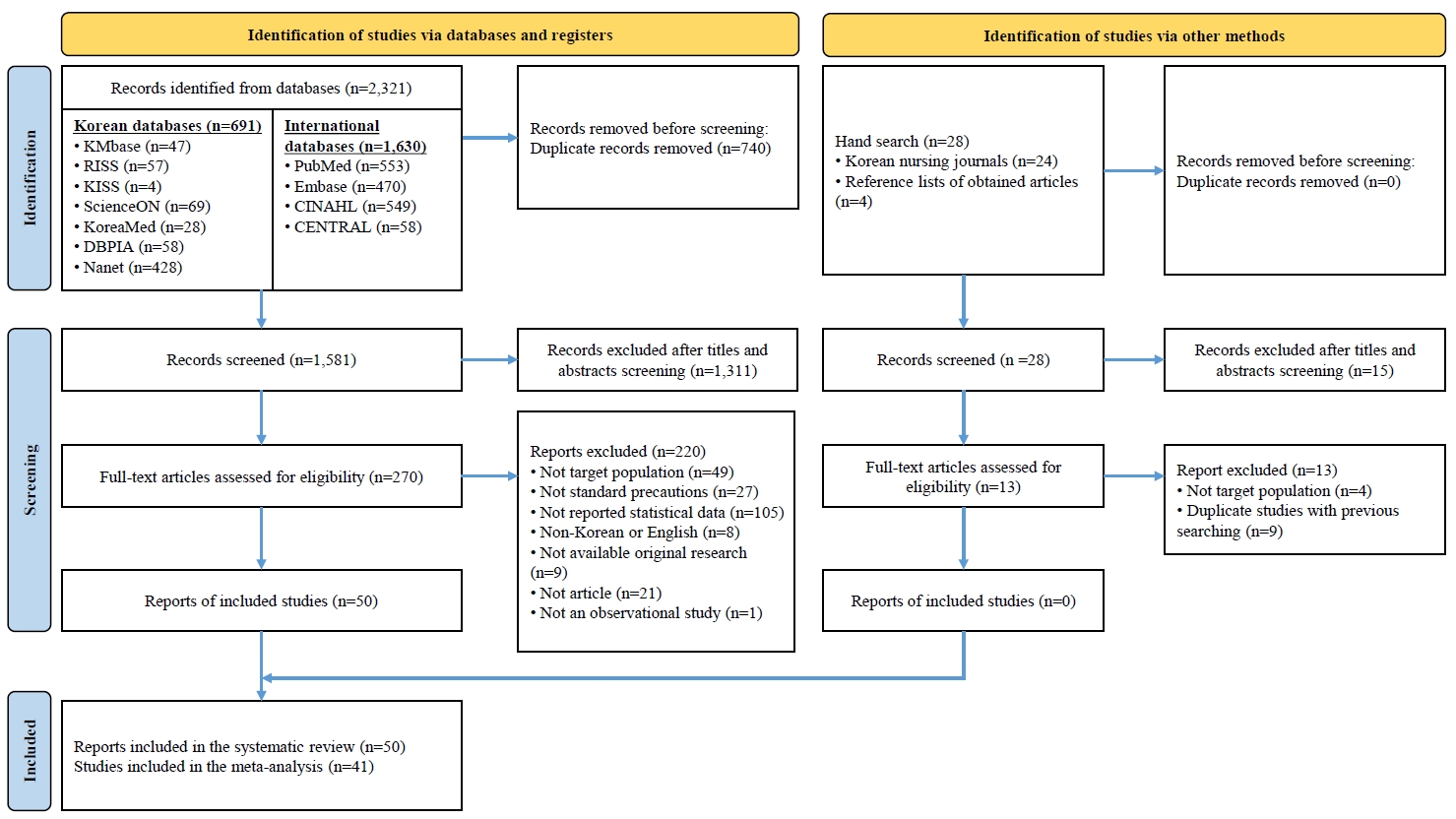
A systematic review and meta-analysis were reported in accordance with the PRISMA and MOOSE guidelines. Studies published in English or Korean were retrieved from KMbase, KoreaMed, KISS, ScienceON, RISS, Nanet, DBpia, PubMed, Embase, CINAHL, and CENTRAL. Data collection was conducted from July 6 to July 16, 2024. To ensure a comprehensive search, no restrictions were placed on the publication period, and studies published up to June 2024 were included in the literature search. Analyses were performed using R ver. 4.4.1.
Results
Of the 2,321 studies screened, 50 were included in the systematic review and 41 were included in the meta-analysis. Variables were categorized according to the ecological model. Among individual-level factors, variables with medium correlation effect sizes (ESr ≥.30) included self-efficacy (ESr=.41; 95% confidence interval [CI], 0.24 to 0.56), perceived barriers (ESr=−.35; 95% CI, −0.59 to −0.05), cues to action (ESr=.34; 95% CI, 0.07 to 0.57), and perceived benefits (ESr=.30; 95% CI, 0.13 to 0.46). Among organizational factors, organizational culture for infection control (ESr=.47; 95% CI, 0.39 to 0.54) and patient safety culture (ESr=.44; 95% CI, 0.35 to 0.53) demonstrated medium effect sizes. Other statistically significant variables with small effect sizes were also identified. No variables were identified within the interpersonal, community, or public policy domains.
Conclusion
This study identified self-efficacy and organizational culture for infection control as key determinants of compliance with standard precautions. Strengthening these factors may reduce healthcare-associated infections and promote safer nursing care (PROSPERO registration number: CRD42024566518). -
Citations
Citations to this article as recorded by
- Factors influencing intensive care unit nurses’ performance of standard precautions in South Korea: a descriptive correlational study
Hana Seo, Nahyun Kim
Journal of Korean Biological Nursing Science.2026; 28(2): 300. CrossRef
- Factors influencing intensive care unit nurses’ performance of standard precautions in South Korea: a descriptive correlational study
- 3,435 View
- 391 Download
- 1 Crossref

Research Papers
- Usefulness of Charlson comorbidity index-adjusted mortality prediction tools and factors influencing mortality in intensive care unit patients: a retrospective medical record review–based study
- Jai Jung Lee, Dong Yeon Kim, Min Ji Lee, Ji Young Kim
- J Korean Acad Nurs 2026;56(1):27-38. Published online February 11, 2026
- DOI: https://doi.org/10.4040/jkan.25094
-
Abstract
PDF
 ePub
ePub - Purpose
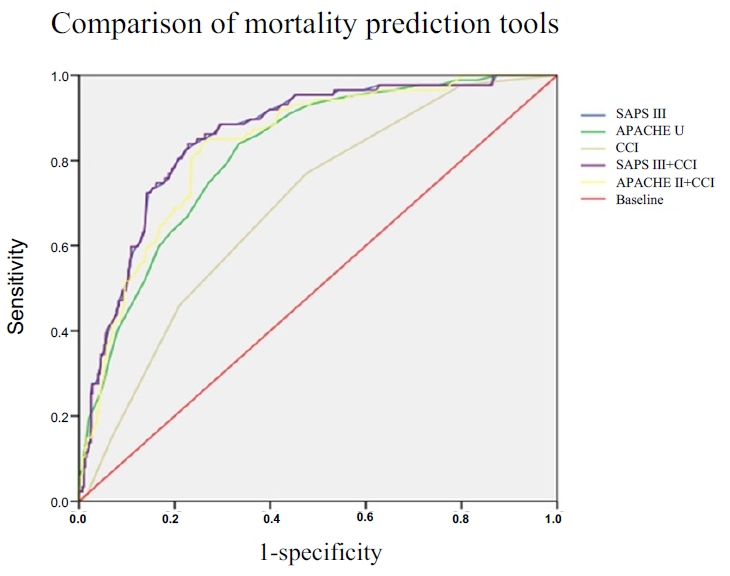
This study aimed to estimate the mortality rate in adult intensive care units (ICUs) using the Charlson comorbidity index (CCI)-adjusted Acute Physiology and Chronic Health Evaluation (APACHE) II and Simplified Acute Physiology Score (SAPS) III models, and to identify factors influencing mortality.
Methods
This retrospective cohort study included adult patients admitted to the ICU at a tertiary hospital between June 1 and August 31, 2022. Among the 1,098 screened patients, those younger than 18 years, those discharged within 48 hours, and those with missing medical records were excluded. In total, 482 patients were analyzed using the chi-square test, independent t-test, and multivariate logistic regression. Model performance was evaluated using the c-statistic and the Hosmer-Lemeshow goodness-of-fit test.
Results
The predictive accuracy of the mortality models was shown by c-statistic values of 0.817 for APACHE II, 0.857 for SAPS III, 0.697 for CCI, and 0.834 for CCI-adjusted APACHE II (0.834). Mechanical ventilation, cardiopulmonary cerebral resuscitation, continuous renal replacement therapy, and the presence of leukemia or lymphoma were significant predictors of mortality in adult ICU patients. Among the evaluated models, SAPS III and CCI-adjusted APACHE II demonstrated the highest predictive power.
Conclusion
The findings indicate that incorporating comorbidity indices such as the CCI with acute physiological parameters improves the accuracy of mortality prediction in ICU patients. Understanding mortality prediction models is essential for nurses to provide individualized, evidence-based, and high-quality care in adult ICUs.
- 3,521 View
- 277 Download
- Transforming nursing education to enhance integrated nursing competency: a Delphi-based methodological study on symptom-based clinical reasoning
- Jeung-Im Kim, Soyoung Yu, Jin-Hee Park, Ju-Eun Song, Eunjung Ryu, JuHee Lee, YeoJin Im
- J Korean Acad Nurs 2026;56(1):39-50. Published online February 5, 2026
- DOI: https://doi.org/10.4040/jkan.25151
-
Abstract
PDFePub
- Purpose
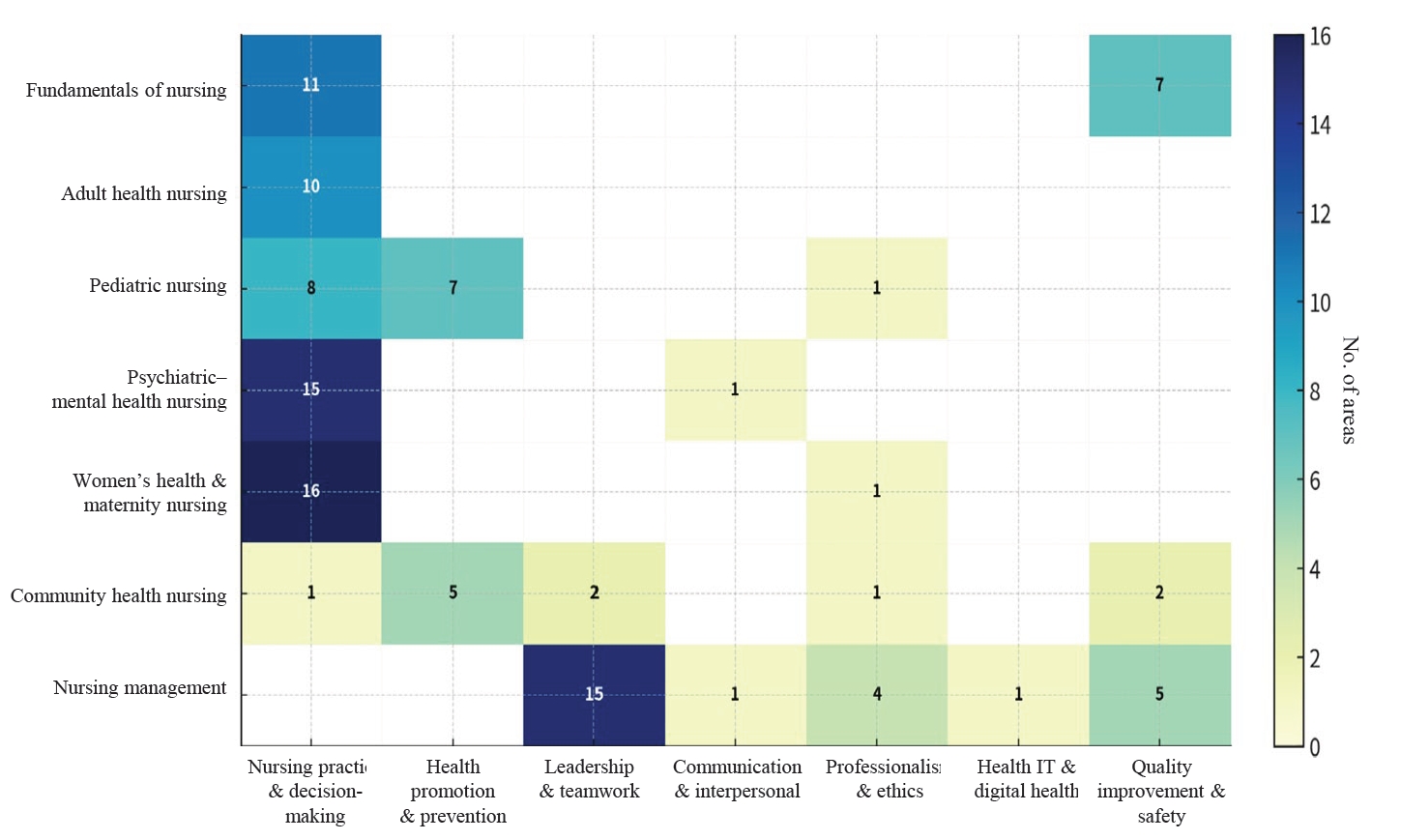
This study aimed to address the shift toward competency-based education and the planned 2028 “Integrated Nursing” National Licensing Examination (NLE), this study aimed to establish structural alignment among NLE domains, the seven integrated nursing competencies (INCs), and curriculum goals, with a particular focus on implementing symptom-based clinical reasoning (SBCR).
Methods
This Delphi-based methodological study included seven content experts for content validity index (CVI) assessment and 24 nursing education experts who participated in a consensus workshop. The item-level CVI and the scale-level CVI/average were calculated to confirm the linkage between INCs and NLE domains. In addition, qualitative analysis of workshop materials and meeting records was conducted to derive 10 integrated learning topics and to develop an SBCR educational model for the key symptom of headache, grounded in Miller’s Clinical Competence Pyramid (levels 2–4).
Results
The analysis confirmed the validity of integrating the INCs within the overall curriculum structure. The resulting framework delineates staged learning objectives and core clinical questions designed to systematically enhance clinical reasoning, promote safe nursing practice, and support professional reflection within a unified curriculum.
Conclusion
This study provides a practical foundation for nursing curriculum redesign by facilitating a transition from fragmented, subject-based instruction to a holistic, patient-centered SBCR model. This approach aligns with the requirements of the integrated NLE and is expected to contribute to meaningful improvements in actual clinical competency.
- 3,211 View
- 319 Download
- Psychometric testing of the Korean version of the Undergraduate Nursing Student Academic Satisfaction Scale: a methodological study
- Da-In Park, Joohee Shim
- J Korean Acad Nurs 2026;56(1):51-66. Published online February 9, 2026
- DOI: https://doi.org/10.4040/jkan.25125
- Correction in: J Korean Acad Nurs 2026;56(2):289
-
Abstract
PDFePub
- Purpose
This study aimed to translate, cross-culturally adapt, and evaluate the psychometric properties of the Korean version of the Undergraduate Nursing Student Academic Satisfaction Scale (K-UNSASS).
Methods
The K-UNSASS was developed using Brislin’s team-based translation–back-translation approach, with semantic and conceptual equivalence examined. Face validity was assessed, and a pilot test was conducted in November 2022. Content validity was evaluated by an expert panel. Formal data collection was conducted from December 2022 to January 2023. Structural validity was examined using exploratory and confirmatory factor analyses. Reliability was assessed using Cronbach’s alpha and McDonald’s omega coefficients.
Results
A total of 482 full-time nursing students, most of whom were in the fourth year of their nursing program, were included in the psychometric testing. Construct validity supported a four-factor structure accounting for 65.9% of the total variance. After removal of three items with unsatisfactory factor loadings, a 45-item K-UNSASS was established. Confirmatory factor analysis of the 45-item K-UNSASS demonstrated an acceptable model fit, and both Cronbach’s alpha and McDonald’s omega coefficients were .97.
Conclusion
The K-UNSASS demonstrates acceptable reliability and validity for assessing academic satisfaction among Korean nursing students. As a culturally relevant instrument, it supports educational improvement through targeted strategies and program evaluation. -
Citations
Citations to this article as recorded by- Corrigendum: Psychometric testing of the Korean version of the Undergraduate Nursing Student Academic Satisfaction Scale: a methodological study
Da-In Park, Joohee Shim
Journal of Korean Academy of Nursing.2026; 56(2): 289. CrossRef
- Corrigendum: Psychometric testing of the Korean version of the Undergraduate Nursing Student Academic Satisfaction Scale: a methodological study
- 3,027 View
- 214 Download
- 1 Web of Science
- 1 Crossref
- Development and evaluation of the Trauma-nursing Education and Skill Support program to enhance trauma nursing competencies: a quasi-experimental study
- Tae Yeong Yang, Myung Jin Jang, Ki Ung Kim, Min So, Mi Na Choi, Eun Jung Lee, Jin Su Jo, Ji Yun Lee, Kwang Kyun Lim, Kyoung Mi Kim, Hae Jun Baek, Sun Ho Wang, Jin Oh Choi
- J Korean Acad Nurs 2026;56(1):67-80. Published online February 24, 2026
- DOI: https://doi.org/10.4040/jkan.25134
-
Abstract
PDFePub
- Purpose
This study aimed to develop and evaluate the effectiveness of the Trauma-nursing Education and Skill Support (TESS) program based on the ADDIE model (Analysis, Design, Development, Implementation, Evaluation model). The program was designed to enhance trauma nurses’ clinical competencies, including trauma-related knowledge, self-efficacy, and problem-solving ability, through the integration of theoretical education and simulation-based practice.
Methods
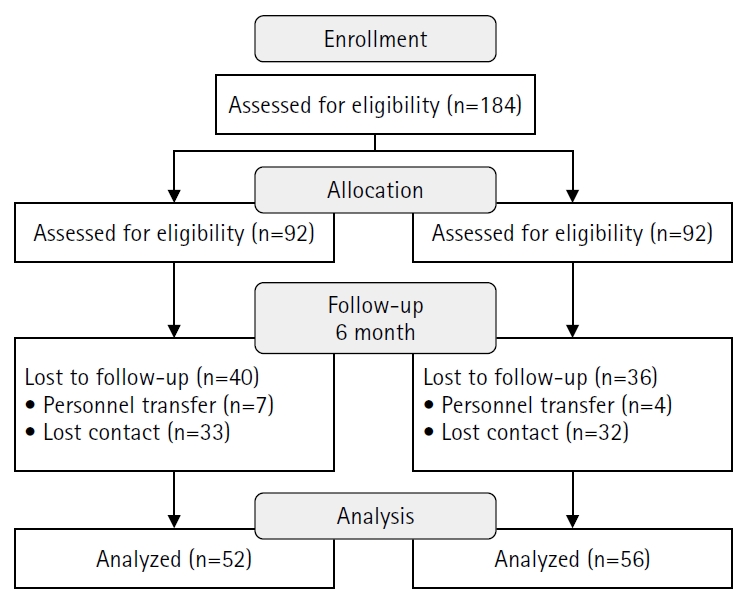
A quasi-experimental study using a non-equivalent control group pretest–posttest design was conducted. Participants included 108 trauma nurses from regional trauma centers, military trauma centers, and emergency care facilities, who were assigned to an experimental group (n=52) or a control group (n=56). The TESS program consisted of a 2-day, 14-hour blended-learning course that included eight lecture sessions and four simulation-based practice stations. Data were collected at baseline, immediately after the intervention, and at 6 months using validated instruments measuring trauma-related knowledge, self-efficacy, and problem-solving ability. Two-way repeated-measures analysis of variance was used for data analysis.
Results
The experimental group demonstrated significant improvements in trauma-related knowledge, self-efficacy, and problem-solving ability compared with baseline (all p<.001). These improvements were sustained at 6 months, although trauma-related knowledge scores showed a slight decline compared with immediate posttest levels. Between-group analyses confirmed significant group-by-time interaction effects for all outcomes: trauma-related knowledge (η2=0.12, p<.001), self-efficacy (η2=0.09, p=.002), and problem-solving ability (η2=0.08, p=.003).
Conclusion
The TESS program effectively enhanced trauma nurses’ trauma-related knowledge, self-efficacy, and problem-solving ability, with effects sustained for up to 6 months. Incorporating blended learning and simulation-based training into standardized trauma nursing education may strengthen clinical competencies and ultimately contribute to improved patient outcomes.
- 3,326 View
- 353 Download
- Development and psychometric testing of the Perceived Postoperative Care Competency Scale for Nursing Students: a methodological study
- Perihan Şimşek, Gül Çakir Özmen, Melek Ertürk Yavuz, Sema Koçan, Dilek Çilingir
- J Korean Acad Nurs 2026;56(1):81-97. Published online February 24, 2026
- DOI: https://doi.org/10.4040/jkan.25123
-
Abstract
PDFePub
- Purpose
To improve the quality of postoperative care and promote recovery after surgery, it is important that nursing education is competency-based and that competency assessment is an integral part of the educational process. The purpose of this study was to develop a tool to evaluate nursing students’ perceived competence in postoperative care.
Methods
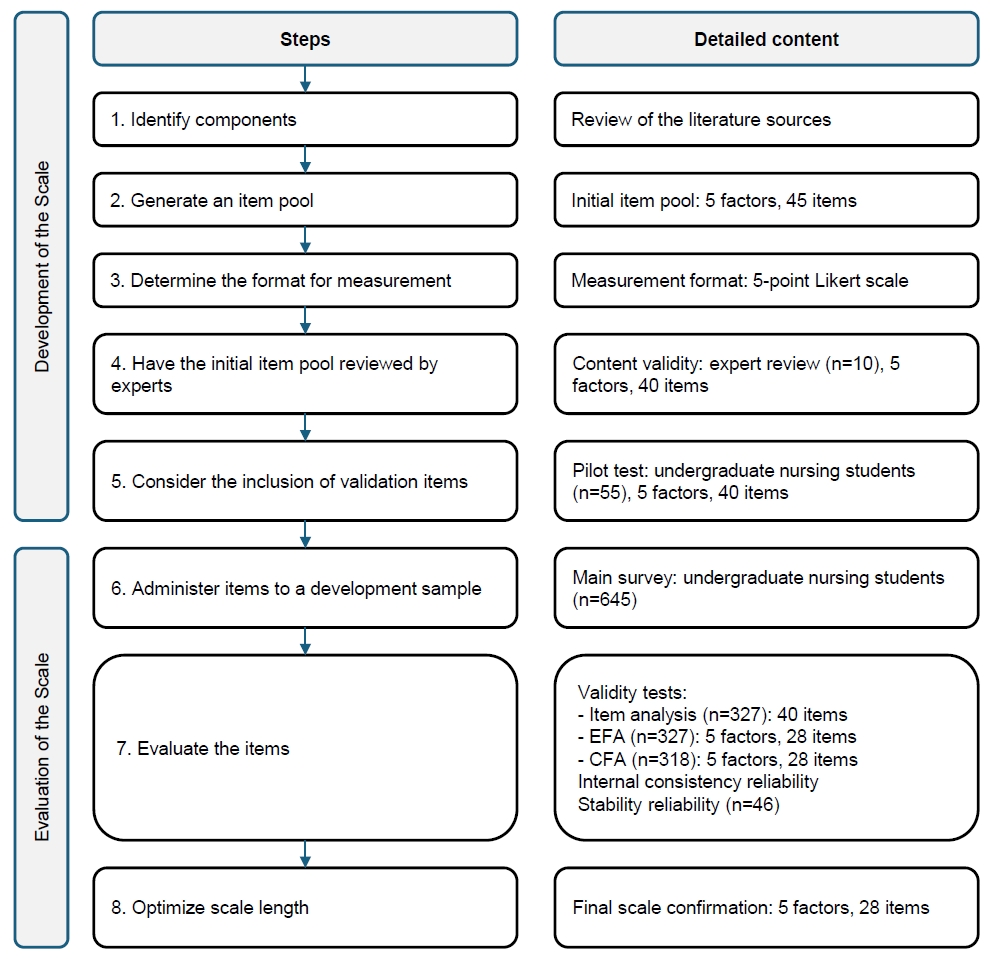
This cross-sectional methodological study followed DeVellis’s scale development steps and was conducted between December 2022 and March 2023. In this study, 892 students were invited and 703 responded. After exclusions, data from 645 students were analyzed to examine the psychometric structure of the scale using exploratory factor analysis (n=327) and confirmatory factor analysis (n=318). Reliability was assessed by calculating Cronbach’s α coefficients and by test–retest measurement (n=46).
Results
The proposed scale was confirmed to consist of five factors and 28 items (χ2/degrees of freedom=2.25, root mean square error of approximation=.06, normed fit index=.90, and goodness-of-fit index=.85). Cronbach’s α was .97 for the total scale. The data demonstrated high test–retest stability (intraclass correlation coefficient=.88). The scale developed and psychometrically tested in this study revealed a five-factor structure: legal responsibilities and ethical principles (seven items), postoperative nursing care (seven items), interpersonal relations and communication (four items), leadership (six items), and education and professional development (four items).
Conclusion
The scale, which demonstrated very good psychometric properties, would be helpful in assessing perceived postoperative nursing competence among nursing students. This may help students graduate with the necessary knowledge and skills required for postoperative care. However, further research involving larger samples and more diverse cultural contexts is needed to enhance the generalizability of the scale.
- 2,792 View
- 191 Download
- Experiences of work performance among physician assistant nurses during the period of healthcare disruption in South Korea: a qualitative content analysis
- Juyoung Ha, Minji Kim
- J Korean Acad Nurs 2026;56(1):98-107. Published online February 24, 2026
- DOI: https://doi.org/10.4040/jkan.25133
-
Abstract
PDFePub
- Purpose
This study aimed to explore the work experiences of physician assistant (dedicated nurses in Korea) during the medical service gap caused by physician–government conflicts.
Methods
A qualitative design employing individual in-depth interviews was used. Data were collected from July 18 to August 13, 2025. Fifteen nurses who worked as physician assistant 5 during the healthcare service gap participated in the study. Participants were categorized as follows: (1) nurses in the role before the period of healthcare disruption, (2) those who voluntarily applied after the period of healthcare disruption, and (3) those involuntarily assigned during the period of healthcare disruption. Data were analyzed using conventional content analysis.
Results
Three categories with six subcategories were identified: (1) reconstructing inner experience within an expanded role (unprepared responsibility and burden, inner fulfillment discovered through continuity of care); (2) reconfiguring relationships from a boundary position (feeling distant as “the same yet different” nurses, expansion of mutual understanding in a crisis context); and (3) precarious positioning within an unestablished system (uncertain standing after residents’ return, episodic implementation of non-standardized training).
Conclusion
This study showed that physician assistant who filled residents’ gaps in an incomplete system experienced heavier role burdens, blurred job identity, unequal conditions, and unstable affiliation, while some also found renewed meaning and fulfillment through continuity of care and closer collaboration. With structured education, clearly defined scopes of practice after residents’ return, and stable legal and organizational support, these nurses can function as more than temporary substitutes and help sustain continuity and quality of patient care. -
Citations
Citations to this article as recorded by- The Tertiary Hospital Restructuring Project in South Korea: A Reflexive Thematic Analysis of Hospital Directors’ Perspectives on Barriers and Policy Recommendations
Hooyeon Lee, Ji Eun Kim, Kyungin Lee, Dong Jun Kim, Kwangmo Yang, Kyounga Lee, Myung-Il Hahm
Healthcare.2026; 14(16): 2469. CrossRef
- The Tertiary Hospital Restructuring Project in South Korea: A Reflexive Thematic Analysis of Hospital Directors’ Perspectives on Barriers and Policy Recommendations
- 2,622 View
- 367 Download
- 1 Web of Science
- 1 Crossref
- Perspectives of parents, teachers, and community leaders on adolescent sexual behavior across ecological contexts in Cambodia: a qualitative study
- Youngran Yang, Gloria Park
- J Korean Acad Nurs 2026;56(1):108-122. Published online February 25, 2026
- DOI: https://doi.org/10.4040/jkan.25146
-
Abstract
PDFePub
- Purpose
This study investigated the perspectives of parents, teachers, and community leaders regarding adolescents’ sexual behavior in Cambodia.
Methods
Grounded in the ‘ecological framework of adolescent health,’ this study employed a descriptive qualitative approach to explore the perspectives of key stakeholders, including 12 parents, eight teachers, and four community leaders. Drawing on in-depth, semi-structured individual and focus group interviews, the study examined risk and protective factors related to risky sexual behavior across family, school, community, social, cultural, and policy contexts. Data collection was conducted from December 5, 2022 to January 31, 2023.
Results
The integrated thematic analysis revealed six main themes. Parents positioned themselves as anxious protectors but struggled with limited opportunities for open conversation; teachers acted as observe-and-warn mediators, constrained by institutional authority, curricular boundaries, and rapidly shifting youth culture; and community leaders interpreted emerging trends through the lens of social change, eroding traditions, and weakening collective governance. Across groups, participants acknowledged the limitations of unilateral action and advocated for multilevel, collaborative solutions that bridge families, schools, and broader communities.
Conclusion
The study concluded that adolescent sexual behaviors should be understood from diverse perspectives. This finding highlights the need for culturally appropriate and sensitive measures supported by multisectoral systems operating at the family, school, community, civil society (e.g., non-governmental organizations), and national levels.
- 1,586 View
- 115 Download
 First
First Prev
Prev


