
 Submit an article


Search
- Page Path
- HOME > Search
Research Paper
- Perceptions of advanced practice nurses’ role expansion among graduate students in advanced practice nursing programs: a qualitative study using SWOT-TOWS analysis
- Eun Sook Kim, Hui Jin Lim, Boram Sagong, Jinhu Seok, Su Jung Choi
- Received April 3, 2026 Accepted September 19, 2026 Published online November 4, 2026
- DOI: https://doi.org/10.4040/jkan.26050 [Epub ahead of print]
-
 Abstract
 PDF
 ePub
- Purpose
This study aimed to explore graduate nursing students’ perceptions of advanced practice nurse (APN) role expansion and identify strategic directions for APN role development using strengths, weaknesses, opportunities, and threats (SWOT) analysis and a threats, opportunities, weaknesses, and strengths (TOWS) matrix.
Methods
A qualitative descriptive design was used. Participants were 24 nurses enrolled in graduate APN programs who had experience relevant to APN roles and practice. Focus group interview data underwent inductive content analysis and were organized into SWOT domains, with the APN system as the unit of analysis. A TOWS matrix was used to derive strategies.
Results
Strengths included clinical expertise, patient-centered care, continuity of care, and multidisciplinary coordination. Weaknesses included role ambiguity and interprofessional conflict arising from unclear role boundaries, as well as insufficient shared understanding and clarification of APN roles within the system. Opportunities arose from policy and organizational changes that facilitated formalization of APN roles. Threats included structural undervaluation of APN expertise and the risk of burnout arising from insufficient support for expanded roles and responsibilities. Four TOWS strategies were derived: (1) institutionalizing and expanding APN roles by drawing on clinical expertise and organizational opportunities; (2) clarifying roles and establishing standardized systems for education and competency development; (3) making clinical contributions more visible to strengthen recognition of APN expertise and roles; and (4) preventing burnout through clearer responsibilities and appropriate workload and compensation systems.
Conclusion
Participants’ perceptions suggest that expanding APN roles may require a structural approach that integrates role clarification, competency development, organizational support, and policy and institutional frameworks, rather than extending tasks alone. Further validation involving diverse stakeholders is warranted.
- 273 View
- 14 Download

Invited Paper
- Lessons from the US Advanced Practice Registered Nurse system
- Eun-Ok Im, Dongmi Kim
- J Korean Acad Nurs 2025;55(4):492-505. Published online November 27, 2025
- DOI: https://doi.org/10.4040/jkan.25120
-
Abstract
PDFePub
- Purpose
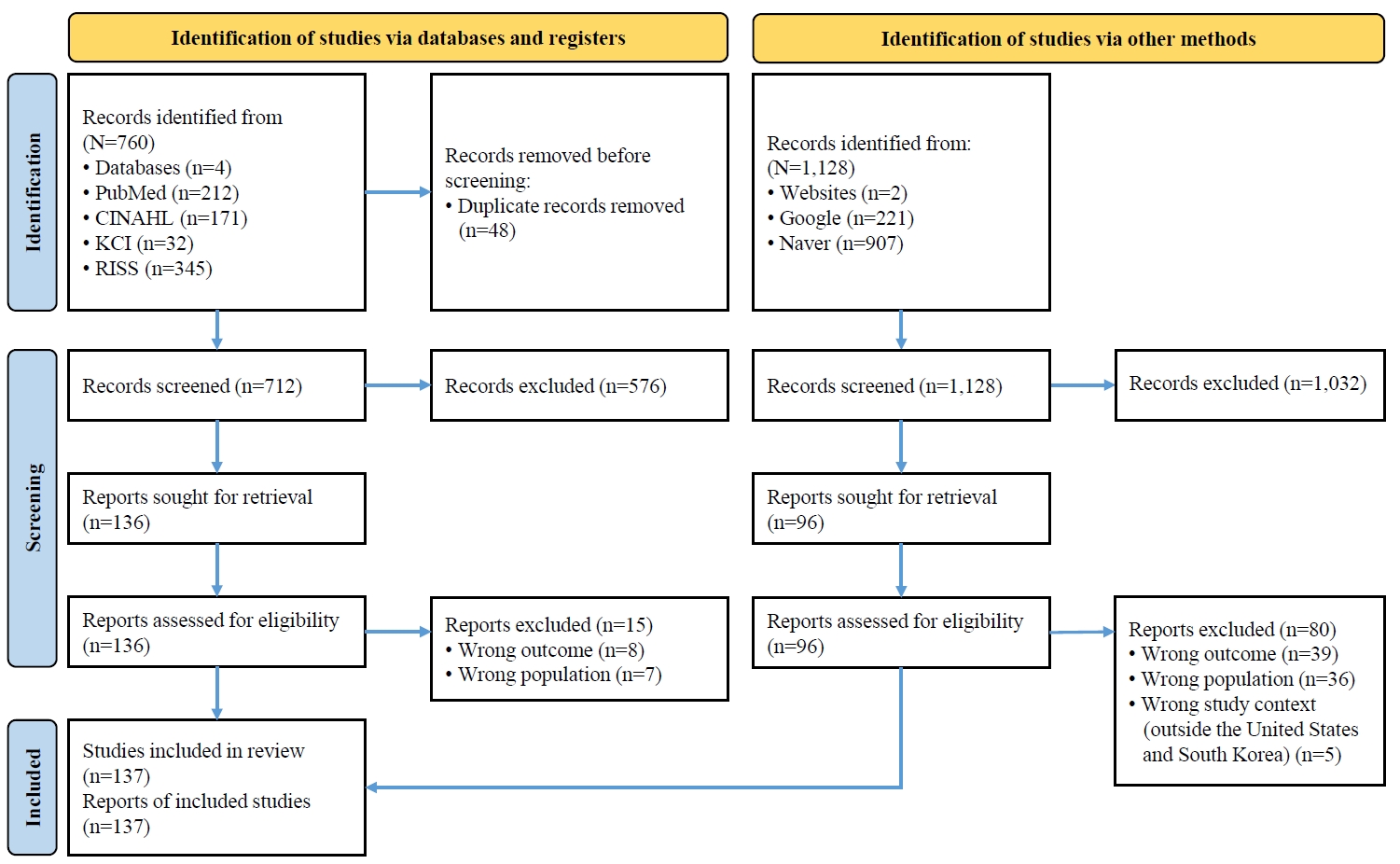
This review compares the development of South Korea’s Advanced Practice Registered Nurse (APRN) system the well-established APRN system in the United States and provides recommendations for future improvements to the APRN system in South Korea.
Methods
To compare the APRN systems between the two countries, an integrative literature review was conducted using multiple databases and professional nursing organization documents and reports from both the United States and South Korea.
Results
Issues were identified in five major domains: (1) research evidence, (2) education and training, (3) the scope of practice, (4) financial mechanisms, and (5) public awareness and acceptance.
Conclusion
Recommendations are made in four areas: (1) building evidence to support APRN programs; (2) strengthening APRN education; (3) establishing legal support and reimbursement mechanisms; and (4) improving public awareness and acceptance of APRNs.
- 2,842 View
- 236 Download
Research Paper
- Comparison of educational needs and priorities for work-related laws between hospital and community-based nurses
- Jeonghyun Kim, Min Kyoung Han, Minjae Lee, Sujin Shin
- J Korean Acad Nurs 2025;55(3):400-412. Published online August 21, 2025
- DOI: https://doi.org/10.4040/jkan.25049
-
Abstract
PDFePub
- Purpose
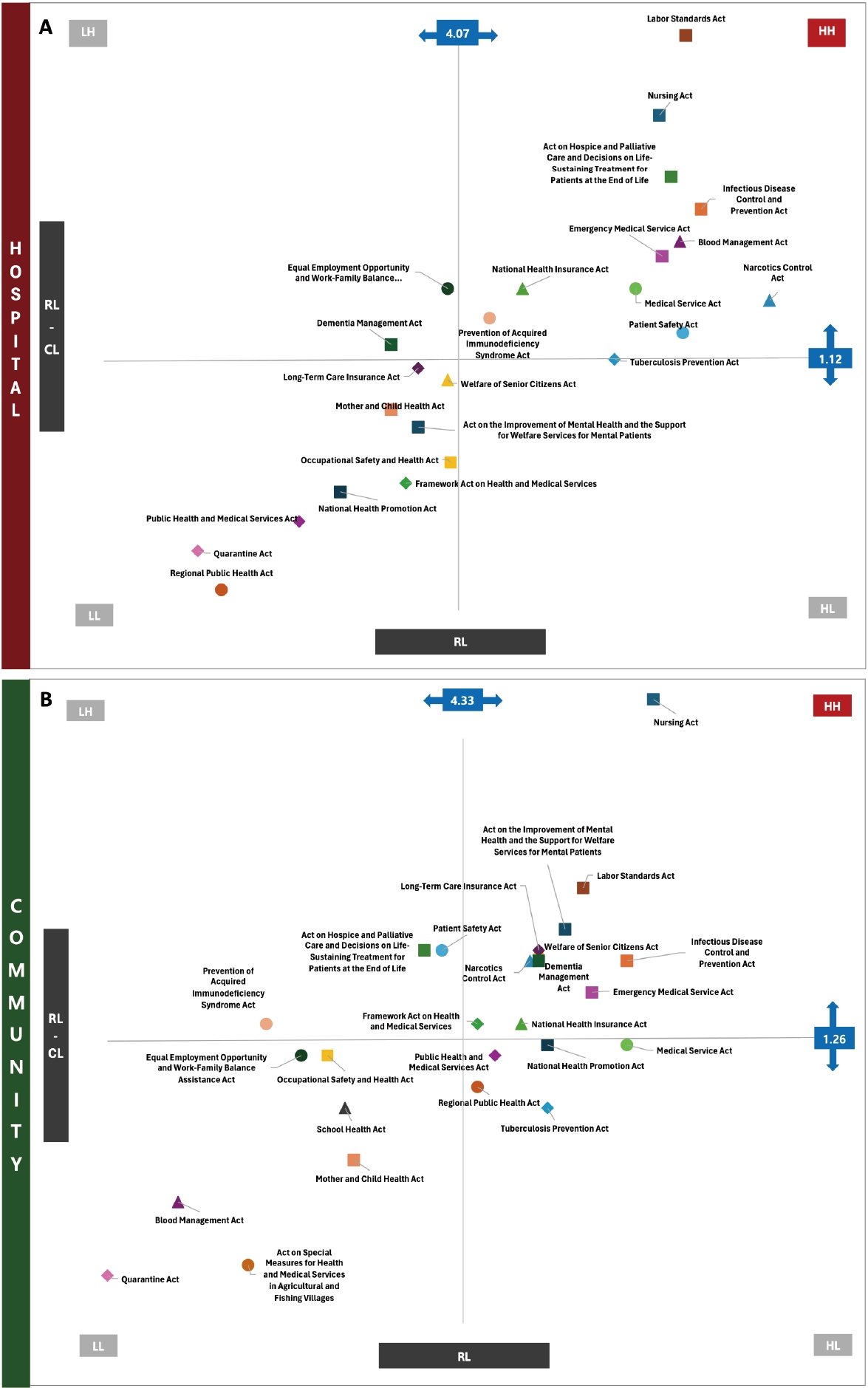
This study aimed to examine the practical utilization of work-related laws in nursing practice and to prioritize educational needs to provide foundational data for improving nurses’ legal competencies.
Methods
A descriptive survey was employed using an online self-reported questionnaire. Participants included 275 nurses with over 3 years of clinical experience, categorized into hospital and community-based. Convenience sampling was used, and data were collected between January 9 and February 3, 2025. Descriptive statistics and the paired t-test were conducted using IBM SPSS 26.0. Educational needs were analyzed using the Borich Needs Assessment and the Locus for Focus model.
Results
Among participants, 75.6% had received education on work-related laws, and 79.3% of those participants received related education during their undergraduate studies. However, 32.4% of nurses reported experiencing practice related difficulties due to insufficient legal knowledge, particularly related to unclear legal responsibilities and ambiguity in the scope of practice. High educational needs were identified for the Nursing Act and the Labor Standards Act across all workplaces. Hospital nurses emphasized the Hospice and Palliative Care Act and Emergency Medical Services Act, while community-based nurses prioritized the Mental Health Welfare Act, Elderly Welfare Act, and Dementia Management Act.
Conclusion
Nurses’ legal education needs are related to practical applications and their capability to respond appropriately to legal requirements, and these needs vary depending on their work environment and social changes. These findings underscore the necessity of restructuring legal education curricula to improve practical relevance and support nurses’ rights, providing a basis for developing workplace-specific legal education programs. -
Citations
Citations to this article as recorded by
- Legal Literacy in Clinical Nursing Practice: A Walker and Avant Concept Analysis
Yufei Xing, Xiaolong Wang, Enming Zhang, Jiajia Yu, Qiong Fang
Nursing Reports.2026; 16(6): 200. CrossRef
- Legal Literacy in Clinical Nursing Practice: A Walker and Avant Concept Analysis
- 3,525 View
- 217 Download
- 1 Web of Science
- 1 Crossref
Original Article
- Approaches to Teaching Health Policy: Moving Students into the Political Process
- Young Hee Yom
- Journal of Nurses Academic Society 1995;25(1):156-163. Published online March 30, 2017
- DOI: https://doi.org/10.4040/jnas.1995.25.1.156
-
Abstract
PDF
No abstract available.
-
Citations
Citations to this article as recorded by- Analysis of the health policy education needs of nursing students
HyungSeon Kim
Journal of Korean Public Health Nursing.2024; 38(3): 410. CrossRef
- Analysis of the health policy education needs of nursing students
- 1,295 View
- 0 Download
- 1 Crossref
 First
 Prev



